Air pollution levels in one of China’s old steel bastions are double the “crazy bad” / “airpocalypse” level, reaching New Delhi levels pic.twitter.com/hF1reZsDxn
— Lauri Myllyvirta (@laurimyllyvirta) December 19, 2016
An area larger than Spain and Portugal, home to over 460 million people – the equivalent of the population of the US, Canada and Mexico combined- is suffocating under a thick blanket of smog.
Planes have been delayed, hospital visits have spiked and entire cities have been brought to a standstill as the smog rolled in for the most punishing episode of the year.
Northern China’s #smog is affecting 460 million people, equal to the populations of the US, Canada & Mexico combined https://t.co/AX5sevEhjT pic.twitter.com/j81HRtBw8G
— Greenpeace East Asia (@GreenpeaceEAsia) December 20, 2016
Pollution in one of China’s steel-producing hubs reached record-breaking levels, even as red alert regulations shut and slowed down production in 1200 factories across the region.
Meanwhile, we recently mined the data and found that after almost 2 years of continuous improvement in China’s air quality, progress is starting to slow.
Look familiar? Almost exactly one year ago, north China was facing exactly the same situation.
All is not lost
It’s hard to remember when the scenes outside your window look like something out of Mad Max, but the situation is improving.
China has undergone an incredible energy shift and in just a few short years, established itself as a leading voice in the global climate debate. China’s renewables industry continues to smash records, global emissions are stalling and we’ve every reason to believe we’ve reached peak coal. Meanwhile, levels of heavy metal carcinogens in Beijing’s air have plummeted.
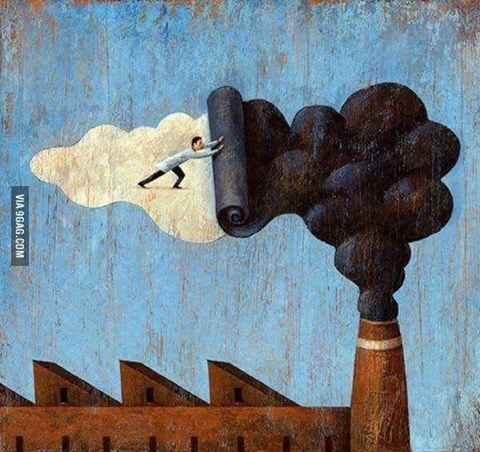
But when scenes like this are becoming an annual event, it’s clear that the transition needs to pick up speed. China’s economy needs to wrench itself away from coal, deal with the curtailment and distribution problems that plague its renewables industries and tackle its coal overcapacity glut.
In crisis there is opportunity: exposing and sharing the impacts of China’s air pollution has driven the government to take unprecedented action and lead to the biggest energy revolution in modern history.
The renewables revolution is already here: we just need to push it along.