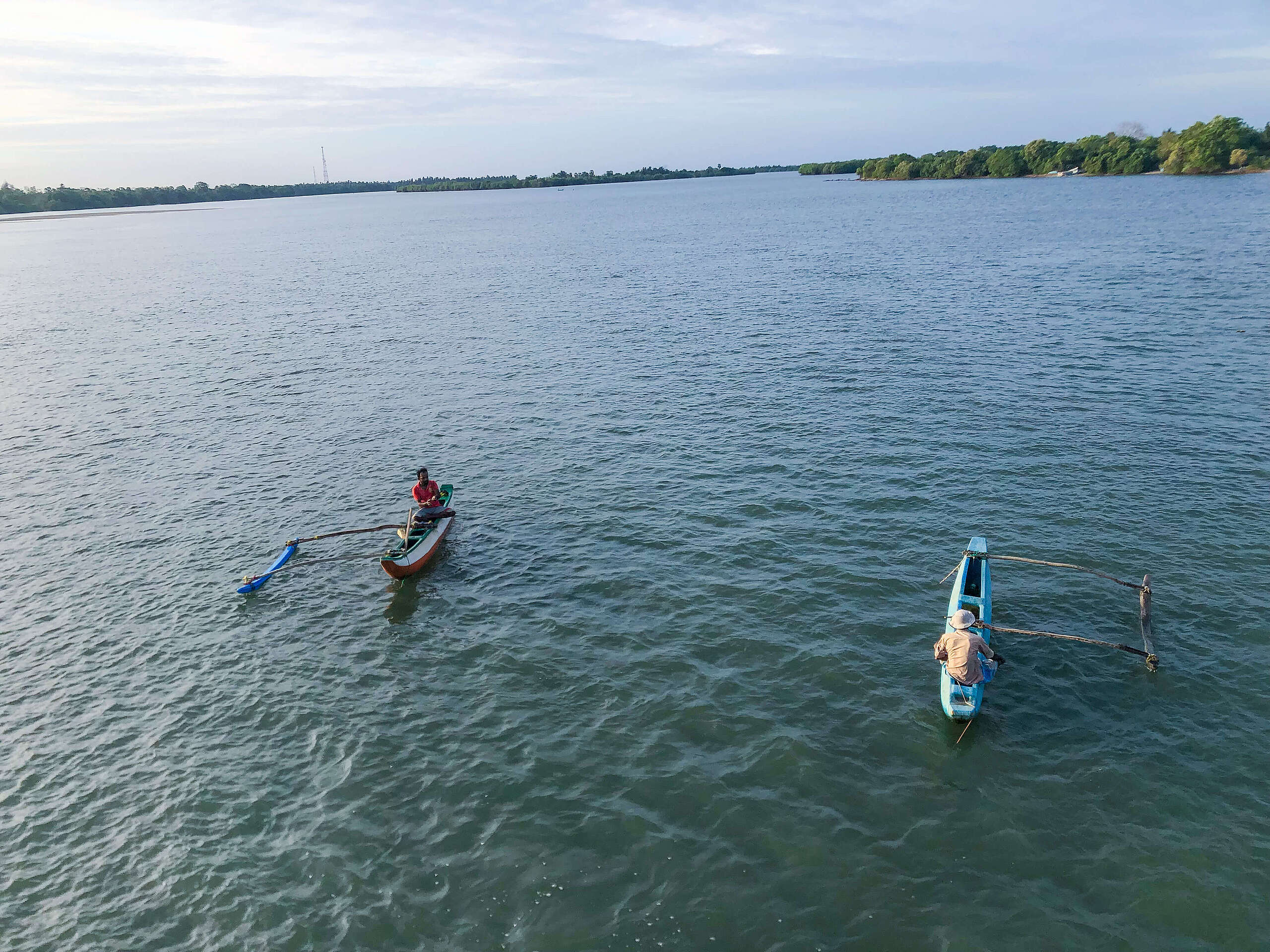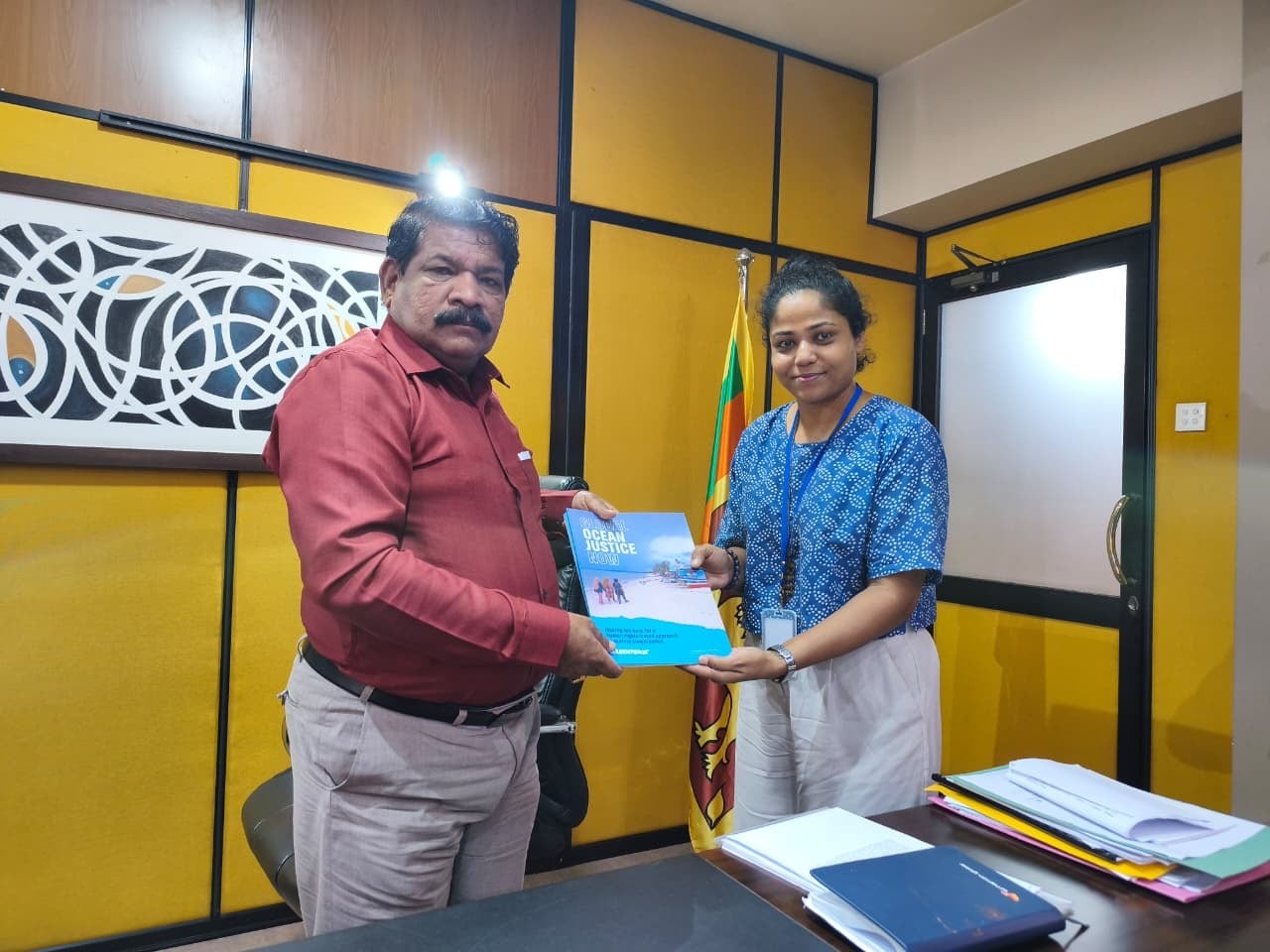
New Greenpeace South Asia Issue Brief documents a recurring “consent gap” in coastal governance and calls for Free, Prior and Informed Consent.
Colombo, 28 September, 2026 — After holding extensive Focus Group Discussions (FGDs) with coastal and indigenous communities throughout Sri Lanka, Greenpeace South Asia identified a recurring gap in consent, where policy decisions are often made by authorities without sharing information with directly affected community members.
“From Consultation to Consent: Community Voices in Sri Lanka’s Marine and Coastal Governance” document experiences from communities in Negombo, Rekawa, Vakarai, Kalpitiya and Vidathaltivu, alongside a survey of 186 fishing community respondents across North Mannar. The Brief was unveiled at the Sri Lanka Press Institute Auditorium, in the presence of representatives from authorities, stakeholders and allies, and members of the media.
The Brief identifies that coastal and indigenous communities frequently have little agency over matters that directly affect their life and livelihood. “Information is frequently shared with community members after decisions have been effectively made, technical planning does not consistently incorporate local ecological knowledge; language and administrative barriers restrict participation; and communities have limited ability to challenge decisions that affect their lands, waters, and livelihoods,” the Brief’s executive summary underscores.
“For too long, coastal communities have been asked to participate after decisions have already been shaped. Consultation cannot simply mean informing people about a project. Communities who live with and depend on these ecosystems must have a meaningful role in deciding what happens to their lands, waters and livelihoods. Sri Lanka has an opportunity to move from consultation to consent, and from top-down conservation to genuine partnership with the communities who have protected these ecosystems for generations. Free, Prior and Informed Consent should be a foundation of environmental and biodiversity governance, not an afterthought.”
“What is needed is a rights-based approach, with consent rather than consultation being the focus, and having policy decisions made with communities,” Human Rights Defender and Campaigner Melani Gunathilaka emphasised.
The call comes as Sri Lanka implements its biodiversity commitments under the Kunming-Montreal Global Biodiversity Framework, including Target 22 on the participation and rights of Indigenous peoples and local communities, and ahead of the 17th Conference of the Parties to the Convention on Biological Diversity (CBD COP17) in Yerevan, Armenia, from 19-30 October 2026.
The Issue Brief recommends:
- Establishing a rights-based national standard for Free, Prior and Informed Consent (FPIC) and meaningful participation;
- Ensuring environmental and project information is available in Sinhala and Tamil;
- Recognising traditional and local ecological knowledge in decision-making;
- Piloting community co-management of marine and coastal areas;
- Providing accessible grievance reporting and legal remedies for affected communities;
- Integrating FPIC and community rights into biodiversity and climate policies;
- Improving direct access to biodiversity and climate finance for local communities.
These measures reflect the best practices followed by other nations that have adopted fair consultation, consent, and participatory mechanisms in their policymaking processes.
Greenpeace South Asia urges the government and private actors to recognise Indigenous Peoples and local communities not merely as stakeholders, but as rights-holders and primary stewards of their territories, whose knowledge and consent must shape decisions before projects and conservation measures become irreversible.
Media Contacts:
Shanuka Kadupitiyage
Greenpeace South Asia, Media Officer
[email protected] || +94 72 644 4770
Anita Perera
Greenpeace South Asia, Campaigner
[email protected] || +94 773925597
Available for Media
- Issue Brief and Annexes, including:
- Photographs
- Quotes from surveyed individuals and FGD Participants
- Letter for the Sri Lankan Government to consider Indigenous Peoples and Local Communities’ Free, Prior and Informed Consent mechanisms in the conservation and management of coastal areas
- Coastal Community Focus Group Discussion Questionnaire
- Glossary terms for coastal communities
- Recommandations on the National Environmental Bill to the MoE
- Op’ed article on Free, Prior and Informed Consent