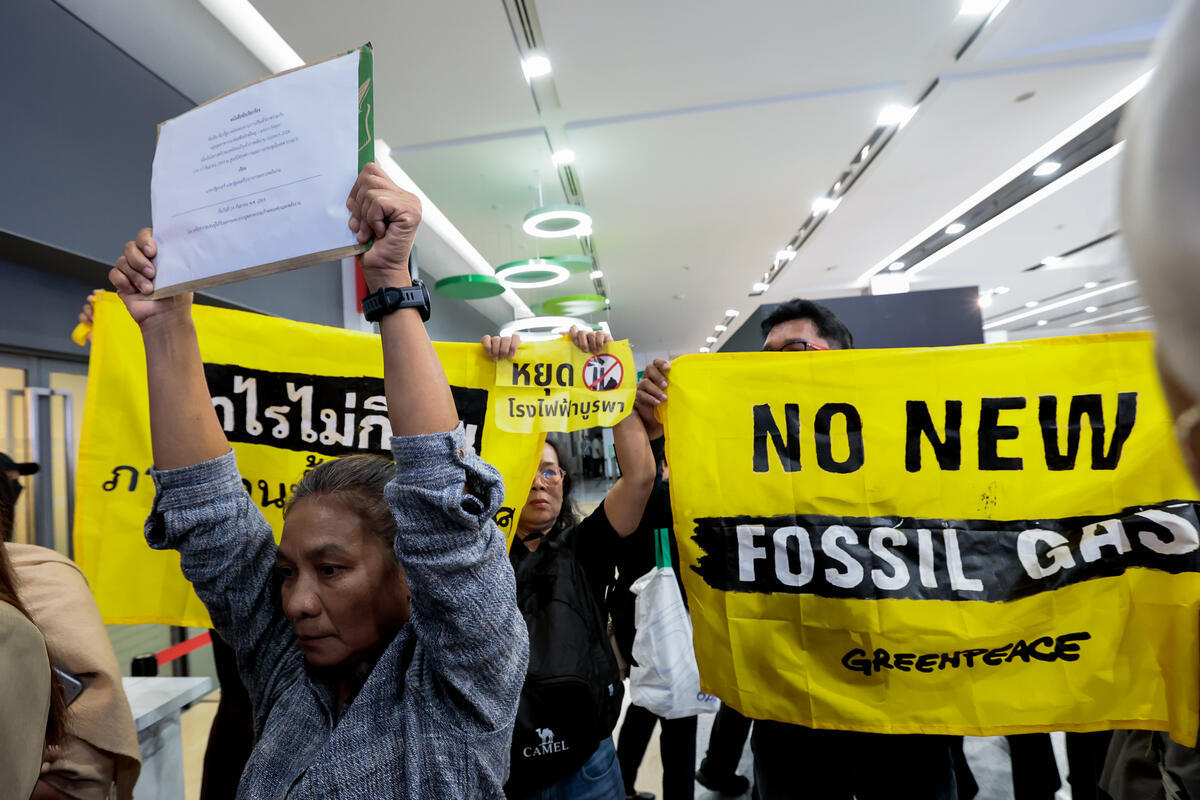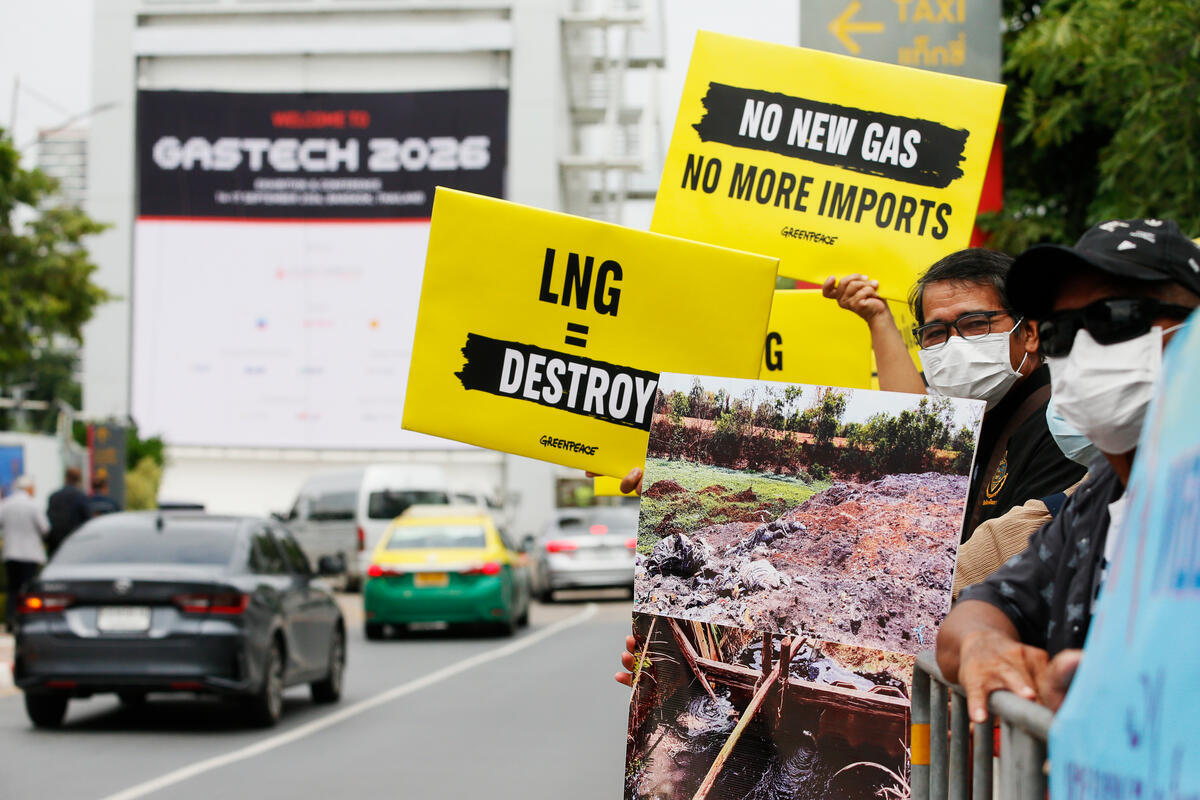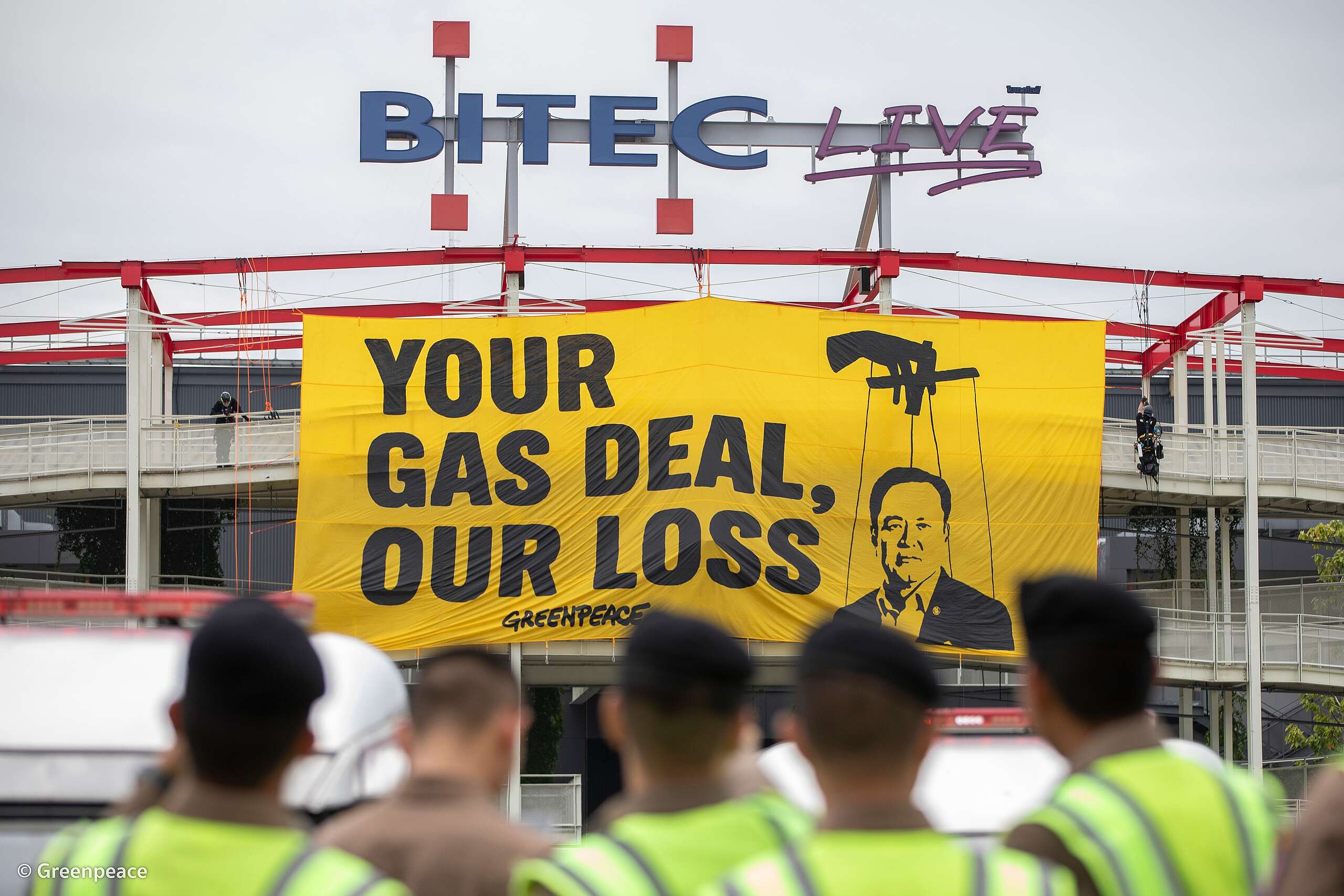
BANGKOK, THAILAND, 18 September 2026 – As Gastech 2026 comes to a close in Bangkok, Greenpeace Thailand expressed disappointment that a conference framed around energy security and the energy transition has instead been accompanied by announcements that could deepen Thailand’s dependence on fossil gas and imported LNG for decades to come.
During Gastech 2026, Thailand’s Energy Minister Akanat Promphan announced the opening of the country’s 26th petroleum exploration bidding round, covering more than 60,200 square kilometres of high-potential deepwater areas. Thailand is also expanding its LNG import capacity from 19 million to 27 million tonnes as the government seeks to position the country as a regional energy connectivity hub [1].
By the end of the third day of Gastech 2026, memoranda of understanding, supply agreements and investment commitments with a combined estimated value of US$40 billion had been announced or advanced at the event. These agreements cover LNG supply, power generation, upstream development, petrochemicals and shipping, including long-term LNG supply and gas infrastructure [2].
Yet growing reliance on LNG also brings economic risks. Speaking at Gastech, PTTEP warned that every US$3 per MMBtu increase in LNG prices could raise Thai electricity prices by around 5%. Thailand currently relies on LNG for around 30% of its power generation, and around half of the LNG it purchases comes from the spot market, leaving the country more exposed to global price shocks [3].
Manun Wongmasoh, Climate and Energy Campaigner at Greenpeace Thailand, said:
“Growing electricity demand from AI and data centres should not become another justification for expanding fossil gas. Thailand should not allow the growth of the digital economy to lock the country into decades of fossil fuel dependence. New electricity demand must be met without creating a new wave of fossil gas infrastructure that could remain in place for decades.
There is also an economic cost. If every US$3 increase in LNG prices could raise Thai electricity prices by around 5%, greater dependence on imported LNG should not simply be presented as energy security. Energy security should protect people from volatile global fuel prices, not expose them to greater risk.”
As Gastech 2026 closes in Bangkok, Greenpeace Thailand calls on the government to move away from further fossil gas expansion and redirect investment towards renewable energy, energy efficiency, energy storage and modernised power grids, while ensuring meaningful participation of communities in decisions shaping Thailand’s energy future. Gastech may leave Bangkok, but the energy choices made today will remain with people and communities for decades to come.
Notes to editors
[1] Government Public Relations Department, “Thailand Opens New Gas Exploration Bidding Round at Gastech 2026,” 15 September 2026: https://thailand.prd.go.th/en/content/category/detail/id/2078/iid/541579
[2] Dmg events, “Gastech 2026 in Bangkok Converts Global Energy Ambition into Billions of Dollars in Deals,” 17 September 2026: https://www.prnewswire.com/in/news-releases/gastech-2026-in-bangkok-converts-global-energy-ambition-into-billions-of-dollars-in-deals-302881057.html
[3] Reuters, “Thailand’s PTTEP says every $3 rise in LNG prices could lift Thai power prices by 5%,” 16 September 2026: reuters.com/business/energy/thailands-pttep-says-every-3-rise-lng-prices-could-lift-thai-power-prices-by-5-2026-09-16/
Media Contact:
Somrudee Panasudtha, Senior Communications Campaigner, Greenpeace Southeast Asia (Thailand Office), +66 81 929 5747, [email protected]