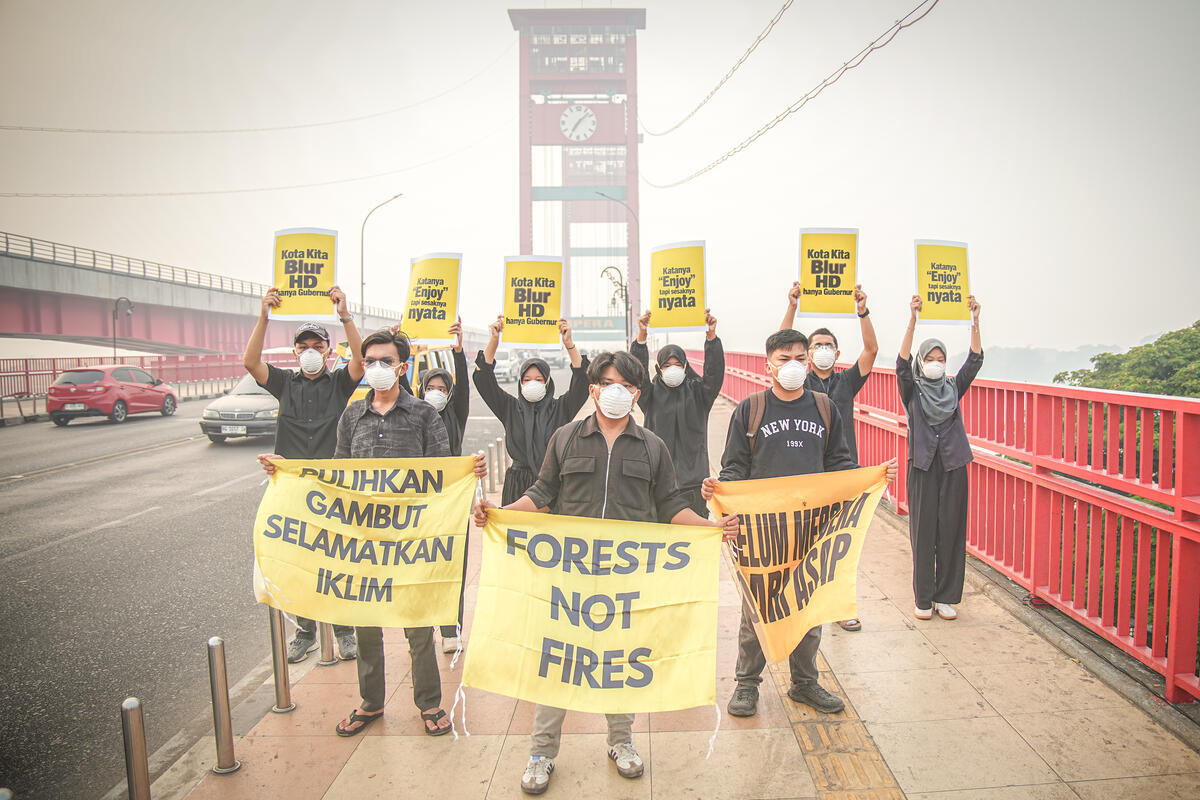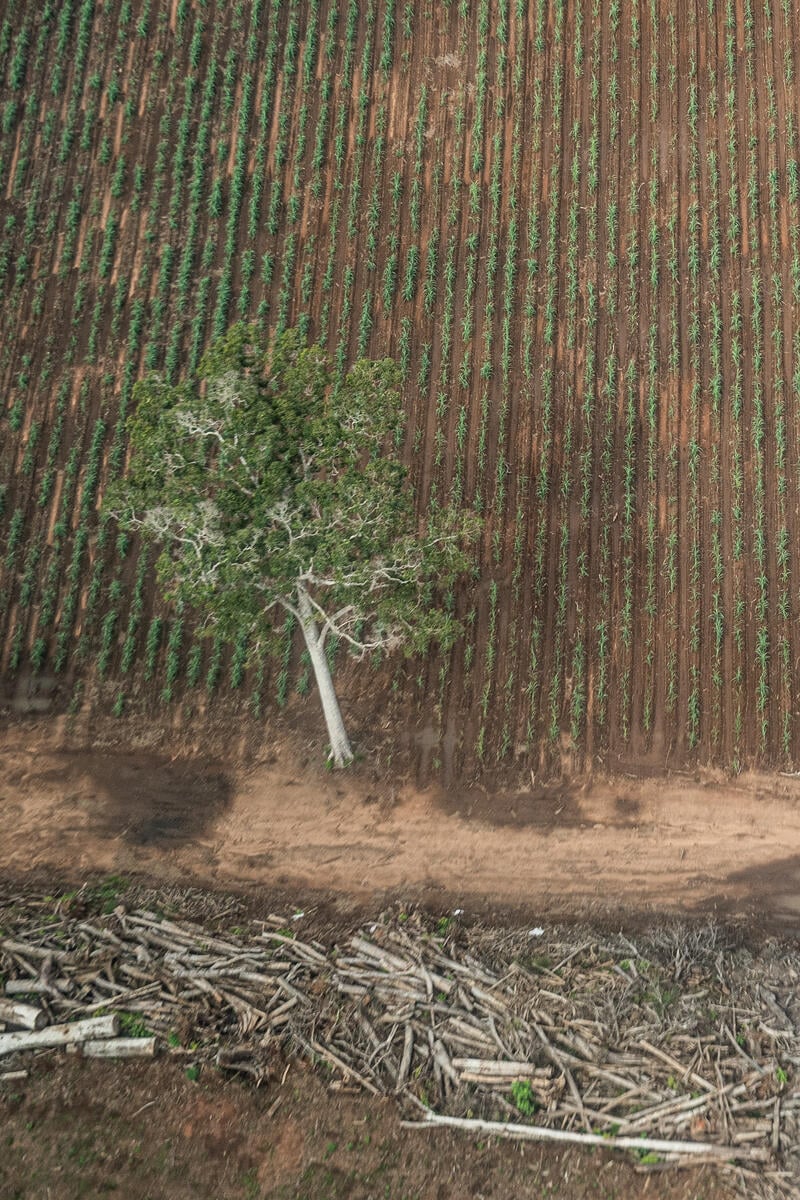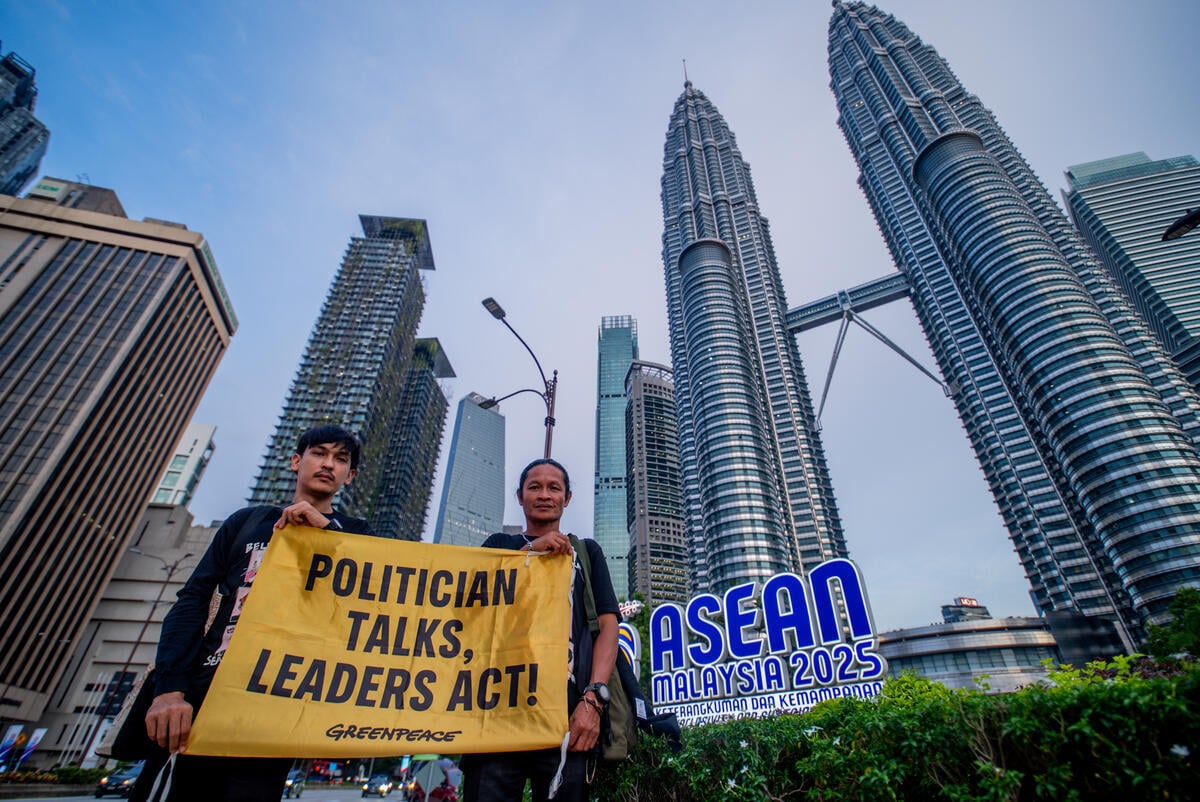
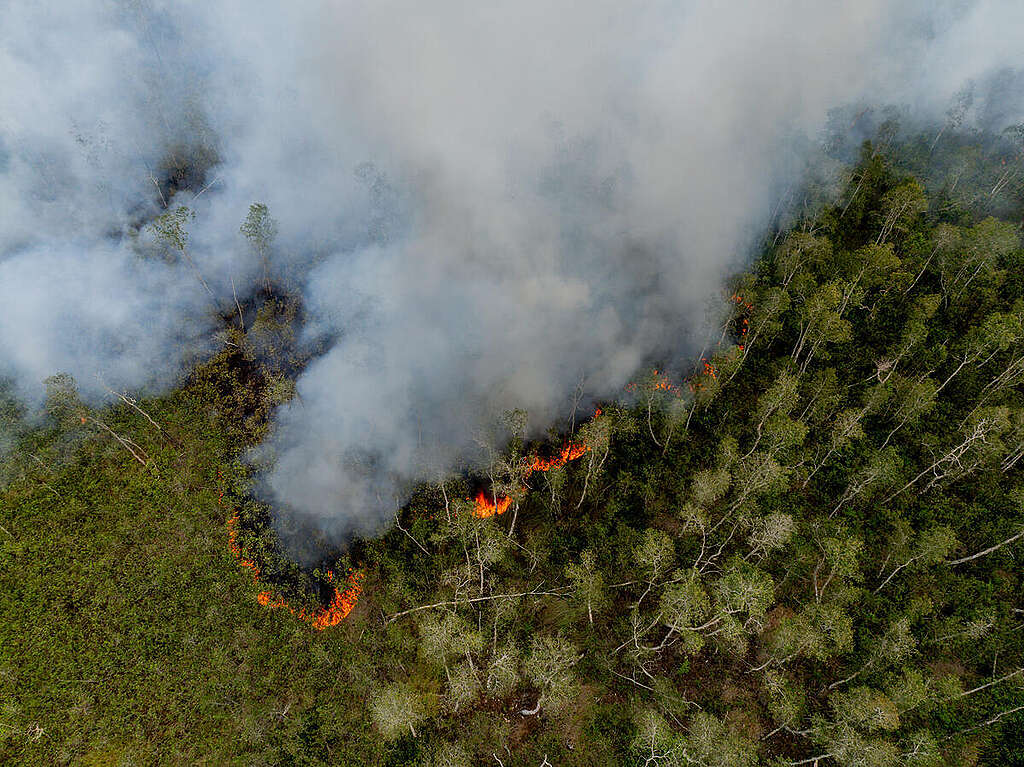
Jakarta, 13 November 2026–Greenpeace Indonesia and Greenpeace Malaysia launched a new report revealing findings on the extent of haze from forest and peatland fires in Indonesia. Among the findings are data on haze-source points inside oil palm and pulpwood plantations with connection to business groups or holding companies domiciled in Singapore and Malaysia.
Greenpeace analysis found 17,390 haze-source spots across Indonesia between 8 August to 31 October 2026, with 1,776 haze-source spots detected inside 46 palm oil concessions and 2,586 spots within 28 pulpwood concessions.[1] More than 40 pulpwood and palm oil companies with connections to Singaporean and Malaysian companies were found to have haze-source spots inside their concessions.
Among the Malaysian-linked business interests identified in the analysis are concessions associated with Genting, IOI, and Kuala Lumpur Kepong (KLK). These include PT Globalindo Agung Lestari in Central Kalimantan, associated with Genting, where 50 haze-source points were recorded; PT Sukses Karya Sawit in West Kalimantan, associated with IOI, with 24 points; and PT Menteng Jaya Sawit in Central Kalimantan, associated with KLK, with 19 points. It is worth noting that the detection of haze-source points within these concessions does not, on its own, establish who started the fires or determine corporate liability but instead warrants further investigations and the corporate links of these business entities.
Meanwhile, among the Singaporean-linked companies identified in the analysis are PT Damai Agro Sejahtera, associated with Bumitama (52 haze-source spots); PT Kayung Agro Lestari, associated with Fangiono Family/First Resources (26 haze-source spots); and PT Bumi Mekar Hijau, associated with APP/Sinar Mas/Wijaya Family. The last of those, PT Bumi Mekar Hijau, was identified as having the most haze-source points (1,056) and is among companies that received preventive measure notices from Singapore’s National Environment Agency.
“As demands mount for accountability for transboundary haze, we call on Southeast Asian governments to adopt new strategies beyond the “ASEAN way”. Transboundary haze is a transboundary problem, and therefore we need transboundary accountability. This year’s haze has deprived citizens of their right to clean air, and the fires have undoubtedly jeopardized efforts to protect nature amid the twin climate and biodiversity crises,” said Kiki Taufik, Greenpeace’s global head of Indonesia forest campaign.
Mapping platform Nusantara Atlas estimates that this year’s fires have burned 2.8 million hectares of land, with 60 percent fires occurring inside forest areas. Months of forest and peatland fires have also elevated Indonesia to the unedifying position of world’s highest contributor of carbon emissions as of 31 October 2026, according to Copernicus’ fires emissions monitoring. [END]
Editor’s Note:
[1] Companies listed in the report are entities with a minimum of 10 haze-source spots.
Read the full report “Days Full of Haze”.
Media contact:
Budiarti Putri, Communications Campaigner for Greenpeace Indonesia, +62 811-1463-105
Greenpeace Indonesia additional media contact: +61 414 288 424