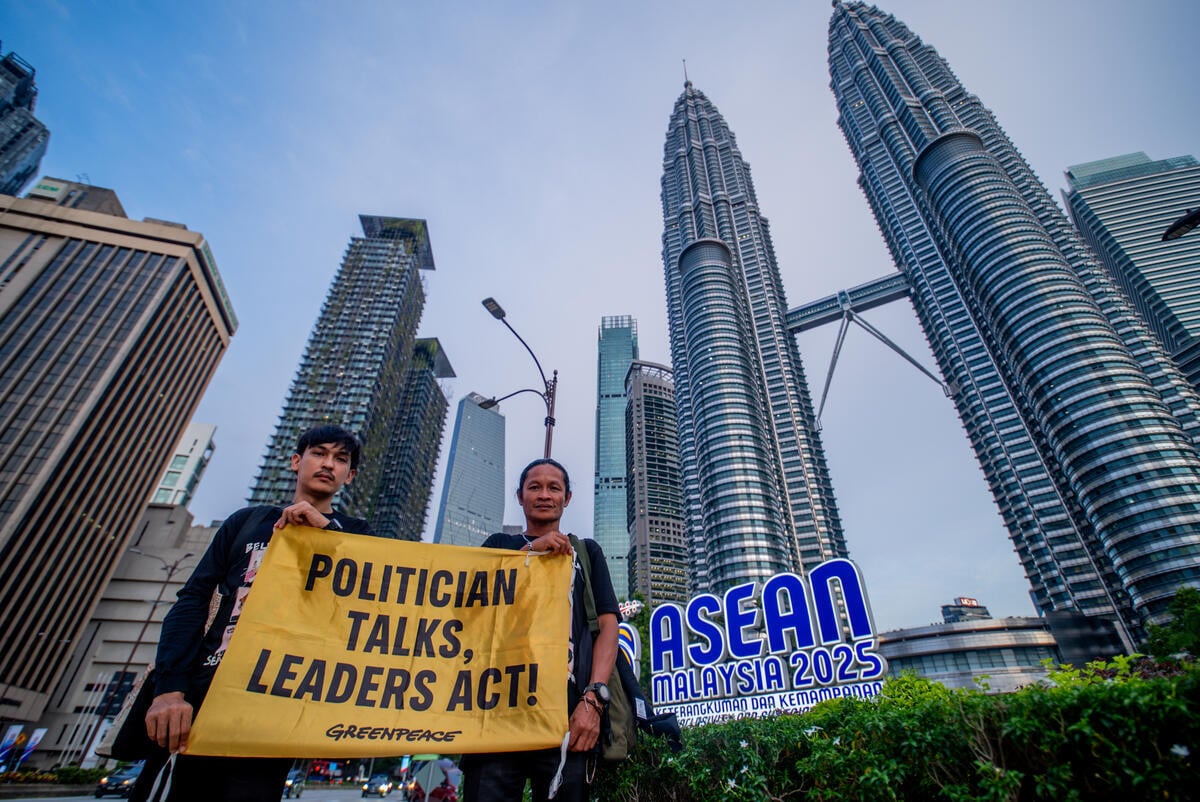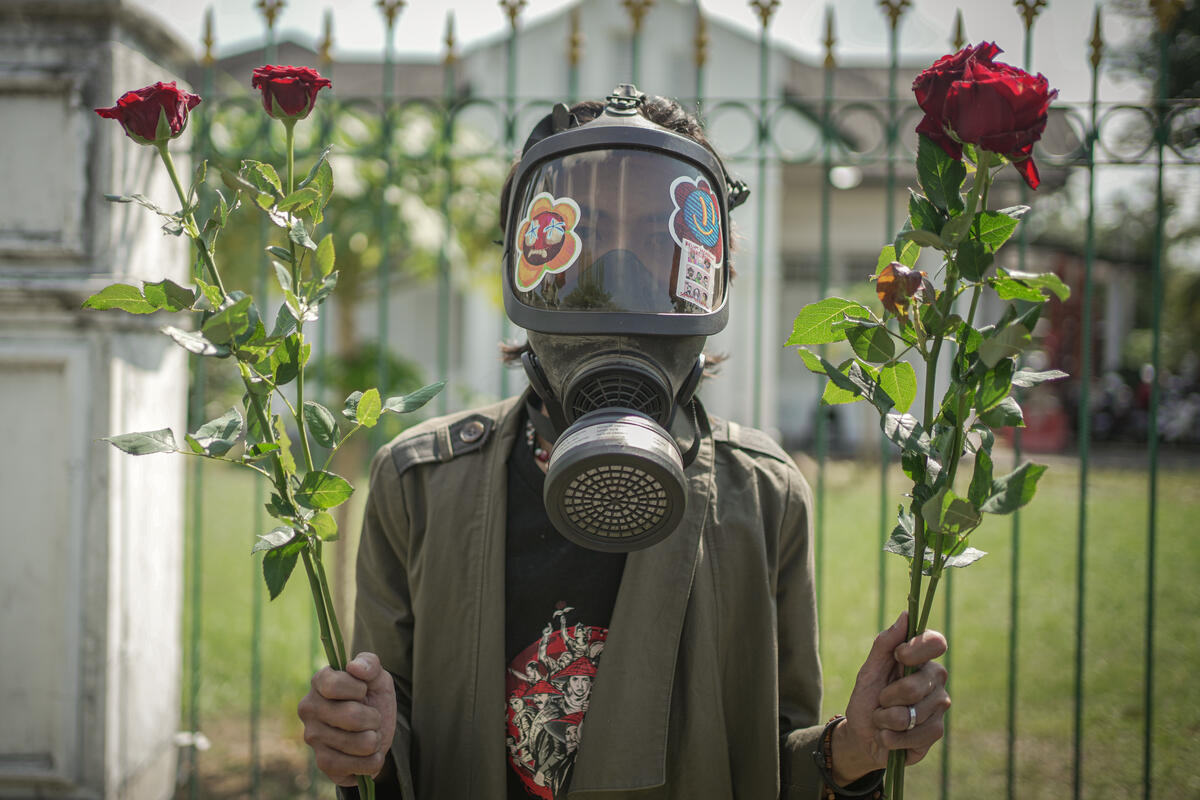
Jakarta, Indonesia, 9 October 2026. The announcement by Special Envoys Hashim Djojohadikusumo and Mari Elka Pangestu at the Indonesia International Sustainability Forum 2026 should be scrutinized properly. Hashim said that Indonesia ‘does not need to expand further the cultivation of rice in so-called forest areas’, as it has successfully reached rice self-sufficiency three years ahead of schedule. The Indonesian President’s brother added that rice self-sufficiency has been achieved without planting the 2 million hectares food estate project in West Papua.
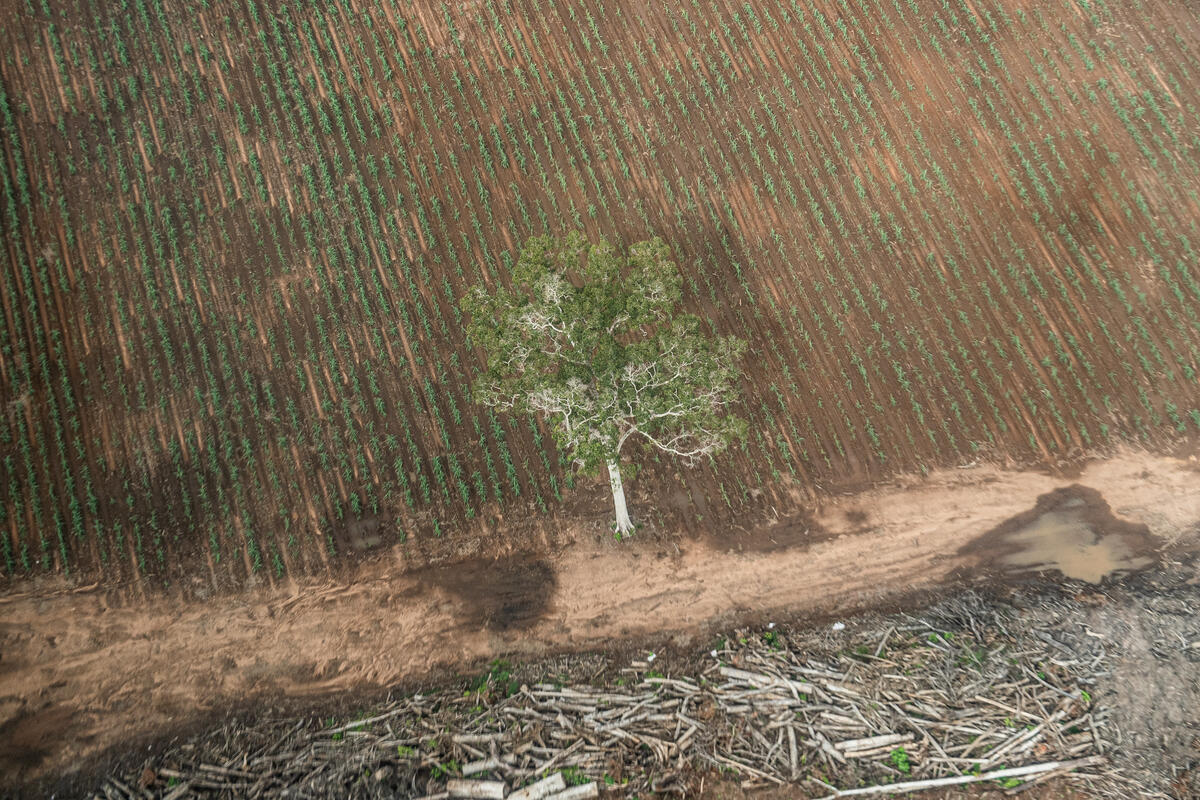
Mari Elka added that Indonesia will be using 12 million hectares of degraded land to increase food and biofuel production. But a clarification from the Forestry Ministry in a statement to journalists indicates that Hashim’s statements are not yet backed by clear information.
Greenpeace Indonesia’s forest campaigner Refki Saputra said, “At first glance, this sounds like good news for the Indigenous communities in the southern part of Papua who have been fighting against the large-scale food and energy projects run on their customary lands. However, the claims made by Hashim and Mari Elka require careful examination as they contain distortions of information and could potentially raise problems in the future.”
The claims about rice self-sufficiency, as Hashim quoted from the Minister of Agriculture Andi Amran Sulaiman, do not fully reflect actual situation. Indonesia did not import rice in 2017-2020 and 2022, but it imported rice in other years due to specific circumstances. In 2023, rice imports reached approximately 3.06 million tons due to El Niño conditions.
In fact, the Indonesian government’s national strategic projects (PSN), including rice paddyfields and sugarcane plantations for bioethanol in southern Papua, have already come at the expense of customary forests, land, and wetland ecosystems that serve as life-sustaining environments for Indigenous communities. Swamp ecosystems, like peatlands, are home to biodiversity; they are not the empty tracts of land that Minister Amran claimed have been magically transformed into productive land.
The food estate project in Merauke has cleared 9,871 hectares of land by January 2026.[1] Greenpeace’s satellite analysis found deforestation within the forest area granted to the Ministry of Defense, specifically along a 135-kilometer roadway from Wanam village to Muting subdistrict.[2] By February 2026, deforestation had affected nearly 7,600 hectares.
Indonesian government has ignored public protests on the food and energy projects in West Papua. It instead deploys military personnel to secure the projects, a move that perpetuates terror, intimidation, and trauma to West Papuans.
To smooth the path for PSN, both the former and current Indonesian administrations have been maneuvering through regulations. For instance, the ‘forest areas for food security’ (KHKP) regulation, issued in 2020, allows forest areas to be designated for food security purposes. Yet in reality, it merely facilitates deforestation.
Southern Papua has become an epicenter of forest and land fires. Greenpeace satellite analysis found 1,413 haze-source spots in the area from August 8 to October 1. The haze source spots were also detected in ecologically significant areas, including inside the national park in Merauke, and in areas linked to the PSN, including around the 135-kilometer road project.
“Therefore, we see Hashim’s statements as wordplay. If the government truly acknowledges that food security does not require clearing forests, it must establish some proof, as in reality the PSN in Merauke has triggered deforestation, environmental destruction, and violations of Indigenous Peoples’ rights,” Refki Saputra added.
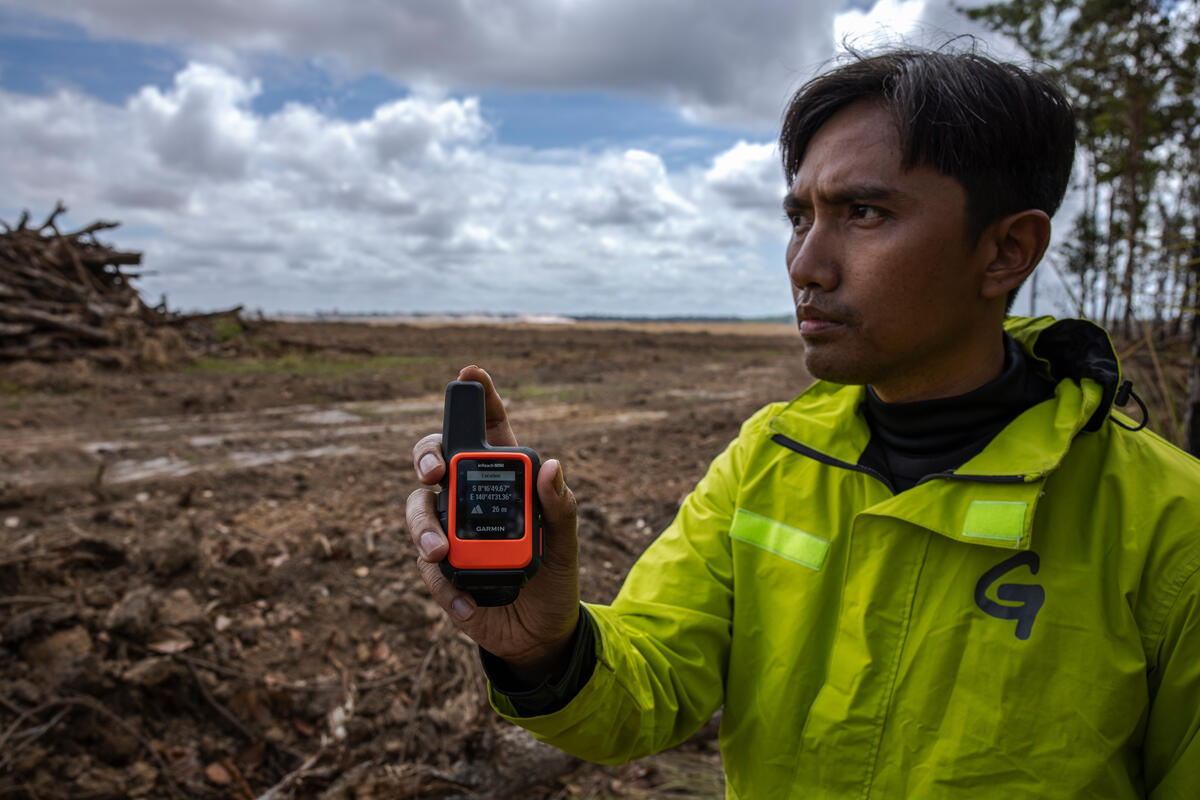
Indonesian government has allocated around 2.7 million hectares of land in southern part of Papua for food, energy, and water projects, claiming the mission is to ensure self-sufficiency. Beyond developing new ride paddy fields, the plan includes sugarcane for bioethanol, oil palm plantations for biofuel, and livestock farming. The government has also released nearly half a million hectares of forest, with 328,000 hectares already granted to PT Agrinas Pangan Nusantara for cultivation.[3]
‘Degraded Land’ Transparency
Indonesian government has also never disclosed specific locations of the 12 million hectares of degraded land it plans to use for future programs. In reality, some of the country’s degraded lands are peatland landscapes destroyed by drainage for industrial plantations and subsequently suffering recurring peatland fires. Not all of them are suitable for agriculture.
The government must restore degraded lands rather than impose extractive activities on them. Restoration must address environmental and social aspects, as those degraded lands may have supported local communities’ livelihoods before they were destroyed.
Greenpeace’s global head of Indonesia forest campaign, Kiki Taufik, stated, “Amid the government’s boastful promotion of bioethanol (E20) and biodiesel (B60) programs, the statements made by Hashim and Mari Elka ring hollow regarding ‘sustainability.’ If the government is truly serious, it must halt the program which currently is driving forest destruction, backed by the military and regulatory ‘red carpet,’ and allegedly marred with conflicts of interest.”
“Papua is not empty land or a reserve for industrial expansion; its forests are the ancestral homelands of Indigenous Peoples, sources of food and water, bastions of biodiversity, and the foundation of Papua’s future. The government must halt the PSN in South Papua and various extractive projects across Tanah Papua. It must also evaluate and stop projects that threaten natural forests, critical ecosystems, and Indigenous territories. There is no other choice if we want to save our communities and biodiversity from the impacts of the climate crisis. No path to food sovereignty and sustainable development comes at the expense of forests, Indigenous rights, and the future of Papua,” said Kiki Taufik. [END]
Editor’s Note:
[1] The area of land clearing was acknowledged by Johnlin Group’s survey team. Jhonlin Group, owned by Andi Syamsuddin Arsyad, an Indonesian businessman closed to President Prabowo, has been involved in the food project from the very beginning.
[2] Five Indigenous Marind people from Merauke filed a lawsuit to challenge the environmental permit of the 135-km road. Read more.
[3] PT Agrinas Pangan Nusantara is a state-owned food and agriculture company, which is fast becoming a powerful body under President Prabowo administration. But it’s also under criticism due to concerns about accountability and conflict of interests.
[4] The ‘red carpet’ regulations for these projects include environmental permit for the construction of the 135-km Wanam-Muting road, Forestry Ministry Decree Number 591/2025 releasing forest area, and the granting of cultivation rights to PT Agrinas Pangan Nusantara.
Contact Media:
Budiarti Putri, Greenpeace Indonesia’s communications campaigner, [email protected]