[Download Inside the Merauke Sugarcane Project report]
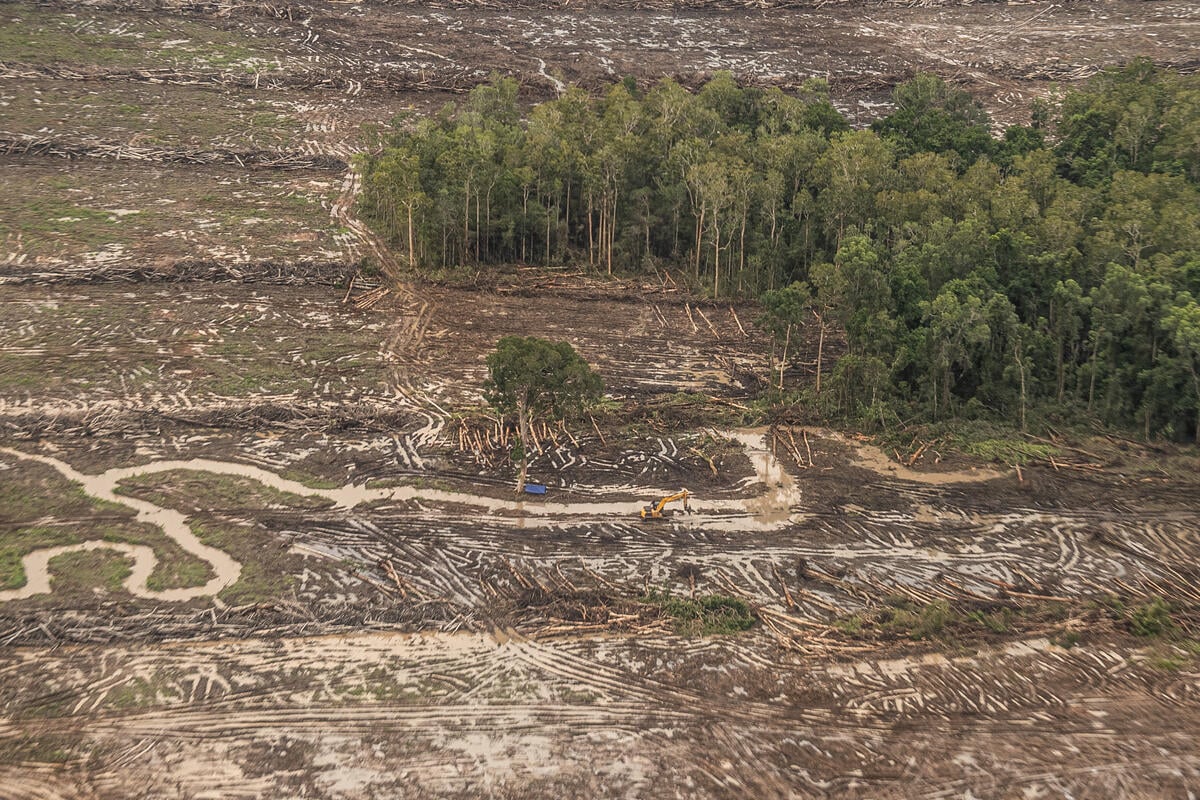
Travellers flying over Merauke, on West Papua’s southern coast, have long been treated to a sight that’s hard to find remaining anywhere in the world: an expansive lowland filled with natural forests, savannahs, and vast wetlands. But these days, they’re also likely to see a landscape in the midst of change. Excavators turning green cover and blue creeks into brown mud. Felled logs piling up in rows.
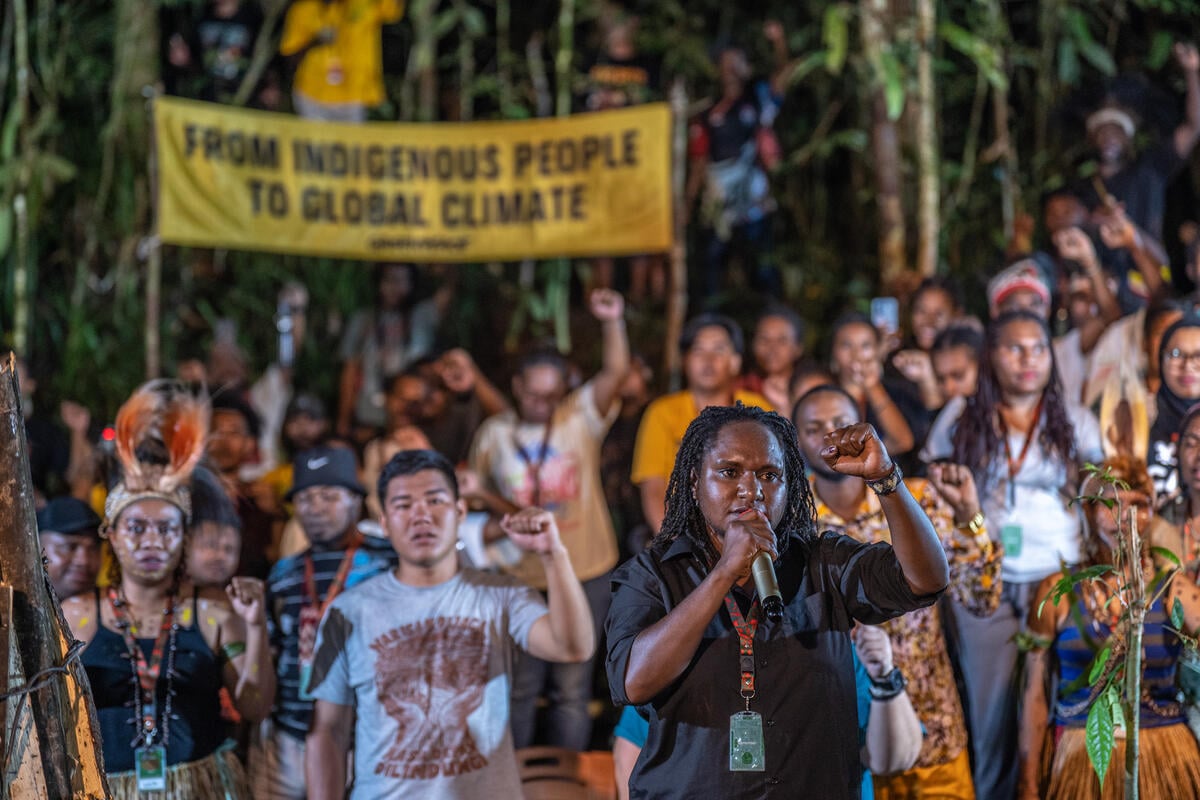
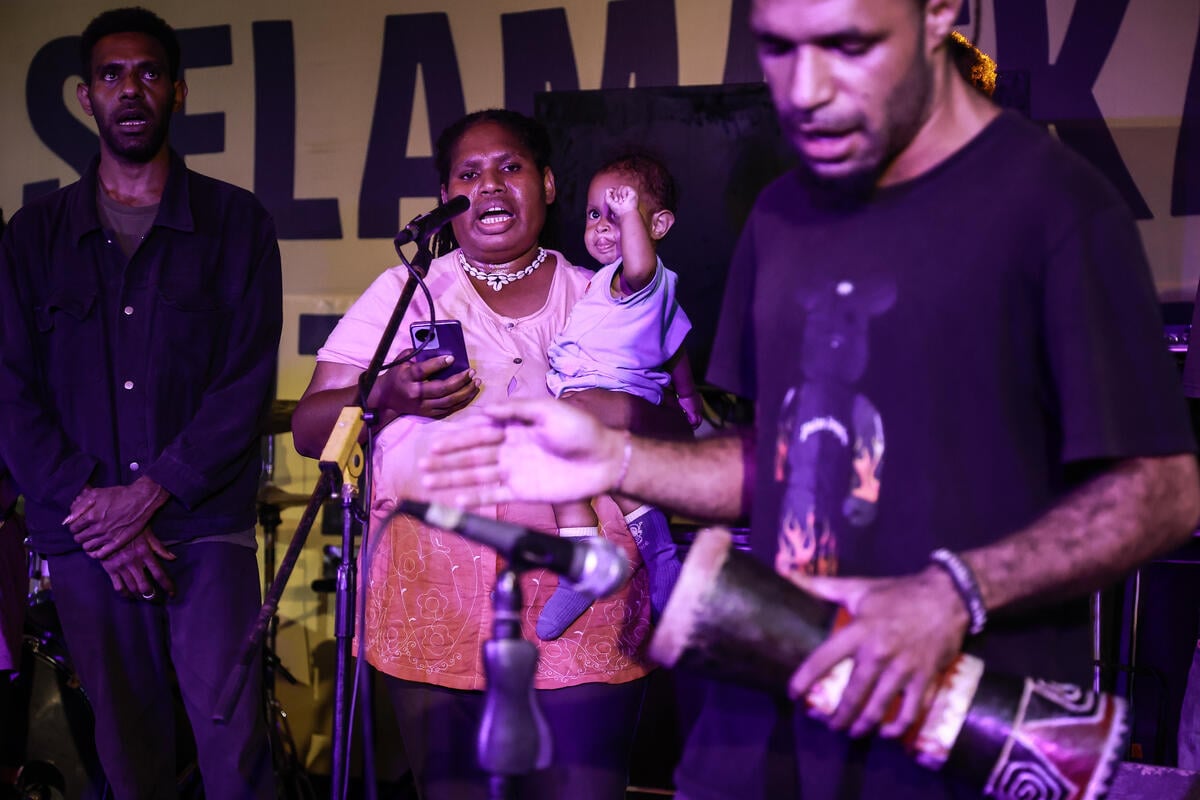
In the forests and riverside villages, Indigenous Marind, Yei Nan, and Muyu communities are anxious. This new destruction stalks their livelihoods and threatens land passed down through generations. Companies are even encroaching upon the customary territories of Indigenous Peoples who refuse to surrender their land.
In the Marind homeland, land grabbing and forest destruction are taking hold in the name of the Indonesian government’s program for food and energy self-sufficiency – designated as a National Strategic Project (PSN). President Prabowo Subianto has framed this ambition as strengthening national resilience to legitimize massive military involvement. A new Regional Military Command has been established in Merauke, estimated to house over 5,000 combat personnel. On the roads of Merauke, military vehicles and soldiers passing by have become a common sight. But for Indigenous West Papuans, given the military’s long history of brutal violence, their presence is a terror in itself.
The government’s rhetoric is harshly ironic, because in reality the project enhances neither food security nor political security. For many Marind, food security and political freedom means moving through their natural forests, savannas and wetlands, encountering abundant wild foods. Converting those landscapes into intensive monocultures such as sugar or oil palm plantations amounts to enslaving living organisms. As Marind woman Rafaela explained to environmental anthropologist Sophie Chao: “Free beings make free food. Forest foods taste of freedom. And nothing tastes as good as freedom.”
Greenpeace Indonesia investigated one of these government food and energy projects in West Papua, namely the Merauke Sugarcane PSN, which targets an area of 560,000 hectares – the size of the island of Bali. A consortium of ten companies is set to work on the project. Nine out of the ten are connected to two corporate groups with long track records in the palm oil industry.
If this sugarcane plantation project is not stopped, it will sow disaster through the destruction of West Papuan forests, which now serve as a global climate and biodiversity shield. Greenpeace Indonesia invites you, the reader, to join us in urging the government to stop the Merauke Sugar PSN and save Papua’s forests. As West Papuans say, ‘Papua bukan tanah kosong’ – Papua is not an empty land.
Read the Inside the Merauke Sugarcane Project report here (also available in Indonesian).
Key points:
- A consortium of ten companies is seeking to develop more than 560,000 hectares of land – an area the size of Bali – for sugarcane plantations in Merauke.
- Clearing this natural vegetation could produce emissions equivalent to 221 million tonnes of CO₂, or as much as the annual emissions of 48 million cars.
- More than 23,000 hectares of forests, savanna, and wetlands were cleared within the last 18 months by two of the companies.
- The Kwipalo Clan, part of the Yei Indigenous People in Blandin Kakayo Village, continue to be forced to release customary rights, putting them in conflict with other clans in the vicinity; the Muyu People in Senayu Soa Village are threatened with eviction; and the Marind People in Domande Village are continuously harassed. The company employs every means necessary to obtain the release of customary territories for sugarcane land.
- Militarism is intensifying and makes Indigenous communities fearful. The military assists companies in obtaining customary right releases, even establishing new battalions inside company concessions.
Links:
- Inside the Merauke Sugarcane Project report
- Photo and videos from Merauke
- West Papuan Protest Against Merauke Sugarcane Nat. Strategic Project
Media contact:
Igor O’Neill, Greenpeace Indonesia, [email protected] +61 414-288-424
Refki Saputra, Greenpeace Indonesia, +62 852-6351-5392