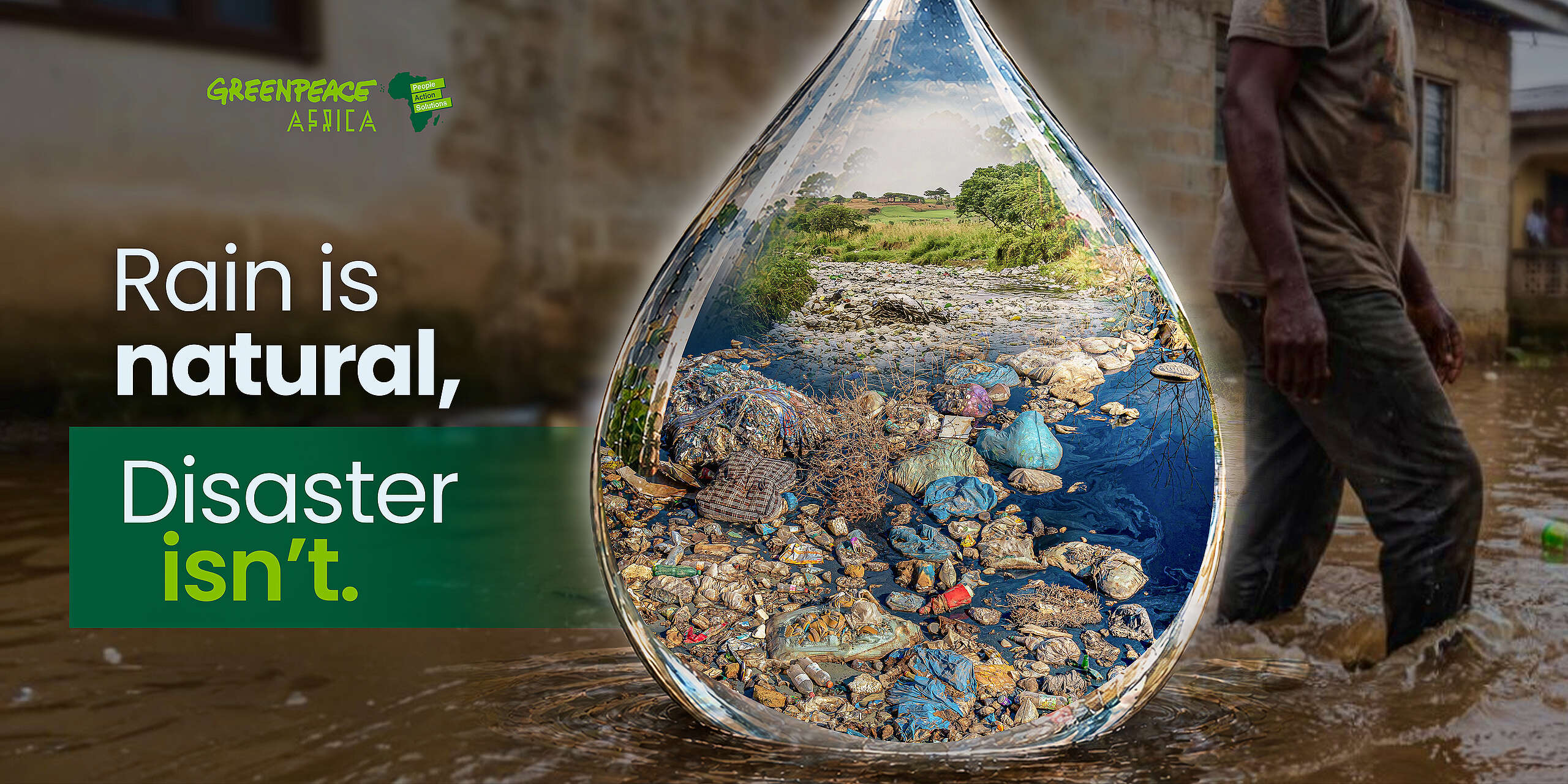
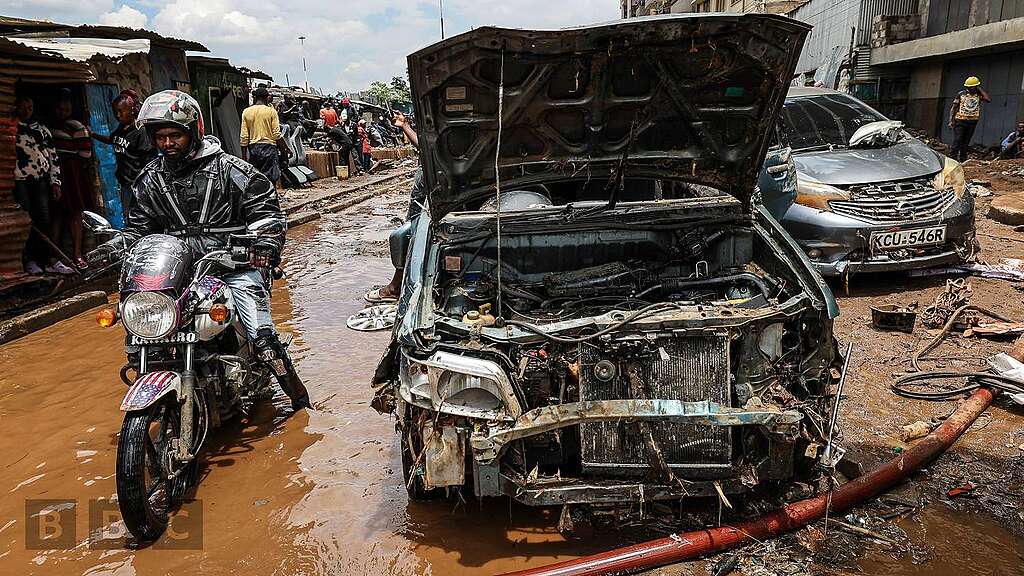
As I write these words, parts of Kenya remain submerged. Since the night of March 6, floods have claimed at least 66 lives and forced more than 2,000 families from their homes.
In the Democratic Republic of Congo, the Congo River reached its highest level in sixty years in 2024, leaving nearly two million people in distress.
Off the coasts of Senegal and Ghana, sardinella catches have declined by 80% within a single generation, threatening the food security of millions who depend on artisanal fishing.
These are not isolated or unpredictable events.
They share a common root: climate disruption. A crisis driven by rising temperatures, the relentless expansion of fossil fuels, and decisions made by governments and corporations that knowingly chose to ignore the consequences.
In the face of this reality, sounding the alarm is no longer enough.
It is time to act.
That is why Greenpeace Africa is bringing this issue before the African Court on Human and Peoples’ Rights. This intervention is part of a broader request for an advisory opinion led by the Pan African Lawyers Union on the climate obligations of African states.
SUPPORT LANDMARK CHANGE TO AFRICAN LAW ACROSS THE CONTINENT
Let’s tell the African Court to put climate justice into law.
We are participating as amicus curiae to address a fundamental question: do states and corporations have a legal duty to protect African populations from the impacts of climate change?
The answer is unequivocal.
Africa accounts for no more than 4% of global greenhouse gas emissions. Yet 17 of the 20 countries most vulnerable to climate disasters are on this continent. Nearly two-thirds of industrial CO₂ and methane emissions since 1751 can be traced back to just 90 companies—the “Carbon Majors.” A person in the UK emits in two weeks what someone in Burkina Faso, Ethiopia, or Malawi produces in a year. And 98% of African children face high or extreme climate risk.
The African Charter guarantees every individual the right to a healthy environment. It also requires states to protect their people from all forms of exploitation.
These are not abstract principles. They are binding legal obligations. And for the first time, they are being called upon to address the climate crisis.
This moment is a turning point.
A favorable advisory opinion would make it clear that protecting populations from climate change is not a political choice, but a legal duty. It would affirm that the continued expansion of fossil fuel industries cannot come at the expense of human rights.
The implications are tangible.
It means ending the issuance of new licenses for oil, gas, and coal projects.
It means holding major fossil fuel companies accountable for the harm they cause.
It means factoring all emissions into environmental assessments.
It means recognizing and easing the financial burden the climate crisis places on African countries.
It means, ultimately, challenging extractive models that perpetuate climate inequality.
What is at stake today goes beyond a legal process.
It is an assertion of sovereignty.
An assertion of responsibility.
And an assertion of justice.
SUPPORT LANDMARK CHANGE TO AFRICAN LAW ACROSS THE CONTINENT
Let’s tell the African Court to put climate justice into law.
Africa is no longer waiting for others to define its response to the climate crisis. It is mobilizing its own institutions and legal frameworks to claim its rights and those of its people.
This is no longer about negotiation.
It is about enforcing the law.

Eugene Perumal
Greenpeace Africa, Governance and Legal Advisor