In Mbandaka, some realities cannot simply be explained — they must be lived. The forest is everywhere. It shapes the landscape, livelihoods, and the fragile balance that sustains daily life. And yet, this same forest is increasingly under threat.
In recent weeks, I have witnessed another kind of movement emerging. A quieter one, but no less essential. It begins in schools.
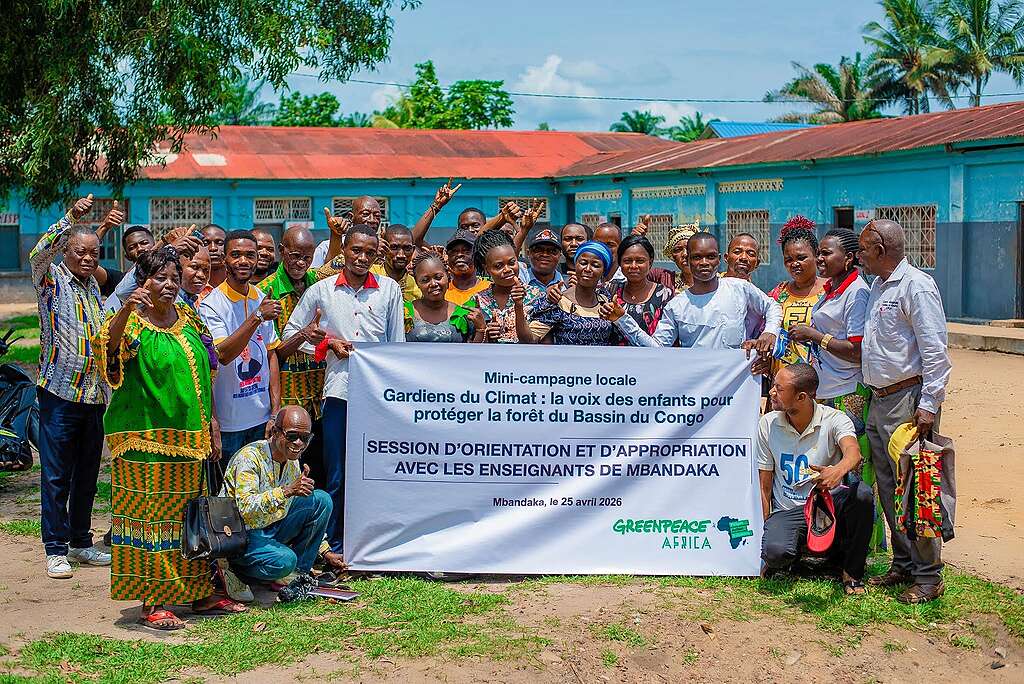
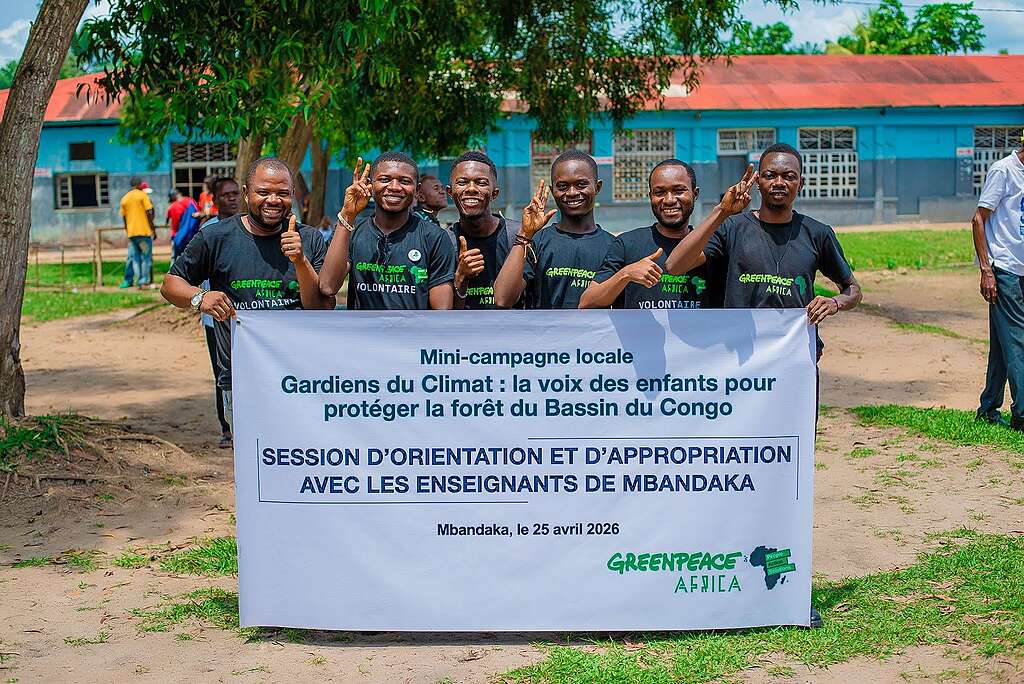
As part of the mini-campaign “Climate Guardians: Children’s Voices to Protect the Congo Basin Forest,” Greenpeace Africa volunteers organized an orientation session in Mbandaka. Around thirty teachers and administrative staff members from three primary schools — EDAP-ISP, Liziba, and Bosawa — took part in the session.
A key step in anchoring the program
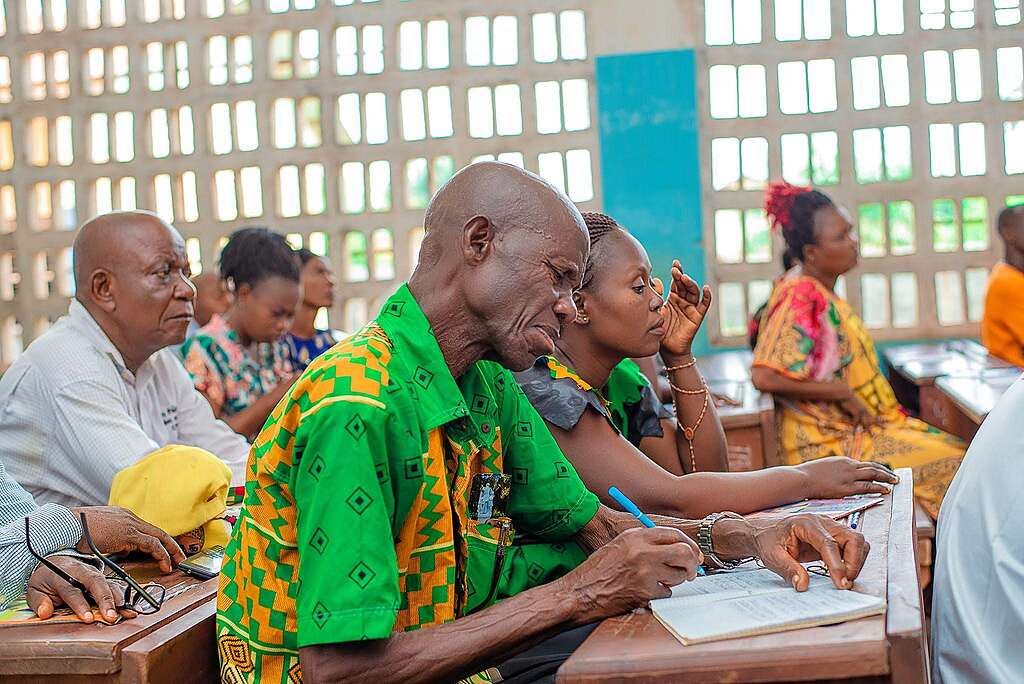
Hosted at EDAP-ISP Primary School, the meeting laid the foundations for the program. The objective was clear: share the vision, explain the planned activities, and most importantly, clarify the role schools would play. But very quickly, the discussion moved beyond the initial framework. Climate change and biodiversity were no longer discussed as distant or abstract concepts. Teachers spoke about what they are already witnessing: changing seasons, dwindling resources, and the growing difficulties faced by families.
At that moment, one thing became obvious: schools have a central role to play.
A generation ready to act
Speaking on behalf of the volunteers, Jarrys Bosenge, leader of the Mbandaka local group, emphasized the importance of the initiative: “We believe that protecting the Congo Basin forest also begins in classrooms. Educating children today means protecting our shared future tomorrow.”
He also highlighted the crucial role of teachers:
“Teachers are essential actors of change. With their guidance, children can become true environmental ambassadors within their families and communities.”
As I listened to him, I realized that this is exactly what this program is about. It is not only built around activities — it is built around human connections and local leadership.
When schools embrace the initiative
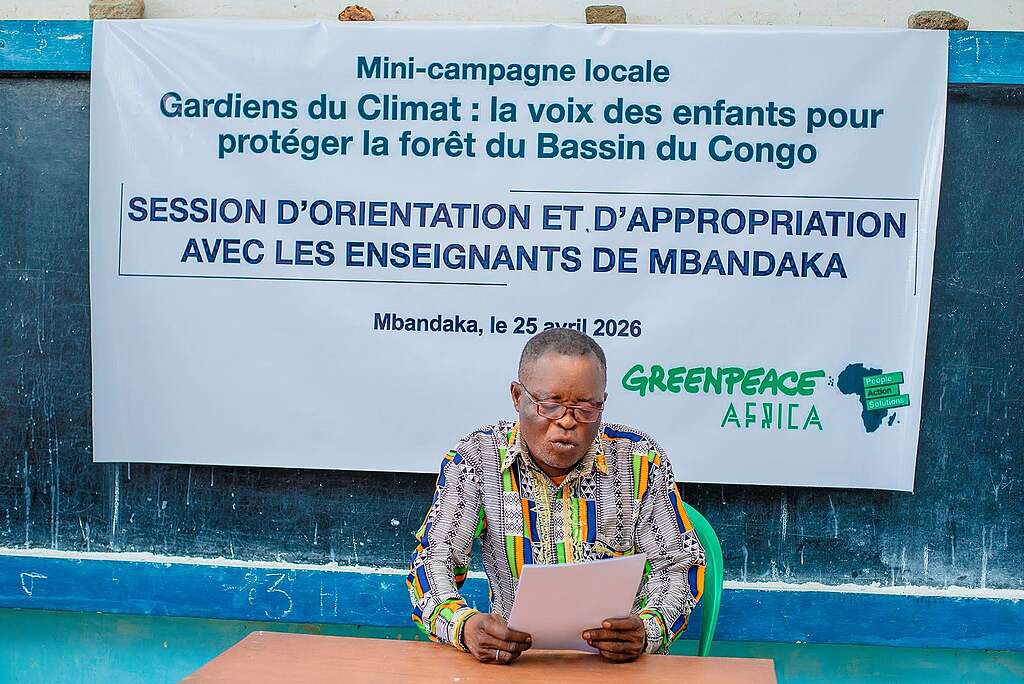
The support from the host school further confirmed this momentum. Mr. Jean-Pierre Iyola, primary pedagogical advisor at EP EDAP-ISP, expressed his commitment to the initiative: “We are honored to host this meeting. Schools have the mission not only to transmit knowledge, but also to shape responsible citizens.”
He continued:
“If our students learn from an early age to protect nature, they will become conscious leaders who are valuable to society tomorrow.”
His words gave greater meaning to what we were building together.
Children as voices for the forest
What makes this initiative different is the place given to children. They will not simply be beneficiaries of the program. They will be trained as “Climate Guardians,” capable of raising awareness among classmates, families, and communities.
Concretely, the program includes:
- mentoring 25 already identified Climate Guardians;
- establishing school-based learning gardens;
- organizing interactive educational sessions;
- implementing practical environmental activities;
- and producing a children’s manifesto to defend the Congo Basin forest.
These may appear to be simple actions, but they can create meaningful change if sustained over time.
A grassroots mobilization
What matters most to me, as a volunteer, is that this initiative was born here. It is led by volunteers based in Mbandaka who understand local realities and community challenges. That changes the entire approach. We are not trying to impose solutions. We are building something that makes sense for schools and for children. By mobilizing teachers and students, we are helping nurture a generation that is more aware, more engaged, and more connected to the future of the forest.
What comes next?
This first phase was important. But the most decisive part begins now. With the completion of the orientation phase, the program now enters a new stage: concrete activities with pupils.
This is where everything will truly take shape — in classrooms, on the ground, and in the way these children will embrace these issues and share them with those around them. In Mbandaka, something powerful is beginning to grow.
Because “Climate Guardians” is far more than a slogan. It is a commitment to the future. And that future is already taking root.