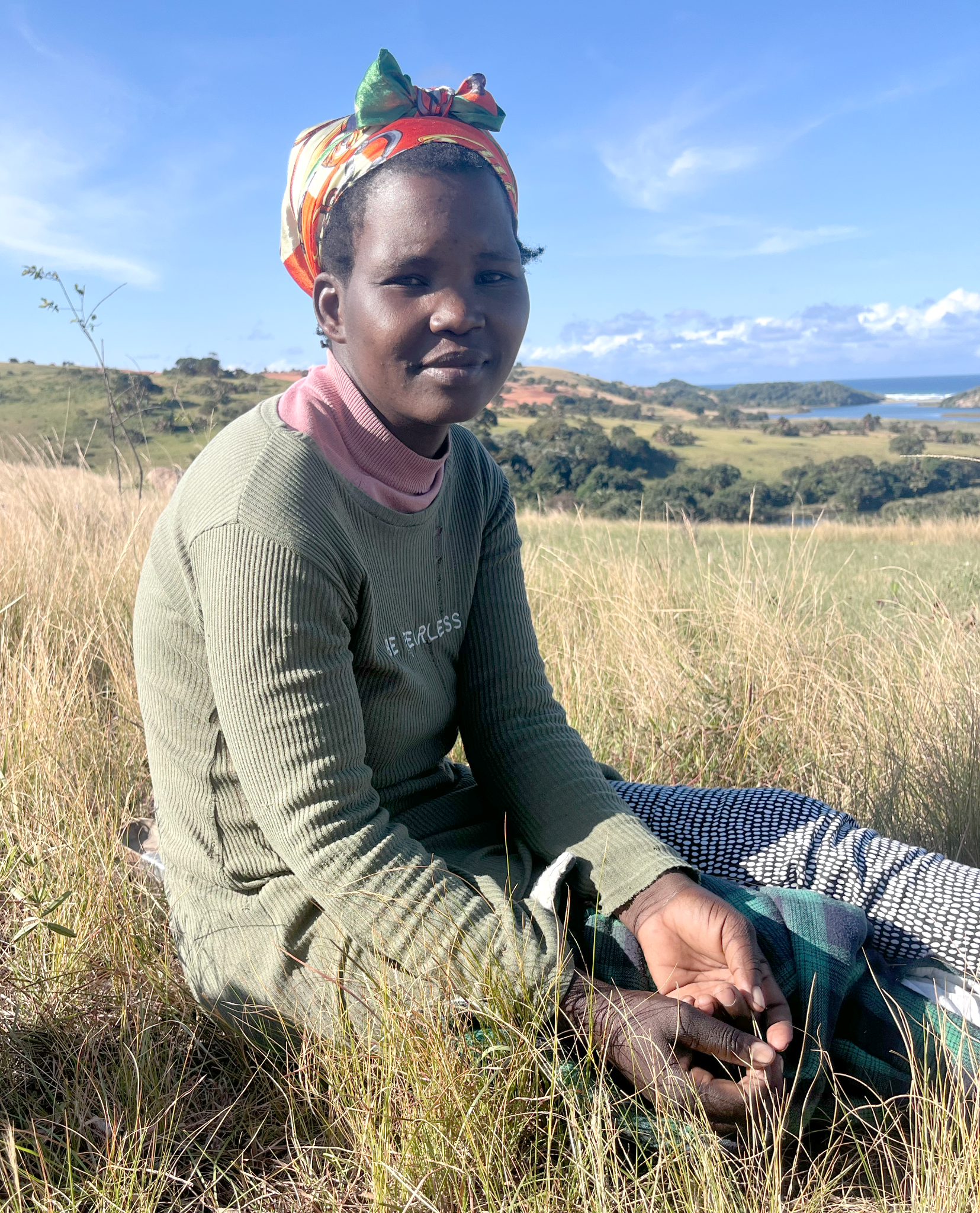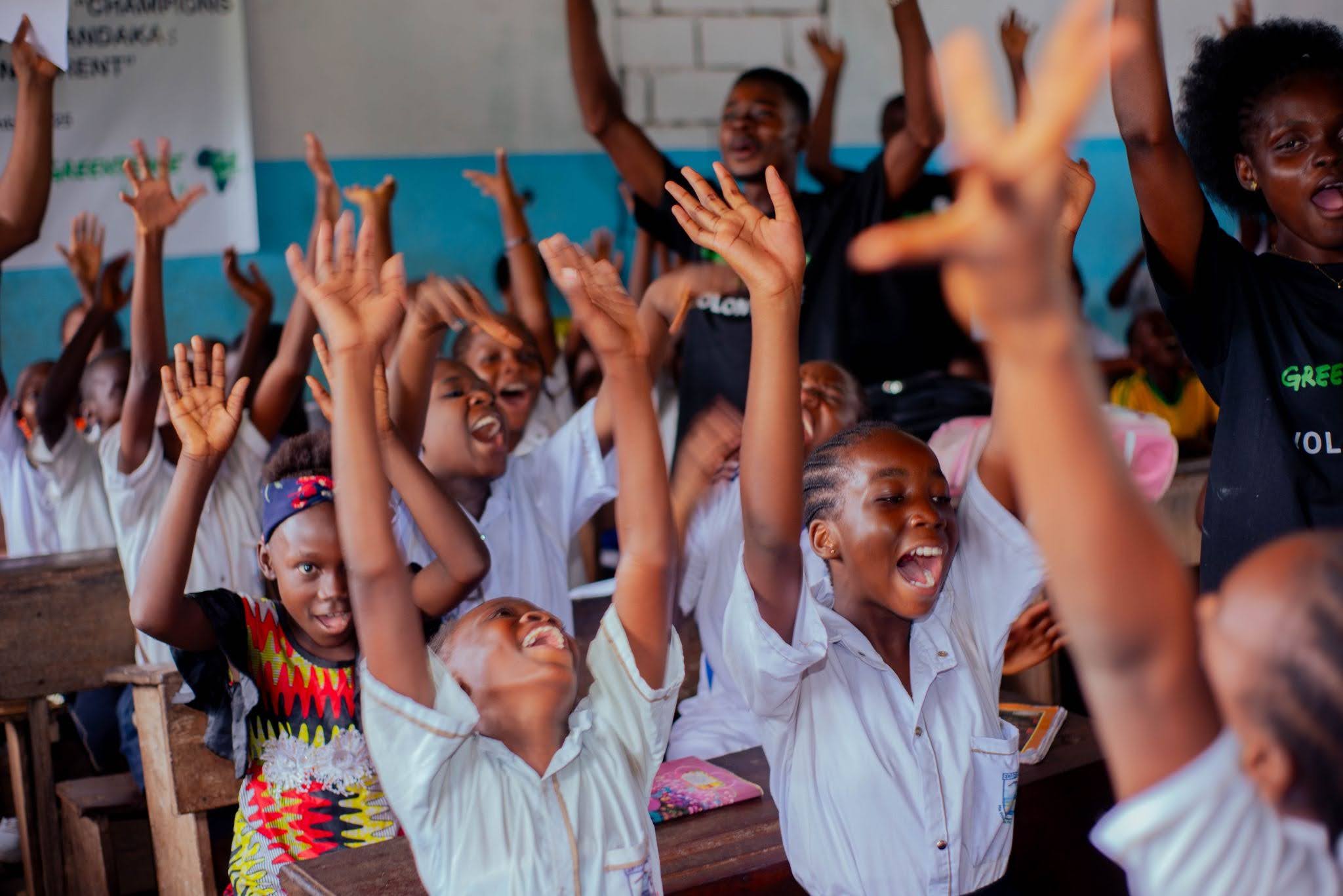
Politicians and corporate executives often push the narrative that oil and gas extraction is a development imperative. Travelling between Mthatha and Durban by bus, minibus taxi and foot, Greenpeace Africa volunteer Milan Burnett and photographer Tom van der Schijff spent 14 days in the Eastern Cape to gather perspectives from coastal residents on this narrative. Special thanks to our media editing and translation team: Lex Owen, Gulshan Stodel, Zimbini Quza and Caelin Nell. Thanks to Buhle Francis from Coastal Justice Network and Boyisile Mafilika from Masifundise Development Trust for advice. Find video coverage of this journey on Greenpeace Africa’s social media pages.
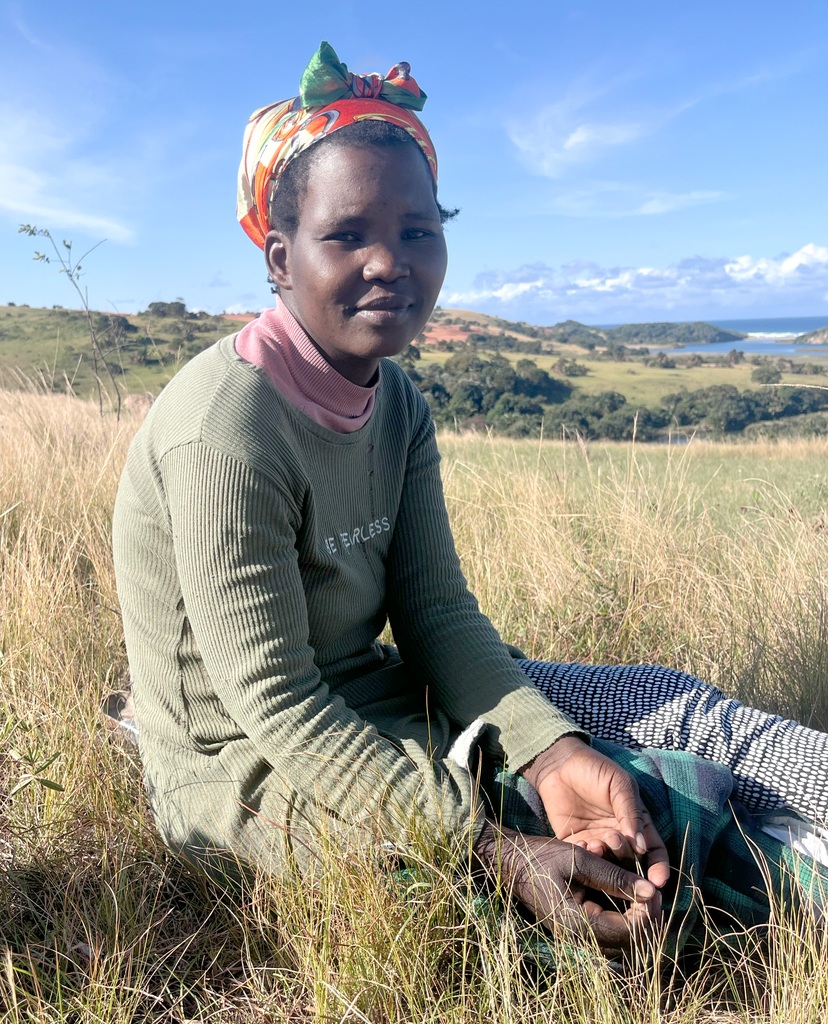
“When you are drilling in the ocean it feels like you are drilling in me,” said Zingisa Ludude, Eastern Cape Secretary of advocacy group Coastal Links. She continues: “Because the way I feel, the ocean is a living thing…It’s a threat to me when they are talking about this oil and gas because I am thinking about our people, about how we are going to survive…we want what we have to sustain us for generations and [for those] generations to come to enjoy what we have.”
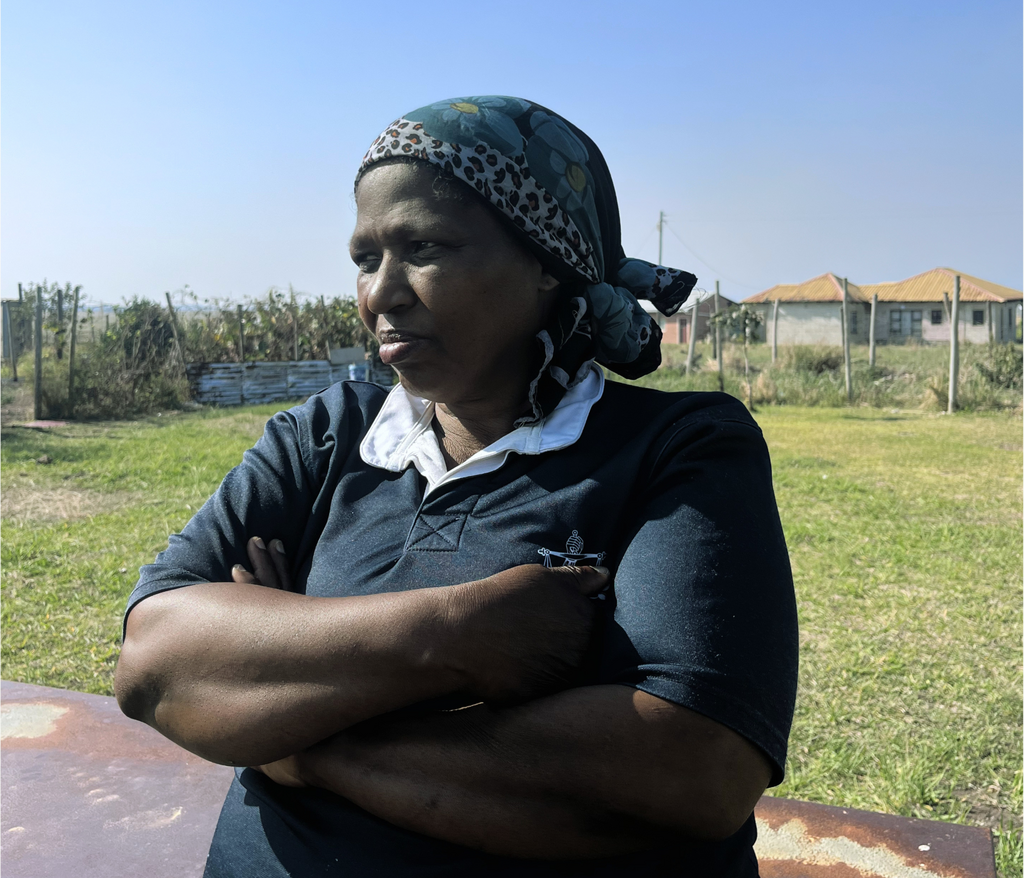
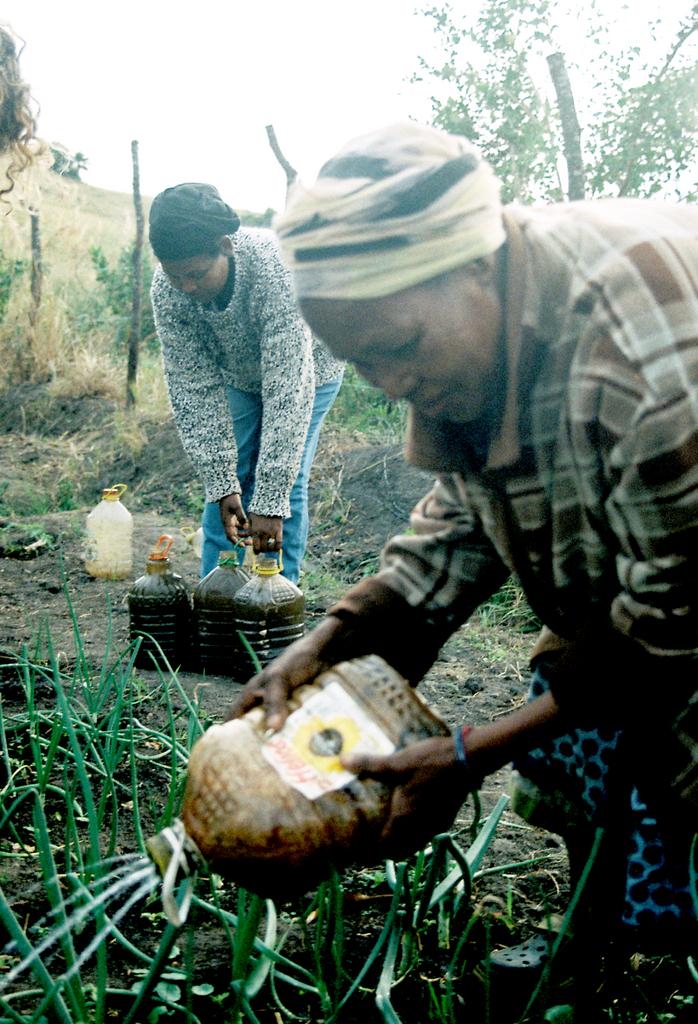
The Ludude family, like many families in the Msikaba area, are fishers. As Mam’Zingisa speaks to us on a cold July morning, she is surrounded by her neighbours, who are working in nearby vegetable gardens growing sorghum, pumpkin, red peppers and other veggies. Many residents of Msikaba and similar coastal areas have small-scale agricultural plots, harvest fish from the ocean to sell and eat, and are involved in the tourism economy.
The earnings of those ocean harvests have sent many children in this area to school or university, explained Mam’Zingisa, including her son, Wanda Ludude, who is a trained mechanic, fisher, and tour guide. To protect this reliance on the ocean, Mam’Zingisa has called for people around the country to join her in protesting oil exploration and mining: “Even the air we breathe is clean because of the ocean…all the people who are along the coast must speak in one word and say no to this mining and gas drilling because we cannot live [without the ocean].”
On this coastline, Mam’Zingisa’s call is part of a groundswell of resistance to Shell and Impact Africa’s exploration rights in the Indian Ocean. This resistance culminated in the Constitutional Court’s ruling on August 14th 2026 which ordered the exploration rights to be set aside.
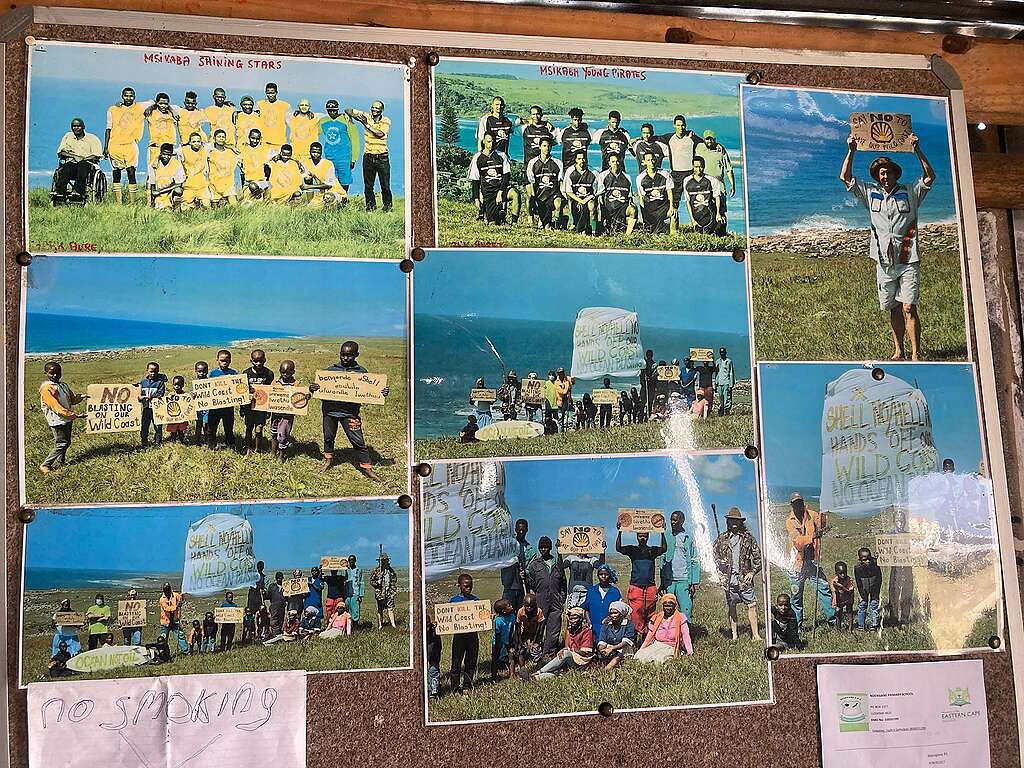
Part of this resistance has played out in the courts where community based non-profits are demanding accountability for oil companies which run roughshod over their rights to political and economic inclusion. Read more in Part 1 of this series. In a nearby spaza shop, a wall of photos commemorates the resistance in this area to Shell’s oil and gas applications. In other parts of the country, movements like Mining Affected Communities United in Action, Abahlali baseMjondolo, and many others, are pushing back on similar issues where activists say that human life and dignity, and that of future generations, is sacrificed in the name of profit.
Ludude is humble about her role in this movement. But she is proudly recognised by her son, Wanda, who said that “my mother played a big role in [resisting] the Shell mining.” Wanda is also one of many fishers in this area and around the country who joined his mother’s call to demand economic equality, participation in decision-making, and ownership: “They do not realise that mining will destroy everything that people benefit from and all marine life. All I ask is that we have control over our own land, instead of having others make decisions for us,” he said.

For Wanda, the resistance against Shell is grounded in ongoing struggles for ocean access and an inclusive economy, which he and other activists say inform their resistance to Shell. Wanda explained one of those struggles through a recent experience:
“Last month we went fishing at sea. We have fishing rights here at Ndengane. I am a member of the Msikaba mouth fishing cooperative. When we went out to sea, a boy was sent by one of the cottage owners to tell us we were not allowed to fish in the sea. We were in canoes, not motorboats. He threatened us and told us that we would be arrested…We even asked him what gave him the right to tell us that because we have fishing rights as the local cooperative. He undermined our intelligence and assumed we could not think for ourselves. The cottage owners do as they please. They even take our land to extend their properties and make decisions on our behalf…Here in South Africa, land belongs to the people who live in it so we are the people who are living in this land. If something is about to change, you must be consulted first.”
About 50 residents of about 10 Eastern Cape coastal villages told Greenpeace Africa a similar story: expanding oil and gas developments and laws that prioritise those with money. Many residents say they see massive trawlers granted fishing rights, while smaller-scale fishers receive small quotas. Follow Greenpeace Africa on social media to hear more testimony on these issues.
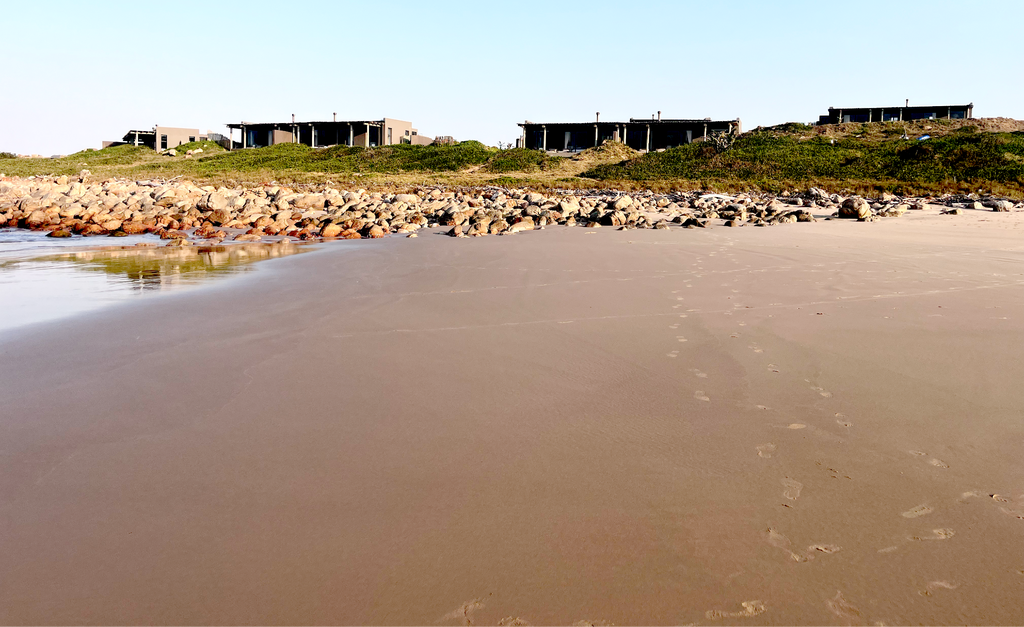
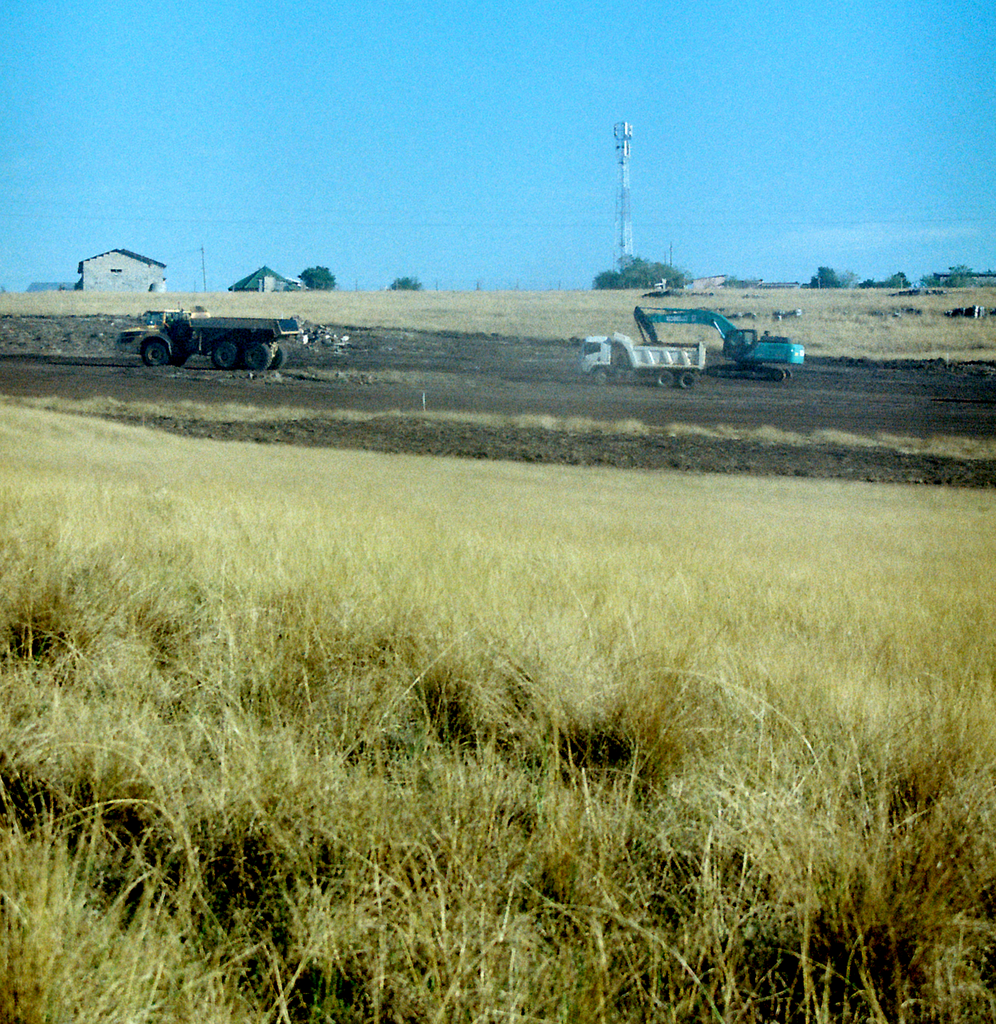
The Lududes and other residents of the area also say that developments like nearby multi-million rand beach lodges were set up without consent or involvement of surrounding communities, lodges which now prevent beach access and thoroughfare. Wanda and others say this is a trend of privatising the land and ocean by companies for narrow economic benefit:
“There is an inequality in terms of the law. There are so many times when we used to report the trawlers here catching our fish and going away, and the government officials do not do anything about that. What I can say is that those are unjust laws.”
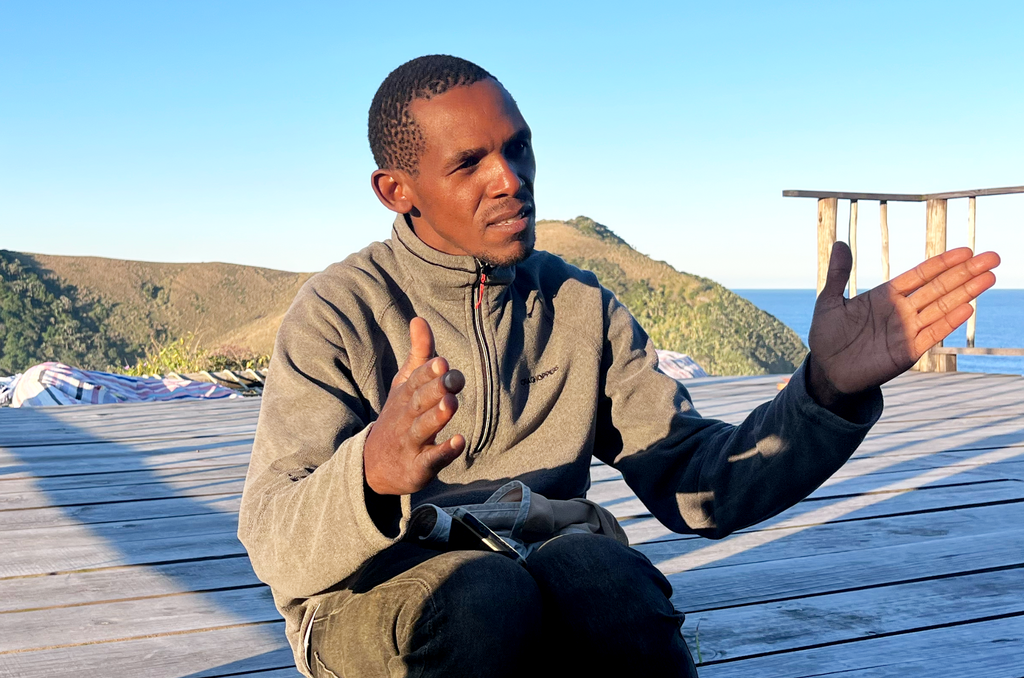
Wanda explains that this struggle is about who has the economic and political power to decide what development and what progress looks like. Oil developments and unequal quotas are two of the manifestations of that power, he said: “The politicians are unwilling to confront the heart of the matter. I want to understand why the government fails to come to us when we need them…They collaborate with capitalists and overlook communities like ours because we have no money…We want to stop being exploited by our government and its officials. We ask that our voices be heard too, just like the ones of those in power. So it is very clear that our voices don’t matter because the interests of wealthy people are prioritised.”
But politicians like James Lorimer, shadow Minister for Minerals and Petroleum Resources (DMPR), say that drilling oil will benefit people so that no one has to worry about putting food on the table. As Lorimer said: “South Africans need to decide if they want development or not, and if they do, it will be boosted…by fossil fuels.”
“The problem is that they are just Ministers, they are just politicians,” replied Mam’Zingisa. “If the politicians take the money [from oil extraction], they won’t give [it to] those people who are starving. That money can go to them, not to the people who are starving. I’ve seen people struggling. Someone who works in Parliament just writes down orders and demands money from those operations…What we want as fisher people is for the government to create a way for people to sustain themselves, to be equipped with all the skills needed to feed and sustain themselves with the things they get from the community. Not with things that destroy our sea. We don’t want our sea to be destroyed by mining.”

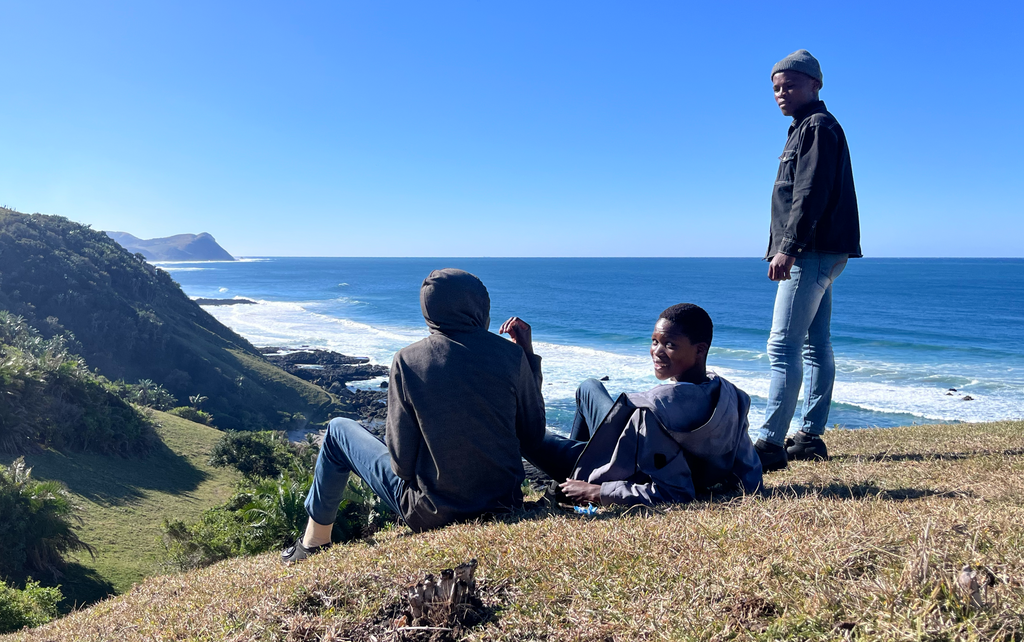
About 80 kilometres south of the Ludude family, Xolisani Mavela, father of four, is an active fisher and professional tour guide, leading hiking trails through the Eastern Cape. His lifelong friend, Sikanyeso Mdiya, is also an active fisherman and has recently started a homestay for visitors in Manteku. Their thoughts bounce off of each other in the evening light, as they kindle memories of their childhood together like a small fire. Both men were born in Manteku, a coastal village of about 500 residents, many of whom depend on the ocean for food and income, or small-scale agriculture.
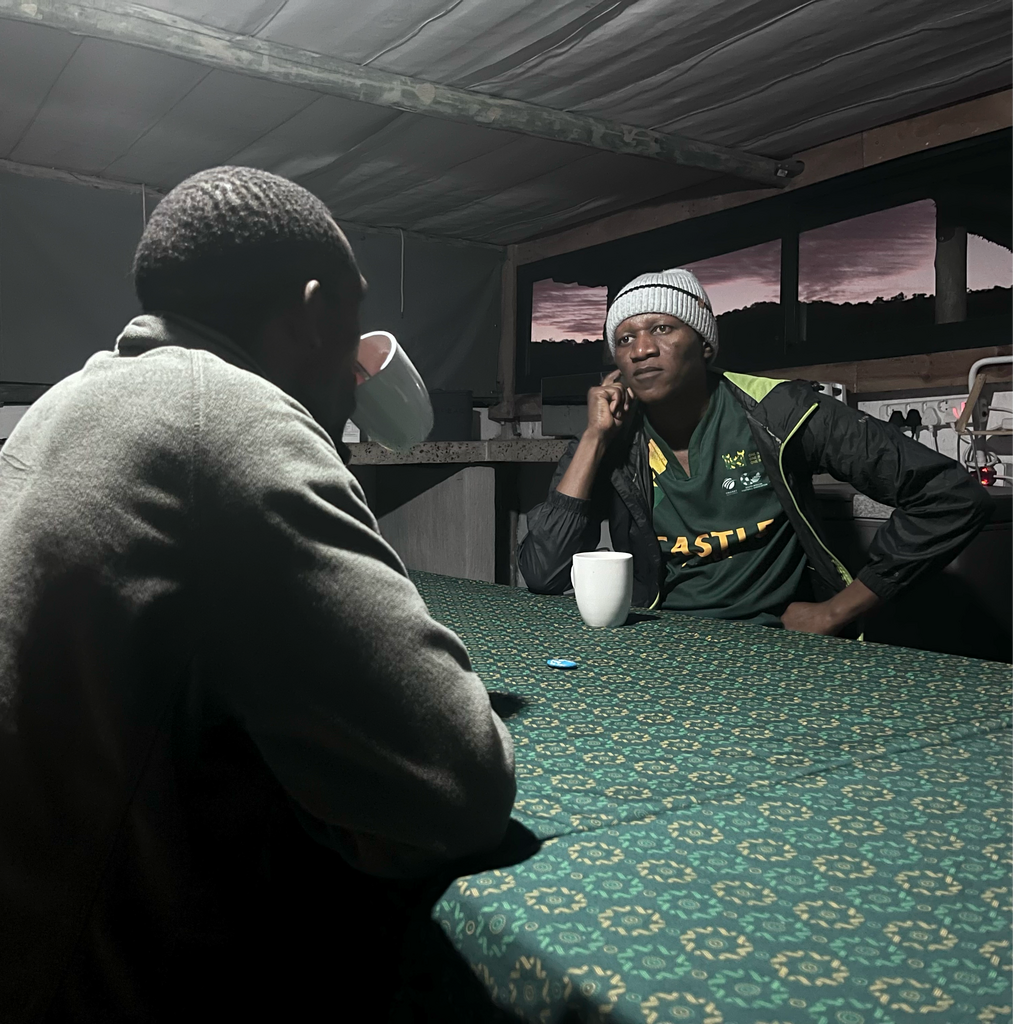
Mdiya and Mavela have depended on the ocean since their early years together. They were together the first time they navigated the currents of the Eastern Cape’s rivers. To teach Mdiya how to swim, Mavela used a cow crossing the river as a flotation aid, instructing his friend: “Swim across the river holding the tail of a cow in your hands, and kick your legs behind you.” So began what these men describe as a lifelong love of nature:
“I fell in love with nature when I was 6 years of age…since we were 9 years old we started fishing together. We know how important the ocean is. That is why we protect the ocean as much as we can,” said Mdiya.
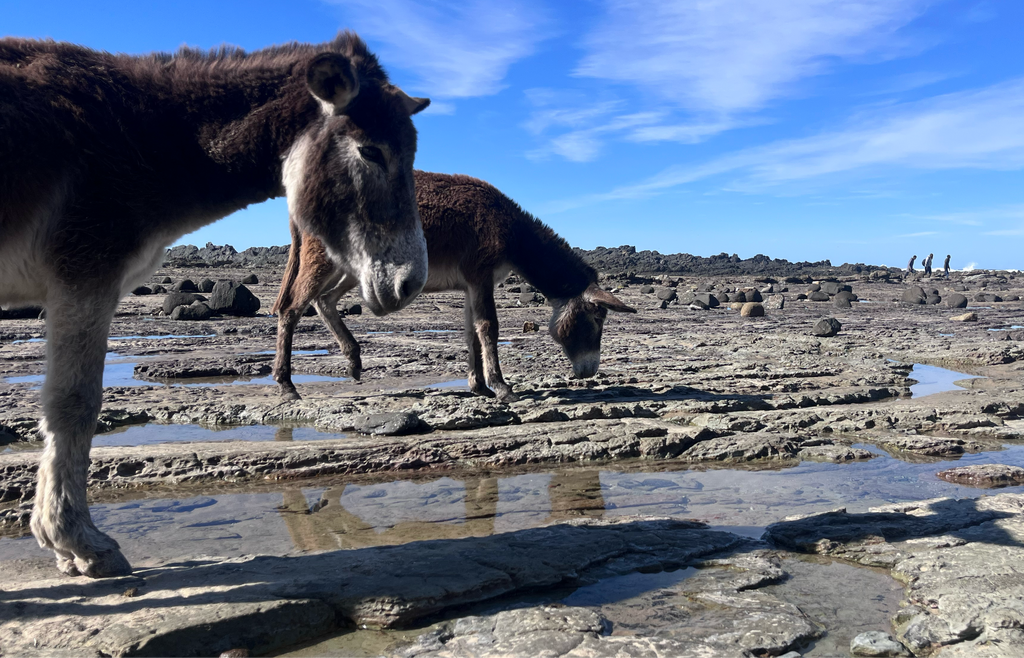
Just as Bhekeni Danca’s grandfather fought for the land of this area (see Part 1), it was Mdiya and Mavela’s grandmothers who taught them to fish: “I learnt how to fish from my grandmother…She was fishing a lot, and what made me her favourite is that I always accompanied her. I was also going with her when she went fishing and also after; I think she was still mourning her husband’s loss, so it [helped] her to try and relieve the stress when she is fishing,” said Mavela. Under the tutelage of their grandmothers, these young men brought home fish for their families and neighbours: “We would bring it back to my family, and then we have supper together, which is a big feast,” remembered Mdiya.
Meanwhile, their parents also shared their knowledge of the soil, knowledge which sustains the family every day. As Mdiya explained: “My mum is almost 75 years old now. She is very, very old but when you see her it’s like [she’s] maybe 40 or 45 years old. She’s very, very tough. She used to be a good diver as well, but now she’s just busy working in the garden growing her vegetables, sugarbeans, cabbage, carrots and everything from the garden.”
The land their families have tended for generations must be sustained for the next generation, said Mavela. For Mdiya, Mavela, and many others on this coastline, oil, mining, and industrial developments threaten a safe future on this land. This is why Mavela urges leaders to “Try and engage with the local people first. Respect them no matter [where] they live, but respect comes first. Consider all the suggestions that they put out on the table.”
This testimony, and those of people all around the country impacted by decisions made in their name, must be heard by those in power, explained Mam’Zingisa:
“We want to own our land…I would like us to be consulted as the people of this place. No decisions must be taken without us…Nothing for us without us. And we need this free prior informed consent…We were never consulted and they did not come to us and ask us what kind of development we need as people who stay along the coast, [or] which development is suitable for us.”
If he were consulted, one of the questions Mavela would ask the Chief Executive of Shell is:
“Do you love the people who are living on the ocean? And if you love them, why would you mess up the place of the people you love? Why would you cause sickness of the people you love?”
Find out more on how Mdiya, Mavela, the Lududes, and others envision a more inclusive economy by watching their video testimony on Greenpeace Africa’s social media.
Part 1
We are not saying we will never see change. What I’m saying is that we will die trying. As long as we are still alive, we will never stop fighting.