Greenpeace Malaysia firmly condemns the Department of Environment’s (DoE) decision to restrict public downloads of full Environmental Impact Assessment (EIA) reports as a step backwards for transparency and public accountability in Malaysia. Under the guise of “security concerns”, the move risks undermining one of the few remaining mechanisms that play a fundamental role in ensuring transparency, accountability and meaningful public participation in decisions that may have significant environmental and social impacts.
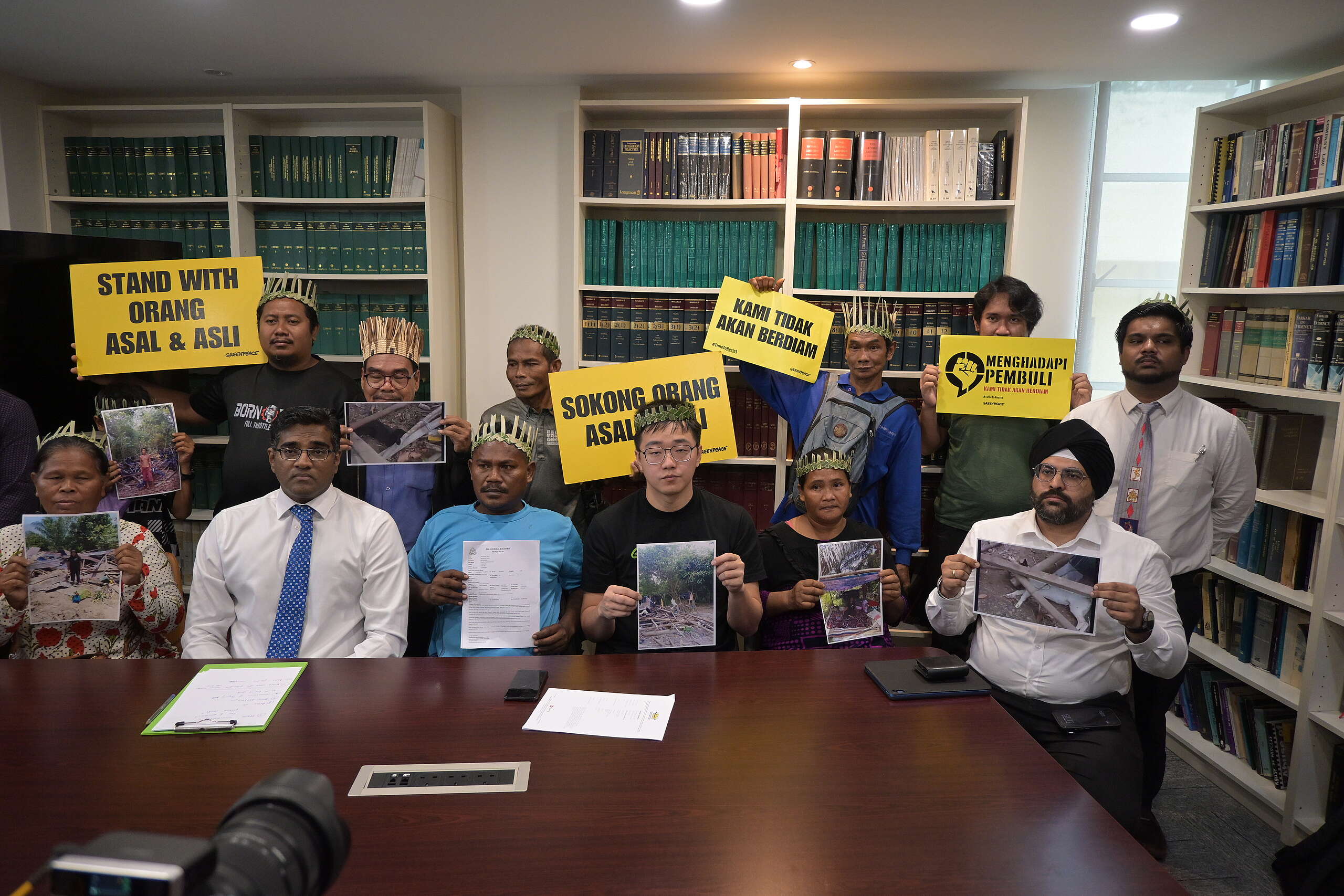
Communities affected by proposed projects, civil society organisations, researchers, journalists and independent experts depend on meaningful access to full EIA reports to properly review, analyse and provide informed feedback during public consultation processes. In addition to assessing whether corporations and developers are being truthful about the environmental, social and economic risks of their projects.
Measures that limit downloading or independent review create additional barriers to effective public participation and scrutiny, weakens transparency, and undermines public trust in the environmental governance process. While at the same time, shielding both regulators and corporations from accountability at a time when environmental governance demands greater openness, and not less as Malaysia faces increasing environmental challenges including deforestation, climate impacts, biodiversity loss, and pollution. It also raises serious concerns that corporate interests are being prioritised over the rights to information, participation, and environmental justice of affected communities.
Companies that are genuinely committed to sustainability and responsible investment should welcome transparency and independent assessment. Transparency should not be viewed as a threat. It creates opportunities to strengthen responsible business practices, improve project planning, reduce environmental and social risks, and build public confidence. Any restriction on access must be proportionate, clearly justified and implemented transparently. The government should be strengthening transparency and public participation, not creating additional barriers to environmental oversight.
Greenpeace Malaysia calls on the DoE to:
- Ensure that full EIA reports remain meaningfully accessible for public review and participation;
- Engage civil society and affected communities before introducing measures that limit access; and
- Uphold the principles of transparency and accountability in environmental decision-making.
Environmental governance must remain open, participatory, and accessible to all stakeholders. Public scrutiny is not a threat, it is an essential safeguard for protecting communities, ecosystems and future generations.