Urgent action needed on root causes and legal reforms to safeguard human rights.
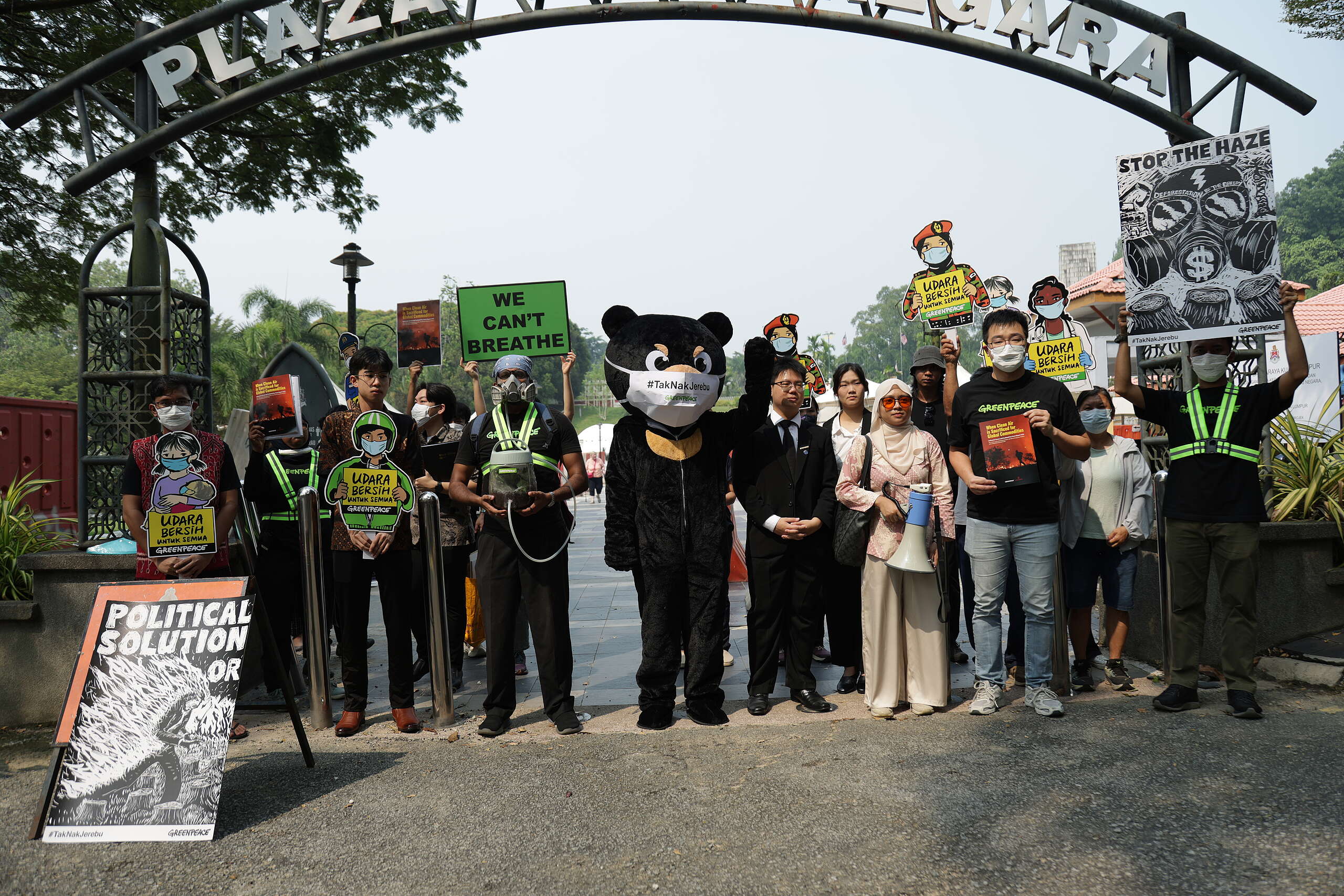
KUALA LUMPUR – CERAH expresses grave concern over the re-emergence of toxic transboundary haze pollution across Malaysia. Official Air Pollutant Index (API) monitoring shows multiple locations at “Unhealthy” levels and several locations in Sarawak entering “Very Unhealthy” and “Hazardous” levels, with toxic air threatening public health and livelihoods. The severity of the situation is underscored by recent announcements that Penang state may cancel its 31 August National Day parade at Padang Kota Lama if API readings reach the “Very Unhealthy” threshold.
As detailed in the 2024 Human Rights Commission of Malaysia (SUHAKAM) report, Silent Enemy: Report on Haze Pollution and the Right to Clean Air, haze pollution inflicts widespread, compound harm across public health, the economy, and the environment. Biologically, exposure to fine particulate matter (PM2.5) drives acute respiratory illnesses, cardiorespiratory hospitalisations, and premature mortality, while disproportionately harming vulnerable groups including children, the elderly, outdoor workers, and pregnant mothers. Economically, seasonal haze incurs massive losses through reduced labour productivity, severe disruptions to tourism, aviation, and agriculture, and crippling healthcare costs borne by the public. Environmentally, toxic haze damages biodiversity, degrades forest ecosystems, and accelerates carbon emissions from burning peatlands, compounding the broader climate crisis.
CERAH emphasises that transboundary haze pollution is fundamentally a man-made environmental crisis, not an act of God. The widespread fires that produce transboundary haze pollution are, at the root, caused by unsustainable land-use changes, the drainage and degradation of carbon-rich peatlands, and aggressive industrial agricultural expansion. Significantly, corporate actors fail to take adequate responsibility for what happens across their complex supply chains, prioritising short-term economic goals over environmental and social considerations. These structural factors converge and manifest as large-scale fire risks.
Crucially, these root causes have been continuously present throughout the years, profoundly impacting people and the planet irrespective of whether fires were actively burning or haze was visible on any given day. Haze is merely the seasonal symptom of an ongoing, structural failure to govern land-use practices and hold commercial actors accountable.
Because clean air is a prerequisite to life itself, this systemic failure directly compromises our most essential human rights. The United Nations General Assembly (UNGA) formally recognised the human right to a clean, healthy, and sustainable environment in 2022. Importantly, this right encompasses the vital dimension of safety, as affirmed under the landmark 2025 ASEAN Declaration on the Right to a Safe, Clean, Healthy, and Sustainable Environment. In Malaysia, this fundamental right to a safe, clean, healthy, and sustainable environment is intrinsic to Article 5(1) of our Federal Constitution, which guarantees the right to life.
The Silent Enemy report was borne directly out of CERAH’s landmark public complaint filed with SUHAKAM and co-developed through our coalition’s joint advocacy to establish structural solutions to haze. Of the six recommendations laid out in the report, only one has materialised – the launch of the National Action Plan on Business and Human Rights (NAPBHR) in 2025.
While the 2025 launch of the NAPBHR set out the state’s duty to protect human rights and corporate responsibility to respect them, 2025 also marked the first mandatory measurement period under the National Sustainability Reporting Framework (NSRF), requiring major corporations (Group 1) to disclose sustainability performance. Yet, as toxic air returns to choke our nation, we must ask the fundamental “so what?” question: Are the NAPBHR and NSRF actively transforming corporate behaviour across complex, cross-border agricultural supply chains, or are Malaysian business giants still escaping liability for peatland drainage and land clearing carried out through overseas subsidiaries, joint ventures and third-party suppliers? Frameworks on paper mean nothing if they fail to improve on the systemic practices that lead to seasonal fires on the ground.
CERAH calls on the Government of Malaysia and relevant authorities to immediately act on the remaining recommendations in SUHAKAM’s Silent Enemy report, alongside enhanced market mechanisms:
1. Constitutional Amendment: Amend the Federal Constitution to explicitly recognise the right to a safe, clean, healthy, and sustainable environment under Article 5(1) so that environmental rights are no longer treated as discretionary policy choices.
2. Enactment of a Clean Air Act: Pass holistic framework legislation establishing mandatory and enforceable duties on federal and state governments to maintain healthy ambient air quality, while legally holding domestic citizens and corporations accountable for transboundary air pollution through civil and criminal justice systems.
3. Enhancement of Regional Governance (AATHP Protocol): Take a leadership role at the ASEAN level to advocate for a legally binding protocol under the ASEAN Agreement on Transboundary Haze Pollution (AATHP) requiring each Member State to enact domestic transboundary haze liability laws that hold their own corporate actors, parent companies, and investors accountable for any contribution to extraterritorial haze pollution caused by their overseas operations or supply networks.
4. Judicial Reform for Environmental Justice: Request the Rules Committee to amend the Rules of Court 2012 to establish specialised rules of civil procedure for environmental proceedings, lowering legal barriers and improving public access to environmental justice.
5. Accelerated SDG Implementation: Institutionalise structural transformations across all tiers of government to accelerate the implementation of the Sustainable Development Goals (SDGs), ensuring meaningful, inclusive participation of affected civil society and communities.
6. Enhance Sustainability Disclosures for Real Supply-Chain Impact: Call on the Securities Commission Malaysia and other relevant regulators to strengthen the National Sustainability Reporting Framework (NSRF) so that corporate disclosure requirements translate into real-world reductions in haze and fire risks.
Malaysians cannot continue to accept widespread public harm as an inevitable cost of economic development. Haze pollution is not an unchangeable reality. Decisive, ambitious policy interventions can turn things around. Recent global evidence, such as a landmark five-year study published in The Lancet Public Health (August 2026) evaluating London’s Ultra Low Emission Zone (ULEZ), demonstrates that targeted clean air policies directly restored stunted lung capacity growth in children, narrowing the health deficit with less polluted areas. Clean air is achievable with an appropriate governance framework that makes public and ecosystem health its explicit objective. The Government of Malaysia must demonstrate this legislative leadership by enacting binding, rights-based reforms because clean air is an absolute constitutional right.
About CERAH Anti-Haze Action Coalition
CERAH is a civil society coalition dedicated to advocating for clean air, environmental justice, and systemic legal solutions to eliminate domestic and transboundary haze pollution in Malaysia and the ASEAN region. CERAH works alongside affected communities, legal experts, and environmental organisations to uphold the universal human right to a safe, clean, healthy, and sustainable environment.
MEDIA CONTACT:
Email: [email protected]
CERAH’s website: https://cerah-my.org/
This press statement is supported by the following civil society organisations and institutions:
- Pertubuhan Pelindung Khazanah Alam
- Gabungan Darurat Iklim
- Alliance of River Three (ART!)
- Sarawak AIDS Concern Society (SACS)
- Sustainable Development Network Malaysia (SUSDEN Malaysia)
- Greenpeace Malaysia
- Smart Cities Network
- Climate Finance Association Sarawak
- Sahabat Alam Malaysia (SAM)
- Justice for Sisters
- PurpleLily Social Association Kuching
- Consumers’ Association of Penang (CAP)
- Persatuan Tindakan Alam Sekitar Kuala Langat
- Family Frontiers
- The National Human Rights Commission of Malaysia (SUHAKAM)
- RED A Humanitarian Development Global
- Center to Combat Corruption and Cronyism (C4 Center)
- Parti Sosialis Malaysia (PSM)
- Kuala Lumpur Residents Action for Sustainable Development Association (KLRA+SD)
- Sarawak OKU Skills Development Association (SOSDA)
- Centre for Independent Journalism (CIJ)
- WWF Malaysia
- Pergerakan Tenaga Akademik Malaysia (GERAK)
- Mind Brew, Mental Health Association of Sarawak
- Persatuan Promosi Hak Asasi Manusia (PROHAM)
- Persatuan Aktivis Sahabat Alam (KUASA)
- Malaysian Bar Council Environment, Climate Change & ESG Committee
- Birdseye Climate (Singapore)
– END –