The war in West Asia did not create our vulnerability to oil & gas price shocks; it merely exposed the one we built, barrel by barrel, and plastic bottle by plastic bottle. The disruption to global petrochemical and plastics supply chains following escalating tensions in the region is not a surprise. For decades, we have constructed an entire consumption economy on the back of fossil fuels and their byproducts such as single-use plastics.
People’s safety and dignity come first
Before anything else, the war is a human crisis. Across the region, people are living with fear, disruption, and deep uncertainty about what comes next. In the countries most directly affected, communities are enduring violence, loss of life, and displacement from their homes. For others, the effects are seen as rising instability, pressure on daily life, and the slow erosion of the basic conditions people need to live safely and with dignity.
Ripple effect from the Strait of Hormuz
Fossil fuels are the raw material from which petrochemicals are made. Petrochemicals are chemical compounds derived from crude oil and natural gas, and they form the building blocks of an enormous range of everyday products, most visibly in packaging. This means that every time a product is packaged in plastic, the supply chain stretches back to a fossil fuel well somewhere in the world. When oil & gas prices rise, or when conflict disrupts supply, the cost ripples forward through the entire chain.
In Southeast Asia, we face the rippling impacts of the war. A disruption to oil and gas supply does not just raise petrol prices. It raises the cost of producing food and the cost of packaging it. Factories face higher input costs for plastic resins. Farmers face higher costs for fertiliser. Transportation and logistics face higher diesel bills to move goods from farm to factory to shelf. The price of goods on our shelves are now affected. And as always, it is ordinary people who are left to settle the tab. The Malaysian dairy producer, Farm Fresh has flagged rising costs to packaging. For mineral water producer Spritzer, packaging makes up 30 to 40 percent of total production costs, which means rising PET resin prices, driven by the oil price shock, will hit the company’s bottom line fast and hard.
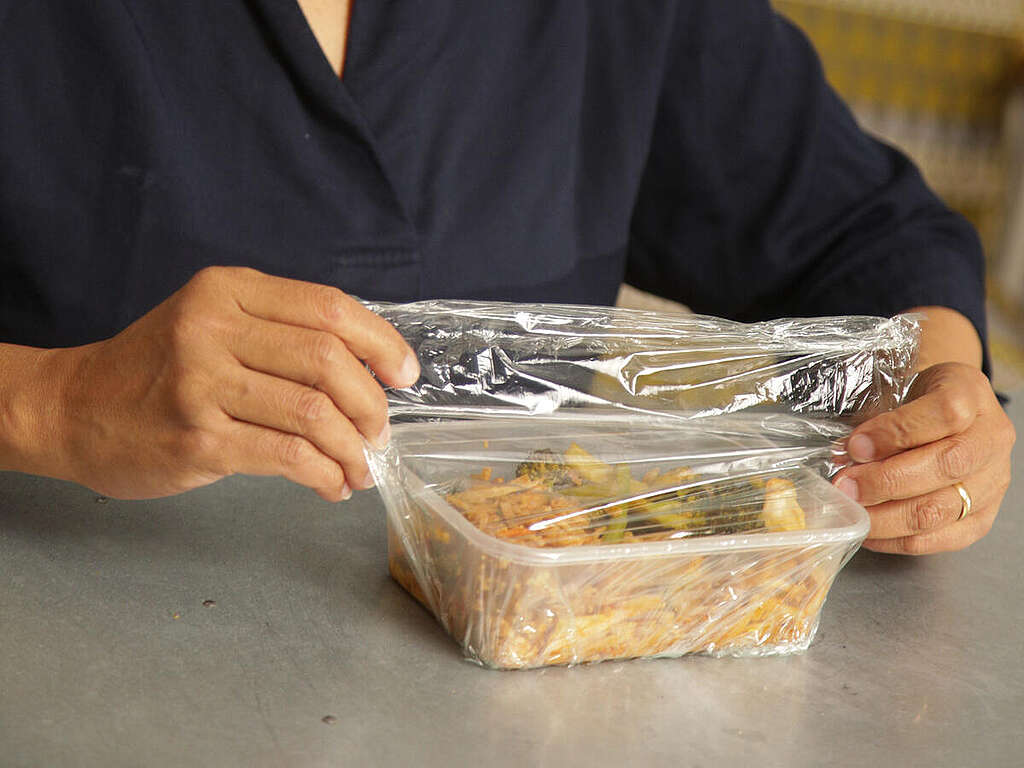
Some manufacturers have already begun selling plastic at prices 15 to 40 per cent higher than usual. Sarawak-based manufacturers are facing unstable raw material supplies and sharply rising costs, with some potentially forced to halt production. The Malaysia Retailers Association warned that grocery prices are expected to rise in the coming months as a result of the tensions. The Malaysian Plastics Manufacturers Association has said the industry should brace for ongoing turbulence, with no sign of stability on the horizon in the near to medium term.
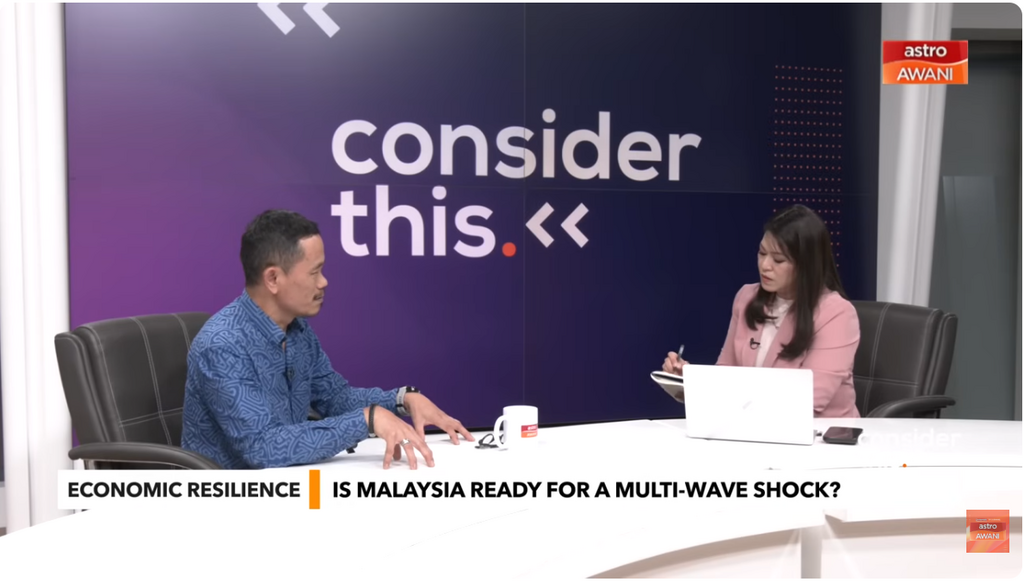
In an interview on Consider This (Astro Awani), Nurhisham Hussein, Economic Adviser in the Prime Minister’s Office and Head Secretariat of the Crisis Management Taskforce Team on the National Economic Action Council, candidly admitted to having a panic attack during a recent trip to the supermarket upon realising how pervasive plastic is in everyday life. “Everything involves plastic,” he said, noting that as an oil derivative, plastic underpins a vast range of essential goods, from packaging and adhesives to sanitary towels, diapers, and the garbage bags used daily. The impact, he warned, is “very wide-ranging.”
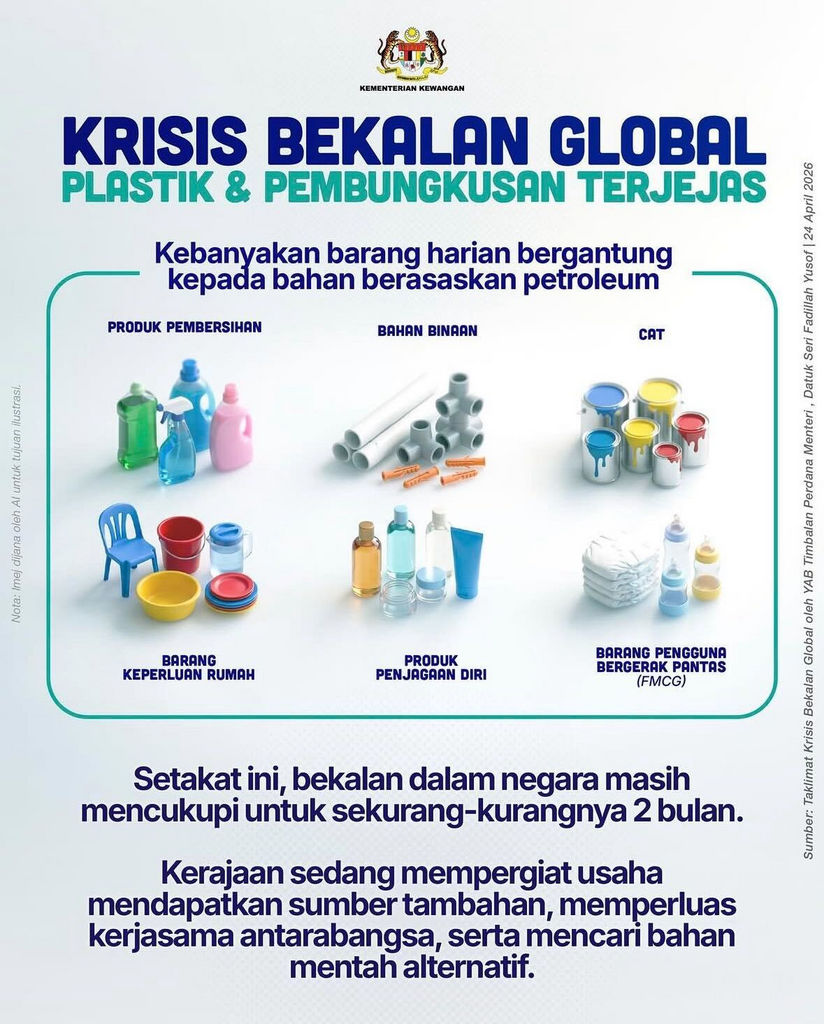
For businesses exposed to petrochemical input costs, the concern is less about long-term supply disruption and more about the immediate earnings impact of a material they cannot easily replace or avoid. Despite industry claims that plastics support economic development, the reality on the ground tells a different story. Plastic pollution hits the world’s poorest people hardest, over 200 million people living in poverty face a higher risk of severe flooding because of it, and now, with projected inflation in living costs. What are we witnessing? Each cost compounds the next, and all of them trace back to the same source: a global economy built on the assumption that fossil fuels will always be cheap and available.
Supply-chain shocks?
These price hikes are the predictable outcome of a supply chain model built on fossil fuel dependency. By renouncing the fossil fuel-petrochemical nexus, governments can dismantle the injustices embedded in the plastic supply chain and reduce the disproportionate burden placed on marginalised communities. Shifting from toxic, single-use plastics to sustainable, circular reuse models is not just an environmental necessity. For decades, Fast-moving consumer goods (FMCG) companies have had every opportunity to invest in reuse and refill systems that would have reduced their exposure to exactly this kind of uncertainties. Many chose not to. Now, as costs rise, they are passing those costs on to the communities least able to absorb them.
Time for real action
It must be clear: Communities should not be made to bear the cost of a supply chain model that was always fragile.
The question is whether we will look away again once the immediate disruption passes, or whether we will finally reckon with what this system has always demanded on supply chain resilience and insulation from the commodity shocks that are currently punishing us. The alternative to virgin plastic already exists. Reuse and refill systems are the solution, they are proven, scalable and already available. There needs to be political will and investment in these models. The ASEAN Declaration on the Right to a Safe, Clean, Healthy and Sustainable Environment recognises that every person in this region has the right to clean air, safe water, healthy ecosystems, and a life free from toxic pollution. That promise now needs to be kept.
The same fossil fuel dependence driving plastic inflation also traps communities in broader systems of energy insecurity. Therefore, a decentralised energy system will help build the agency of the community to take control over their lives, livelihoods and their environment. It is a pathway out of being held hostage by fossil fuel wars and the economic instability they create.