A Call from a Burning Planet
On the 26th of September 2026, the Bangkok Metropolitan Region was declared a disaster zone by the Government of Thailand. Torrential non-stop rain covered 90% of the Bangkok Metropolitan Area by the 25th of September. The Federation of Thai Industries estimated that Thailand suffered a 6 billion THB in losses, and the Guardian reported that 40 people died as of the 10th of October 2026. Other areas in Mainland Southeast Asia were also impacted by the flooding, most notably Ho Chi Minh City in Vietnam and Battambang in Cambodia.
In Archipelagic Southeast Asia, countries are struggling to manage the worst transnational haze since 2014. The long dry season coupled with the “Godzilla” El Niño resulted in the largest forest fires that have devastated large parts of Kalimantan, Sumatra, and Papua. Haze covered cities in Indonesia, Malaysia, and Singapore, resulting in school closures and casualties from health problems, with pregnant women, children, and older persons among the most exposed. The expansion of large-scale palm oil and pulpwood plantations, which drained and degraded peatland area, is attributed as the underlying factor of the current wildfire.
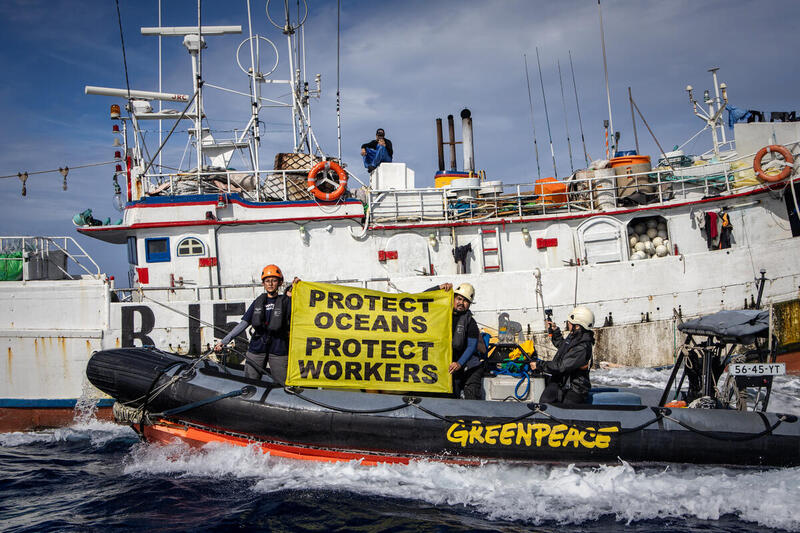
In fisheries, forced labor and illegal, unreported, and unregulated (IUU) fishing remain unresolved issues in the industry. In October, the Indonesian government detained a fishing vessel, MV Maulana 23, after viral videos emerged of its fishers getting physically assaulted by the captain because they could not meet its targeted catch. After investigations, it was also found that the vessel conducted illegal fishing operations. This case is not isolated, however, as the practice of IUU fishing is deeply intertwined with forced labor cases found in fishing vessels operating in the Asia Pacific.
A week before the Bangkok flood, Bangkok hosted the 8th UN Responsible Business and Human Rights Forum on the 14th-17th of September 2026. Going with the “Building Resilience, Advancing Rights” theme, the Forum’s key purpose is to drive corporate accountability and human rights commitment as an essential element of business’ operational resilience. This means that making a business resilient is not limited to the operational cost alone, but also the responsible environmental and human rights business practices.
Asia Pacific countries led their support for responsible corporate conducts. The National Human Rights Action Plan has emerged as one of the core foundational frameworks for future business operations in the region. In accordance with the United Nations Guiding Principles on Business and Human Rights, human rights and environmental due diligence were seen as an essential part of the business operation, not just as a subsidiary. Mandatory government actions to put businesses in line with responsible environmental and human rights practices are viewed as a necessity against the backdrop of greenwashing and fairwashing.
The agenda of business and human rights should also be put in the lens of halting the biodiversity and climate crisis. Key agendas on accelerating actions to protect nature and transitioning away from fossil fuels are the main themes of the subsequent conference of parties of the UN CBD and UNFCCC in the last quarter of 2026. Corporate accountability should be at the heart of both agendas – demanding the corporate actors to stop their harmful activities to nature, climate, and human rights while at the same time start paying for the damages they have been inflicted upon nature, climate and human rights.
Our Call
Reflecting on the Forum and the need to safeguard our common future while maintaining sustainable development growth, we, as civil society organizations call on corporate actors and governments in Asia Pacific to:
- Reaffirm and strengthen their commitment to the United Nations Guiding Principles on Business and Human Rights through the implementation of mandatory measures for participatory environmental impact assessment and human rights due diligence.
- Streamline environmental and human rights-based approaches as a core foundational principle of business operations.
- Implement binding principles for responsible business practices that consider environmental, labor, and human rights aspects in accordance with the ASEAN Human Rights Declaration, Environmental Rights Declaration, Cebu Declaration, and ASEAN Declaration on the Protection and Placement of Migrant Fishers.
- Guarantee effective access to remedy for affected communities, workers, and migrant fishers, in line with the third pillar of the UNGPs, through accessible judicial and non-judicial grievance mechanisms.
Signatories
The organizations that sign and endorse the Joint Statement in alphabetical order are:
- Alliance of River Three
- CERAH Malaysia
- Greenpeace Southeast Asia
- International NGO Forum on Indonesian Development (INFID)
- Jejaring Serikat Pekerja Perikanan Indonesia (Network of Fisheries Labor Union of Indonesia)
- Kerja Jalan
- Klang River Festival
- Malaysia Green Building Council
- MY Mind Comrade
- National Human Rights Society (HAKAM)
- Perhimpunan Indonesia untuk Buruh Migran Berdaulat (Migrant CARE)
- Parti Sosialis Malaysia
- Pertubuhan Pengembaraan Bilik Darjah (Reimagine Education)
- Persatuan Aktivis Sahabat Alam (KUASA)
- RimbaWatch
- Serikat Buruh Migran Indonesia (SBMI)