December 3, 2019, Tuesday
01:00 (GMT +8)
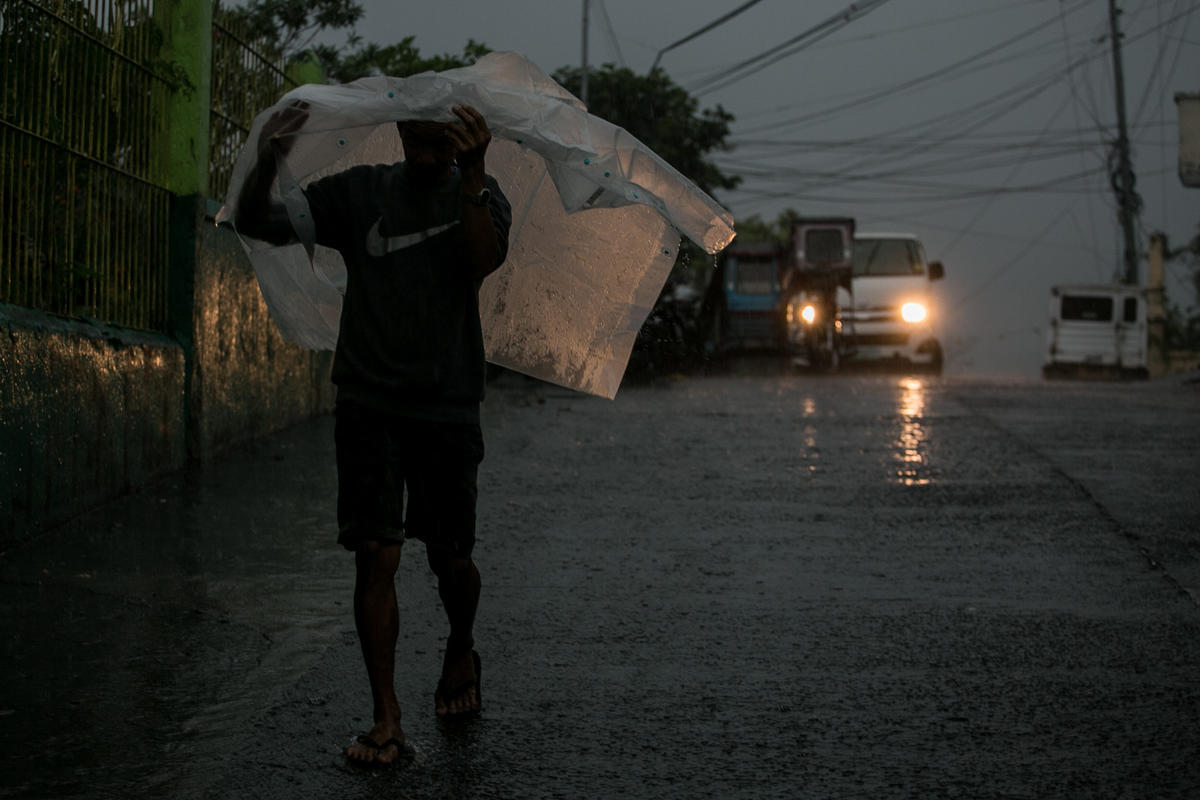
Hotel staff deals with flood caused by heavy rains as Typhoon Kammuri makes landfall in the province of Albay.
![Kuala Lumpur, 29 August 2014 – Greenpeace today joined local groups calling on the Malaysian government to deny the granting of a permanent license for the Lynas plant in Kuantan, citing the grave and unresolved radioactive and environmental threats associated with the controversial rare earth processing facility.
<div>
<p>“We appeal to the Malaysian authorities to listen to the demands of local groups and deny the <br>granting of a permanent operating license to Lynas. Our research on the issue reveals that Lynas <br>has not been operating according to best environmental practices and standards. As far as we <br>know, the company has yet to come up with a convincingly safe and acceptable solution for its <br>radioactive waste outputs, and this is cause for grave public concern,” said Von Hernandez, <br>Greenpeace Southeast Asia Executive Director.</p>
<p>The environmental group made the appeal a few days before the government was to decide <br>whether or not to issue a permanent operating license to the Lynas plant, which has faced <br>intense opposition from local groups since the facility started operating a few years ago.</p>
<p>The group’s demands were based on findings contained in its new report entitled ‘A Radioactive <br>Ruse’, which highlights a number of concerns linked to the Australian multinational’s rare earth <br>processing facility, including the company’s insufficient and dubious plans on how it intends to <br>contain and deal with the estimated 6 million tons of waste, with at least 1 million tons likely to <br>be and radioactive waste, that the plant is projected to generate over a production period of 20 <br>years.</p>
<p>Greenpeace joined a panel of speakers in the launch of ‘A Radiocative Ruse: report-lynas.org’ <br>who each urged the denial of the permanent operating licence to Lynas Corporation for the LAMP at Kuantan:</p>
<ul>
<li>
<p>Mr Ali Akbar, Chairperson, Stop Lynas Coalition reflected that ‘ the Malay community continue to be kept in the dark about the impacts of the Lynas Kuantan plant, we are concerned about the way the impact on our health and environment with radioactive waste so near our homes’.</p>
</li>
<li>
<p>A local fisherman from Balok Village, Mr Mahmud Yaakub further highlighted that in his community, ‘We are concerned, we notice that there are less fish and cannot get information that tells us how all this waste is made safe.’</p>
</li>
<li>
<p>Mr Wong Tack, Chairman of Himpunan Hijau (HH) who pledged, ‘Five days from now, at midnight on the 2nd of September, we expect that the doors of the Lynas plant will shut, when this happens, we know that the Malaysian Government have listened to over 1.2 million concerned citizens, and our international friends. We will continue our work to protect our beautiful country, Malaysia.’</p>
</li>
<li>
<p>Mr Tan Bun Teet, Spokesperson for Save Malaysia Stop Lynas (SMSL) shared that ‘if the Malaysian Government has any sense of wisdom and justice left, then it should deny Lynas the permanent operating license. If the licence is issued, then we will take whatever measure is necessary to get it revoked.’</p>
</li>
</ul>
<p>The amount of the waste generated each year from the Lynas plant could contribute significantly to background radiological exposures of workers and people around the vicinity of the plant and at its permanent disposal site, the location of which the company has so far refused to publicly disclose. Lynas’ possible planned use of a final disposal site for its radioactive waste in Malaysia directly contradicts earlier government demands that no radioactive waste should remain in Malaysia.</p>
<p>According to Greenpeace findings, neither Lynas nor concerned government authorities provided sufficient information to the public and local communities about the potential pollution and risks involved in the plant’s operations. The documentation provided by Lynas in order to obtain operating licenses from regulators for example, has not been made accessible to the public. Furthermore, the group accuses the company of applying lower environmental standards for its Kuantan plant, than would be allowable in Australia.</p>
<p>“If Lynas were a truly responsible multinational company, it should adopt and observe in Malaysia, the same strict set of environmental standards and safeguards that it would be expected to comply with in its country of origin. The Malaysian government and public were also made to believe that no radioactive waste from the plant would be disposed of in Malaysia. This has now been exposed as a ruse, following reports that Lynas is now planning to “recycle” certain fractions of its radioactive waste stream into construction materials and other commercial product applications. This is a very dangerous proposition with the potential of spreading radioactive exposure rather than containing it, ” added Hernandez.</p>
<p>“We hope that the Malaysian government will exercise greater caution and not allow itself to be deceived into believing that Lynas can find safe and beneficial recycling options for its radioactive waste,” he said.</p>
<p><strong>To download the report, please visit:</strong> <a title="www.report-lynas.org/" href="http://www.report-lynas.org/" target="_blank" rel="noopener noreferrer">www.report-lynas.org</a><br><strong>To find out more about Greenpeace Southeast Asia, please visit:</strong> <a title="www.greenpeace.org/seasia/" href="http://www.greenpeace.org/archive-seasia/" target="_blank" rel="noopener noreferrer">www.greenpeace.org/sea</a><br><strong>To join the Greenpeace Southeast Asia Malaysia facebook group visit: </strong><a title="www.facebook.com/GreenpeaceMalaysia" href="https://www.facebook.com/GreenpeaceMalaysia" target="_blank" rel="noopener noreferrer">https://www.facebook.com/GreenpeaceMalaysia</a></p>
<p>Notes to Editors: <br>Key recommendations from the report include the following:</p>
<p>1. [CLOSE THE LYNAS PLANT IN KUANTAN] The Lynas Corporation must close the Lynas Advanced Materials Plant (LAMP) processing plant in Kuantan, Malaysia, until it puts in <br>place best practice environmental protection protocols and conditions and comes up with <br>an acceptable solution for the plant's radioactive waste disposal outside of Malaysia.</p>
<p><br>2. [ADVANCE GREEN DEVELOPMENT FOR SOUTHEAST ASIA AND PROTECT <br>ENVIRONMENTAL HEALTH] In view of the above, the (federal) government of Malaysia <br>must deny Lynas Corporation a permanent operating license, and prioritize the protection <br>of Malaysian environmental and public health interests, modelling green development <br>standards for Southeast Asia in the process</p>
<p><br>3. [AVOID DOUBLE STANDARDS – STOP EXPORTING POLLUTION TO OTHER COUNTRIES] Government of Australia and Japan and other stakeholders in the operations of the Lynas plant in Malaysia, must uphold the same environmental protection standards, as they <br>demand for their own environment and populations.</p>
<p><em>To download the report, please visit:</em> <a title="www.report-lynas.org/" href="http://www.report-lynas.org/">www.report-lynas.org</a><br><em>Photo credits:</em> <br><em>For media interviews:</em> Heng Kiah Chun: +6016-3198278 or <img class="obfimg Eoi_1" src="/seasia/Templates/Planet3/Styles/Images/emailimages/b6f2798daf394758372ba7fee3d06037.png" alt=""><script type="text/javascript"><!--
document.write(dc('Eoi_1', 'F0_97_82_9F_DE_95_93_91_95_80_9E_95_95_82_97_B0_9E_85_98_93_DE_98_91_99_9B_DE_97_9E_95_98'));//--></script></p>
</div><p></p>](https://storage.googleapis.com/planet4-philippines-stateless/2019/12/fcef0a6d-20191202-typhoon-kammuri-landfall-basiliosepe-2.jpg)
![Greenpeace notes the announcement by Sime Darby, IOI, KLK, Musim Mas and Asian Agri that they intend to temporarily halt clearance of potential High Carbon Stock forests while a HCS study commissioned by their Sustainable Palm Oil Manifesto* group is taking place.
<div>
<p>“Greenpeace welcomes the fact that a number of the world’s biggest palm oil producers have announced a temporary halt of all clearance of potential HCS areas in their concessions after being called to action for a long time. However, this is just a first step, Greenpeace encourages the companies to expand their No Deforestation commitment across their supply chains and trade, to ensure that they are no longer involved in deforestation, peat land clearance and social conflicts,” said Bustar Maitar in Jakarta on 19th September.</p>
<p>Since these five companies do not specify how they will identify potential HCS, Greenpeace calls on the companies to follow the HCS approach that is being used by GAR, Wilmar, Cargill and others, and to share maps and expansion plans to enable monitoring of this commitment. Greenpeace also urges these companies to support the HCS Steering Group, established by a range of prominent companies and environment groups last month in Singapore. The HCS Steering Group will lead a process for global standardisation of the HCS methodology across commodities. This includes seeking review and advice from a science committee and expert guidance based on a range of field trials. The need for such a process could not be more pressing.</p>
<p>“With recent satellite data confirming Indonesia has the world’s highest deforestation rate, driving our GHG-emmissions ever upwards despite our commitment to reductions, this is not the time to debate what a forest is,” said Bustar Maitar. “It is time to show bold action and protect forests and peatlands within concessions and through supply chains, like GAR, Wilmar and Cargill have committed to do. We encourage Sime Darby, IOI, KLK, Musim Mas and Asian Agri to do the same and turn this temporary halt into full-time protection across their supply chains and trade.”</p>
<p>Greenpeace notes that RGE, the parent company of Palm Oil Manifesto signatory Asian Agri, continues with rainforest destruction in Indonesia for parts of both its palm oil and pulp and paper businesses. RGE also owns APRIL, Indonesia’s second largest pulp and paper business, which has stated it will not stop relying on rainforest clearance until 2019.</p>
<p>[ends]</p>
<p> </p>
<p><strong>Media Contact:</strong></p>
<p>Bustar Maitar- Global Head of Indonesian Forest Campaign, Greenpeace International</p>
<p>+62 813666135 <img class="obfimg Eoi_1" src="/seasia/Templates/Planet3/Styles/Images/emailimages/0ba857d0b7e9276a65473623be0dd536.png" alt=""><script type="text/javascript"><!--
document.write(dc('Eoi_1', 'FB_C5_9A_D4_C7_9C_89_94_D5_9E_98_9A_9E_8B_95_9E_9E_89_9C_BB_89_9A_8F_92_9A_96_D5_89_9A_8F_88_8E_99_C5_D9_9C_89_94_D5_9E_98_9A_9E_8B_95_9E_9E_89_9C_BB_89_9A_8F_92_9A_96_D5_89_9A_8F_88_8E_99_C1_94_8F_97_92_9A_96_D9_C6_9D_9E_89_93_DB_9A_C7'));//--></script> </p>
<p>Igor O’Neill – International communications, Forest Campaign, Greenpeace Indonesia +62 8111-923721 <img class="obfimg Eoi_2" src="/seasia/Templates/Planet3/Styles/Images/emailimages/f6d1fcee9f9c7c66fbd5ee7eb972109c.png" alt=""><script type="text/javascript"><!--
document.write(dc('Eoi_2', 'A8_96_C9_87_94_C5_C7_CB_86_CD_CB_C9_CD_D8_C6_CD_CD_DA_CF_E8_C4_C4_C1_CD_C6_C7_C1_96_8A_C5_C7_CB_86_CD_CB_C9_CD_D8_C6_CD_CD_DA_CF_E8_C4_C4_C1_CD_C6_C7_C1_92_C7_DC_C4_C1_C9_C5_8A_95_CE_CD_DA_C0_88_C9_94'));//--></script></p>
<p><strong>Notes to Editor:</strong></p>
<p>The HCS Steering Group comprises the following organisations: NGOs: Forest Peoples Program, Greenpeace and World Wildlife Fund; plantation companies: Agropalma, APP, GAR and Wilmar; and technical support organization TFT. For more information, see: <a title="Steering Group Established to Oversee the High Carbon Stock (HCS) Approach for Implementing ‘No Deforestation’ Commitments" href="http://www.greenpeace.org.uk/sites/files/gpuk/HCS_Steering%20_Group_Announcement_16092014.pdf" target="_blank" rel="noopener noreferrer">Steering Group Established to Oversee the High Carbon Stock (HCS) Approach for Implementing ‘No Deforestation’ Commitments</a></p>
<p>* The Sustainable Palm Oil Manifesto is an initiative of companies Sime Darby, IOI, KLK, Musim Mas and Asian Agri but which does not have the support or participation of NGOs. Greenpeace has criticized the SPOM commitments for the fact that they do not cover all the traded oil, nor minority shareholdings. For more details see: <a title="http://www.greenpeace.org/international/en/press/releases/Greenwash-alert-as-palm-oil-companies-sign-onto-continued-deforestation/" href="http://www.greenpeace.org/archive-international/en/press/releases/Greenwash-alert-as-palm-oil-companies-sign-onto-continued-deforestation/" target="_blank" rel="noopener noreferrer">Greenwash alert as palm oil companies sign onto continued deforestation</a></p>
</div><p></p>](https://storage.googleapis.com/planet4-philippines-stateless/2019/12/e515ea13-20191202-typhoon-kammuri-landfall-basiliosepe.jpg)
December 2, 2019, Monday
18:00 (GMT +8)
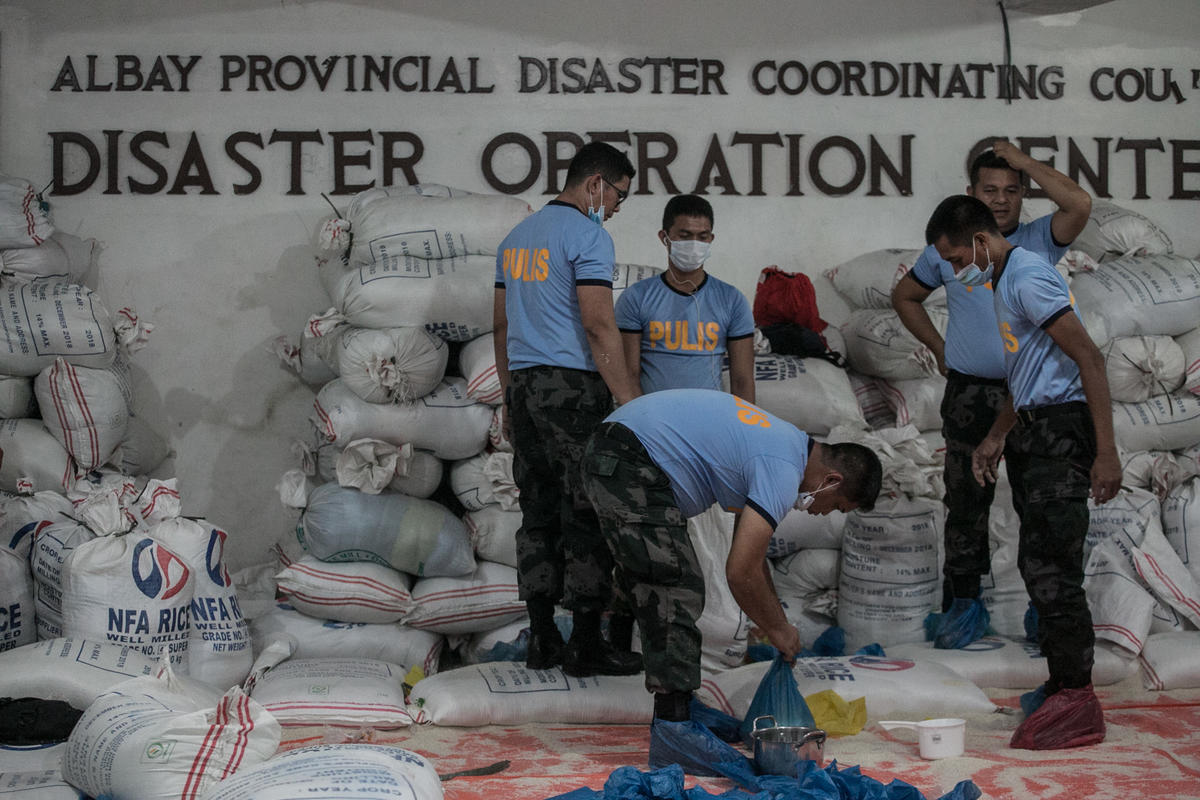
Policemen repack relief goods which will be delivered to small villages in the town of Daraga, Albay.
![Jakarta, 15 May 2016 – Greenpeace Indonesia activists today climbed the cranes of two grab-type ship unloaders, blocking the supply of coal for the Cirebon Coal Power Plant. The protest in Indonesia, the world’s second biggest exporter of coal, is part of a global wave of ‘Break Free’ actions running from 4-15 May demanding governments keep coal, oil and gas in the ground.
<div>
<p dir="ltr">The activists unfurled banners saying ‘Quit Coal’ and ‘Clean Energy, Clean Air’ from both cranes supplying the coal terminal and urged the government to immediately transition towards renewable energy. Communities near the coal power plant have protested its expansion plans since last year.</p>
<p dir="ltr">“Every new coal-fired power plant means elevated health risks for Indonesians. Lives, including those of children, are cut short due to strokes, heart attacks, lung cancer and other cardiovascular and respiratory diseases,” said Arif Fiyanto, Climate and Energy Campaigner at Greenpeace Indonesia.</p>
<p dir="ltr">“Coal has a dirty history in Indonesia ranging from land grabs, violence against local communities, polluting our air and exporting climate change to the rest of the world. The time is now for ordinary Indonesians to show the government and foreign investors in our dirty coal industry that enough is enough.”</p>
<p dir="ltr">Air pollution from coal in Indonesia has had a devastating effect on the country’s health. According to a study Greenpeace Indonesia released with Harvard University researchers last year, existing coal plants in Indonesia already cause an estimated 7,100 premature deaths per year.</p>
<p dir="ltr">If all proposed new power plants are built, the study found that they could cause the death of a further 21,200 people, due to increased risk of stroke, lung cancer, heart disease and chronic respiratory diseases, as well as deaths of young children due to increased risk of acute respiratory infections.</p>
<p dir="ltr">West Java’s Cirebon Coal Power Plant will be expanded as part of a national 35,000 MW power generation capacity addition project. Under this plan, over 60% of the additional 35,000 MW will come from coal power plants, while only 20% will come from renewables.</p>
<p dir="ltr">The first unit at the Cirebon Coal Power Plant, in operation since July 2012, exploded in September 2014 causing injury to several workers. The expansion plan will be funded by JBIC (Japanese Bank for International Cooperation), the same bank behind another controversial coal power plant at Batang.</p>
<p dir="ltr">“President Jokowi has a choice: stay with a business-as-usual approach to generating electricity and see the lives of thousands of Indonesians cut short, or lead the rapid transition to safe, clean, renewable energy,” Arif added.</p>
<p> </p>
<div class="text">
<div>
<p dir="ltr">“It is unthinkable for the government to expand fossil fuel projects following the Paris agreement. If we are to keep the average global temperature rise to well below two degrees, we must urgently end subsidies for fossil fuel companies and transition to 100% renewables.”</p>
<p dir="ltr">Today’s action follows a protest on 11 May by over 3,500 people in Jakarta, led by people from several communities outside the capital who are resisting coal projects in Indonesia. Greenpeace is joining other NGOs and affected communities in South Africa, the Philippines, USA, Canada, Spain, and other coal affected countries as part of the ‘Break Free’ movement.</p>
<p dir="ltr"><strong>Notes to editors:</strong></p>
<p dir="ltr">[1] The report, Human Cost of Coal – Indonesia, released by Greenpeace Southeast Asia and researchers from Harvard University can be found <a href="http://www.greenpeace.org/archive-indonesia/press/reports/Harvards-Research-Result-Human-Cost-of-Coal-Indonesia/">here</a></p>
<p dir="ltr">[2] Photos and video can be accessed <a class="zoom" href="http://photo.greenpeace.org/collection/27MZIFJJM63AJ" target="_blank" rel="noopener noreferrer">here</a></p>
<p dir="ltr"><strong>Media contacts:</strong></p>
<p dir="ltr">Greenpeace International Press Desk, <img class="obfimg Eoi_3" src="/seasia/Templates/Planet3/Styles/Images/emailimages/c899bfb5de219c052742d9fedb8dbf40.png" alt=""><script type="text/javascript"><!--
document.write(dc('Eoi_3', '39_5E_4B_56_17_5C_5A_58_5C_49_57_5C_5C_4B_5E_79_4D_57_50_17_52_4A_5C_5D_4A_4A_5C_4B_49'));//--></script>, phone: +31 (0) 20 718 2470 (available 24 hours)</p>
<p dir="ltr">Arif Fiyanto, Regional Campaign Coordinator Climate and Energy, Greenpeace Southeast Asia, mob: +62811-180-5373, email : <img class="obfimg Eoi_4" src="/seasia/Templates/Planet3/Styles/Images/emailimages/a4f2f6ef733b180ac22c54a1595866f9.png" alt=""><script type="text/javascript"><!--
document.write(dc('Eoi_4', '1A_7D_68_75_34_7F_79_7B_7F_6A_74_7F_7F_68_7D_5A_75_6E_74_7B_63_73_7C_7B'));//--></script></p>
<p dir="ltr">Hindun Mulaika, Climate and Energy Campaigner for Greenpeace Southeast Asia, mob: , email: <img class="obfimg Eoi_1" src="/seasia/Templates/Planet3/Styles/Images/emailimages/bb511891c19d9362477d89dc6ef319e7.png" alt=""><script type="text/javascript"><!--
document.write(dc('Eoi_1', '40_7E_21_6F_7C_27_32_2F_6E_25_23_21_25_30_2E_25_25_32_27_00_21_2B_29_21_2C_35_2D_28_7E_62_27_32_2F_6E_25_23_21_25_30_2E_25_25_32_27_00_21_2B_29_21_2C_35_2D_28_7A_2F_34_2C_29_21_2D_62_7D_26_25_32_28_60_21_7C'));//--></script></p>
<p>Rahma Shofiana, Media Campaigner, Greenpeace Southeast Asia, mob: <a href="about:blank">+62 8111 461 674</a>, email:<img class="obfimg Eoi_2" src="/seasia/Templates/Planet3/Styles/Images/emailimages/b2c03cae8742d78bb92b28b4f888e838.png" alt=""><script type="text/javascript"><!--
document.write(dc('Eoi_2', '6E_50_0F_41_52_09_1C_01_40_0B_0D_0F_0B_1E_00_0B_0B_1C_09_2E_00_0F_07_08_01_06_1D_1C_50_4C_09_1C_01_40_0B_0D_0F_0B_1E_00_0B_0B_1C_09_2E_00_0F_07_08_01_06_1D_1C_54_01_1A_02_07_0F_03_4C_53_08_0B_1C_06_4E_0F_52'));//--></script></p>
</div>
</div>
</div><p></p>](https://storage.googleapis.com/planet4-philippines-stateless/2019/12/fb734002-gp0stuaye.jpg "Activists bring coal supply to a standstill at massive Indonesian power plant")
17:00 (GMT +8)
Policemen help villagers move a toppled tree caused by the continuous strong winds of Typhoon Kammuri.
![Jakarta, 2 December 2016. Greenpeace has warned that environmental and human rights abuses are still endemic in the IOI Group’s supply chain, even though AidEnvironment’s complaint against the palm oil trader has been resolved. [1]
<div>
<p dir="ltr">Greenpeace Indonesia forest campaigner Annisa Rahmawati said:</p>
<p dir="ltr">“If the IOI Group does what it is now promising, it would go some way to resolving its legacy of destruction in West Kalimantan. But it is still too early to tell whether there is light at the tunnel or just another dead end.”</p>
<p dir="ltr">AidEnvironment’s complaint related only to IOI’s concessions in West Kalimantan. The company also has a large network of plantations in Malaysia, and is a major trader of oil produced by other companies. Investigations by Indonesian, Malaysian and international civil society organisations have shown that environmental and human rights abuses are endemic in IOI’s supply chain. [2]</p>
<p>Over the past year, dozens of international brands stopped sourcing palm oil from IOI.</p>
<p>“IOI has a lot of work to do before it would comply with international brands ‘no deforestation, no peat, no exploitation’ policies. It is still in conflict with local communities, exploiting its workers and buying palm oil from producers responsible for destroying forests, draining peatland and human rights abuses. Companies should wait for evidence that IOI has really changed before resuming trade.” Annisa said. [3]</p>
<p>[ENDS]</p>
<div dir="ltr"><strong>Notes for editors:</strong></div>
<p dir="ltr">[1] AidEnvironment, which lodged a complaint against the IOI Group with industry body the Roundtable on Sustainable Palm Oil (RSPO), issued a joint statement with IOI on 1 December. <a href="http://www.aidenvironment.org/wp-content/uploads/2016/12/Joint-statement-on-Ketapang-Complaint-Aidenviroment-IOI-Final-20161201.pdf">http://www.aidenvironment.org/wp-content/uploads/2016/12/Joint-statement-on-Ketapang-Complaint-Aidenviroment-IOI-Final-20161201.pdf</a></p>
<p dir="ltr">[2] An investigation by Greenpeace, published in September 2016, revealed that IOI had been sourcing its palm oil from producers known to be responsible for deforestation, peatland drainage and human rights abuses throughout Indonesia. <a href="http://www.greenpeace.org/archive-international/Global/international/publications/forests/2016/Deadly-Trade-off-IOI-Report.pdf">http://www.greenpeace.org/international/Global/international/publications/forests/2016/Deadly-Trade-off-IOI-Report.pdf</a> </p>
<p dir="ltr">An investigation by Finnwatch, published in November 2016, found that while some improvements had been made, many workers in IOI’s Malaysian concessions were still being paid less than the minimum wage — two years after it first raised the issue with the company. <a href="http://www.finnwatch.org/images/pdf/IOI-2016_EN.pdf">http://www.finnwatch.org/images/pdf/IOI-2016_EN.pdf</a></p>
<div dir="ltr">A complaint by the Long Teran Kanan communities in Sarawak, East Malaysia, against IOI-Pelita, remains unresolved after six years.</div>
<div dir="ltr"><a href="http://www.rspo.org/members/complaints/status-of-complaints/view/4">http://www.rspo.org/members/complaints/status-of-complaints/view/4</a></div>
<p> </p>
<p>[3] <a href="http://greenpeace.org/seasia/Global/seasia/20161202%20IOI%20consumer%20company%20update.pdf">Greenpeace Indonesia has written to companies</a> to advise buyers that any decision to resume purchasing must be conditional on the IOI Group publishing a credible NDPE policy and action plan.</p>
<div dir="ltr"><strong>Contacts:</strong></div>
<p dir="ltr">Annisa Rahmawati, Forest Campaigner, Greenpeace Indonesia. Mobile: +62 8111097527</p>
<div dir="ltr">Igor O'Neill, International Media for Greenpeace Indonesia Forest Campaign. Email</div>
<p dir="ltr"><img class="obfimg Eoi_1" src="/seasia/Templates/Planet3/Styles/Images/emailimages/17be5aeb0d184918cc0ec0abc9a2e9fc.png" alt=""><script type="text/javascript"><!--
document.write(dc('Eoi_1', '75_12_07_1A_5B_10_16_14_10_05_1B_10_10_07_12_35_19_19_1C_10_1B_1A_1C'));//--></script>, Mobile +62 811 1923 721</p>
</div><p></p>](https://storage.googleapis.com/planet4-philippines-stateless/2019/12/e76f68f8-gp0stuayd.jpg "IOI's RSPO complaint resolved, but environmental and human rights abuses continue")
16:00 (GMT +8)
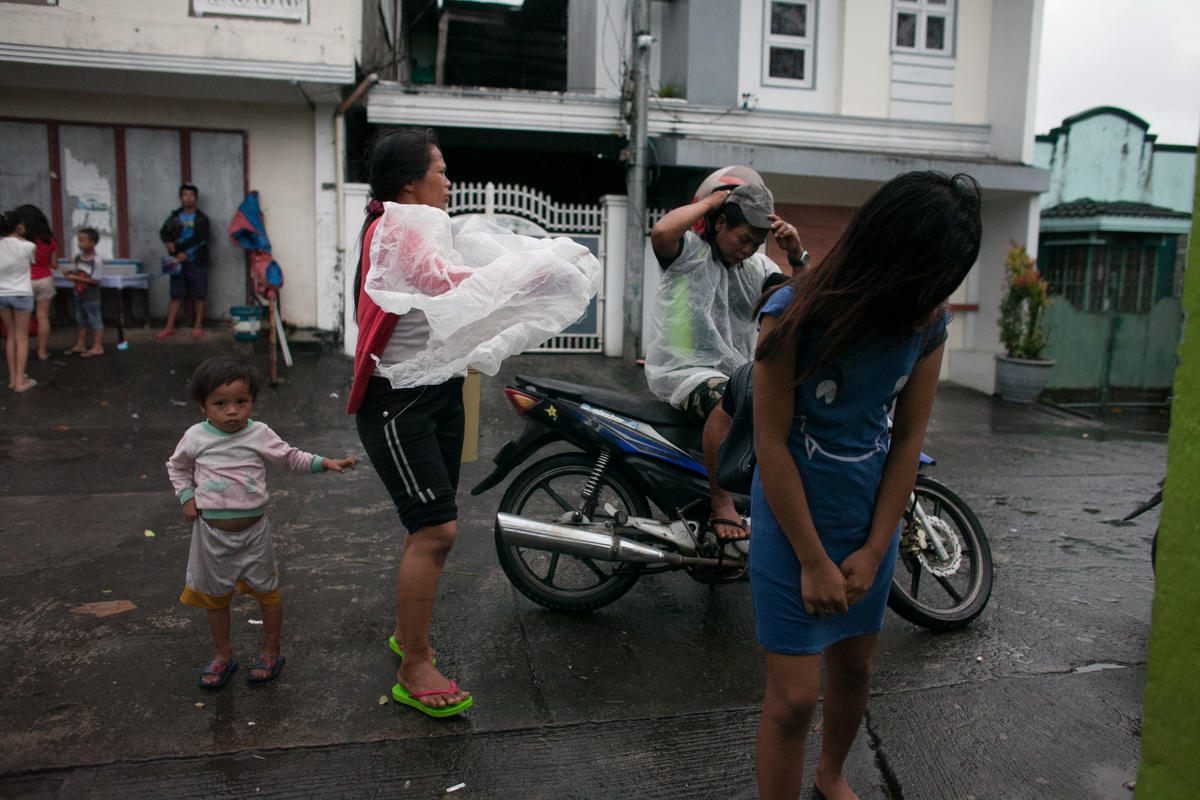
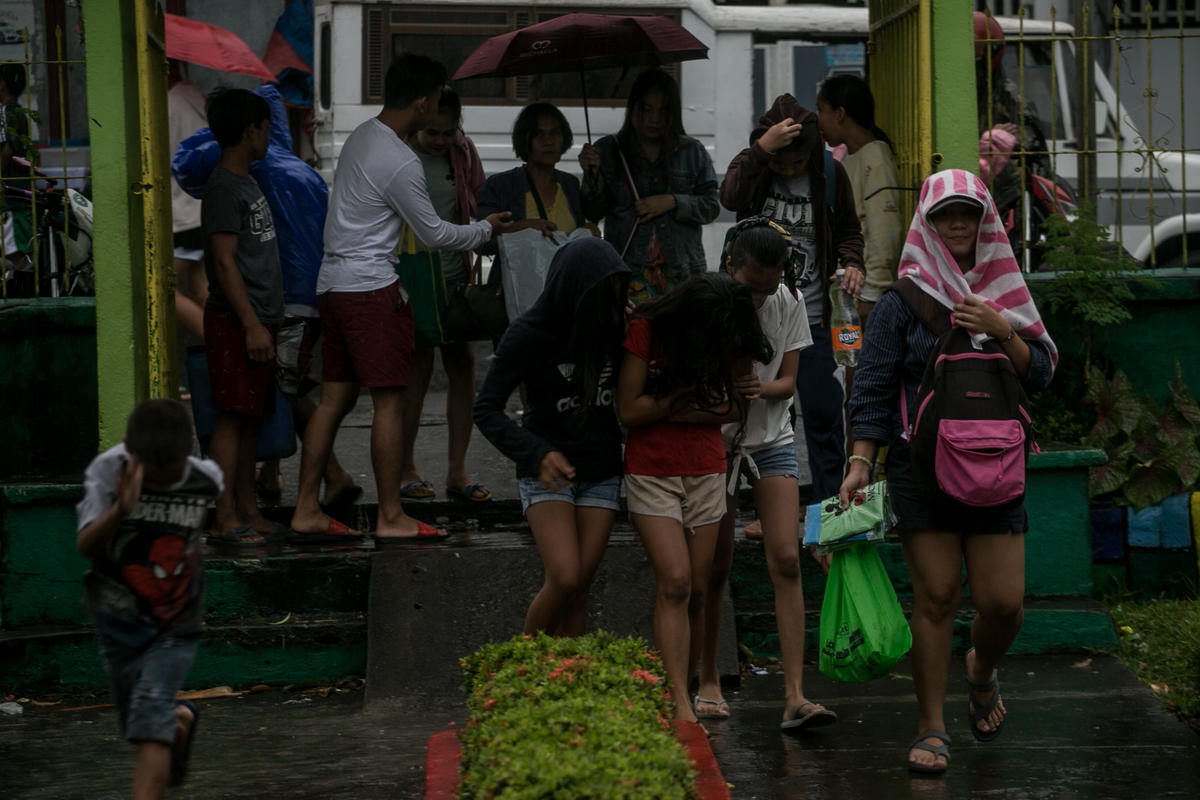
Strong winds blows in the town of Daraga in Albay. The typhoon is expected to make landfall either Monday evening or early Tuesday morning in Eastern Luzon.
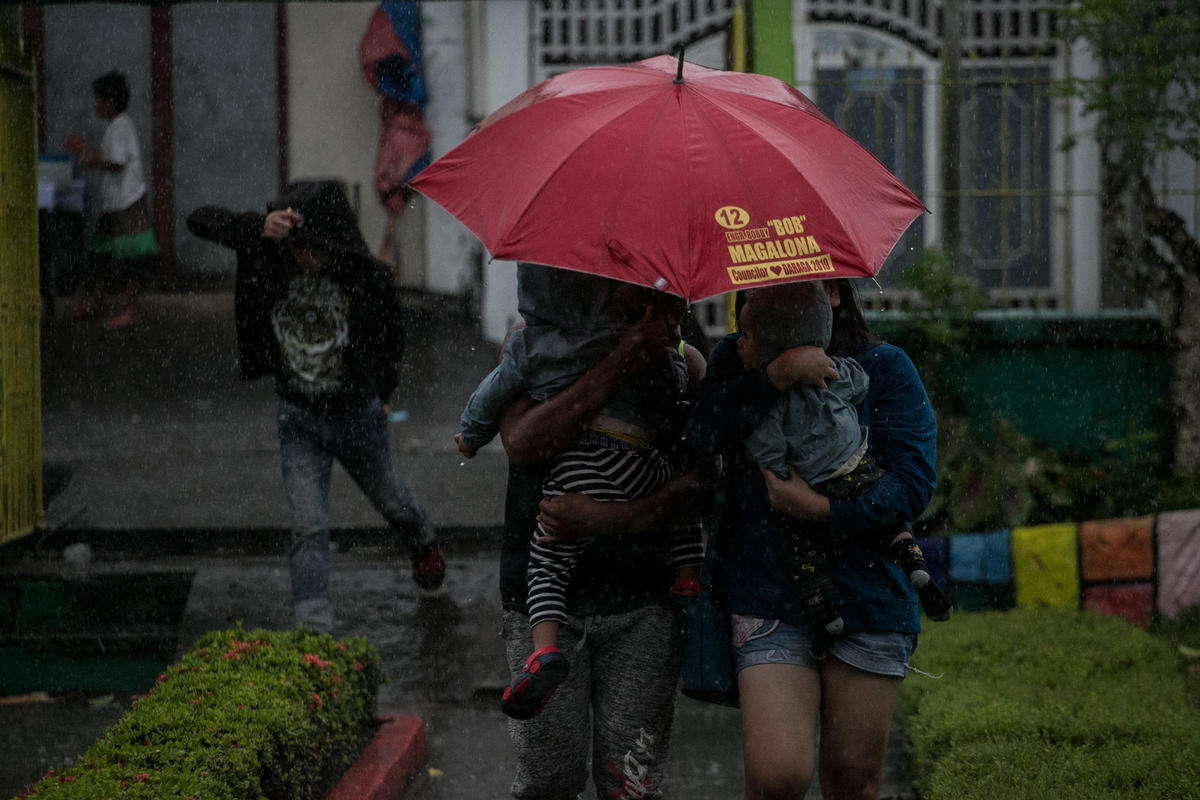
Families rush to nearby evacuation centers.
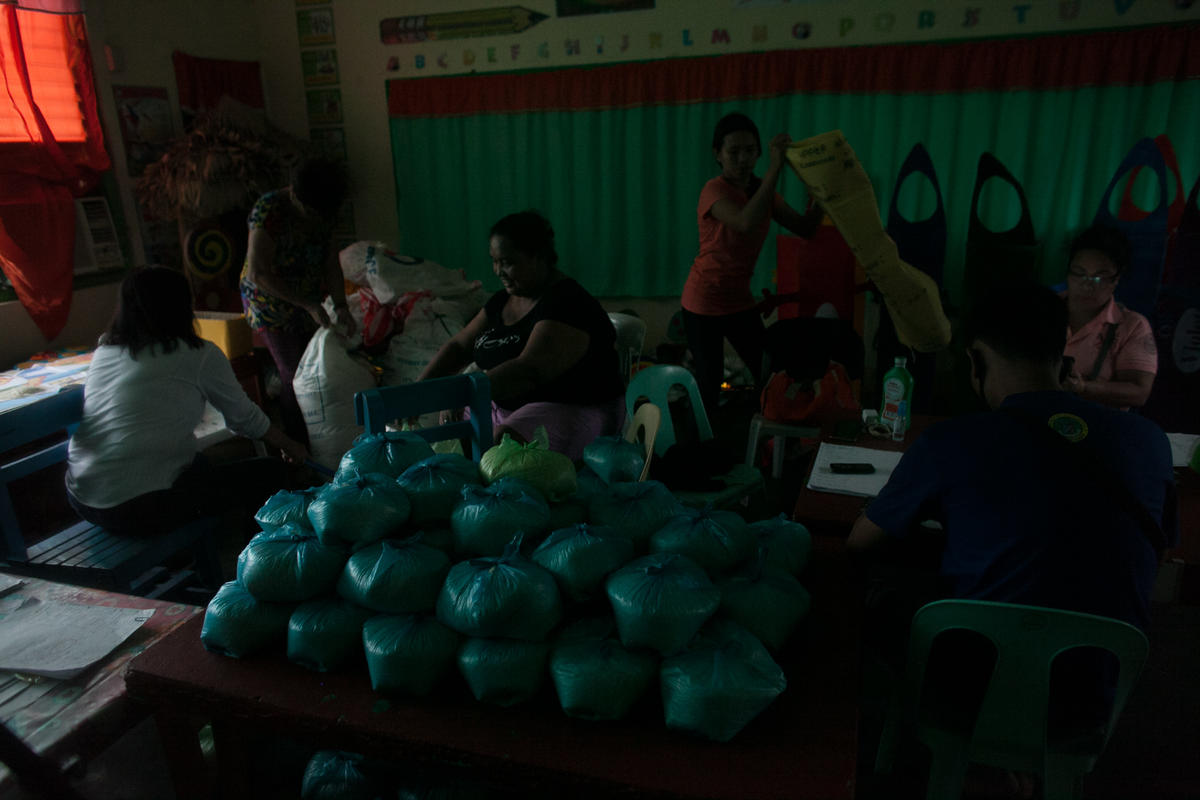
Residents help in repacking relief goods inside an evacuation center.
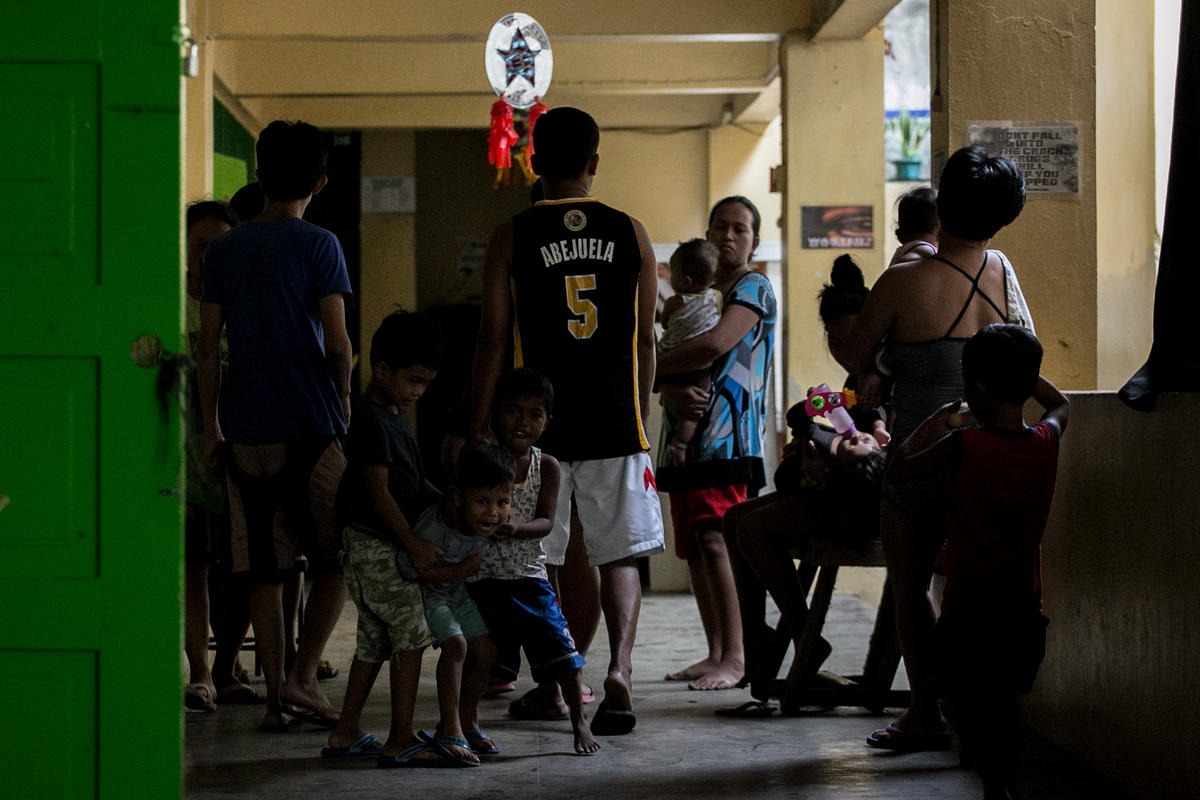
Children playing along the corridor of an evacuation area.
11:00 (GMT +8)
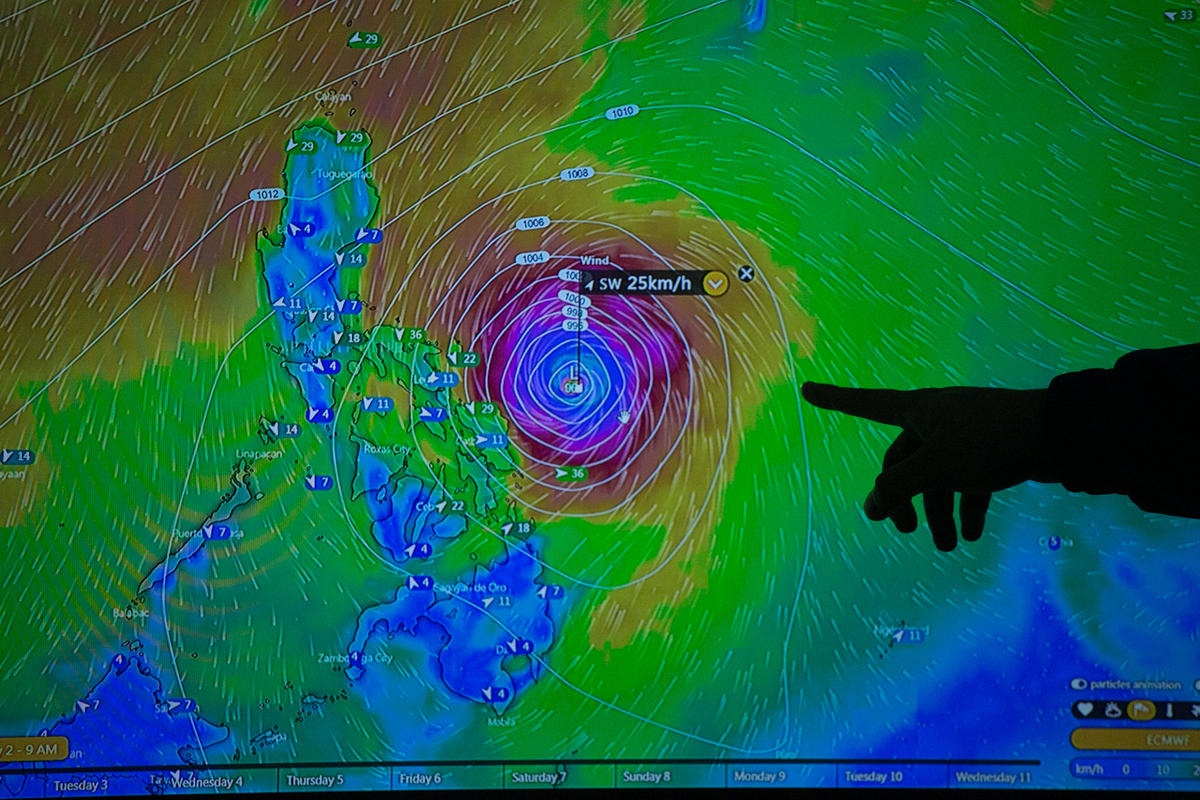
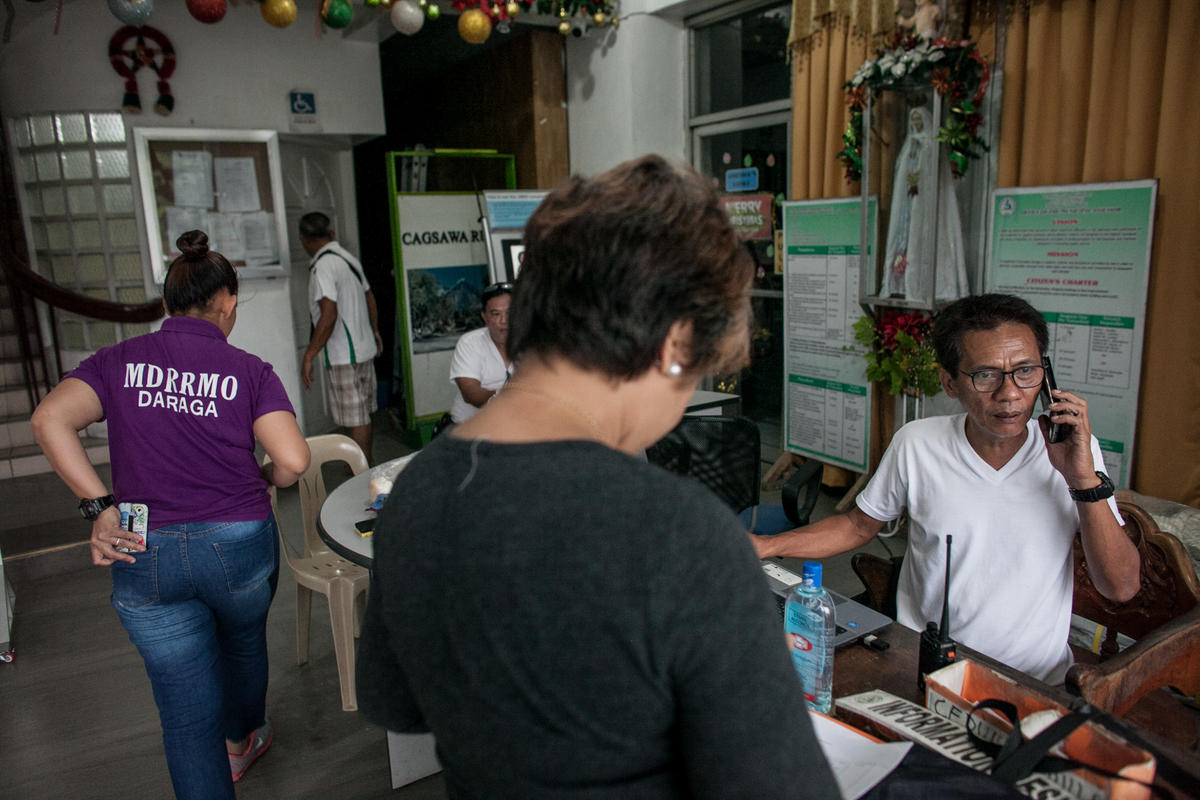
The City Disaster Risk Reduction Managment Office (CDRRMO) of Legazpi City monitors Typhoon Kammuri as it nears landfall in the province of Albay.
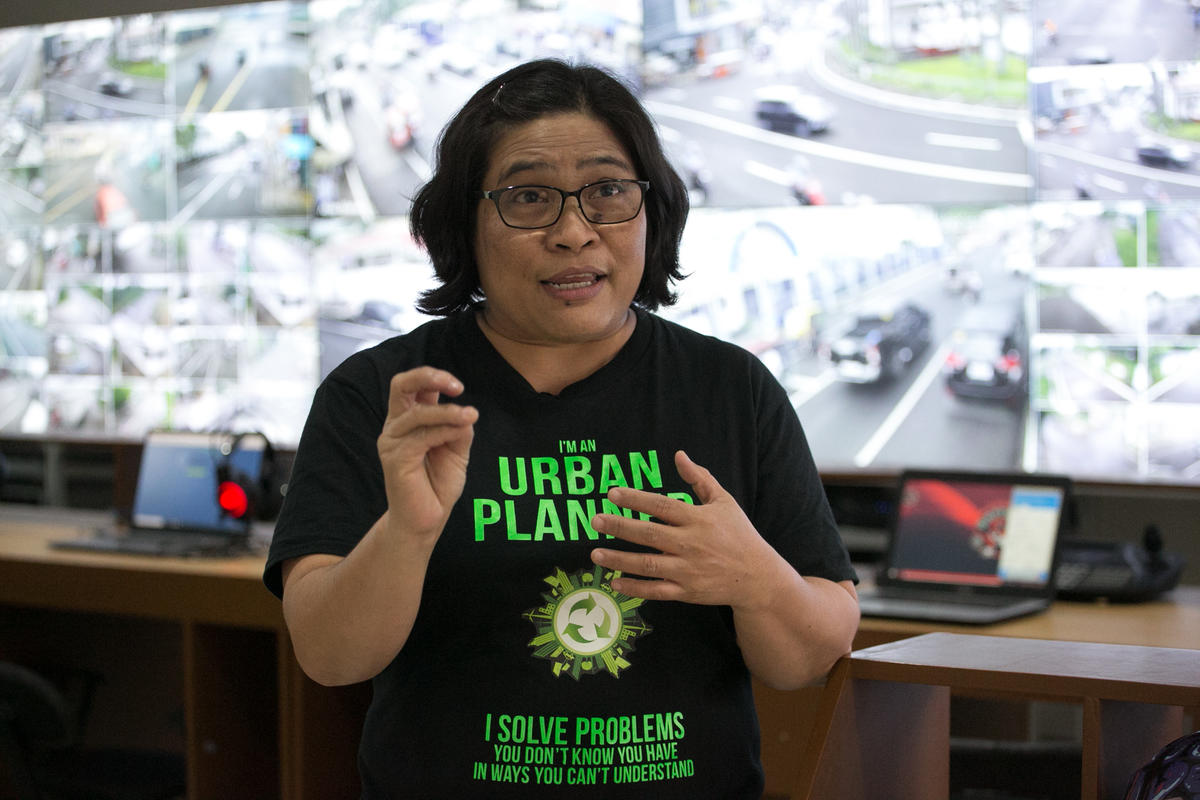
Engr. Miladee N. Azur, head operations of CDRRMO, shares how they used to only prepare for strong winds and probable flooding, but with the effects of climate change, they now need to prepare for additional threats such as landslides, storm surge, and lahar.
9:00 (GMT +8)
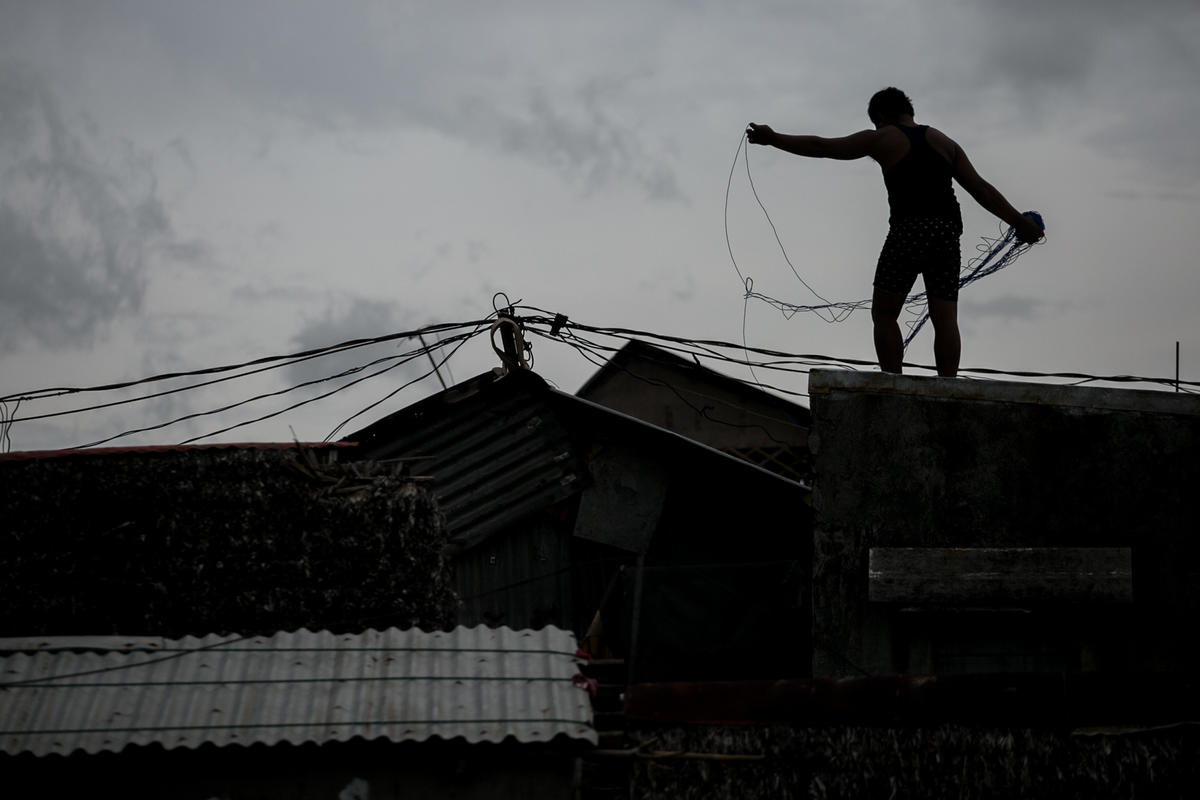
A man reinforces the roof of his house in preparation for Typhoon Kammuri.
Strong waves batter the coastline of Legazpi City, Albay.
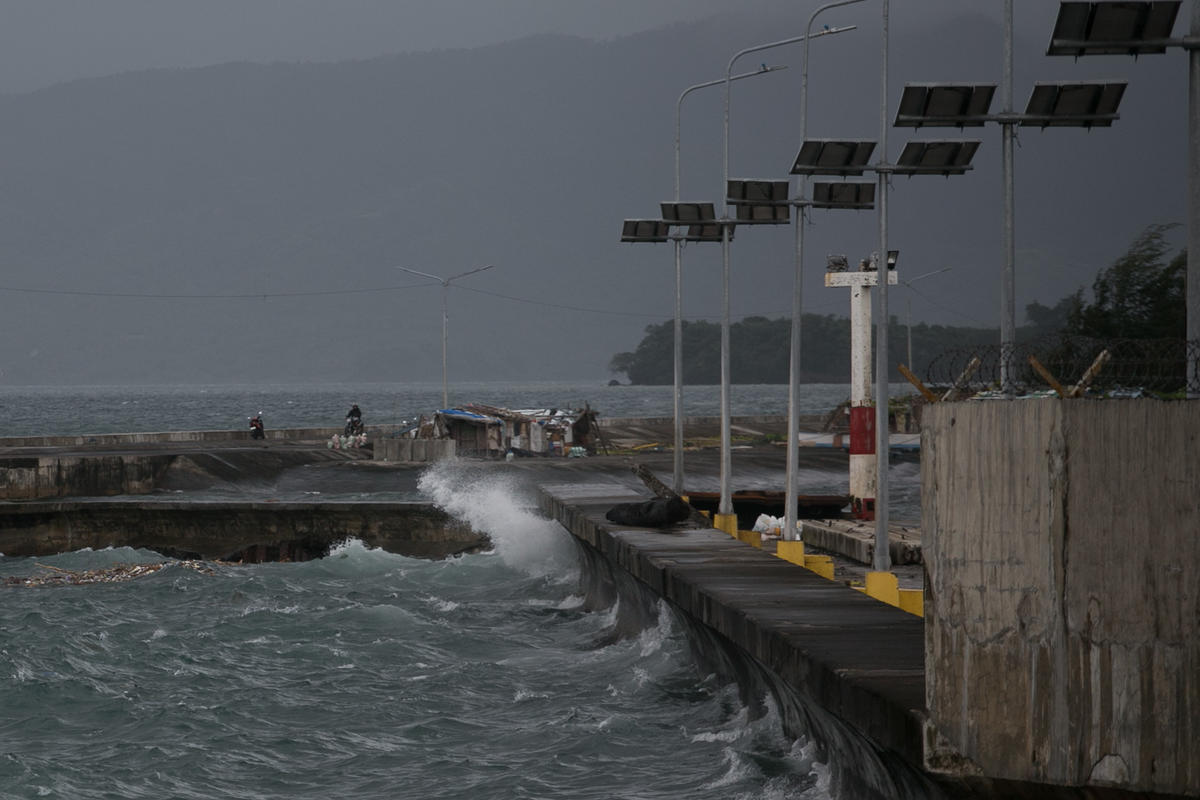
Thousands of residents living along the coastline have been evacuated as Albay and nearby provinces in Eastern Luzon brace for the impacts of the typhoon.
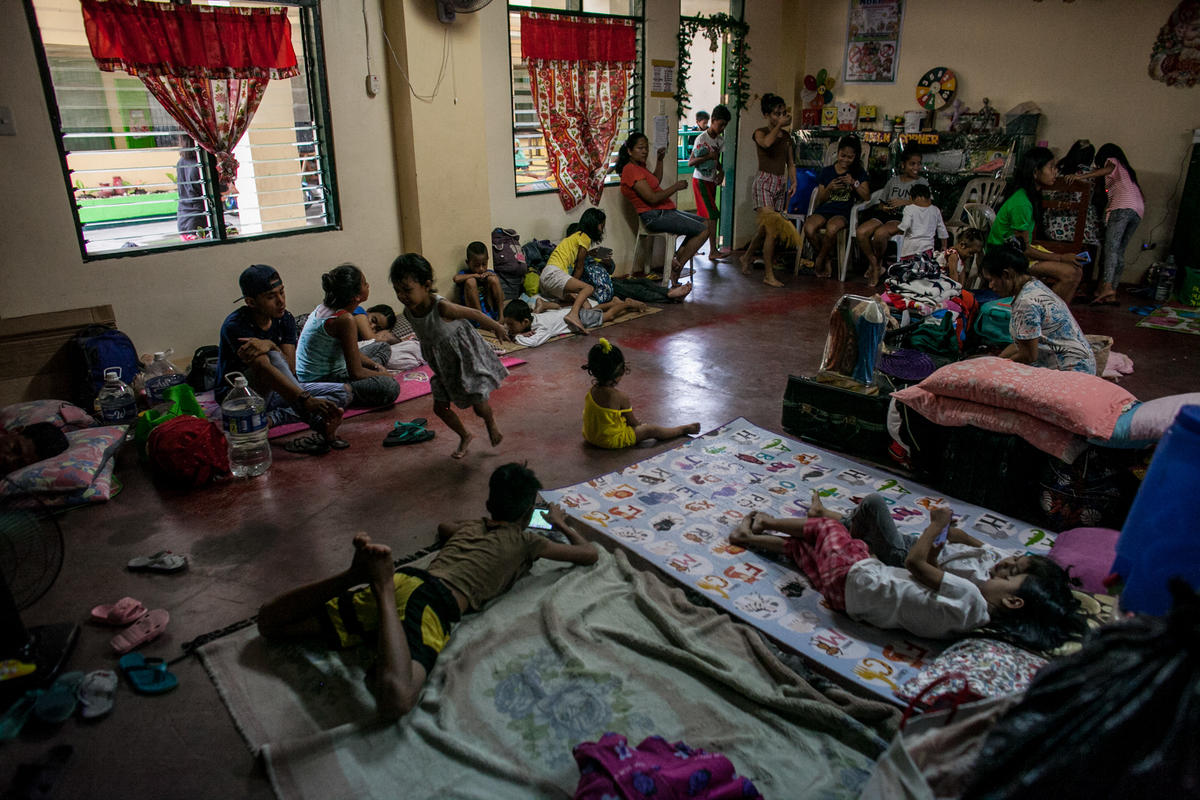
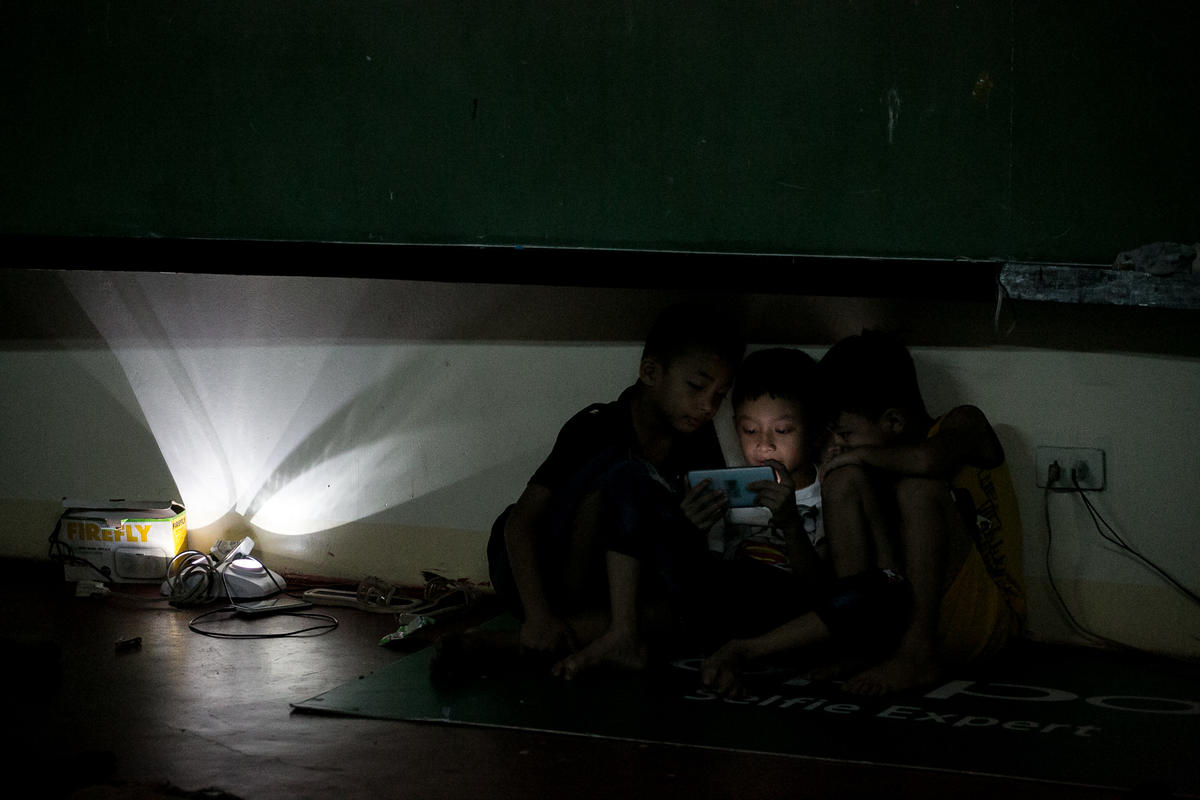
Children play video games inside a school turned into an evacuation area.
December 1, 2019, Sunday
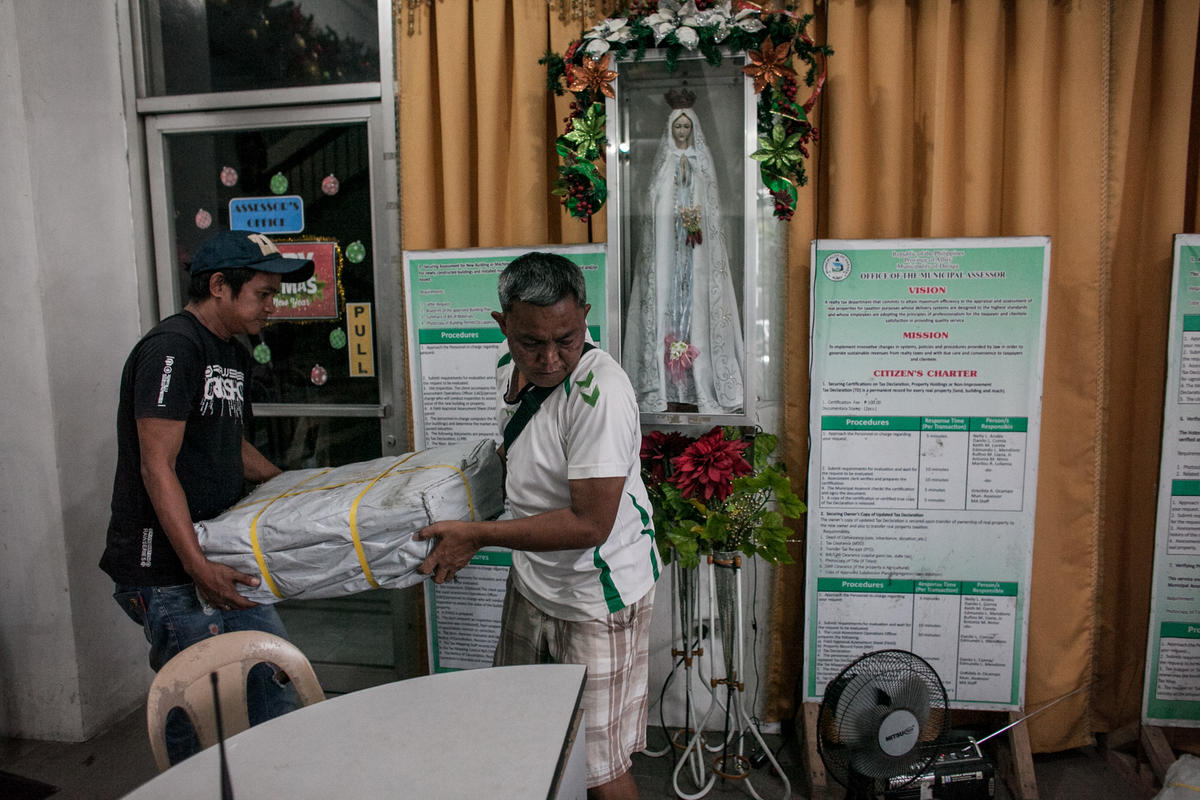
Members of the Municipal Disaster Risk Reduction and Management Office (MDRRMO) assemble relief goods and coordinate with village officials in Legazpi, Albay.
Typhoon Kammuri entered the Philippine Area of Responsibility (PAR) on Saturday and is expected to bring heavy rains and strong winds across Luzon.
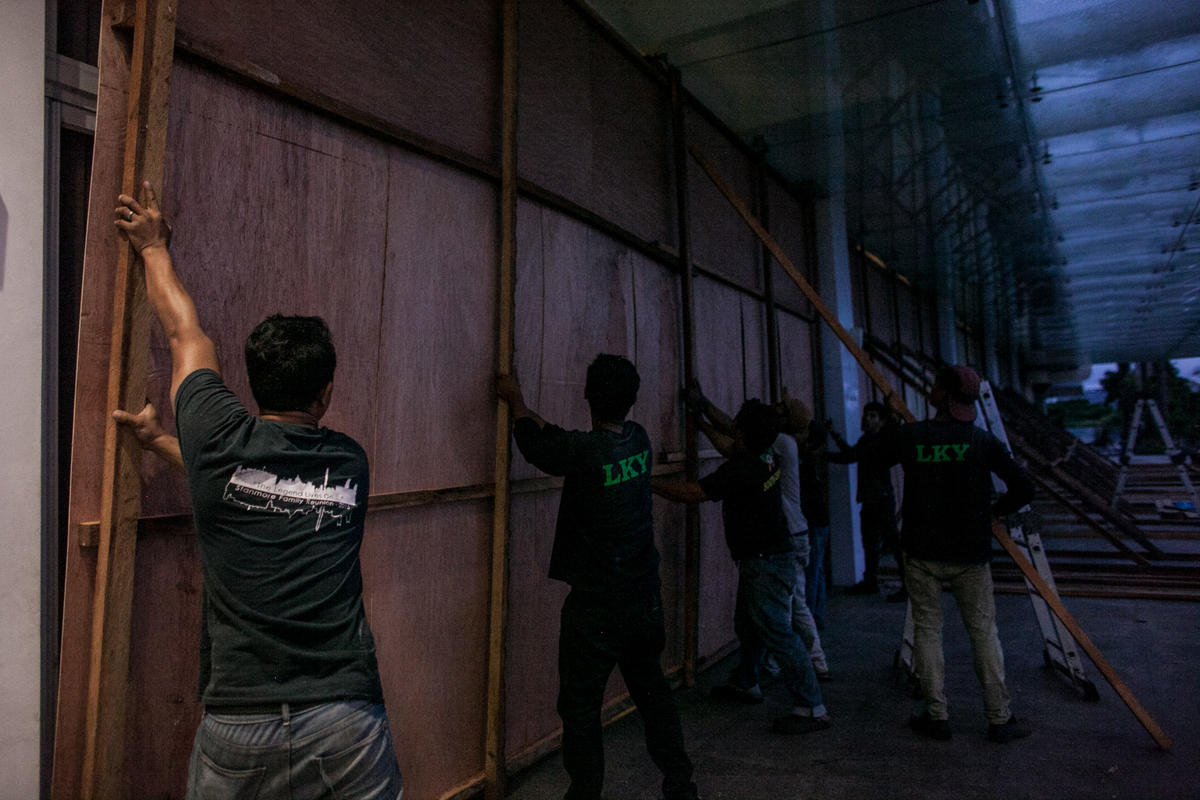
Workers reinforce hotel windows with wood in preparation for Typhoon Kammuri.
Typhoon Kammuri (Tisoy) is the Philippines’ 20th typhoon this year, highlighting that the Philippines is perhaps the country most vulnerable to and most impacted by strong typhoons.
Scientists are saying that the warming of the world is making weather events such as typhoons stronger. Typhoon Kammuri is not a super typhoon, but its impacts will still be heavily felt by Filipino communities which are in its path.
Greenpeace teams are on the ground to join and bear witness to Filipinos rising up in the face of the climate emergency.