12-month review of satellite imagery finds no evidence of Ukrainian shelling and documents Russian military damage to ZNPP power lines
Kyiv, 4 March 2026. Russian false flag sabotage and military strikes during the past 12 months are the sole cause of damage and loss of external grid connection to the Zaporizhzhia Nuclear Power Plant (ZNPP). This is the conclusion of a new Greenpeace Ukraine analysis published on the four year anniversary of the illegal Russian occupation of the plant. The attacks and frequency of damage and loss of external grid line connection has significantly increased in the past year as Rosatom continued to develop its plans for restarting the ZNPP reactors which have been shut-down since September 2022.
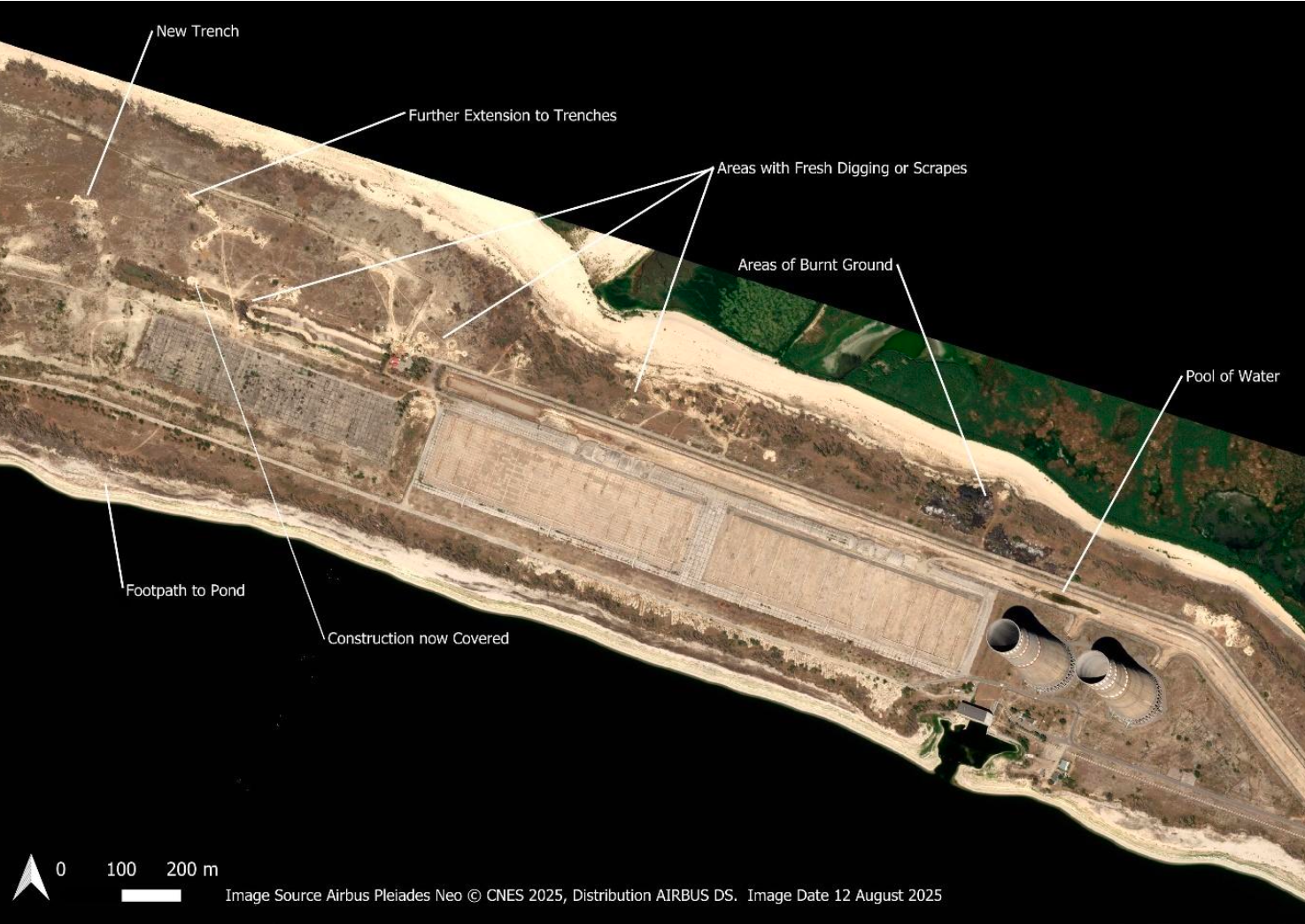
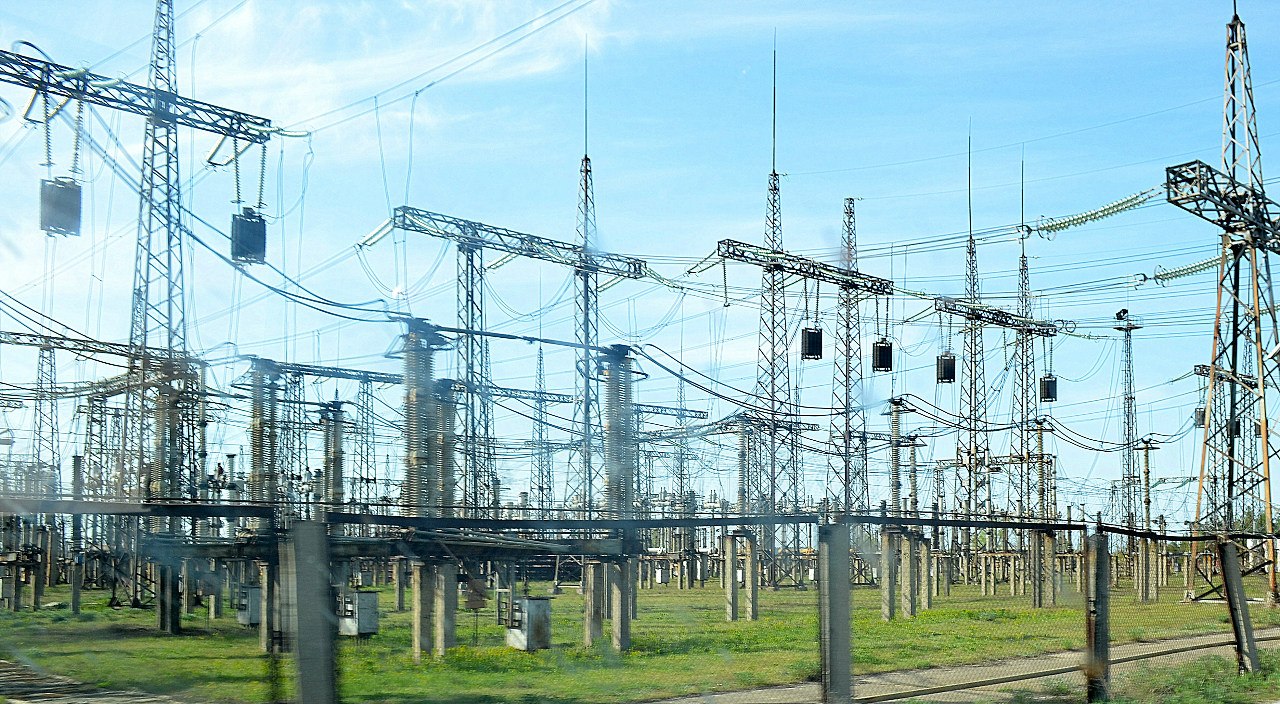
High resolution satellite imagery of electrical switchyards and transmission towers at the ZNPP and the Zaporizhzhia Thermal Power Plant (ZTPP) were reviewed over the past year by Greenpeace Ukraine nuclear energy specialists in consultation with McKenzie Intelligence Services (MIS). There was no evidence of any shelling by Ukraine military forces at the key locations as falsely claimed by Rosatom and the Russian government.
Greenpeace has sent its analysis to the Board of Governors of the International Atomic Energy Agency (IAEA) which meets in Vienna 2-6 March.
“The Russian armed forces and Rosatom have been conducting a large-scale disinformation and false-flag campaign at the ZNPP since 2022. The last year of the occupation is not unique – however Greenpeace Ukraine sees the escalation. Their sabotage operations at switchyards and transmission lines, as well as missile and drone attacks against substations on the wider Ukraine grid, violate fundamental nuclear safety principles. The Russian disinformation needs to be exposed for the lies that they are. For these attacks Rosatom must be comprehensively sanctioned and punished for the crimes it has orchestrated,” said Jan Vande Putte, nuclear energy specialist at Greenpeace Ukraine.
The key findings of Greenpeace review of the past year of loss external grid connection at the ZNPP are:
● No evidence of Ukraine shelling of ZNPP power lines and associated switchyards;
● Since July 2025 there have been four occasions when the ZNPP suffered Loss Of Offsite Power (LOOP);
● Three of the LOOPs were a direct consequence of Russia’s wider military attacks on Ukraine’s electricity infrastructure, including critical sub-stations, underscoring the vital importance of stopping these attacks and the important role for the IAEA extended mission teams (2)
● Between February 2025-February 2026 there were 13 cases of damage to either the 750 kV Dniprovska or 330kV Ferosplavna-1 lines leading to loss of connection to the ZNPP;
● Six cases of damage have been located in territory under temporary Russian occupation in close proximity to the ZNPP or Zaporizhzhia Thermal Power Plant (ZTTP);
● Seven losses of grid connection were due to Russian shelling and missile attacks on the Ukraine electricity grid in Nikopol district, and the wider Dnipro region;
● For 296 days in the past year one or both of the grid lines to the ZNPP have been disconnected; and
● In key locations at the ZNPP and ZTTP, the IAEA mission personnel are prevented by Rosatom from accessing the site to conduct inspections.
● The IAEA Director General’s claims that repairs to damaged gird requires a joint Ukraine/Russia ceasefire, promote Russian disinformation.
“Since October 2025, the IAEA Director General Rafael Grossi has facilitated five local ceasefires between Russia and Ukraine related to the ZNPP. But the evidence shows that there is only one guilty party attacking the nuclear plant grid – the Russian military aided by Rosatom. Our evidence to the Board of Governors is aimed at exposing Russian deception. Grossi needs to stop repeating and amplifying Russian propaganda and instead report in detail on Russian crimes,” said Shaun Burnie, nuclear specialist at Greenpeace Ukraine.
Russian efforts to damage and sabotage the ZNPP grid lines while falsely claiming Ukraine responsibility is a central tenet of the Russian government and Rosatom disinformation campaign and their efforts to attempt to normalize their illegal occupation of the ZNPP. This ‘normalization’ was highlighted by the recent issuing of nuclear plant licenses for unit 1 and 2 reactors by Russia’s Federal Service for Environmental, Technological and Nuclear Supervision, Rostekhnadzor, which declared that ZNPP meets the highest Russian safety standards.
NOTES
2 – Greenpeace Ukraine, Risk of unprecedented nuclear disaster if Russia’s attacks on Ukraine’s electricity system continue, 2 October 2024, see https://greenpeace.at/uploads/2024/10/copy-of-greenpeace-analysis-on-risk-of-unprecedented-nuclear-disaster-in-ukraine.pdf; and Russians again targeting critical electricity system for nuclear plants in Ukraine, 1 November 2025, see https://www.greenpeace.org/ukraine/en/news-en/4565/russians-again-targeting-critical-electricity-system-for-nuclear-plants-in-ukraine/