IAEA Director Grossi “A great day for Russia.”
5 February 2026
The official construction of the Russian Paks II nuclear plant began in Hungary today with the start of pouring of the base-mat concrete. The two reactor project is funded by the Russian state in billions of Euros of loans to Hungary which have been shown to violate European Union law. The nuclear plant technology is supplied by Russia’s state nuclear corporation Rosatom, and is the VVER 1200 reactor design. The controversial project, located on the Danube river and 100 kilometres south of Budapest, was conceived nearly two decades ago, during which time Greenpeace and civil society in Hungary have challenged the plans as dangerous and uneconomic.
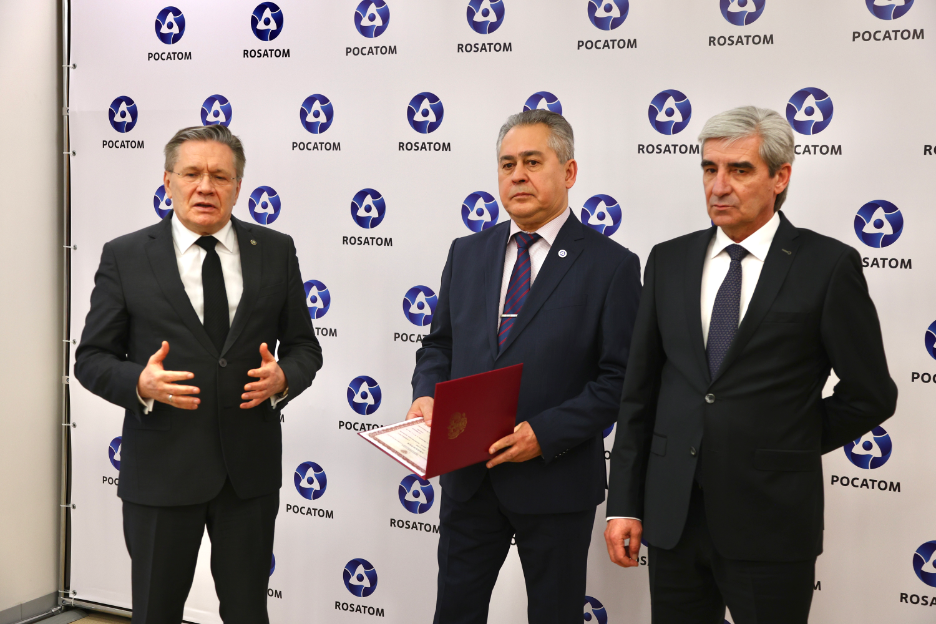
In attendance at the start of construction was Director General Alexey Likhachev together with Rafael Grossi, Director General of the International Atomic Energy Agency. IAEA DG Grossi described the start of a construction at Paks as, “a great day for Russia” and congratulated Rosatom for its nuclear cooperation “hand in hand with the IAEA” and our responsibility as leaders in the area of energy that it is done with safety and security at its core, and for “nuclear energy to be a messenger of peace.”
Greenpeace Hungary in a statement issued in Budapest says that the project is a grave political risk and moral irresponsibility for the Hungarian government to begin pouring the first concrete at the Russian Paks II nuclear power plant.
“The move is not just a technical milestone, but an open political statement: Hungary is siding with war, opacity and the Russian state nuclear industry. The government proudly advertises that the project is “sanction-free” and can therefore be accelerated. In reality, this means that Hungary has started construction of a nuclear nuclear plant with Rosatom that independent international investigations show is complicit in war crimes, nuclear blackmail, and endangering the civilian population in Ukraine.”
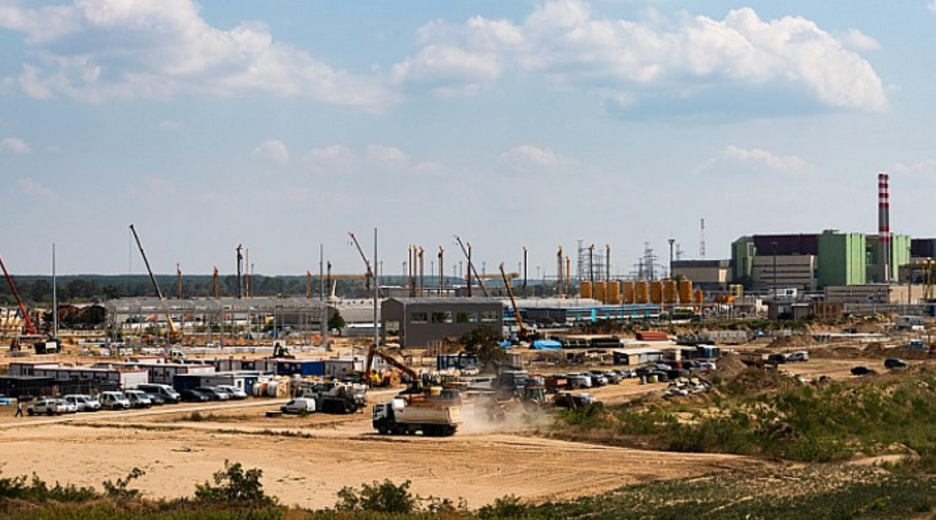
Paks II construction site in Hungary – Rosatom
Rosatom, is not a neutral energy actor but a criminal nuclear enterprise of the Russian state. It is a documented fact that it is an active participant in the occupation of Ukraine, plays a key role in the armed seizure of the Zaporizhzhia Nuclear Power Plant , and is contributing to the militarization of an operating nuclear power plant: an unprecedented move in the history of nuclear energy.
According to reports from Ukrainian NGOs and international human rights defenders, Rosatom has forcibly integrated the plant’s workers into the occupation system, while also documenting unlawful detention, intimidation and torture. All this seriously violates the principles of the International Atomic Energy Agency (IAEA) and creates a nuclear risk threatening the whole of Europe. When Hungary starts pouring concrete at Paks II, it is not only laying the foundation for a power plant, but also a long-term political dependence on Russia which has launched a full scale war against Ukraine. party.
Rosatom has so far escaped severe EU sanctions because it is protected by key European economic interests. French and German majors, including Framatome and Siemens, continue to provide strategic technology and expertise to Rosatom projects, including the instrumentation and control systems that act as the “brains” of nuclear power plants. This technological cooperation is not a neutral business, but an indirect contribution to Russia’s geopolitical influence and war capabilities. And Hungary is not a victim in this system, but an active participant, when consistently blocks EU sanctions on Rosatom and accelerates the Paks II investment. Rosatom’s exemption from sanctions is not unprecedented for United States policy either. The U.S. administration in the last year has lifted financial sanctions against Russian banks to allow funding of the Paks II project. This practice makes it clear: the “inviolability” around Rosatom is not accidental, but the result of conscious geopolitical considerations, in which the Hungarian government is also embedded by accelerating the Paks II project.
All this is happening in a nuclear project that is burdened by serious legal and democratic shortcomings. Court of Justice of the European Union destroyed the Commission decision approving the state aid for Paks II because the contract awarded to a Russian company without a competitive tender was not examined and in breach of EU law. The Hungarian government has also received a rare, formal warning based on the Aarhus Convention, because the government prevented the public from the analyses that underpin Paks II for years and making meaningful social participation impossible. A multi-trillion-Russian nuclear project which have implications for decades is being decided behind closed doors.
According to Greenpeace, the start of concrete pouring today is not Hungary’s future, but a fundamentally flawed decision: Paks II is based on an expensive, outdated, risky technology that diverts resources from energy efficiency and renewable energy development, while increasing the country’s political and economic vulnerability from Russa. This is not energy security, but dependency. This is not climate protection, but risk. This is not progress, but a decision stuck in the past., Greenpeace Hungary calls on the government to immediately stop the Paks II project, make all background calculations and contracts public, and start a real social debate about Hungary’s energy future before more concrete, money and political credibility are poured into a flawed project.