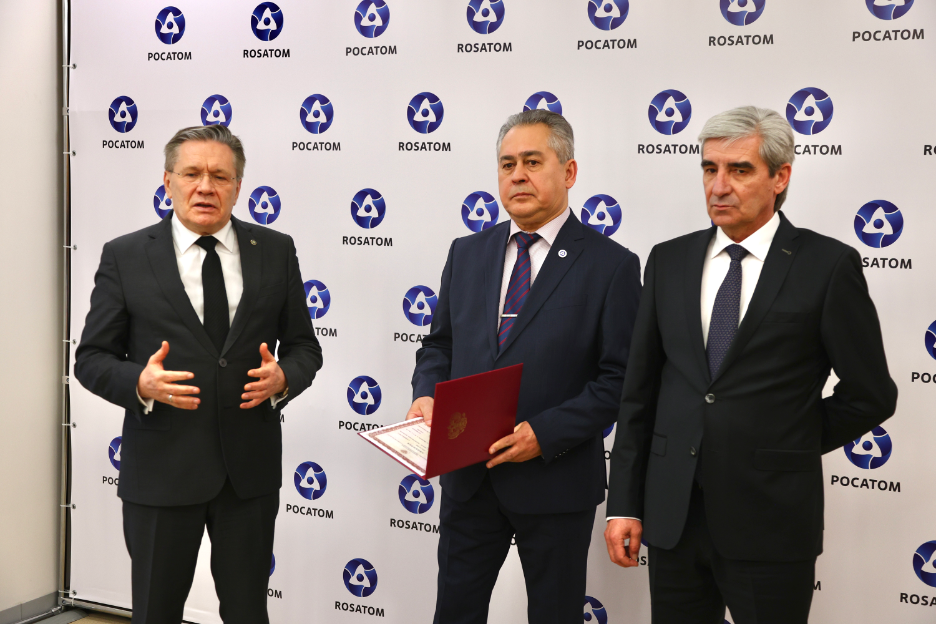
On photo: Alexey Likhachev, CEO of Rosatom, Alexander Trembitsky, Head of the Federal Service for Environmental, Technological and Nuclear Supervision, and Ramil Galiev, CEO of Russian JSC Zaporizhzhia NPP Operating Organization, 18 February 2026 – Photo Rosatom.
The issuing of an operating license by the Russian nuclear regulator for the Zaporzhzhia nuclear reactor unit 2, which was announced in the Russian propagandistic Telegram Channel, has no legal basis either in Ukraine or in international jurisdiction, Greenpeace Ukraine stated today.
“Rostekhnadzor, like Rosatom, is a criminal organization. As a tool of the Russian state it will do what it is told. There is no credible safety basis for signing off on a license for a nuclear plant that has been under military occupation for nearly 4 years and where effective maintenance of the reactors has collapsed. The idea that Russia has any right to issue an operational license for Ukraine’s nuclear plant at Enerhodar is outrageous. But is not surprising given the scale of their criminal operations at the plant since 2022,” said Shaun Burnie, senior nuclear specialist of Greenpeace Ukraine.
The illegal license was granted by Russia’s Federal Service for Environmental, Technological and Nuclear Supervision (Rostekhnadzor) which is under the effective control of Rosatom, and thus not an independent nuclear regulator. Presenting the license to Rosatom head Likhachev, Rostekhnadzor Director Trembitsky “emphasized that the plant had successfully passed the inspection, confirming its high level of safety.” This is clearly ridiculous and has no basis in reality. Previously, on 23 December 2025, Rostekhnadzor issued a license for the operation of ZNPP unit 1.
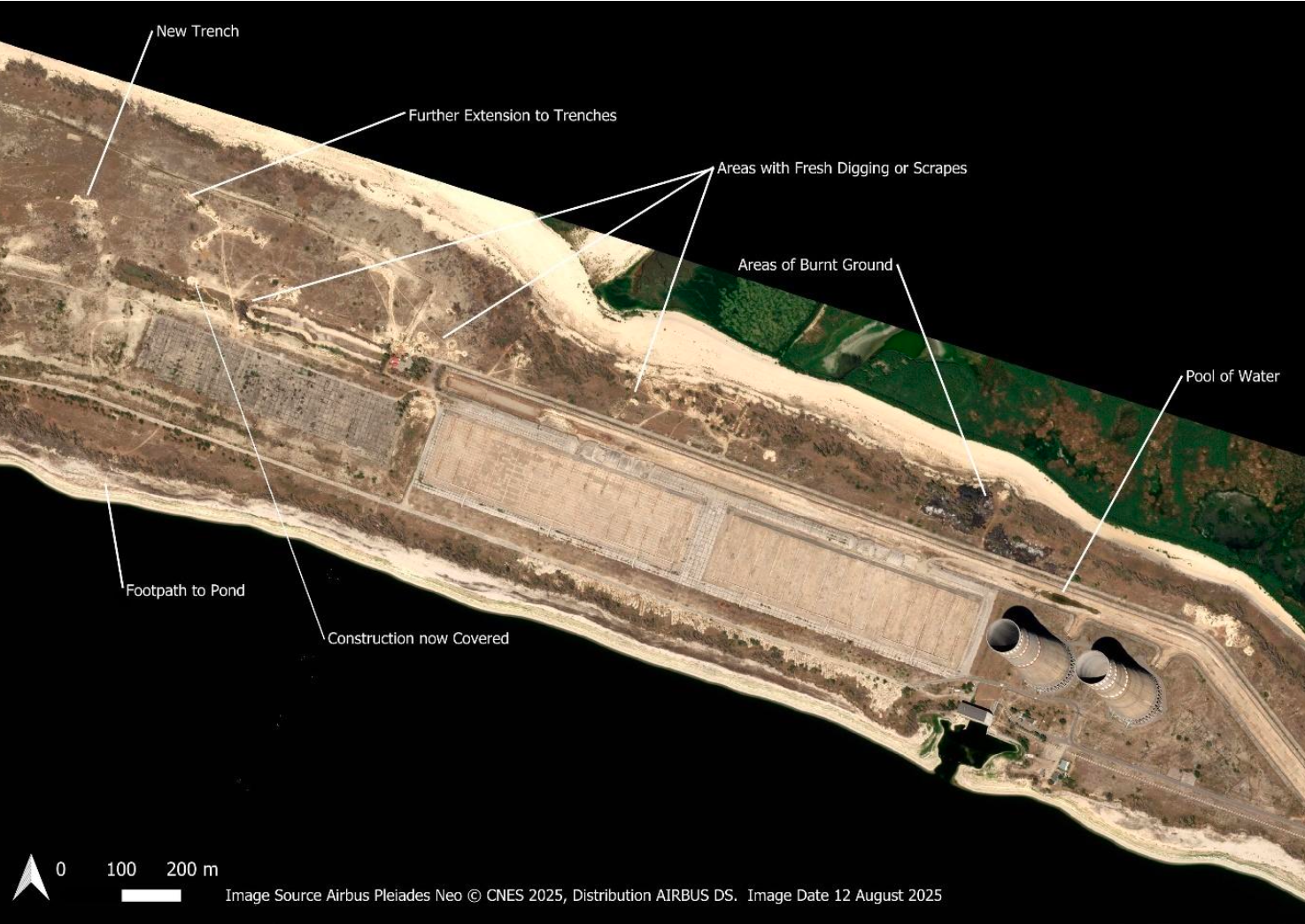
A new satellite study of the Zaporizhzhia Nuclear Power Plant (ZNPP) in 2025, prepared by McKenzie Intelligence Services (MIS) at the request of Greenpeace Ukraine, confirms not only the systematic militarization of the plant and its associated infrastructure, but also a complete disregard for nuclear safety and security principles at the site. A satellite analysis has also found that the surface area of the cooling pond decreased by more than 100,000 m² over the summer of 2025, while fortified military positions and anti-drone structures have appeared around the nuclear facility.
Key findings and key figures from the study can be viewed here.
The granting of the operating license does not mean that reactors at the ZNPP are at imminent risk of restart. The term ‘operational license’ applies to the reactors in their current mode which is generally ‘cold shutdown’ since 2022. Rosatom is committed to illegally trying to restart the reactors. But the scale of the challenges at the plant are enormous.
“This is also a further example of the dangerous nuclear disinformation campaign by Rosatom to try and convince the world that all is proceeding as normal at the plant. As the latest McKenzie report once again shows, there is nothing normal about a full scale military occupation of Europe’s largest nuclear plant where since 2022 torture and intimidation of Ukrainians by Russian forces and enabled by Rosatom has been widespread and where the nuclear plant is used as a military platform to attack and kill Ukrainian civilians living in Nikopol and wider Ukraine”, said Jan Vande Putte of Greenpeace Ukraine.