
Hostomel – green reconstruction of kindergarten
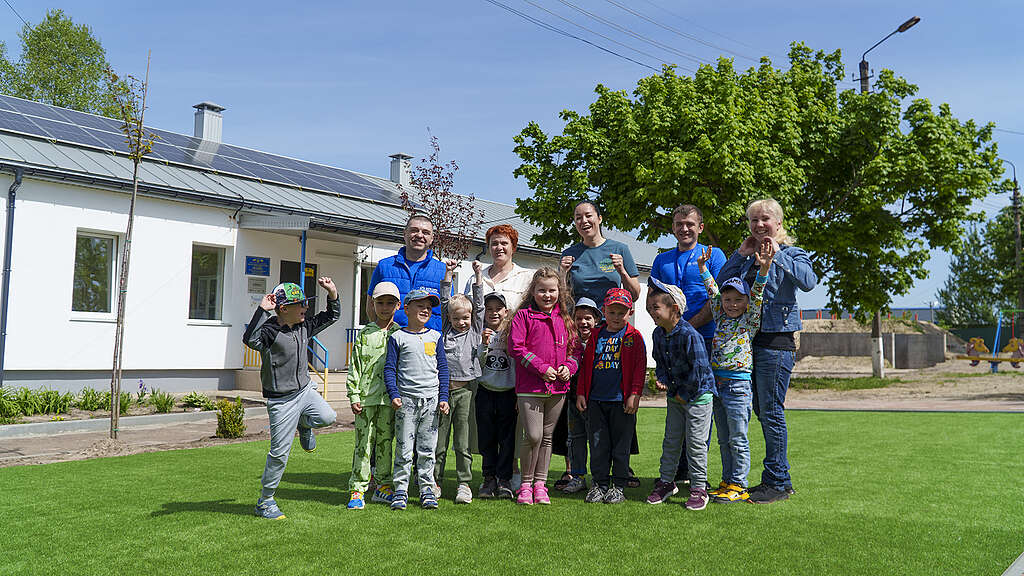
Inspired by green reconstruction of the Horenka outpatient clinic, the Hostomel military administration asked the organization to help install solar panels in the war-ravaged kindergarten.
History
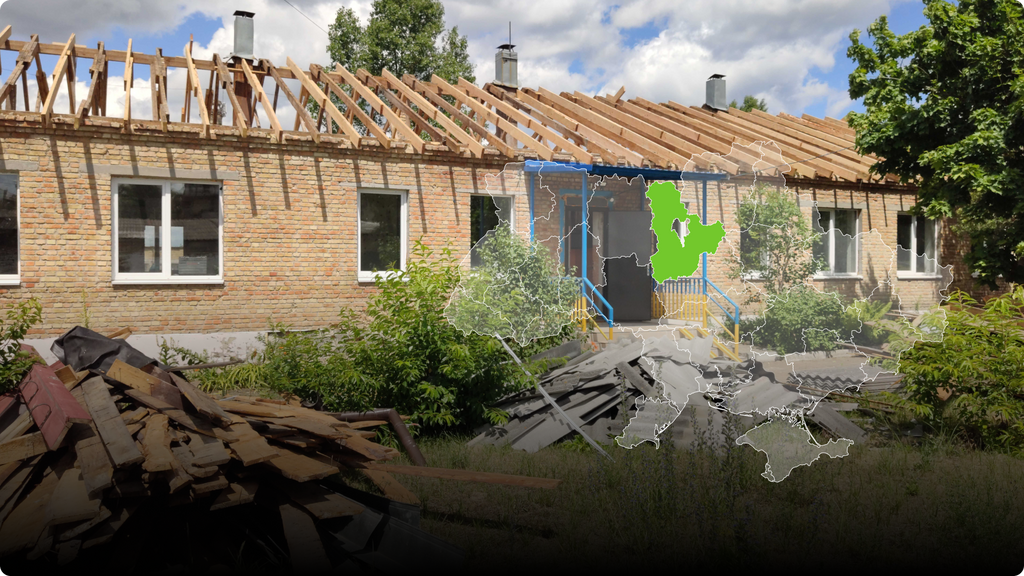
Inspired by the green reconstruction of the Horenka outpatient clinic, initiated by Greenpeace Ukraine, the Hostomel military administration asked the organization to help install solar panels in the war-ravaged kindergarten.
Solution
Inspired by green reconstruction of the Horenka outpatient clinic, the Hostomel military administration asked Greenpeace Ukraine to help install solar panels in the war-ravaged kindergarten.
“This is the only kindergarten in the Hostomel community that accepts children from both Hostomel and Horenka,” says Polina Kolodyazhna, senior campaigner at Greenpeace Ukraine. “It is attended by 84 children, including children with special needs, and we decided that we could help the kindergarten become more energy independent, survive all these emergency shutdowns, and continue to operate”.

11 kWh
Solar station capacity

28 kWh
Batteries capasity

20 kW
Inverter capacity
Arche Nova, an international charitable foundation that works to restore de-occupied territories, social institutions, and private households, supported the project. Within the framework of the project “Multisectoral measures to restore and strengthen the resilience of communities in the de-occupied territories affected by hostilities in northern Ukraine (Kyiv, Chernihiv and Sumy regions),” an 11 kWh solar station and 28 kWh batteries were installed in the kindergarten “Kazka” in Horenka, which accumulate electricity and supply the kindergarten in case of a power outage. In addition, an inverter with a capacity of 20 kWh was installed. The solar power station was installed with funds from the German government.
“The goals of this project are, first and foremost, energy independence, which is very important nowadays, environmental protection, and of course, saving on utilities and energy,” says Borys Prykhodko, coordinator of the international humanitarian charity Arche Nova, “This cooperation is important for our organization, first of all, as a pilot project that we implemented together with Greenpeace Ukraine. I really hope that we will be able to scale up the implementation of such projects in the future.”
The solar panels provide the kindergarten with up to 1000 kWh of electricity per month, which is a third of the school’s needs. According to Yulia Kramarenko, director of the Kazka kindergarten, solar electricity is used most often to run computers, refrigerators, and for shelter – heating, lighting, and during the heating season, to maintain the heating system and pumps. The kindergarten has its own kitchen, where food is prepared for the children and for a branch of the local lyceum, so solar electricity also helps to keep the food in good condition even during power outages.
Greenpeace Ukraine is convinced that green technologies are the best solution for rebuilding Ukraine.
“Our research has shown that literally one percent of Ukraine’s territory is enough to provide the entire country with electricity from renewable energy sources,” says Greenpeace Ukraine Senior Campaigner Polina Kolodyazhna, “That’s why we constantly emphasize to our partners, communities, and other organizations involved in reconstruction to install renewable energy sources. This is energy independence, and with Russia’s constant attacks on energy, green technologies are vital for Ukraine.”
Дізнавайся про роботу Greenpeace Україна
-
Greenpeace presents new pathway towards a resilient and sustainable heating system for Ukraine
Shifting financial support from fossil gas to heat pumps and renewable energy systems
-
Solar Power and Energy Storage Should Be at the Heart of Ukraine’s Green Recovery — Greenpeace Ukraine and SolarPower Europe
Greenpeace Ukraine, together with SolarPower Europe, Europe’s leading solar energy association, has developed recommendations aimed at accelerating the deployment of solar power and energy storage systems in Ukraine. Their goal…
-

Russia is deliberately sabotaging electricity supply lines at Zaporizhzhia NPP as new Greenpeace satellite analysis exposes Moscow’s disinformation on Ukrainian attacks
More than half of ZNPP’s external power losses since 2022 occurred in the past seven months- new analysis of Greenpeace Ukraine finds no evidence of claimed Ukrainian strikes

