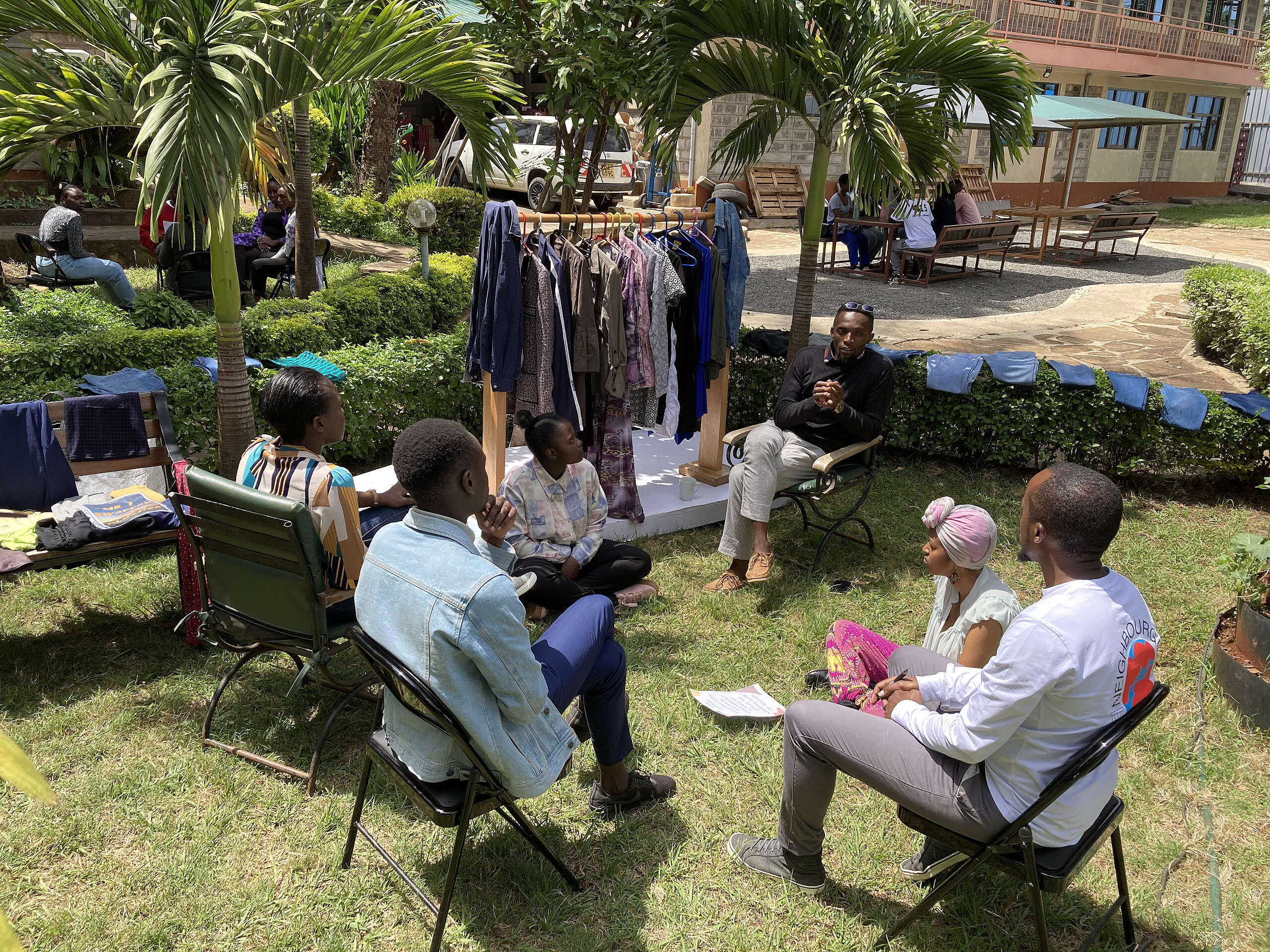
News of smallholder farmers across Kenya standing up to unconstitutional laws prohibiting them from sharing, exchanging or selling uncertified and unregistered seeds is but the latest legal battle on the African continent aiming to protect the rights of local communities and customs. 

This is a prime example of agricultural legislation which punishes ordinary citizens and smallholder farmers, and favours big multinational corporations. As the cost of living skyrockets, greedy corporations are profiting from hunger. The global food system is broken. But, activists and local communities are not taking it laying down  – not in Kenya, nor elsewhere on the continent. 

Here are three African activists who are pushing back to protect the right of African communities to continue our culture and traditions around food, as well as our right to food security.

Claire Nasike Akello – Nairobi, Kenya

Nasike is an environmental scientist who campaigns mainly on food and seed sovereignty within the African region. She currently leads the Seed is Sovereign campaign at Greenpeace Africa, a project  that seeks to safeguard  farming communities from  exploitation by exposing  neo-colonialist attempts that threaten seed sovereignty, local livelihoods and food sovereignty. The campaign is currently supporting  smallholder farmers who have taken Kenya’s government to court for passing a punitive seed law that criminalises farmers from selling and sharing seeds that are unregistered and uncertified. This legislation, punishes offenders with a prison sentence of up to a maximum of 2 years or a fine of up to KES 1,000,000.
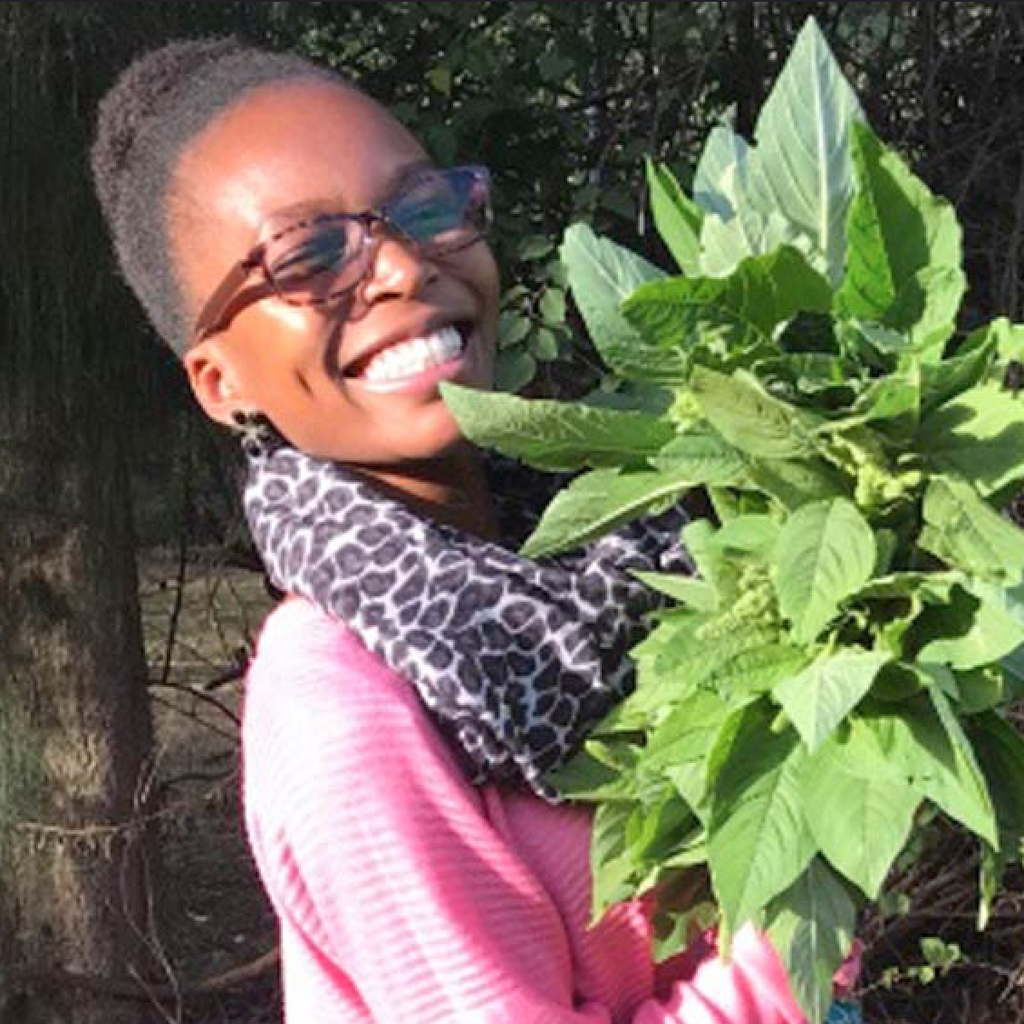
Claire Nasike Akello with plant
Claire Nasike Akello – Environmental Scientist and campaigner, Greenpeace Africa

Keep up with Claire Nasike on Twitter.

“I firmly believe that communities need to be protected from exploitation by Multinational companies and profit seeking individuals. Local communities have always lived in unison with nature and so have been the practices they have implemented. In the case of farming and seed saving, they have bred, saved, shared and exchanged Indigenous seeds since time immemorial. And so, Indigenous seeds form the culture of many communities. Passing laws to criminalise their use of Indigenous seeds seeks to break the cycle of self sufficiency, create poverty, enhance hunger and have local farming communities controlled by multinational seed companies seeking to make profit,” Nasike says. 

Darcise Dolorès Mache Ngassing  – Yaoundé, Cameroon

Darcise Dolorès is an award-winning Environmental Law student from Soa, Center Region, Cameroon. She is also an active member of the Greenpeace Africa volunteer group in Yaoundé, the nation’s capital. Based at the University of Yaoundé II, her studies draw on the landmark South African rooibos case on access and benefit sharing, which proved Indigenous Peoples’ ownership over their native plant wherever the plant or product made up of the plant is found. She hopes to use this legal victory to protect the access and benefit sharing of palm oil; essential to Indigenous Peoples’ culture in Cameroon, used in traditional dishes and ceremonies, as well as medicinally.
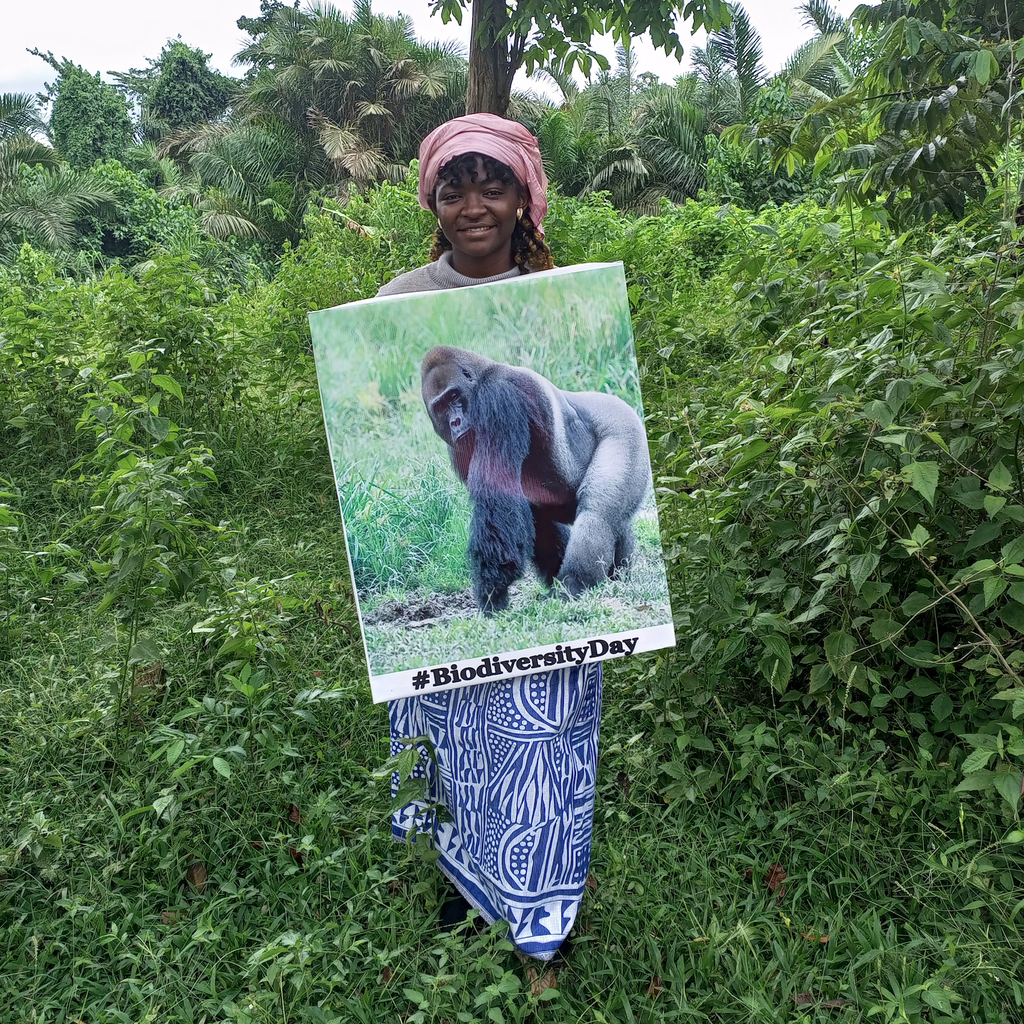
Darcise Dolorès Mache Ngassing
Law student Darcise Dolorès Mache Ngassing wants to protect local communities’ access to palm oil © Greenpeace Africa

Keep up with Darcise Dolorès Mache Ngassing on Twitter.

“I decided to study this field because I am concerned with the economic, social, cultural and environmental value of genetic resources and Traditional Knowledge Associated to genetic resources. Usually, multinationals make huge sums of money without sharing the benefit with local communities where those resources are found, and that is where the problem lies. My study attempts to provide solutions to the rights of local people, as well as reduce the gap between Global South countries and Global North in terms of access and benefit sharing,” Darcise Dolorès says.

Delwyn Pillay – Durban, South Africa

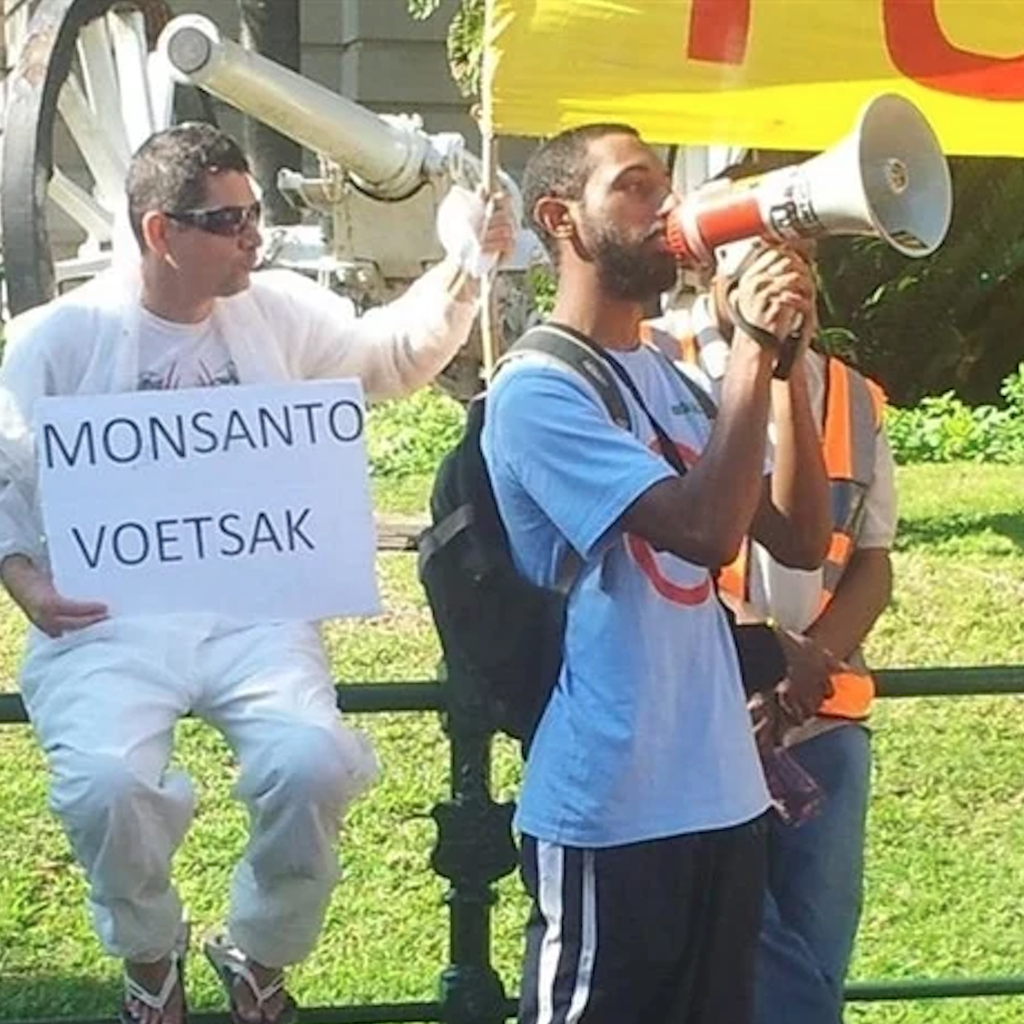
Delwyn is a well-known social justice activist based in Durban, South Africa. He has worked closely with Greenpeace Africa for many years, coordinating the organisation’s volunteer base in his city. The Environmental Management graduate also founded the Food Connect Durban campaign. Food Connect is all about connecting communities around sustainable food that is grown locally for a healthy body and mind, a healthy planet, and a healthy future for all – from the seed to the plate. The project seeks to maintain varieties of seeds, by collecting and saving heirloom seeds, for use in growing systems for the direct benefit of a community. It is aligned to that of the ‘Global Movement for Seed Freedom” and the “Climate Justice Charter Movement“.
<!-- wp:html -->
<style>
body{background-color:#000 !important;
background-image: url("https://www.greenpeace.org/static/planet4-africa-stateless/2024/06/13d3bdd1-deep-sea-mining-gp-africa.jpg");
background-repeat: no-repeat;
box-shadow: inset 0 0 0 2000px rgba(0, 0, 0, 0.5);}
.page-header-background:after{background:none !important}
.form-bg{height: fit-content;}
.row>* {width: auto !important;}
.skewed-overlay{display:none !important;}
h1,h2,p{color:#fff !important;}
.form-bg p{color:#000 !important;}
.text-bg{background: rgba(0,0,0,.6);}
.row h3{color:#FFF !important;}
.text-bg a{color:#00AAFD !important;}
.text-bg a:visited{color:#DA65FF !important;}
.counter-title{color: #FFF;margin:0;}
.counter-target{margin-bottom:0 !important;}
.counter-text {text-align: left;}


.site-footer, .nav-menu>ul, .nav-search-form, .nav-menu-toggle, .nav-search-toggle {display:none;}

.site-logo {padding:5px;}

.has-white-background-color {
    padding: 20px;
}

@media screen and (max-width: 600px) {
  .desktop-p, .desktop-spacer {
    visibility: hidden;
display: none;
  }
}

@media screen and (min-width: 600px) {
  .mobile-p, .mobile-spacer {
    visibility: hidden;
display: none;
  }
}

</style>
<!-- /wp:html -->

<!-- wp:spacer {"className":"desktop-spacer"} -->
<div style="height:100px" aria-hidden="true" class="wp-block-spacer desktop-spacer"></div>
<!-- /wp:spacer -->

<!-- wp:spacer {"height":"29px","className":"mobile-spacer"} -->
<div style="height:29px" aria-hidden="true" class="wp-block-spacer mobile-spacer"></div>
<!-- /wp:spacer -->

<!-- wp:columns {"className":"petition-row"} -->
<div class="wp-block-columns petition-row"><!-- wp:column {"width":"66.66%"} -->
<div class="wp-block-column" style="flex-basis:66.66%"><!-- wp:heading {"level":1} -->
<h1 class="wp-block-heading">Stop deep sea mining before it starts</h1>
<!-- /wp:heading -->

<!-- wp:paragraph -->
<p>In Africa, where biodiversity flourishes on land and in its surrounding seas, the deep sea is a treasure trove of biodiversity and home to untold wonders and possibilities. It is also one of our best allies against climate change. But a threat is coming: deep sea mining.<br><br><strong>The good news is we can stop this industry </strong>before it’s too late, but we don’t have much time.</p>
<!-- /wp:paragraph -->

<!-- wp:paragraph {"className":"desktop-p"} -->
<p class="desktop-p">Deep sea mining companies are pressuring governments to let them go down there, several thousand meters below the surface of the ocean, and<strong> plunder the seabed to extract metals</strong>. If this industry is allowed to start, gigantic machines weighing more than a blue whale will be lowered onto the ocean floor to plunder these pristine ocean ecosystems.<br><br>Imagine if we could go back in time and stop offshore drilling at the dawn of the oil age and prevent environmental and climate catastrophes. This is where we are at with deep sea mining. <strong>This is a once in a generation opportunity</strong>: to stop another extractive industry from damaging the global oceans the way the fossil fuel companies have done to the climate.<br><br>Governments need to take a strong stand against deep sea mining. They have to publicly call for this industry not to start and take action to protect the deep ocean.<mark style="background-color:#ffe100" class="has-inline-color"> <strong><a href="#pet-section" data-type="internal" data-id="#pet-section"> Join us by signing the petition.</a></strong> </mark></p>
<!-- /wp:paragraph --></div>
<!-- /wp:column -->

<!-- wp:column {"width":"33.33%","backgroundColor":"white","layout":{"type":"default"}} -->
<div class="wp-block-column has-white-background-color has-background" style="flex-basis:33.33%"><!-- wp:heading {"level":3} -->
<h3 class="wp-block-heading">Add your name</h3>
<!-- /wp:heading -->

<!-- wp:paragraph {"style":{"elements":{"link":{"color":{"text":"var:preset|color|grey-900"}}}},"textColor":"grey-900"} -->
<p class="has-grey-900-color has-text-color has-link-color" id="pet-section"><strong>I call on African governments to stop deep sea mining before it starts</strong></p>
<!-- /wp:paragraph -->

<!-- wp:gravityforms/form {"formId":"10","title":false,"inputPrimaryColor":"#204ce5"} /--></div>
<!-- /wp:column --></div>
<!-- /wp:columns -->

<!-- wp:paragraph {"className":"mobile-p"} -->
<p class="mobile-p">Deep sea mining companies are pressuring governments to let them go down there, several thousand meters below the surface of the ocean, and<strong> plunder the seabed to extract metals</strong>. If this industry is allowed to start, gigantic machines weighing more than a blue whale will be lowered onto the ocean floor to plunder these pristine ocean ecosystems.<br><br>Imagine if we could go back in time and stop offshore drilling at the dawn of the oil age and prevent environmental and climate catastrophes. This is where we are at with deep sea mining. <strong>This is a once in a generation opportunity</strong>: to stop another extractive industry from damaging the global oceans the way the fossil fuel companies have done to the climate.<br><br>Governments need to take a strong stand against deep sea mining. They have to publicly call for this industry not to start and take action to protect the deep ocean. <mark style="background-color:#ffe100" class="has-inline-color"><strong><a href="#pet-section" data-type="internal" data-id="#pet-section"> Join us by signing the petition.</a></strong> </mark> </p>
<!-- /wp:paragraph -->

<!-- wp:columns -->
<div class="wp-block-columns"><!-- wp:column -->
<div class="wp-block-column"><!-- wp:embed {"url":"https://www.youtube.com/watch?v=JnoukuxzH58","type":"video","providerNameSlug":"youtube","responsive":true,"className":"wp-embed-aspect-16-9 wp-has-aspect-ratio"} -->
<figure class="wp-block-embed is-type-video is-provider-youtube wp-block-embed-youtube wp-embed-aspect-16-9 wp-has-aspect-ratio"><div class="wp-block-embed__wrapper">
https://www.youtube.com/watch?v=JnoukuxzH58
</div></figure>
<!-- /wp:embed --></div>
<!-- /wp:column --></div>
<!-- /wp:columns -->

<!-- wp:columns -->
<div class="wp-block-columns"><!-- wp:column -->
<div class="wp-block-column"><!-- wp:heading -->
<h2 class="wp-block-heading">The problem</h2>
<!-- /wp:heading -->

<!-- wp:paragraph -->
<p>Deep sea mining companies are seeking to start mining the seabed, carving up the global commons for corporate profit. Scientists warn that deep sea mining risks causing severe and potentially irreversible damage to the deep ocean and to the marine life that calls it home. Additionally, mining could adversely affect coastal communities and disrupt the natural processes that store carbon, making the climate emergency even worse.</p>
<!-- /wp:paragraph --></div>
<!-- /wp:column -->

<!-- wp:column -->
<div class="wp-block-column"><!-- wp:heading -->
<h2 class="wp-block-heading">The solution</h2>
<!-- /wp:heading -->

<!-- wp:paragraph -->
<p>The deep ocean is one of the world’s largest, most fragile, and most important ecosystems. Some governments have already voiced their concerns about deep sea mining. Others already called for a moratorium or a ban. We need to turn these words into action. We need governments to stop the launch of this destructive new extractive industry and put the deep sea off-limits to mining for good.</p>
<!-- /wp:paragraph --></div>
<!-- /wp:column --></div>
<!-- /wp:columns -->
Social justice activist Delwyn Pillay aims to protect biodiversity and food security © Greenpeace Africa

Keep up with Delwyn Pillay on Facebook.

“My passion for volunteer work stems from my grandmother. My fondest memories from my childhood were helping my grandmother in the soup kitchen. My job was to help collect all the discarded fruit and vegetables from the supermarkets. I could not believe how much good food got wasted. We managed to feed so many people. Delwyn teaches seed banking as a crucial tool local people can use to preserve their organic seeds and take back control of their food system. The seed bank aims to protect biodiversity and food security by defending the freedom of the seed to evolve in integrity, self-organisation, and diversity,” Delwyn says.

Angelo C. Louw is a Content Editor at Greenpeace International based in Johannesburg, South Africa.