In a stunning betrayal of federal commitments on climate change and Indigenous rights, the Carney government has signed a Memorandum of Understanding (MOU) with the Government of Alberta to build a tar sands pipeline that rolls back key climate policies and attacks Indigenous rights.
Prior to the announcement, we were expecting the Carney government to eliminate the federal oil and gas emissions cap in order to get Alberta’s support for its industrial carbon pricing system (even though they don’t need Alberta’s permission, as the federal government already won on this issue at the Supreme Court), as well as a commitment to talk about building a new pipeline.
Instead, we got federal commitments to eliminate or weaken the oil and gas emissions cap, methane reductions, electricity sector GHGs, the industrial carbon price, carbon capture, impact assessment, the Oil Tanker Moratorium Act and anti-greenwashing legislation (see table below for more detail), and a detailed plan for getting a pipeline built. All of that gets us only a commitment from Alberta to do less on industrial carbon pricing than they were already required to do by law.
A new pipeline from Alberta to BC? In this economy?
The MOU also has a detailed plan for pushing a new, one million barrel per day tar sands pipeline through British Columbia, over strong objections from the government of British Columbia and Coastal First Nations, who were both cut out of the negotiations on the MOU. The proposed Pathways Alliance carbon capture project (which formerly would have been required to meet the terms of the oil and gas emissions cap) now only goes ahead if the new pipeline is under construction.
Canada’s climate plan was far from perfect, but this pipeline MOU fatally weakens it. Alberta is by far the largest carbon polluter in Canada and now other provinces will demand the same exemptions from federal rules.
| What’s in the Canada-Alberta MOU | Prior to MOU |
| Oil and Gas | |
| Commitment to increase production of Alberta oil and gas, alongside no limit on carbon pollution from the oil and gas sector. | Declining cap on oil and gas emissions (the regulation was Gazetted in November 2024, but had not been finalized). |
| 5-year delay in methane reduction (now 75% by 2035). | Reduce methane emissions from oil and gas production by 75% by 2030. |
| Industrial carbon price limited to $130/tonne, but no date set for achieving this. | Industrial carbon price (currently $95/tonne) rises $15/tonne/year until it reaches $170/tonne in 2030. |
| No more net-zero oil production. MOU commits to reduce the emissions intensity of Canadian heavy oil production to the very low bar of “best in class in terms of the average for heavy oil by 2050.” | Oil and gas sector was to be net-zero by 2050. Carbon capture is now linked to a new pipeline, rather than driven by regulations (i.e. no pipeline, no CCS) |
| Tax breaks for carbon capture can now be used for Enhanced Oil Recovery (using captured carbon to push out oil that otherwise would stay underground in depleted reservoirs). | Tax breaks for carbon capture can’t be used for Enhanced Oil Recovery. |
| Unspecified, but additional, public subsidies for Pathways Alliance carbon capture project. | Federal and Alberta governments to cover 50% and 12% (respectively) of capital costs for carbon capture. |
| Electricity | |
| Alberta exempted from Clean Electricity Regulation. Other provinces will no doubt demand the same deal. | All provinces and territories subject to Clean Electricity Regulation. |
| 15-year delay in achieving net-zero emissions from the electricity sector (goal is now to reach “net-zero greenhouse gas emissions for the electricity sector by 2050”). | Clean Electricity Regulation designed “to put Canada on track by 2035 to achieving its net zero grid and net zero economy by 2050 goals.” |
| Enhanced transmission grid to “strengthen the ability of the western power markets to supply low carbon power to oil, LNG, critical minerals, agricultural, data centres and CCUS industries.” | Transmission grid enhancements aim to enable net-zero transition. |
| Pipeline | |
| Government of Canada commits to declaring a new oil sands pipeline to be a Project of National Interest under the Building Canada ACt so it can be pre-approved and exempted from environmental laws. | All pipeline projects must comply with environmental laws. |
| A specific commitment, if necessary, to modify the Oil Tanker Moratorium Act, against the expressed wishes of affected First Nations. | Oil tankers are banned from the dangerous waters of northern BC. |
| Negotiation of an agreement likely to result in no federal impact assessment of provincially regulated projects. | Federal impact assessments conducted of projects designated under the Impact Assessment Act. |
| Greenwashing | |
| It is now easier for companies to mislead the public. Anti-greenwashing legislation will be weakened by (at minimum) removing the requirement that business’ claims be verified by an internationally-recognized methodology and removing the right of private actions. | Companies must be able to demonstrate that their claims are true, based on an internationally-recognized methodology. This is important because otherwise companies can invent their own methodology and claim it is adequate. |
The MOU has provoked a strong response from Indigenous nations. The Coastal First Nations have consistently said that they will not accept oil tankers in their waters, yet the federal government refused to consult them before signing the MOU. The Assembly of First Nations just called an emergency meeting to pass a resolution that calls for the “immediate withdrawal of the Canada-Alberta Memorandum of Understanding and any project contemplated or designated under the agreement that may infringe First Nations’ rights, including the right to self-determination.”
This is not four-dimensional chess
Some are claiming that this is some kind of four dimensional chess, as Carney secured Alberta’s support for industrial carbon pricing in exchange for a pipeline that will never be built because of the opposition from BC and Indigenous people. This is an untenable position for at least three reasons.
First: using Indigenous rights as a cynical bargaining chip does enormous damage to Indigenous reconciliation by forcing Indigenous people to defend their rights (likely in the face of state repression, as we’ve seen with the Wet’suwet’en people opposing the Coastal Gas Link pipeline).
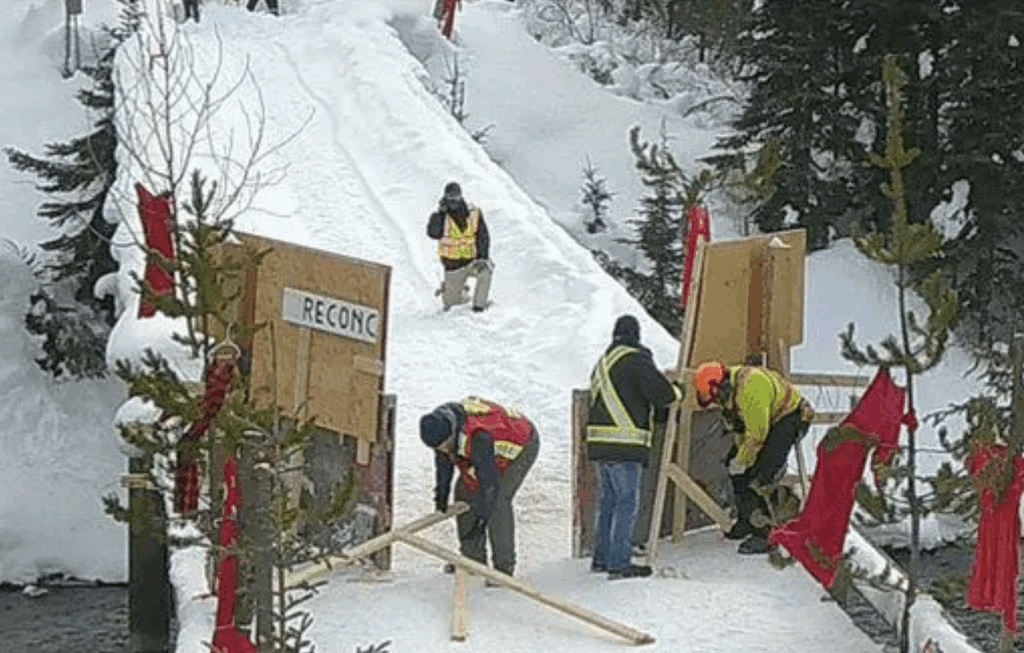
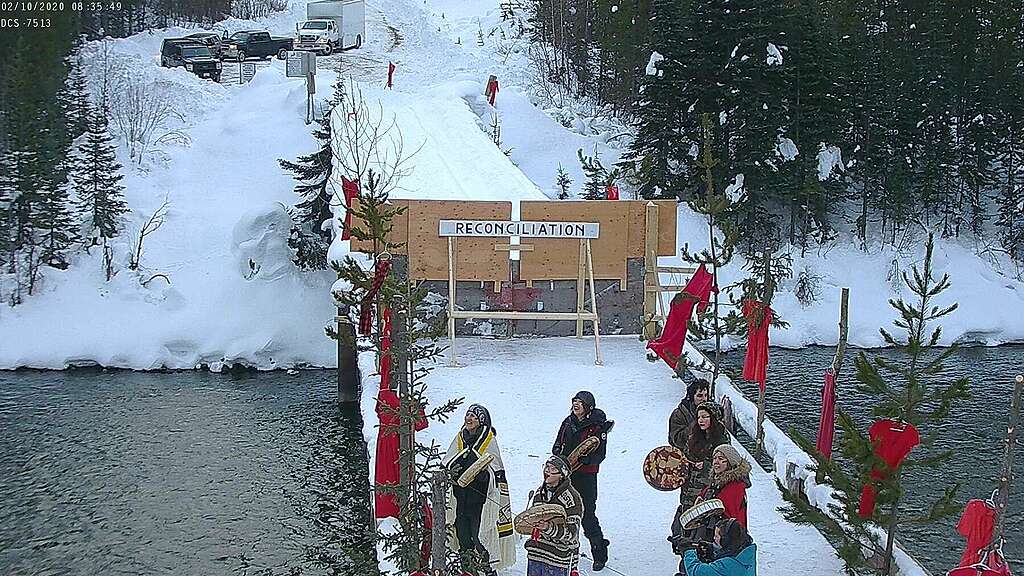
Second: Why would Alberta Premier Danielle Smith honour her agreement on industrial carbon pricing if the federal government doesn’t deliver a pipeline? The Trudeau government bought and built the Trans Mountain Expansion pipeline in exchange for Alberta support for carbon pricing and even then Alberta didn’t honour the deal.
Third: the notion that industrial carbon pricing can replace all of the other policies is naive. In the electricity sector, for example, renewable energy is already cheaper than fossil fuels so the Government of Alberta is putting up regulatory barriers to green energy to preserve market share for natural gas.
Earlier this year, I wrote that the oil industry doesn’t really want a pipeline, but that they want to use the demand for a pipeline to eliminate federal climate policies. Looks like they’re getting what they wished for.