OTTAWA – Today, Greenpeace Canada unveiled two coastal murals in celebration of the Global Ocean Treaty officially entering into force after two decades of campaigning to protect the high seas. As part of a global campaign, coordinated by Greenpeace International, artists around the world are unveiling large scale public artworks celebrating this hard-won victory. This month also marks the beginning of a crucial four-year countdown to protect 30% of the world’s ocean by 2030.
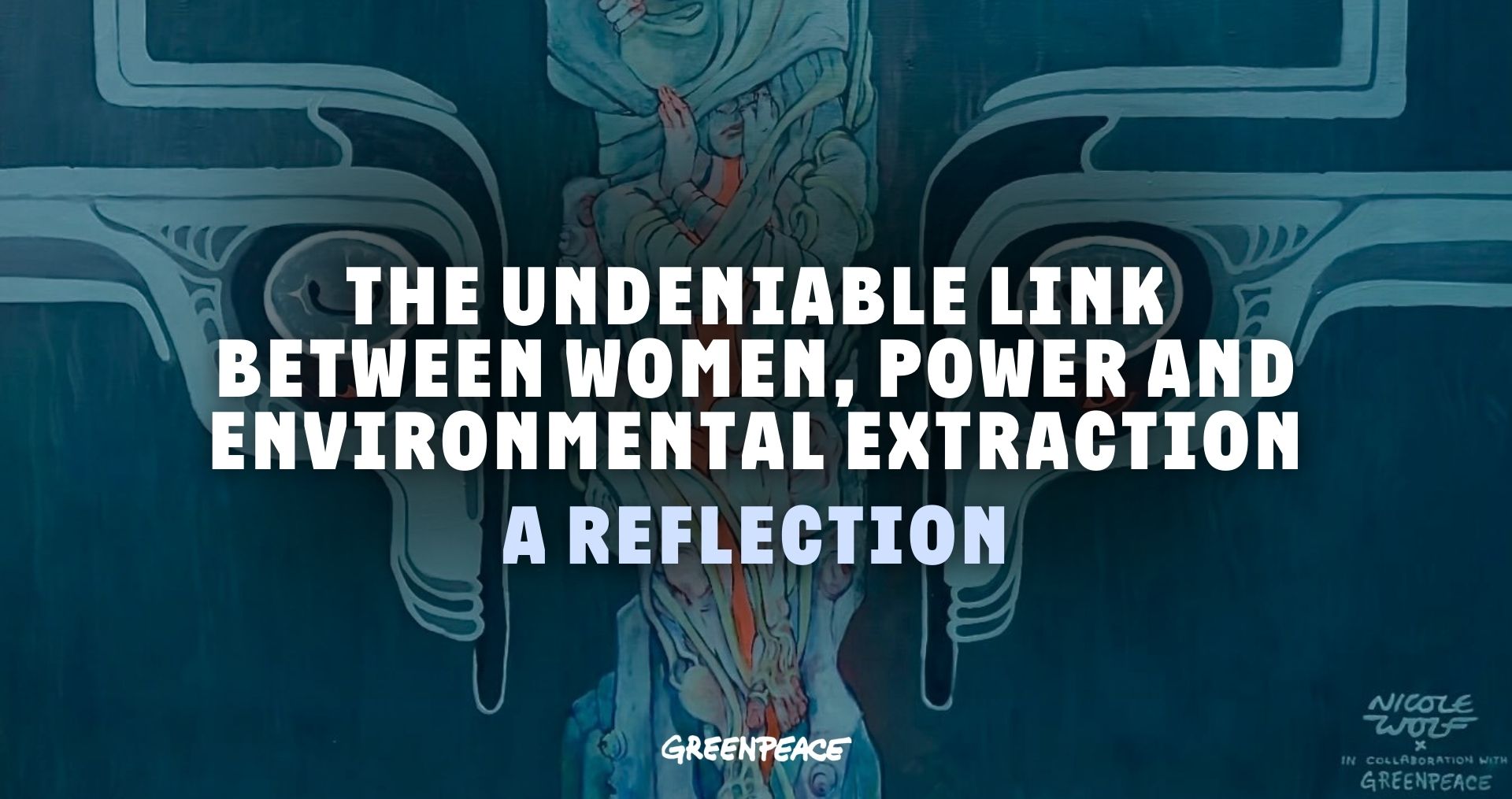
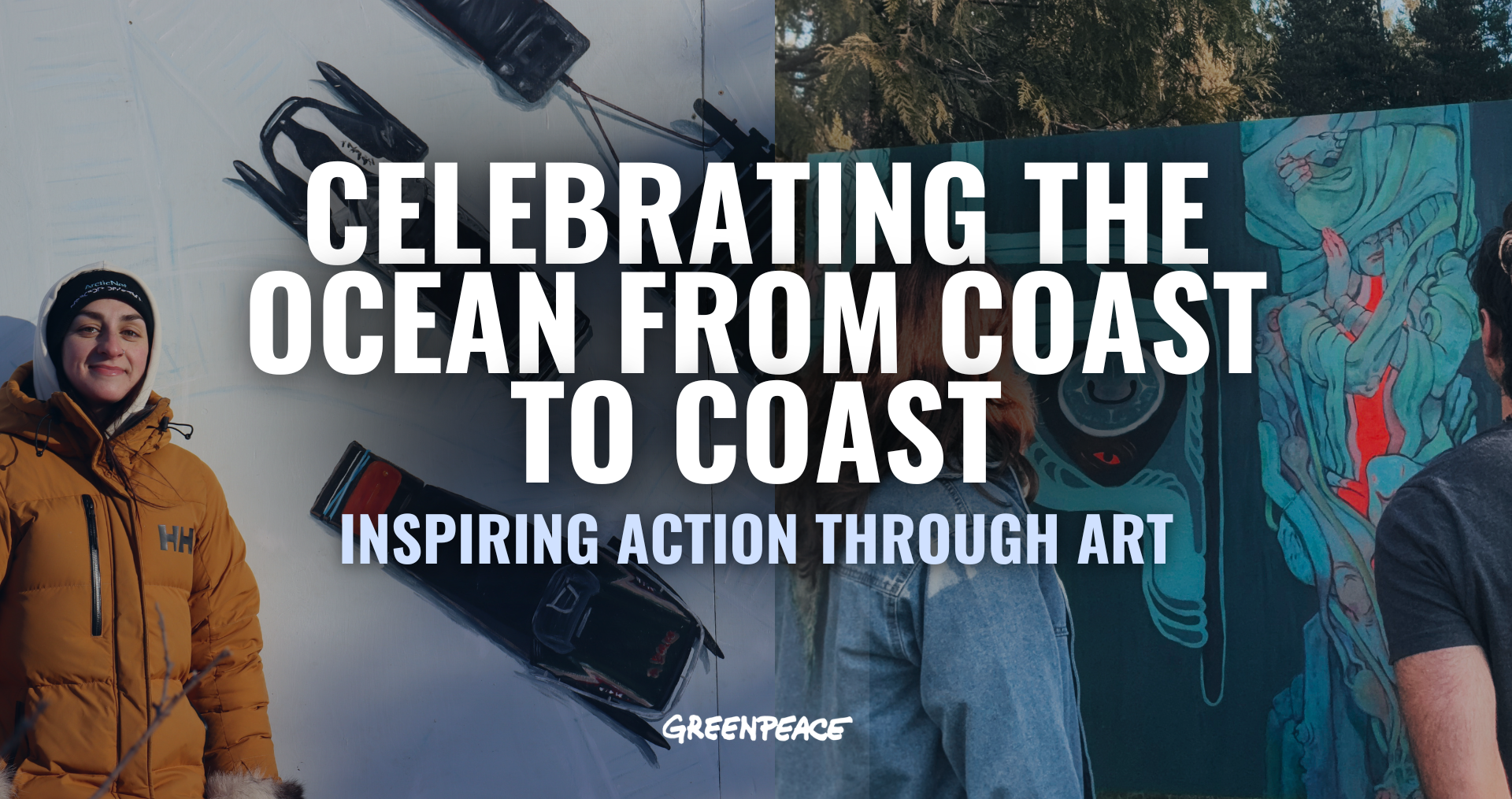
Greenpeace Canada commissioned two artists based on the Pacific and Atlantic coasts of the country, Jessica Winters and Nicole Wolf, to paint murals depicting themes of marine protection and conservation that honour Indigenous stewardship of the oceans.
Winters, an Inuk artist based in St. John’s, Newfoundland and Labrador, created an oceans mural in her home community of Makkovik, Nunatsiavut, an Inuit community in Newfoundland and Labrador. Wolf, a Calgary-based artist, created and installed her mural at the Ptarmigan Arts Centre in Pender Island, British Columbia.
Jessica Winters, Mural Artist, said:
“This mural depicts a family hunting seals at the sina (ice edge), a scene commonly experienced in my home community of Makkovik. When Greenpeace Canada invited me to visualize Indigenous ocean stewardship, this was the most honest and natural expression of that relationship for me. Where I come from, ocean stewardship is rooted in intimacy with the environment; constant observation, deep patience, a balance of respect and reciprocity. Through this mural, I wanted to present seal hunting as it truly is: a practice grounded in care, responsibility and sustenance. I hope this work resonates with my community and that it challenges viewers from the South to reconsider their assumptions about what environmental stewardship can look like.”
Nicole Wolf, Mural Artist, said:
“This imagery was developed during an artist’s residency on Pender Island through conversations with residents, First Peoples and local conservation groups. By embodying the sea in human form, the artwork attempts to shift our perception of the water from a mere resource to a living subject with inherent value, inviting a meditation on ocean stewardship and the environmental cost of unrestrained deep-sea mineral extraction. Hosted on S,DÁYES — the traditional and unceded territory of the Coast Salish Peoples — the imagery references the sovereignty and perspective of the First Peoples: that the health of our marine ecosystems is a direct reflection of our own collective well-being.”
The Global Ocean Treaty, the most significant piece of environmental legislation since the Paris Agreement, achieved its landmark 60th ratification in September 2025, triggering its entry into force. Canada has signed, but not ratified the agreement.
The Treaty enters into effect on January 17, 2026, with the accompanying public art unveilings showcasing vibrant, ocean protection-inspired work, including murals, projections, sculpture and moving artworks. This highlights the extraordinary achievement of artists, Indigenous peoples, activists and local communities from 15 countries across five continents representing every ocean in the world.
Sien Van den broeke, Nature & Biodiversity Campaigner at Greenpeace Canada, said:
“The oceans sustain life below and above water, but industrial threats like deep-sea mining put this life at risk. Indigenous peoples, who have cared for these waters since time immemorial, have the knowledge and practice to guide us toward true protection. These murals remind us of our shared responsibility. Canada must ratify the Global Ocean Treaty and reaffirm their support for a global moratorium on deep-sea mining.”
Currently, only 0.9% of the high seas is fully or highly protected. For the first time in history, the now ratified Global Ocean Treaty provides the legal tools to create High Seas sanctuaries that will help mitigate the climate crisis, halt biodiversity collapse and safeguard food security for the billions who depend on the ocean. From January 17, several specific legal obligations will come into force for countries which have ratified, but this historic milestone must be followed by a commitment from governments around the world to swiftly act and limit the power of industrial fisheries during the creation of the first sanctuary sites.
This will require Canada, alongside other global governments, to commit to protecting ocean areas larger than entire continents and to do so at a rate faster than any conservation effort in history. Last year at the United Nations General Assembly, 16 countries launched the Ocean Pioneers Coalition, a group of countries committing to strong ocean protection by ratifying the Ocean Treaty and committing to a moratorium on deep sea mining. Greenpeace is calling on governments to join them and to protect the ocean as the common heritage of humankind.
Ends
Note to editors:
Photos and videos of Jessica Winters’ mural are available in the Greenpeace media library.
Photos and videos of Nicole Wolf’s mural are available in the Greenpeace media library.
For more information, please contact:
Sarah Micho, Communications Campaigner, Greenpeace Canada
[email protected], +1 647 428 0603