Governments have promised to protect 30% of the ocean by 2030. But, at the current pace, we will not get there until 2291.
I checked my calendar, and I don’t expect to be around. Maybe my reincarnation can check back, but honestly, I would rather see the ocean protected in this lifetime. Right now, only 3.5% of the global ocean is fully or highly protected from destructive human activity. Over the past 34 years, that protection has grown by an average of only around 0.1 percentage points each year. At that pace, protecting 30% of the ocean will take another 265 years.
Fortunately, a new report from Greenpeace International shows that we do not have to wait that long.
Industry is not waiting for its next life
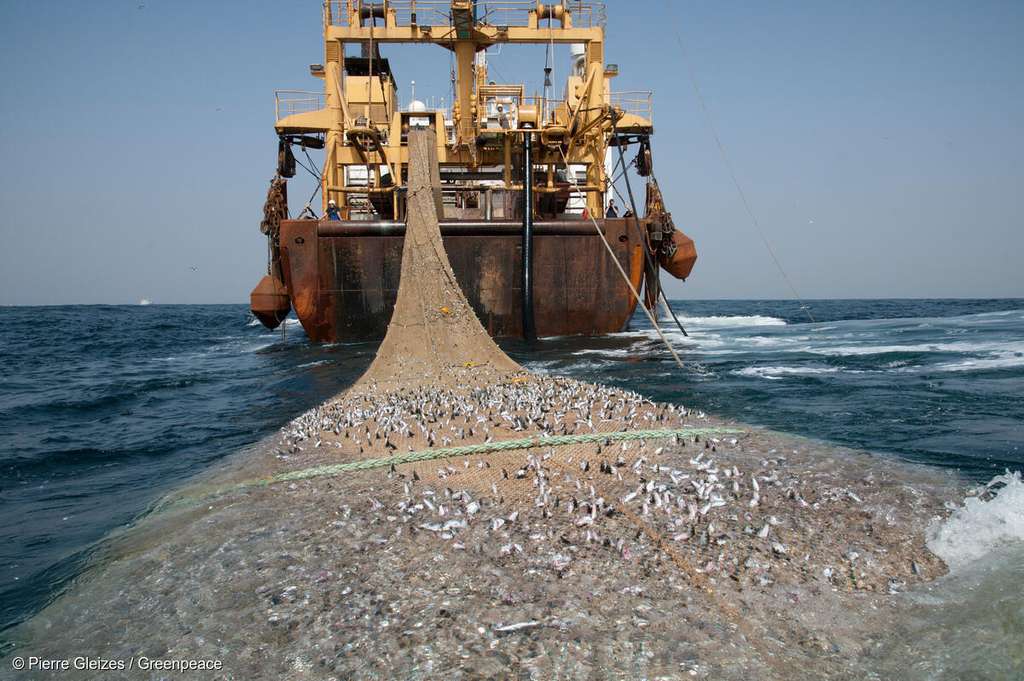
Governments may be taking their time, but industrial fishing is not. In 2025 alone, fishing vessels carried out an estimated 1.6 million hours of fishing activity in the Atlantic High Seas. That is more than 180 years of fishing compressed into just 12 months.
Drifting longlines account for almost half of all fishing effort in the Atlantic High Seas. These lines can stretch for up to 100 kilometres, carrying thousands of baited hooks through habitats and migration routes. They are designed to catch fish, but the hooks do not discriminate.. Turtles, sharks, seabirds and other marine animals can also become trapped, injured or killed as bycatch.
While progress on ocean protection is being measured in centuries, that industrial pressure on fragile and critical ocean ecosystems continues every day.
Protected—on paper
Marine protected areas should give wildlife space to recover and thrive. Yet many still allow destructive industrial fishing within their boundaries and if that practice is still allowed inside a protected area, how protected is it really?
This is the difference between protection that exists on a map and protection that works in the water. Right now, there are no fully or highly protected areas in the Atlantic High Seas. In other words, there is nowhere in these international waters where marine life is completely safe from industrial extraction.
Strong rules within protected areas are essential, but they are only part of the answer. More than 800 migratory marine species travel between feeding grounds, breeding areas, coastal waters and the high seas. An isolated protected area may cover one part of that journey, but it cannot keep an animal safe across an entire ocean basin.

If I come back as a leatherback turtle…
I would have reason to worry. Leatherback turtles travel enormous distances across the Atlantic, and their habitats overlap with industrial longline fishing areas, putting them at risk of being caught as bycatch.
Greenpeace’s analysis found that 80.7% of Atlantic High Seas habitat where leatherback turtles face a moderate-to-high risk of bycatch remains outside existing protected areas and sites currently being considered for protection.
Humpback whales face a different danger. Their migration routes increasingly overlap with busy shipping corridors, putting them at risk of being struck by vessels. Underwater noise from shipping can also interfere with how whales communicate, navigate and find food.
These species face different threats, but both show why isolated protected areas are not enough. Ocean protection must follow the routes marine animals actually travel.
Fortunately, we don’t need to wait until 2291
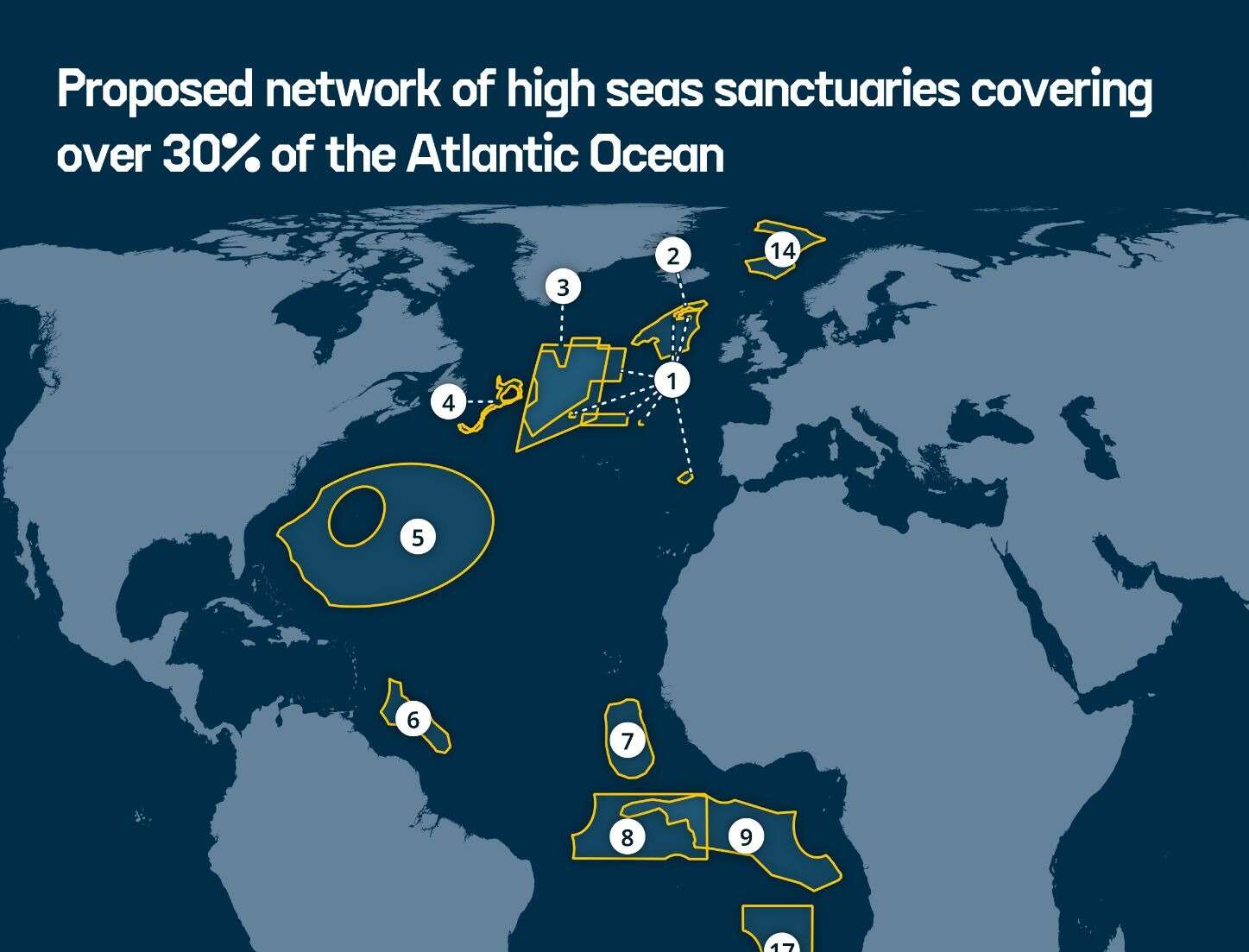
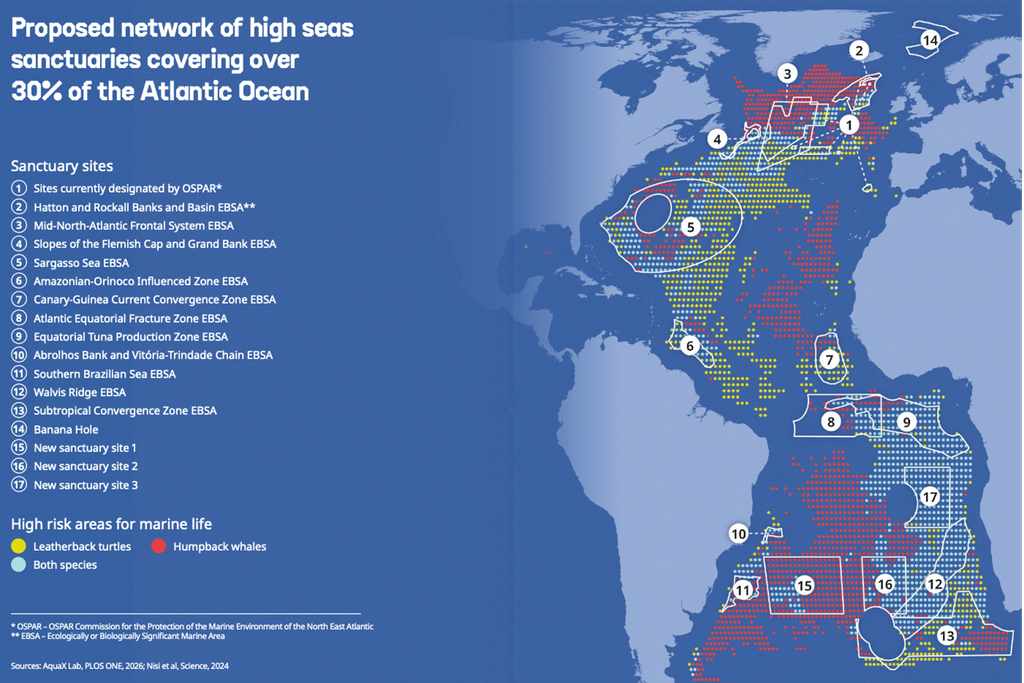
The new Greenpeace report, Well Connected, presents a concrete pathway to protect more than 31% of the Atlantic High Seas through a connected network of 17 proposed sanctuary areas.
The network brings together existing areas that need stronger protection, sites already being considered by governments and several newly identified priority areas. Together, they would connect important habitats, biodiversity hotspots and migration routes across the Atlantic.
These are not random circles drawn on a map. The network was designed around where marine life travels and where species face some of the greatest risks from industrial activity.
The proposed network would cover 36.6% of Atlantic High Seas areas where leatherback turtles face a moderate-to-high risk of bycatch. It would also cover almost 44% of areas where humpback whales face an above-average risk of collision with shipping. Altogether, the network would protect more than 31% of the Atlantic High Seas.
This is what science-based protection can look like: not simply reaching a percentage on paper, but protecting the places where action can make the greatest difference.
What would real protection involve?
Drawing sanctuary boundaries is only the beginning. To deliver meaningful protection, these areas must keep industrial fishing and other extractive activities out. Governments must also reduce shipping risks by rerouting busy shipping lanes where necessary and introducing measures such as vessel-speed restrictions.
Sanctuaries should protect migration routes rather than isolated pockets, connect coastal waters with the high seas and represent the Atlantic’s different species, habitats, depths and ecosystems. Otherwise, governments risk creating more protected areas that look reassuring on a map while leaving marine life exposed in the water.
The Global Ocean Treaty gives governments the legal framework to establish protected areas in international waters. The Well Connected report offers a practical pathway for putting those tools to work across the Atlantic.
Governments do not need another promise or another distant deadline. They need to move quickly enough to keep the commitment they have already made.
This lifetime, please
The ocean should not have to wait for our reincarnated selves to finish the job.
Governments have already committed to protecting 30% of it by 2030. The tools exist. The science is clear. And now, there is a concrete plan for protecting nearly a third of the Atlantic High Seas.
Personally, I would rather see real ocean protection in this lifetime.
You too? Read the full Well Connected report to see how we can get there.