After more than 20 years of campaigning, Canada has finally ratified the Global Ocean Treaty. A historic win for the ocean, and for all of you who made it possible.
Prime Minister Mark Carney announced Canada’s ratification on September 23 during the United Nations General Assembly in New York. The decision legally binds Canada to this landmark international agreement, gives the country a seat at the first Ocean COP in January 2027 and opens the door for Canada to help create the world’s first network of ocean sanctuaries in the high seas.
Mission partly accomplished.
But the next big mission is the how. Ratification gives governments the tools to protect the high seas. Now they must use them to deliver meaningful ocean protection. This treaty represents a promise to the ocean. Will Canada keep it?
This victory is for us all
Greenpeace published its first briefing calling for a Global Ocean Treaty in 2005.
Since then, campaigners, scientists, Indigenous Peoples, coastal communities, small-scale fishers and organizations around the world have fought tirelessly to elevate ocean protection onto the international stage.
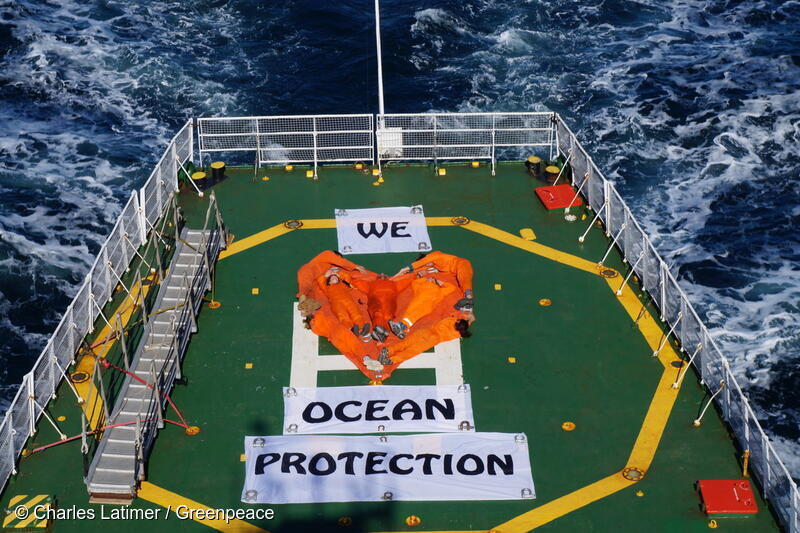
Almost 25,000 people have signed our petition, while others have lobbied politicians, marched on the streets, fought against destructive industries and/or shared their love of the ocean.
All of that public pressure helped move the treaty from an idea to international reality… and has now brought us to Canada’s ratification.
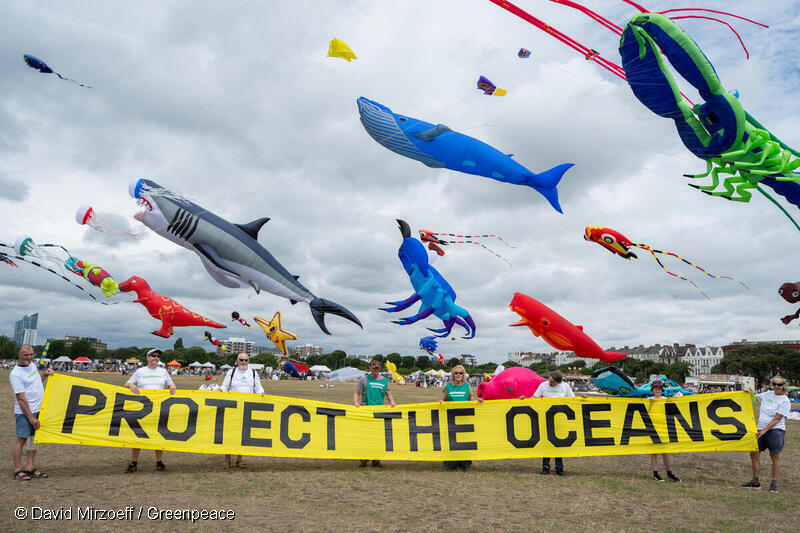
To everyone who took action, shared a campaign or encouraged someone to speak up: thank you. This victory is for you too!
Now, what does ratification mean?
The high seas are the vast expanses of ocean beyond national waters. They make up nearly half of the Earth’s surface and are home to incredible ocean wildlife, from whales and sharks to turtles, seabirds and countless other species yet to be even discovered.
Until now, there had been no global uniform mechanism for establishing protected areas in the high seas, but the Global Ocean Treaty changes that.
For the first time ever, governments have the legal means to establish ocean sanctuaries in the high seas: protected areas where ecosystems can recover and wildlife can thrive.
These sanctuaries are important not only in the box they appear in on a map, but because a healthy ocean is essential for the food security, livelihoods and ways of life of billions of people. It is also crucial for regulating the climate and helping communities adapt to the impacts of the climate crisis.
The legal means are just the start.
Paper promises aren’t enough
Governments have committed to protecting at least 30% of the world’s oceans by 2030. Only about 10 of the global ocean is currently protected, with just 3.5 fully or highly protected.
To close this gap, countries will need to establish ocean sanctuaries at a scale and speed without precedent. Delays risk missing the 2030 30% target.
Countries must also ensure that the protection established under this treaty translates into meaningful protection, rather than simply drawing lines on a map that enable harmful activities to continue outside boundaries.
Fully and highly protected sanctuaries must exclude destructive extractive activities, such as industrial fishing from areas that seek to support wildlife recovery.

They must be based in science, involve meaningful and equitable engagement—especically Indigenous knowledge and leadership, and coastal communities—and be part of a connected global network.
Connectivity is key. Over 800 marine species migrate between national waters and the high seas. Whales, sharks, turtles, seabirds and many other ocean animals do not respect the political borders we draw in the ocean. We need corridors for marine wildlife to feed, breed, migrate and recover.
Ocean COP1 will be the first big test
The first-ever Ocean COP1 in January 2027 will be the first big test of whether governments are ready to make the promises of this treaty a reality. Countries will decide how the treaty will be implemented and how the first ocean sanctuaries can be proposed, assessed and established.
Ocean COP1 must kick-start a swift, effective and equitable process for the establishment of the first generation of high seas sanctuaries. It must also stop powerful industries from trying to erode protections or delay decisions while the clock ticks down to 2030. Canada’s ratification means that the country can be part of those decisions and help shape the implementation of this treaty from the start.
With opportunity comes responsibility.
The opportunity to lead
With three of the world’s oceans on its doorstep, Canada has a unique role to play in protecting the waters that connect and sustain us all.
Canada has appointed its first ever Ocean Envoy, Diana Fox Carney, who will also chair the 2027 Our Ocean Conference in Halifax. Ms. Fox Carney is a climate policy expert who’s involved in various environmental and social justice causes. And given that she is Prime Minister Carney’s spouse, one can only hope they will be talking about the ocean at the dinner table.
In any case, these milestones provide the federal government with a clear path forward. By decisively implementing the treaty and championing fully protected, connected ocean sanctuaries, Canada could become a global ocean leader.
Making Waves: People power works!
This moment was more than 20 years in the making, so let’s take some time to celebrate it!
The Global Ocean Treaty is proof that international cooperation is still possible. It’s proof that public action can change the world, but the next chapter begins now. Ratification presented the opportunity, while implementation must turn that opportunity into fully protected and connected ocean sanctuaries where wildlife can recover and thrive. Ocean COP1 will be the first big test and Canada must be ready to lead.
Together, we helped make the treaty a reality. Now, let’s make sure its promise becomes a reality for the ocean and the planet! The victory is ratification. The next chapter is implementation.
Onwards, Canada.