The global artificial intelligence (AI) boom is running into a hard physical limit: the electricity grid. As technology companies build increasingly powerful models and deploy ever-larger computing systems, the digital revolution is creating unprecedented demand for physical energy. At the center of this challenge sits East Asia, the industrial engine of the global hardware supply chain.
Mainland China has the world’s second-largest data-center market and is the world’s largest electronics-manufacturing hub, producing roughly 36% of global electronics output. Taiwan dominates the production of the most advanced semiconductors and is also the leading manufacturing base for AI servers. South Korea leads the memory-chip industry, with Samsung Electronics and SK hynix holding dominant positions in DRAM and NAND. Together, these three economies occupy critical positions across the data-center, semiconductor, server-manufacturing and memory-chip sectors that underpin modern AI.
Yet this computing boom carries a huge environmental cost. In 2024, data centers consumed approximately 415 terawatt-hours (TWh) of electricity globally—about 1.5% of total electricity consumption. Their electricity use had grown by roughly 12% annually over the previous five years, according to the International Energy Agency (IEA). Greenpeace East Asia estimates that global electricity demand for AI chipmaking could increase by as much as 170-fold between 2023 and 2030. Because the production of logic and memory chips used in AI hardware is concentrated in East Asia, much of this additional manufacturing burden would fall on Taiwan, South Korea and Japan.
To address the challenge and identify a cleaner path forward, Greenpeace East Asia brought together energy-policy and climate-technology experts from the United States, Taiwan and South Korea for a global webinar on August 6. The aim was to shift the conversation from why AI must be decarbonized to how a clean and resilient AI supply chain can be built.
“We would love to build shared momentum for a clearer and more sustainable AI and technology industry … We strongly believe that by partnering directly with industry leaders, we can transform complex environmental hurdles into viable, high-impact business models for the long haul,” said Dr Junyan Liu, deputy program director at Greenpeace East Asia, in her opening remarks.
Scaling Clean Tech: Lessons from China’s Industrial Policy
Closing the AI power gap requires understanding how clean technologies can be scaled at the industrial level. China’s rise in solar energy, electric vehicles (EVs), batteries and grid infrastructure offers important lessons for rapidly deploying clean technologies amid surging demand.
Dr Kyle Chan, a Fellow at the Brookings Institution’s John L. Thornton China Center, highlighted how China built end-to-end dominance, spanning raw materials to finished components, by absorbing foreign technology, adapting rapidly, and co-developing local supply chains. Proactive local governments accelerated this push by providing infrastructure, land, and policy support.
“China’s cleantech policy wasn’t a single linear path toward becoming a powerhouse. It involved constant pivots, strategic shifts and adaptation along the way … China made a broad bet across multiple technologies, and it paid off,” Chan said.
Rather than betting on a single winner, China supported multiple battery chemistries and clean technologies simultaneously. This allowed manufacturers to serve different markets while using scale and supply-chain flexibility to drive down costs. The country’s established heavy industries also created synergies with newer clean-energy sectors. For example, its shipyards have built offshore-wind installation vessels.
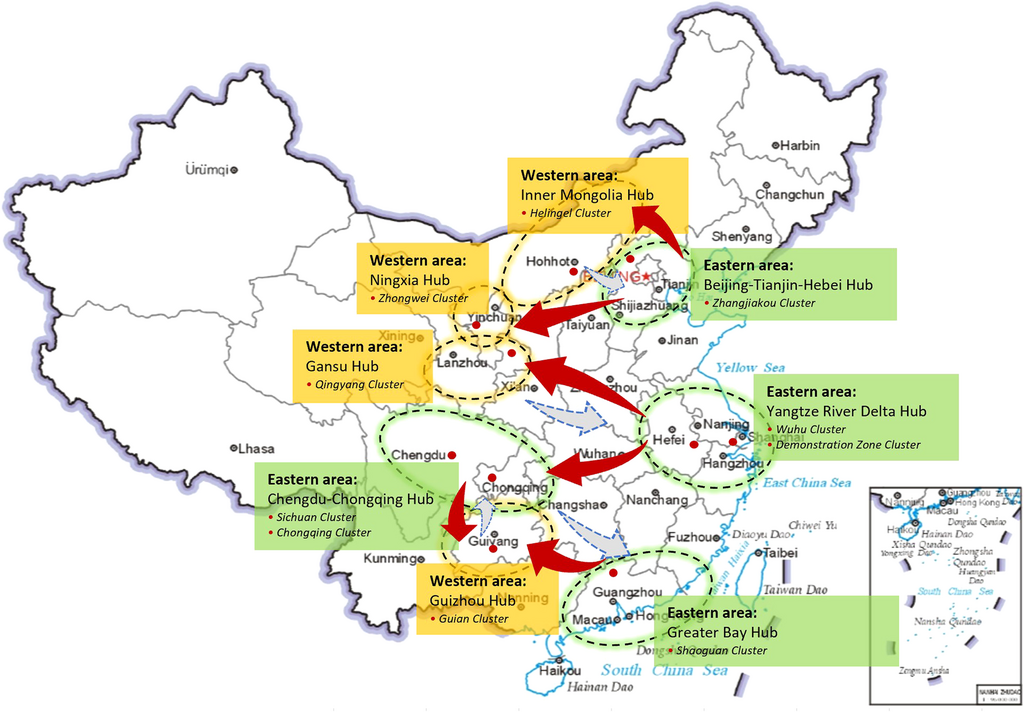
China is now applying similar principles to data centers. Under the “East–West Computing Resources Transmission Project” (EWCRT Project), national policies encourage companies to locate energy-intensive and less latency-sensitive computing workloads in resource-rich western provinces. These regions offer more land and abundant wind and solar resources, while the resulting services and processed data can be delivered to users in coastal cities through national computing networks.
As Chinese cleantech companies expand overseas, this integrated approach could offer important lessons for powering the AI era more sustainably, Chan said.
The Economics of AI Power: Why Renewables Will Win in South Korea
In South Korea, surging demand from AI infrastructure presents a major opportunity to accelerate the country’s transition to clean energy, according to Jongkyu Kim, founder and chief executive officer of 60Hz and chair of the Korea Climate Tech Association.
South Korea recently unveiled three mega-projects involving approximately 1,500 trillion won—roughly US$1 trillion—in combined investment. The package includes four new semiconductor fabs to be built by Samsung Electronics and SK hynix, regional robotics initiatives and a target of 18.4 gigawatts (GW) of AI data-center capacity by 2035. That capacity would be equivalent to roughly 18–19% of South Korea’s recent peak electricity demand.
“AI has become an electricity story,” Kim said. “Sam Altman said last year: ‘The cost of intelligence should eventually converge to near the cost of electricity.’ If true, AI competition becomes a race for the cheapest electricity, and future-proof sources will win.”
Kim argued that renewables offer the strongest economic case compared with fossil gas or nuclear power.
- Emissions and legal exposure: South Korea’s power sector must substantially reduce emissions by 2035. Building gas plants today could create stranded assets, expose companies to higher carbon costs and increase legal risks under climate regulations, while making it harder for major corporations to meet their RE100 commitments.
- Construction time versus AI growth: AI facilities can be built in roughly two years, while major nuclear projects often face lengthy licensing and construction periods. South Korea’s Shin-Hanul Unit 2 took more than 10 years from licensing to grid connection, Kim said. Nuclear power, he argued, cannot be deployed quickly enough to match the pace of AI expansion.
- Price volatility versus zero fuel costs: Fossil-gas prices in Asia have swung sharply during periods of geopolitical disruption. Wind and solar, by contrast, have no fuel costs once built, offering greater long-term price stability.
- Access to global markets: Technology companies and their customers increasingly demand renewable-energy supply chains. Fossil gas does not meet RE100 requirements, while nuclear power is not generally counted as renewable electricity under the initiative’s standards.
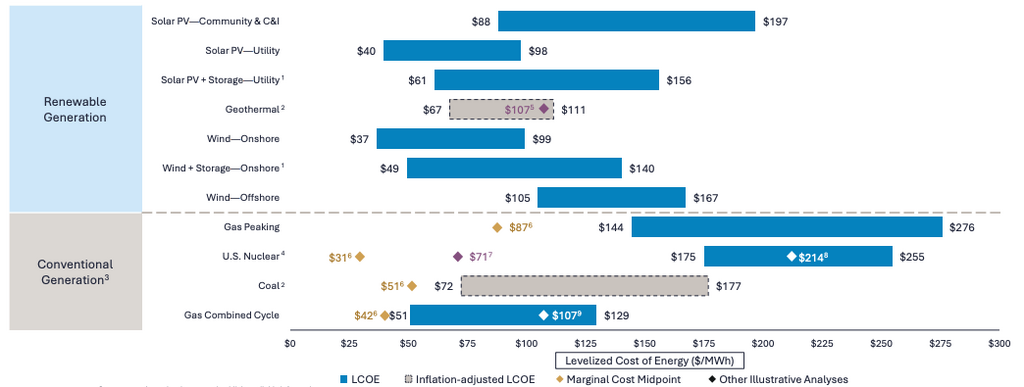
“AI is not a burden on the energy transition; it is a catalyst. Korea has anchored its AI build-out to renewables by location, law and policy. Industry leaders have signed on to RE100, and the underlying economics close the loop. If the cost of AI is the cost of power, zero-marginal-cost renewables will win,” Kim said.
Overcoming Bottlenecks in Taiwan’s Chip Industry
As a leading producer of advanced chips and AI servers, Taiwan is a critical engine of global computing. Allissa Tai, RE100 representative in Taiwan at the Chung-Hua Institution for Economic Research (CIER), outlined the structural obstacles and opportunities facing manufacturers seeking to secure renewable electricity.
Taiwan’s Ministry of Economic Affairs expects electricity demand to grow by an average of 2.5% annually from 2026 to 2035, driven in part by semiconductor fabs, AI data centers and increased cooling demand. CIER estimates that AI- and semiconductor-related projects could require an additional 4.32 GW of capacity by 2030.
To meet the increase, Taiwan’s Ministry of Economic Affairs plans to add approximately 26 GW of new natural-gas-fired capacity by 2035. Yet Taiwan imported more than 94% of its energy in 2024. Greater reliance on imported fossil fuels would therefore expose the island to international price volatility, shipping disruptions and wider geopolitical risks.
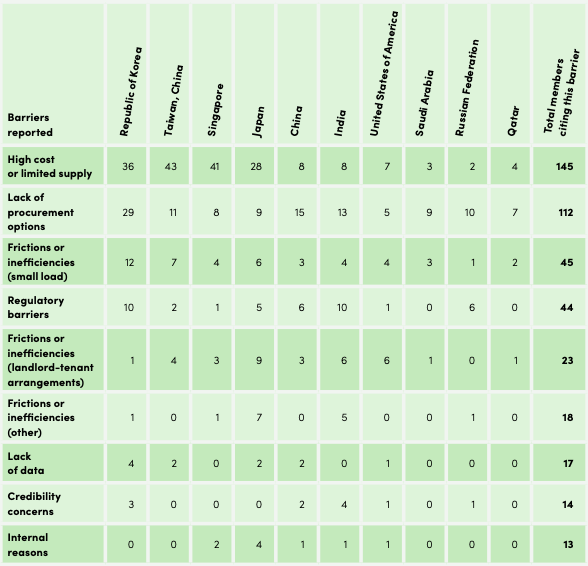
While major technology companies such as Google and Apple are pursuing 100% renewable electricity for their operations and supply chains, RE100 members’ corporate procurement accounts for only about 5% of Taiwan’s total renewable generation, according to CIER and Climate Group’s 2024-2025 Taiwan Renewable Electricity Market Briefing. Key structural obstacles include:
- Supply shortfall: Renewable generation remains well below the potential demand from companies seeking to meet RE100 commitments.
- Grid and regulatory delays: Land constraints, policy uncertainty and complex financing have slowed renewable-energy development, leaving utilities to rely on fossil fuels to cover growing demand.
“To power the AI boom cleanly, we need energy infrastructure built at scale. That requires policy stability, social consensus and cross-party alignment… Transitioning to renewables is not just about climate; it is the bedrock of Taiwan’s economic security and global competitiveness,” Tai said.
An Action Plan for a Clean AI Ecosystem
To align rapid AI growth with climate goals, the webinar’s panelists outlined three targeted reforms:
- Grid reform and private investment: Allow major corporations such as Samsung Electronics and Hyundai Motor Group to co-finance grid infrastructure, helping to overcome state-utility bottlenecks and deliver clean power directly to data centers and industrial hubs.
- Streamlined permitting: Establish single-window government agencies in places such as Taiwan to coordinate land-use and environmental reviews, speeding up project approvals without weakening environmental safeguards.
- Policy stability: Create predictable, long-term regulatory frameworks that can withstand election cycles and give technology companies the confidence to invest in domestic renewable-energy projects.
Discover Greenpeace’s AI Campaign Research
Explore our ongoing work pushing for decarbonization across the global tech supply chain:
- Campaign News: Greenpeace confronts Nvidia CEO in Taipei with call for supply chain decarbonization
- Public Health Report [in Korean]: The price of permitted pollution, the invisible bill (An investigation into the hidden human health costs and local environmental burdens caused by heavy industrial operations and energy expansion in South Korea’s massive Yongin semiconductor hub)
- Environmental Health Study: Public health impacts from electronics industry electricity consumption in Taiwan
- Corporate Accountability Brief: Nvidia records highest ever revenue while outsourcing massive supply chain emissions to East Asia
- Campaign News: Greenpeace calls on TSMC to accelerate energy transition at shareholder meeting
- Regional Sector Report: Artificial intelligence supply chain threatens climate progress in East Asia