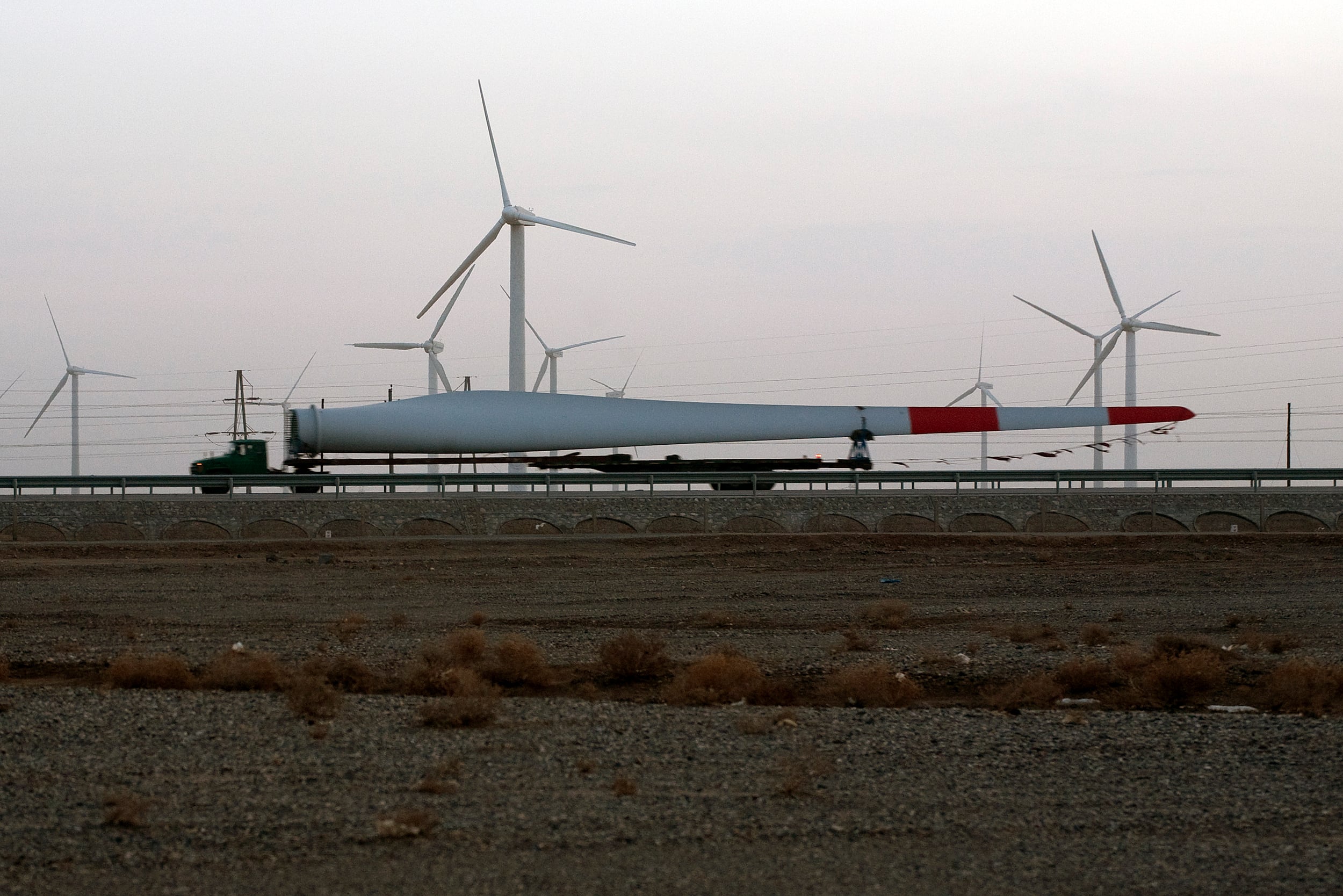
China’s electric vehicle and battery industries are expanding rapidly overseas. But as more batteries cross borders, so do the questions around what happens before and after they are used: where materials come from, how batteries are made, and who is responsible for collecting and recycling them at the end of their lives.
The rules are tightening. In the EU, for example, a battery passport becomes mandatory for EV batteries from 18 February 2027, with due diligence obligations following in August 2027. Who collects and where the material goes are now questions about market access as much as environmental protection.
These questions drove a media workshop in Haikou, Hainan, on 19 – 21 September, organized by Greenpeace’s Beijing office with local partners. Around 40 participants from universities, media, industry associations and practitioners discussed battery recycling, overseas compliance and the changing global battery supply chain.

China’s battery recycling mismatch
China has built up battery recycling capacity quickly. But many of the EVs now on the road are still years away from retirement. To make matters worse, prior to the implementation of the new regulations 2026, the majority of end-of-life batteries flowed into non-compliant recycling channels, creating an unusual situation: legitimate recyclers have capacity, but not always enough retired batteries to process.
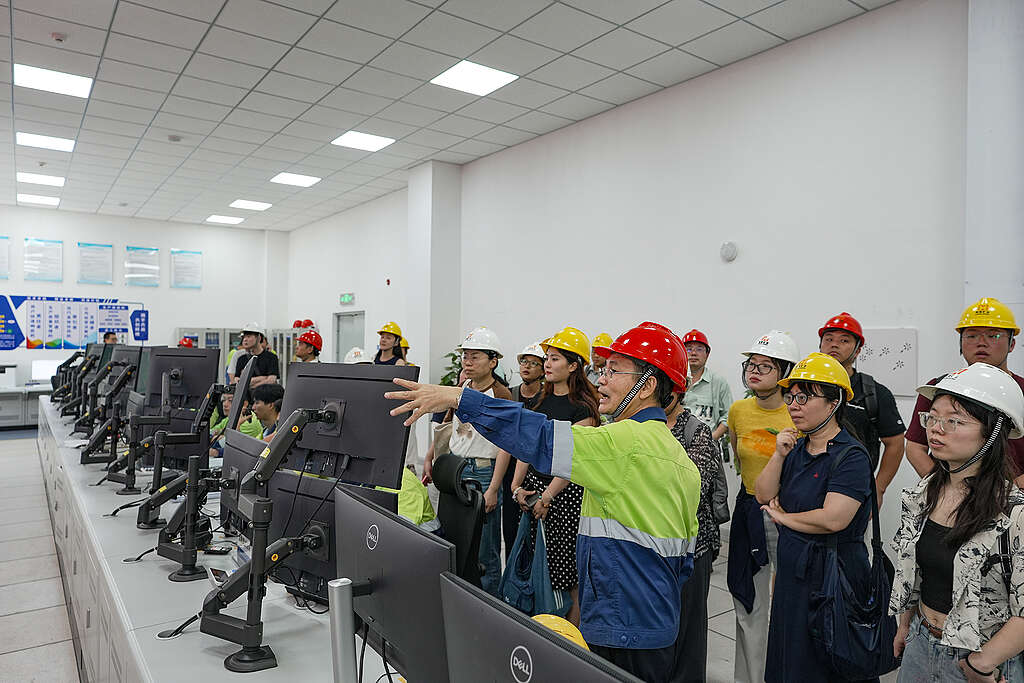
Wang Dechuang, an industry expert on waste battery recycling, compared it to opening “a very big mouth” for a very small amount of food.

© Greenpeace/Yan Tu
That will change as battery retirements climb toward the million-tonne mark expected by 2030. The question will shift from “where do we find batteries?” to “who is responsible for them?” Extended Producer Responsibility, or EPR, is expected to play a larger role in making sure producers remain responsible for collection and treatment.
Recycling isn’t the only answer
Recycling is only part of the story. The bigger question is how much needs recycling at all, and how much new mining can be avoided.
First, how a battery is designed, what materials go into it, and whether its origin and carbon footprint can be traced will all affect what can be done with it later. Then, consider reuse before recycling. If a battery or component can still be reused, breaking it down immediately for material recovery may use more energy than necessary.
The pressure on resources also begins much further upstream. Mining and processing battery minerals can involve material flows far larger than what eventually appears in the finished battery. Recycling, reuse and better material efficiency can all help reduce demand for newly extracted minerals.
When batteries cross borders
As Chinese battery companies expand overseas, questions for recycling arise: who controls valuable materials, where they are processed, and who takes responsibility for their environmental impact.
The answers differ from place to place. Markets have different rules on EPR, hazardous waste, supply-chain due diligence and the movement of used batteries. In the EU, for example, new battery rules are introducing requirements for recycled content, traceability and carbon footprint information. Collection networks and recycling facilities also depend on local infrastructure and regulatory conditions. What works in China cannot simply be copied elsewhere.

© Greenpeace/Yan Tu
Yet moving used batteries across borders is anything but simple. To consolidate batteries from neighboring countries for processing in a single market, a recycler must first clear a basic hurdle: whether the destination’s customs authorities will even allow the material in and out. Even once that is settled, overseas retired batteries are not identical to the feedstock Chinese recyclers are used to. The result is that Chinese companies abroad must solve not only the technical question of how to recycle, but a mounting set of regulatory costs around policy, customs, environmental rules, cross-border transport and material standards, which have little to do with building a plant.
For recyclers, the result can be a dilemma. As one workshop speaker from China’s leading battery recycler put it: “We want to collect the material, but they won’t let it leave the country.”
Companies expanding abroad share this responsibility. Transparent supply chains and credible environmental standards will be essential for recycling to deliver genuine environmental benefits.
Yiwen Xia, EV Next Project Lead at Greenpeace East Asia, says: “A truly circular economy for EV batteries requires a closed-loop system that connects every stage of the value chain. As battery applications and technologies evolve, recycling must go beyond end-of-life treatment to encompass the entire battery life cycle, ensuring that resources are recycled and reused in an environmentally responsible way.”
The footprint starts at the mine
The media workshop ended with a visit to a lithium materials facility in Hainan, shifting attention from retired batteries to the beginning of the supply chain.
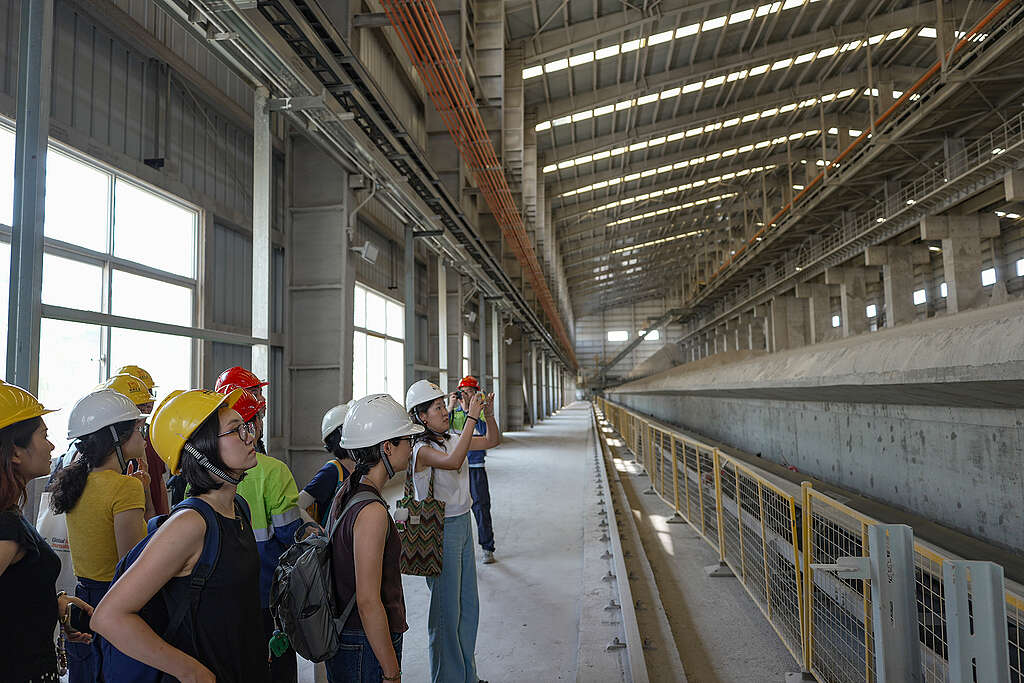
An EV battery’s environmental footprint begins long before the vehicle reaches the road. Mining, refining, manufacturing and transport all add to its carbon footprint. Overseas markets are also paying closer attention to supply-chain traceability and carbon disclosure, making it increasingly important for companies to know where their materials come from and how they are produced.
Hainan is an interesting place to watch these changes. The island is both a growing EV market and a free trade port connected to international resource flows. Battery materials, trade, manufacturing and future recycling demand are increasingly meeting in the same place.
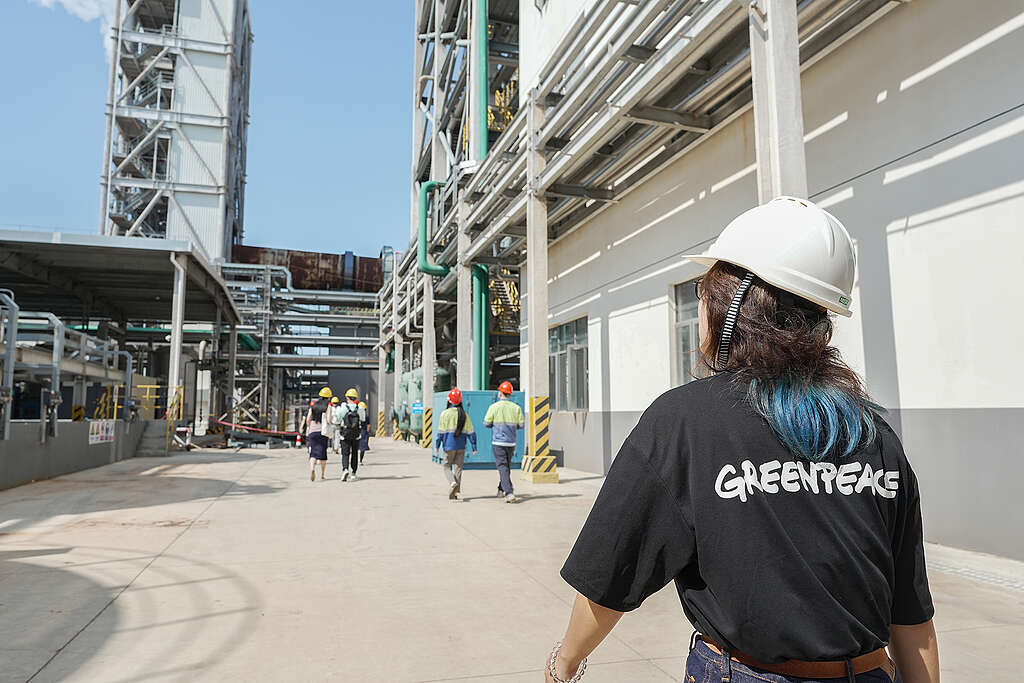
© Greenpeace/Yan Tu
As Chinese battery companies expand into international markets, greater transparency about material origins, carbon emissions and recycling practices will become increasingly important. Consumers, regulators and affected communities need reliable information to understand the environmental impacts behind the products they use.
For Greenpeace, the discussion in Hainan points to a broader priority: ensuring that the growth of electric mobility is accompanied by lower emissions, responsible mineral sourcing, effective recycling and greater transparency across the battery supply chain.