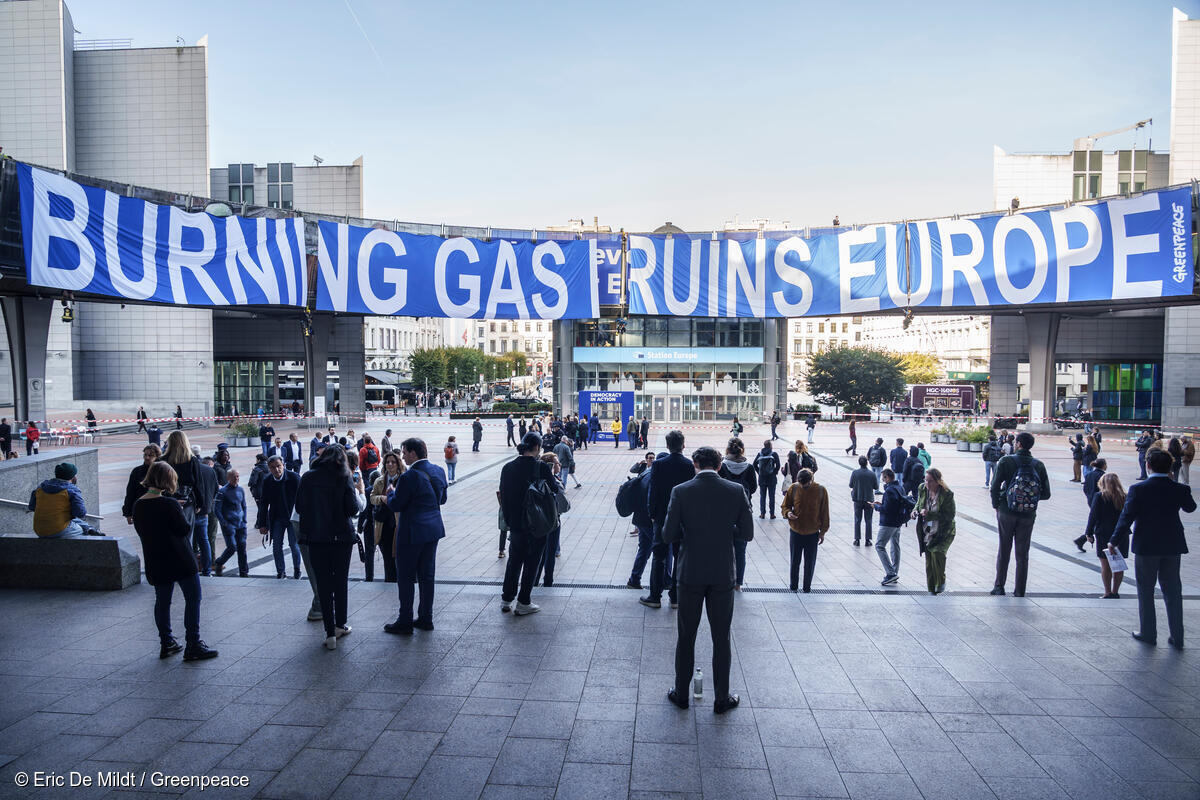
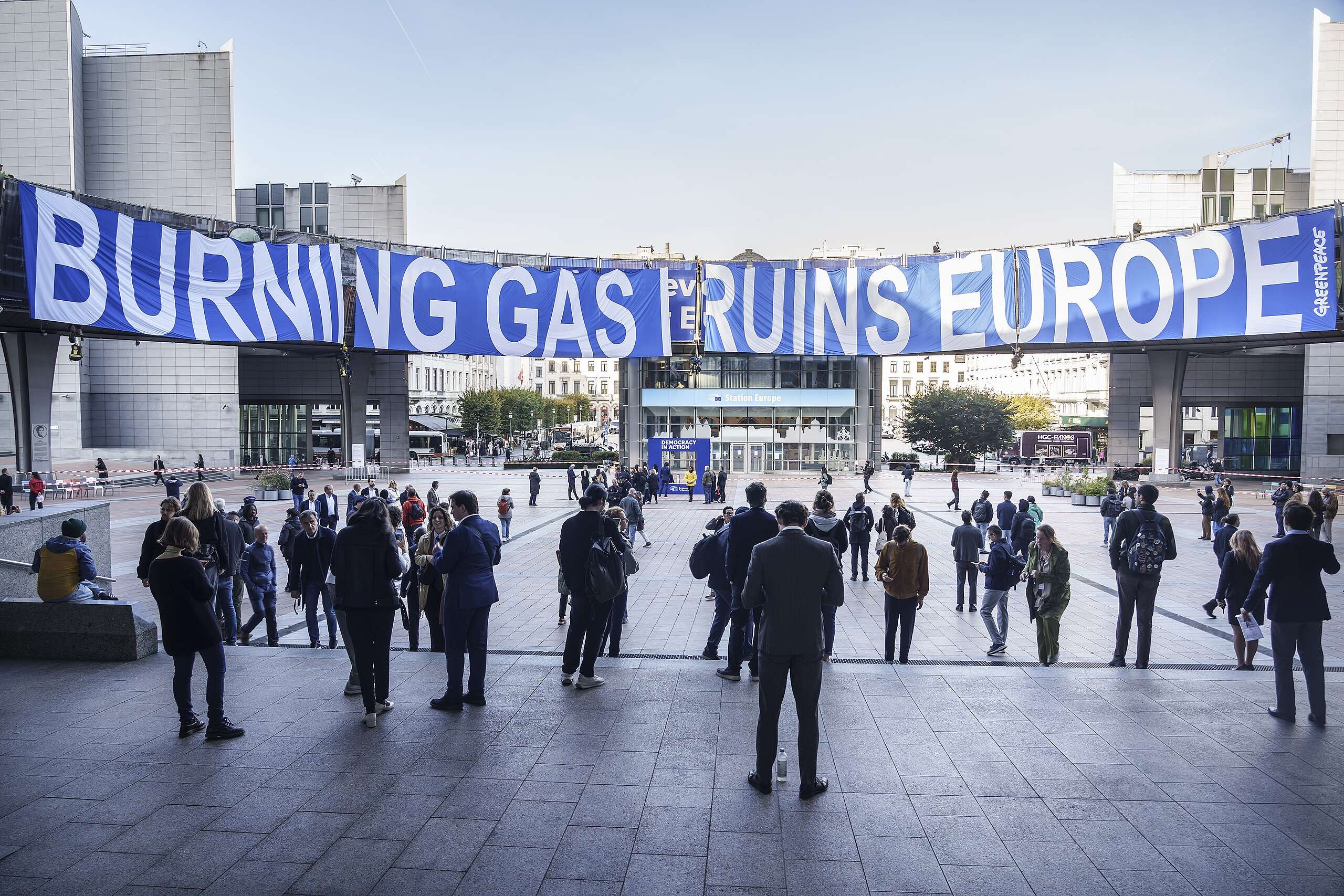
Greenpeace calls on EU governments to introduce permanent top-up taxes on oil profits, using them to lower energy bills, fast-track renewables, and pay for climate damages across the region and globally after summer of record heat
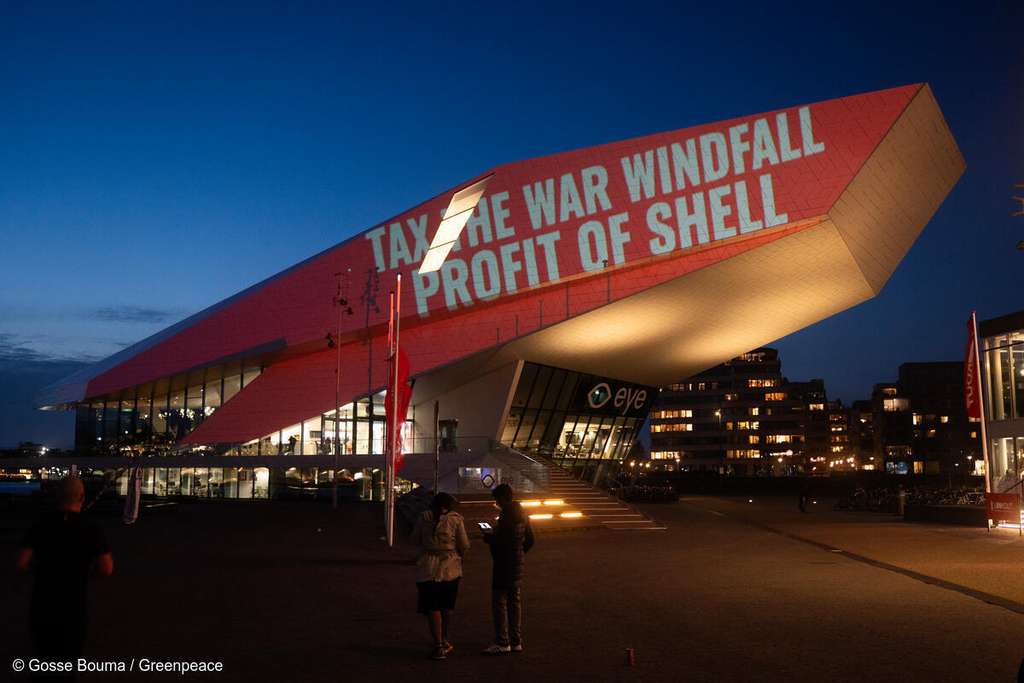
Brussels/Berlin, 29 October 2026 – The oil industry has made €36 billion in excess profits in the EU from skyrocketing diesel and petrol prices since the start of the war on Iran – about €154 million every day. This is the finding of a new study by energy expert Steffen Bukold, commissioned by Greenpeace Germany that compared crude oil and pump prices for diesel and petrol (before taxes and duties) in the EU before and after the start of the war on Iran. [1] According to the report, in September alone, excess profits reached €7.3 billion, the highest month so far.
The study finds that between 1 March and 19 October, pre-tax diesel prices in the EU rose on average by 22.7 cents per litre more than crude prices did, and petrol by 13.3 cents more. This difference is the excess profit oil companies pocketed at the pump, according to the report – contradicting industry claims that it is merely passing on higher oil prices, especially while their costs for production, refining and distribution barely changed. [2] This suggests the Iran war and the crisis in the Middle East are being used as cover to profit at the expense of EU drivers who are footing the bill amid record fuel prices. Greenpeace is calling on EU governments to introduce permanent top-up taxes [3] on oil and gas companies’ profits – using the revenue to cut people’s energy bills, fast track Europe’s energy independence with renewables and energy savings, and support communities impacted by the climate crisis in Europe and the rest of the world.
Herwig Schuster, European transport campaigner at Greenpeace Central and Eastern Europe, said: “Oil companies are shamelessly ripping off people who depend on their cars, and cashing in on wars and climate destruction to line their pockets. After a summer of tens of thousands of reported excess heat-deaths, burning forests, and dried-up rivers and fields, and heading into a winter of soaring energy and fuel bills, our governments and the EU must finally introduce permanent top-up taxes on all fossil fuel profits and use them to cut people’s energy bills, ramp up affordable and safe home-grown renewables and support communities impacted by climate breakdown around the world.”
According to the report, oil companies made their biggest EU excess profits in Germany, France, Italy, Spain and Poland. Per liter of diesel, oil companies raked in their biggest excess profits in Sweden (€0.274), Spain (€0.266), and Slovenia (€0.254); per liter of petrol they profited most in Denmark (€0.184), Germany (€0.169), and Spain (€0.155).
Today, Shell, TotalEnergies and other oil companies are announcing their Q3 profits, with another bonanza in prospect. After the finance ministers of six EU countries – Germany, Spain, Italy, Portugal, Austria, and Poland – called for an EU-wide windfall tax on fossil fuel profits, the Commission was tasked with setting up a working group on the topic. EU leaders have also signalled openness to new tax measures for the EU’s 2028-2034 budget, and a special Council summit on 26–27 November will focus on this issue, including options for new taxes and levies to help close the deficit. Greenpeace is calling on EU governments to use the upcoming Council summits and the new EU Commission working group on fossil fuel profit taxation to agree a permanent European polluter top-up tax on oil and gas company profits, for immediate implementation, either as part of the next EU Budget or through a separate regulation. This would generate new funds for solutions that tackle the climate, cost-of-living and energy crises, nationally and internationally.
ENDS
[1] The excess profits refer to estimated additional gross margins on road-transport diesel and petrol sales across the 27 EU member states between 1 March and 19 October 2026. According to the report, an increase of gross margins correlates very closely with operating profits, as refinery and distribution costs remained largely stable over the period under review. Additional gross margins are calculated as the difference between the margin per litre (pump price before taxes and levies taken from the EU Commission’s EU Oil Bulletin, minus the cost of the crude oil input, based on front-month ICE Brent futures) during this period and the pre-war average of January/February 2026, multiplied by fuel sales volumes (Eurostat, 2024 data, excluding biofuels). The analysis identifies Europe’s refinery operators, above all the major oil companies, as the main profiteers; because the margin covers the whole stretch between crude purchase and pump, it can also include earnings of fuel wholesalers and gas station operators. The results are estimates of additional profits compared with pre-crisis levels, not reported company profits, and the study does not attribute them to individual companies.
[2] The study treats the industry cost base as stable, because the one big cost increase, crude oil, is already deducted in the calculation. The study notes that gas is a small cost for refineries, which generate most of it themselves, and no other significant cost rises have been identified.
[3] A top-up profit tax is a permanent annual tax on all fossil fuel profits, not just on windfall revenues/excess profits. The tax would be additional to existing corporate taxes and therefore lead to a higher tax rate for fossil fuel companies compared to other, less polluting sectors.
Greenpeace urges governments across the EU to deliver the following:
- At the EU level: Support the establishment of a new and permanent top-up tax on profits of minimum 33%, progressively increasing over time, in line with the speed of fossil fuel phaseout necessary for the EU.
- At the national level: Introduce progressive domestic polluter tax options, ensuring the wealthy owners, investors and shareholders of the fossil fuel industry shoulder a greater tax burden, raising more public funds for communities affected by climate breakdown at home and abroad.
- At the global level: Play a proactive role in pushing for a polluter tax on the consolidated global profits of international oil and gas companies through the Global Tax Treaty (also known as the UN Framework Convention on International Tax Cooperation), ensuring these revenues are channelled directly into UN multilateral funds for climate loss, damage, adaptation and mitigation. This should go alongside agreeing binding rules to stop multinational companies shifting profits to tax havens.
Contacts:
Herwig Schuster, Campaigner European Socio-Economic Campaign, Greenpeace CEE, [email protected], +43 664 4319214
For breaking news and comment on EU affairs: Bluesky
Greenpeace is an independent global campaigning network that acts to change attitudes and behaviour, to protect and conserve the environment and to promote peace. We do not accept donations from governments, the EU, businesses or political parties. Greenpeace has over three million supporters, and 26 independent national and regional organisations with offices in more than 55 countries.
EU Transparency Register: 9832909575-41