Unanswered questions remain
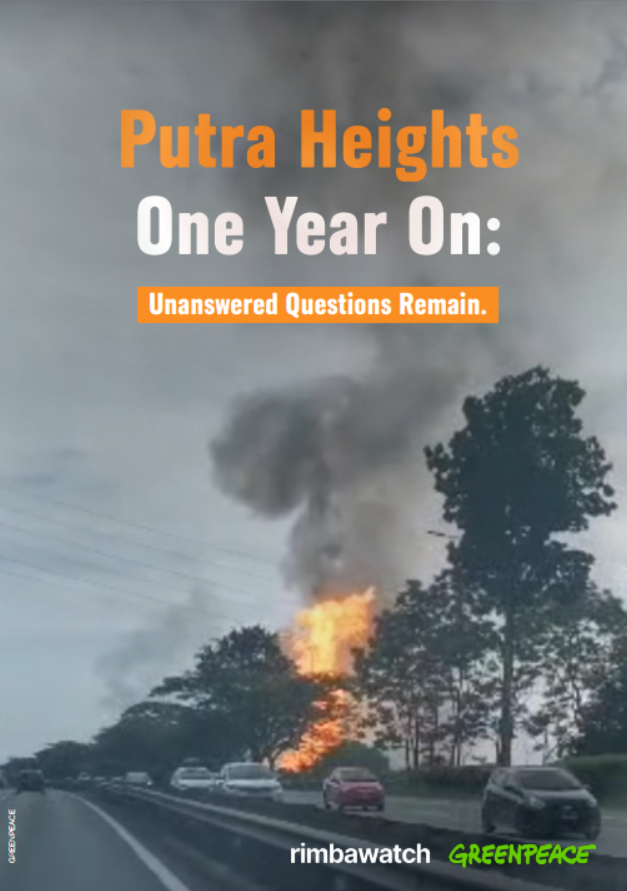
On 1 April 2025, an explosion and fire occurred along the Peninsular Gas Utilisation (PGU) Phase II high-pressure gas pipeline in Putra Heights, Selangor. The blast produced a flame column estimated at 20–30 storeys high, destroyed or damaged over 500 homes and hundreds of vehicles, injured more than 110 people, and forced the evacuation of more than 600 households. The incident created an eight metre-deep crater and burned for over seven hours before being extinguished.
The Parliamentary Special Select Committee (PSSC) on Infrastructure, Transport and Communications concluded in October 2025 that the explosion was caused primarily by long-term soil subsidence beneath the pipeline. According to the PSSC, soft and water logged ground conditions led to 24.3 cm of soil settlement and 15.9cm of pipeline displacement, weakening a welded joint through repeated cyclic loading until a gas leak ignited. The Committee found no evidence of sabotage, over pressurisation, construction interference, or operator negligence, and classified the matter as requiring “no further action.”
However, one year after the disaster, unanswered questions remain.
This policy brief identifies critical governance, regulatory and safety gaps not
adequately addressed in the PSSC report:
1. Pipeline Siting and Zoning
Evidence suggests that the PGU Phase II pipeline was zoned, and ultimately constructed, through areas already allocated, and in some cases already developed, for residential use under the Rancangan Struktur Daerah Petaling Jaya dan Sebahagian Daerah Klang (RSDPSDK) structure plan at the time of the pipeline’s construction. The siting of a 36- inch, high-pressure fossil gas transmission pipeline through dense urban areas raises serious concerns about planning decisions and inter-agency coordination at the time of approval.
2. Buffer Zones
Malaysia lacks a unified legal framework mandating minimum safety buffer zones for high-pressure gas pipelines. The existing 30–50 metre Right-of-Way (RoW) appears to function as the sole buffer, regardless of population density. International best practice, including standards aligned with ASME B31.8 and U.S. High Consequence Area (HCA) definitions, would suggest buffer distances exceeding 200 metres for a pipeline of this size and pressure. The absence of buffer zones calibrated to Potential Impact Radius (PIR) calculations leaves tens of thousands of residents exposed.
3. Community Awareness and Emergency Preparedness
Interviews conducted with residents indicate low awareness of the pipeline’s presence and inadequate communication of safety protocols. While PETRONAS Gas Berhad (PGB) is known to conform to ASME B31.8 integrity management standards, publicly available records do not demonstrate that PGB provided communication of emergency preparedness materials to the public to the extent recommended by ASME.
4. Environmental and Risk Assessment Gaps
It remains unclear whether Environmental Impact Assessments (EIAs) or Quantitative Risk Assessments (QRAs) were conducted for the PGU Phase II pipeline or adjacent residential developments, despite legal requirements under the Environmental Quality Act 1974 and its 1987 Order. Malaysia’s EIA framework historically did not mandate QRAs for pipelines, and transparency regarding past approvals remains limited.
5. Monitoring and Regulatory Oversight Failures
Although PGB employs advanced monitoring technologies, including SCADA systems, cathodic protection, drone surveillance, predictive analytics tools, and In-Line Inspection (ILI), a 243 mm soil movement went undetected. Technologies such as In SAR are capable of detecting millimetre-scale subsidence, leading to questions on how such a significant soil movement was not addressed.
6. Climate and Public Health Impacts
Approximately 400 million standard cubic feet of gas were released. Assuming full combustion, the explosion likely resulted in over 27,000 tonnes of CO₂ emissions, equivalent to the annual emissions of nearly 7,000 internal combustion engine vehicles. The PSSC did not assess the climate implications or short-term public health impacts of sudden high greenhouse gas concentrations in a dense urban environment.
7. Lessons from Previous Incidents
The Sabah-Sarawak Gas Pipeline experienced repeated leaks and subsidence-related failures between2014 and 2022, leading to partial decommissioning in early 2025. The recurrence of subsidence-related failure in Putra Heights suggests that lessons from prior incidents were insufficiently integrated into monitoring protocols for high-consequence urban areas.
8. Continued Infrastructure Expansion Without Reform
Construction of the 36-inch TULIP pipeline continues despite similar siting and subsidence concerns, including development near residential zones and peat soils. Transparency regarding its EIA, buffer zones, and risk assessments remains limited.