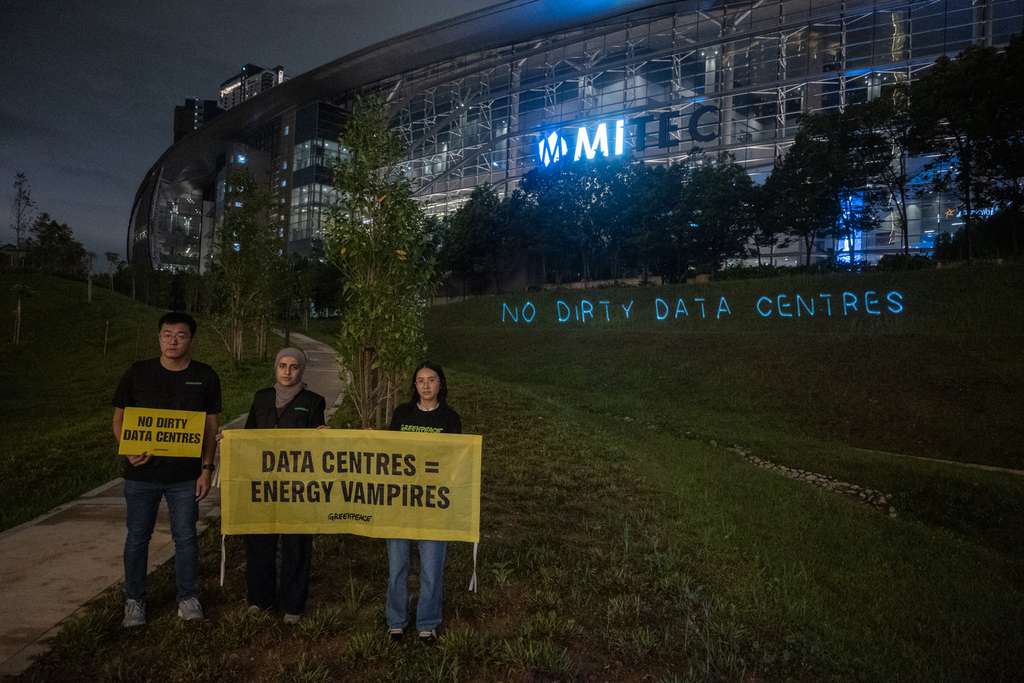
Data Center Asia (DCA), organised by Informa Markets, brings the data centre and AI infrastructure industry to MITEC, Kuala Lumpur this Nov 17 – 19. As part of our ‘Break Free from Big Tech’ campaign, we call for an immediate halt to approvals of new mega data centres until strict climate, water, and community protections are codified in law.
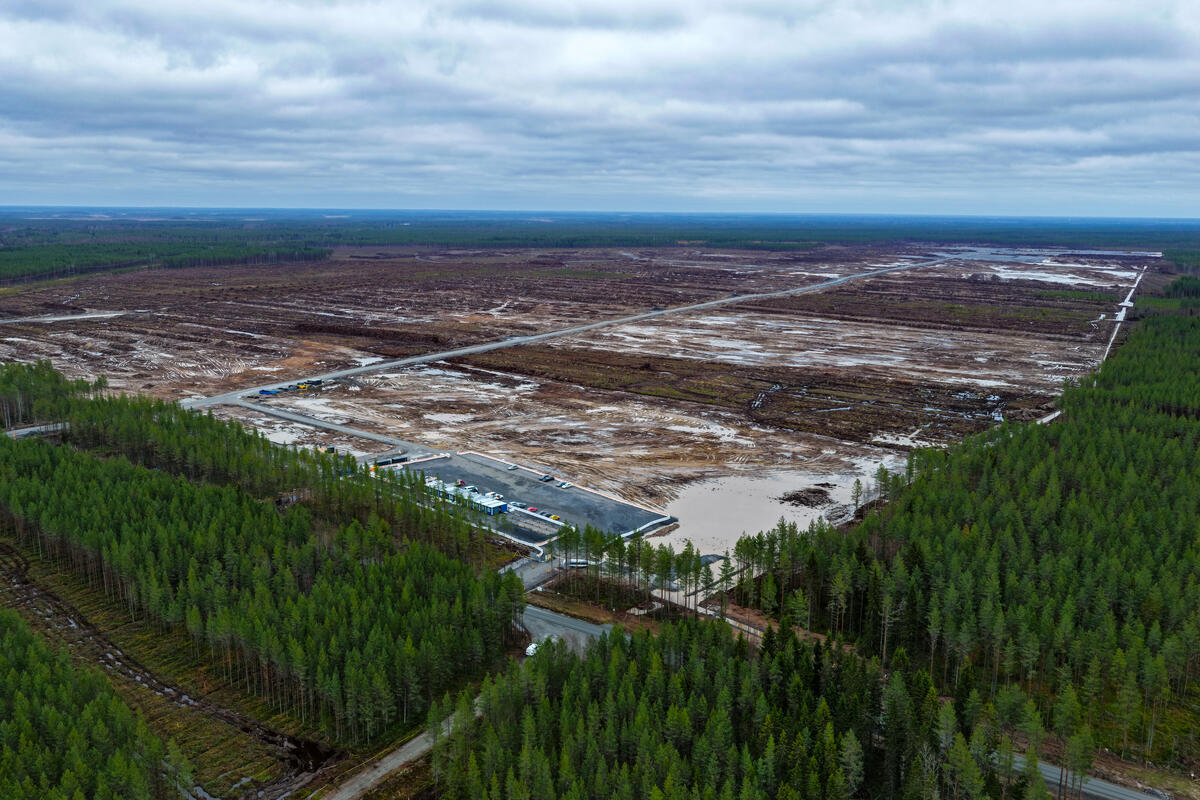
Unchecked data centre expansion is draining electricity grids, using up freshwater, driving up living costs, and reviving fossil fuels in order to power AI. Google reportedly cut down 250,000 trees in Finland illegally to build a data centre, without carrying out the environmental impact assessment required by Finnish law. The forest has been degraded into a muddy field.
While residents of Kota Damansara came together to submit their objections to a proposed commercial data centre in their residential area, they raised serious concerns about intensive water and energy use, noise pollution, urban heat, the loss of green space and the lack of transparency surrounding the proposed project.
Here’s what’s concerning about data centres
- Water: Evaporative cooling lets drinking-quality water escape as vapour, so it is lost to local supply. Only fully closed-loop systems can bring net water use to zero.
- Local water stress: Large facilities add to water stress and set up conflicts with households, farmers and other users.
- Energy and grid: Mega data centres consume as much power as entire countries, strain grids and risk higher bills for ordinary people. For Malaysia, it is projected that the Data Center share of Peninsular Malaysia’s electricity demand could reach 35% by 2035 from its current figure of 7% this year.
- Climate: Rapid expansion risks bringing gas and coal back into service, undermining the transition away from fossil fuels.
- Transparency: In Germany, operators have had to report water use since 2023, but compliance is patchy, unchecked and has no binding caps. Communities often don’t know what is being consumed.
- Democratic oversight: Projects are imposed without community consent, and Big Tech is bypassing scrutiny.
- Wider harms: The technology can enable mass surveillance, data exploitation and AI-enabled warfare.
Greenpeace Germany also gives us a fuller picture of the water issues:
- Data centres there used about 13 billion litres for cooling last year, roughly the drinking water needs of a city of 275,000 people.
- Demand could reach up to 27 billion litres a year by 2030.
- The nearly 30 planned mega data centres (over 100 MW) are each estimated to need 200–930 million litres a year, depending on the cooling technology.
What are we calling for?
1. Immediately halt approvals and construction of new mega data centres until binding legal criteria are in place.
We call on the Malaysian Investment Development Authority (MIDA) and Data Centre Task Force (DCTF) to establish regulations banning the siting of data centres near residential areas, including working with PLANMalaysia to amend the existing Planning Guidelines for Data Centres.
Local municipal councils such as the Petaling Jaya City Council should issue a moratorium on the approval of new data centres, and a stop-work order on data centres currently under construction, until such amended regulations are enforced.
- Introduce mandatory, audited public reporting of energy, water and heat use, with binding limits on consumption.
- Impose strict, enforceable environmental standards.
- Require closed-loop cooling, especially in water-scarce regions.
2. Give communities a real say before approval and require that the data and AI applications these facilities enable do no harm.
The Department of Environment needs to amend the Environmental Quality Act 1974 to include data centres as a prescribed activity requiring a Schedule 2 Environmental Impact Assessment, which are open to public objection periods, meaningful consultation and permanent public access.
- Prohibit draws on critical minerals and water until the needs of people and nature are met.
- Require that data centres do not compromise a just transition away from fossil fuels.
- Require 100% renewable energy that doesn’t disrupt the grid or raise household electricity bills.
And lastly we call on the Government of Malaysia to end collaborations with companies complicit in genocide, and to safeguard strategic and personal data of Malaysians from companies that could threaten national security and digital sovereignty.