

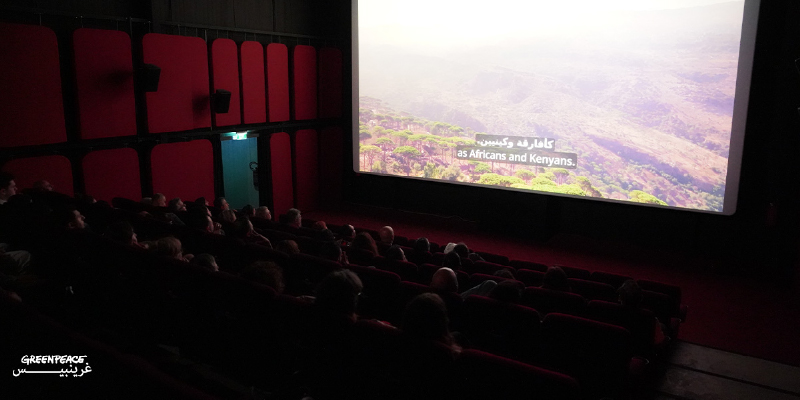
| Expecting a documentary about climate activism, I left with a deeper understanding of the people living on the frontlines of the climate crisis, and the shared fight for justice that connects communities across the Global South. |
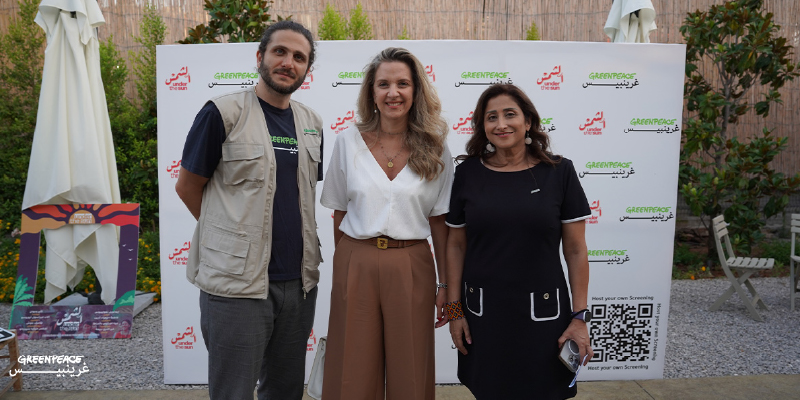
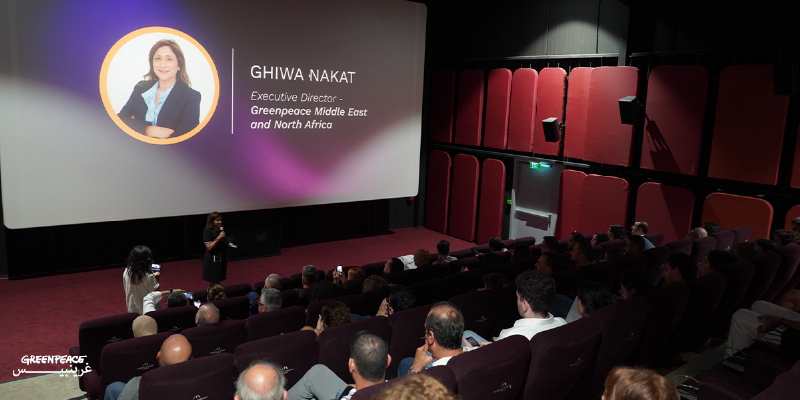
Different life paths, different personalities, and different individuals, yet all united by one documentary, Under the Sun, one message, one purpose. This is the thought that occurred to me as I looked around the room. At that moment, I wasn’t just a Greenpeace volunteer responsible for leading the day’s movie screening, I was part of a larger movement, one tasked with engraving environmental awareness deep into the heart of our community.
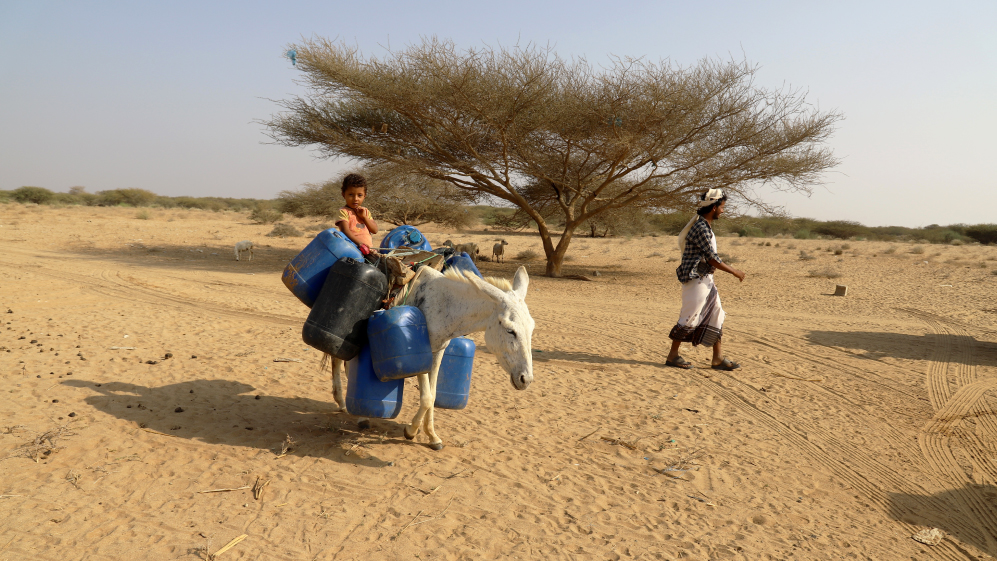
I arrived expecting to watch a documentary about the fight for climate justice led by participants of Lebanon’s 2023 Climate Justice Camp. What I didn’t expect was how deeply I would connect with their experiences. As an Environmental Health student, I was already familiar with the science behind climate change: its causes, impacts, and alarming statistics. But the documentary reminded me that behind every graph and textbook lies a human story. Behind an activist holding a cardboard sign reading, “No to the big corporations,” there is a woman in the Philippines whose father disappeared after speaking out for the environment, or a woman in Tunisia who returned to her family’s farm only to find it devastated by years of recurring drought.
I came away with a renewed appreciation for the solidarity that unites communities across the Global South. Despite our different identities, cultures, and lived experiences, we are connected by a shared pursuit of climate justice. The documentary brought this to life in unexpected ways. Not all the activists spoke the same language, yet they communicated effortlessly through music, setting aside their differences to amplify a common message. Their voices, shaped by resilience and lived experience, carried a powerful reminder: those most affected by the climate crisis are often its strongest advocates. By sharing their stories, they challenge injustice and inspire others to act.
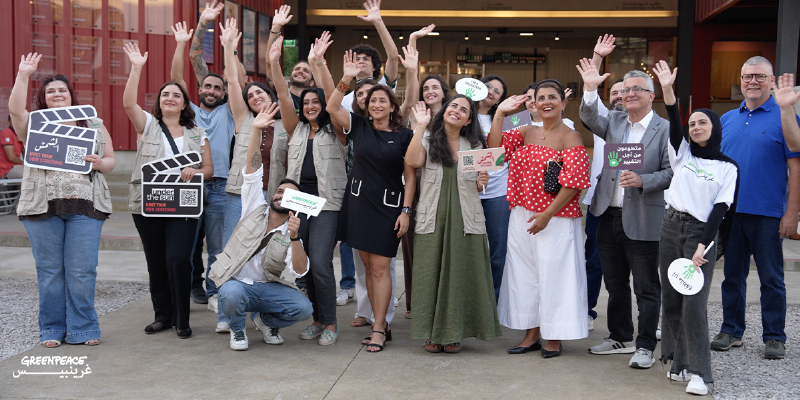
As the documentary came to an end and conversations continued over the reception area, I found myself reflecting on the significance of the evening. It was more than a film screening, it was a space for connection, dialogue, and shared purpose. The documentary held the role of a time capsule, immortalizing those brave voices, and allowing us to use their strength to become more vocal, more visible, and definitely more eager to speak up or take action.
As I carried out my responsibilities during the event, including connecting with wonderfully dedicated participants and facilitating conversations, I had the opportunity to meet inspiring individuals with diverse experiences. One conversation, in particular, stayed with me. I learned about a protected natural reserve in Lebanon that had been established without meaningful consultation with the local villagers, despite the land being one of their main sources of livelihood through cultivation.
I couldn’t help but compare this story to the corporations’ giants and the indigenous community dynamic. While the multinational conglomerates are among the largest contributors to greenhouse gas emissions, instead of reducing their carbon footprint, they attempt to greenwash the victimized populations by importing their “solutions” to lands that have no need for them. Their notion of civilization is entirely bound to their own standards, deliberately ignoring that what might work in the Global North, does not necessarily work in the Global South.
Through these conversations, I discovered that each of us, in our own way, is contributing to the effort to protect the world we depend on. From NGO leaders organizing community initiatives, to environmental journalists holding decision-makers accountable, to volunteers like myself dedicating time and energy to this cause, every action plays a role in shaping a more just future.
And you, dear readers, are part of this movement too. By taking the time to listen to these stories, you have already taken a step toward understanding the realities of the climate crisis. I invite you to continue that journey, whether through everyday choices, volunteering, or simply amplifying the voices that deserve to be heard.
The message I hope readers carry from Under the Sun is that climate change is not only an environmental issue, it is deeply connected to justice, history, and human experiences. The voices of those most affected deserve to be heard, and we all have a role in ensuring they are not overlooked. Sometimes change begins with something as simple as listening, learning, and choosing to act.
About the author: Sirine Al Sakka is a Greenpeace MENA volunteer based in Lebanon and an Environmental Health student with a particular interest in climate justice, environmental advocacy, and community engagement.
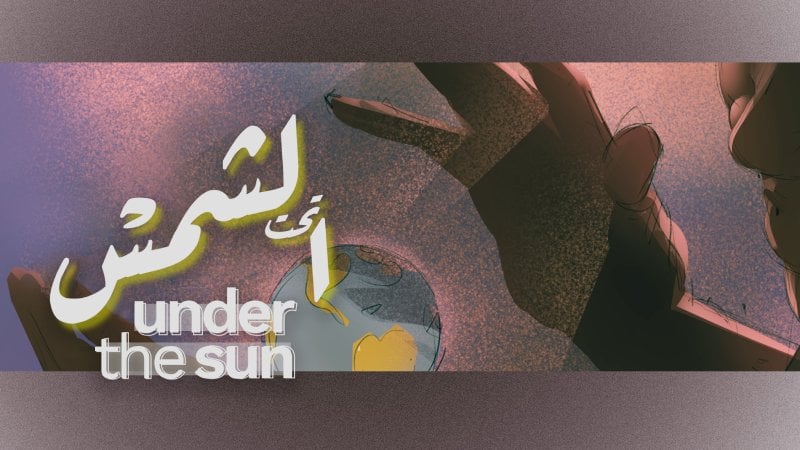
Under the Sun, a Greenpeace MENA documentary filmed in the heart of Lebanon during the summer of 2023, documents how local communities are paying the true price of the climate crisis.
Watch Now