

SEAWEED IN A JAR | PHILIPPINES
AMADOR MACABUTAS
Amador’s source of income relies from the abundance of the ocean. But rising ocean temperatures caused by climate change is endangering his livelihood.
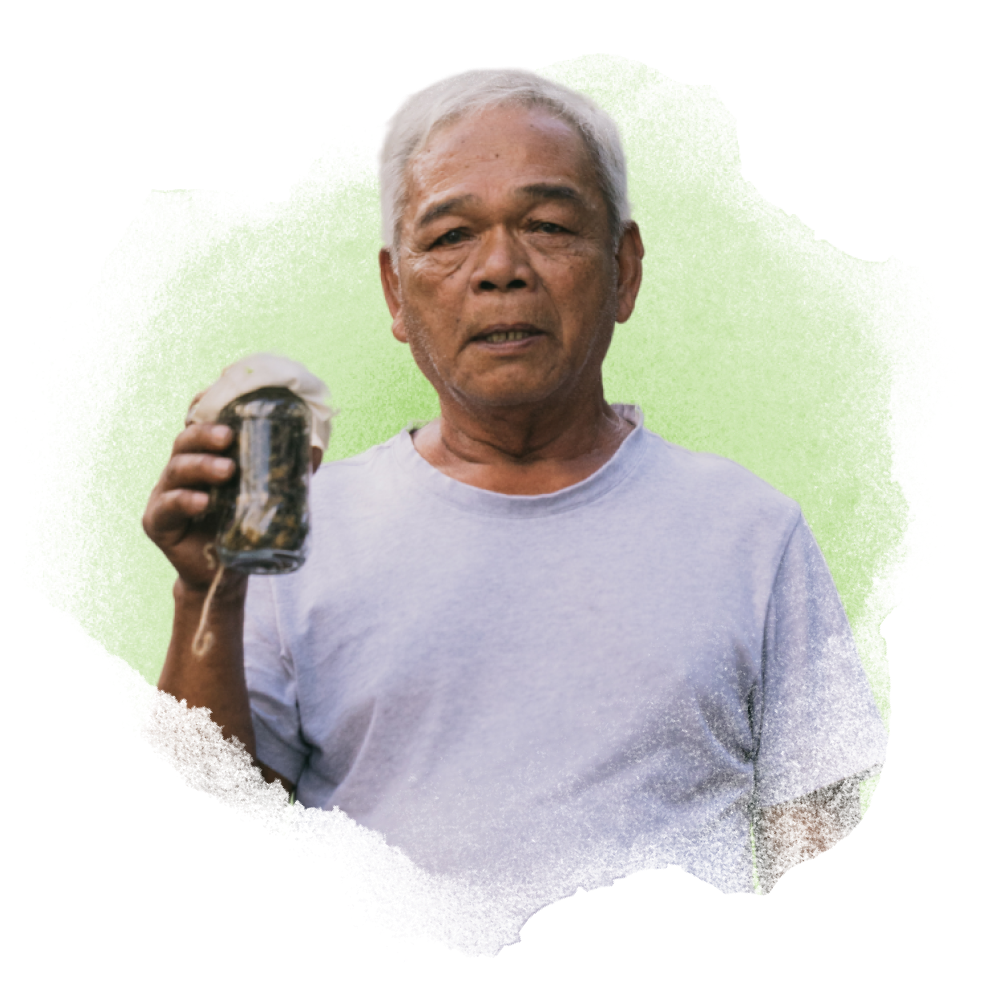

Whether it’s wet or dry season in the Philippines, farmers and fisherfolks like Amador from Salcedo, Eastern Samar, gets disproportionately affected by the worsening climate crisis.
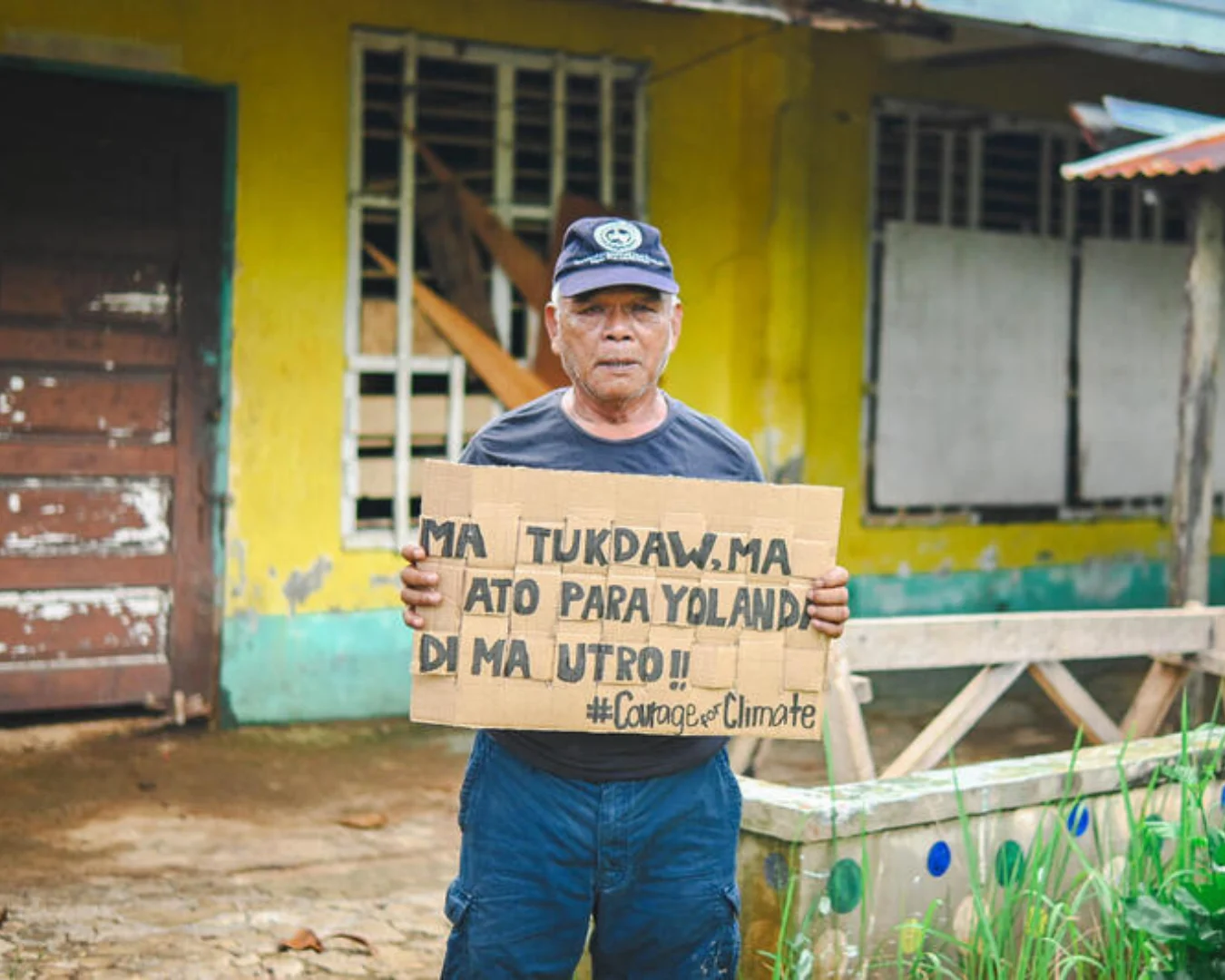
Eastern Samar is located at the west side of the Pacific ocean, making it prone to typhoons. With climate change, extreme weather events such as Haiyan, become more frequent and devastating, making it especially difficult for the farmers and fisherfolks.
Whenever a typhoon is about to hit their locality, Amador and his fellow farmers are forced to harvest their crops early, leaving them at a loss. They also can’t go to the sea to fish as it would be dangerous. Nowadays, typhoons happen more often than before.
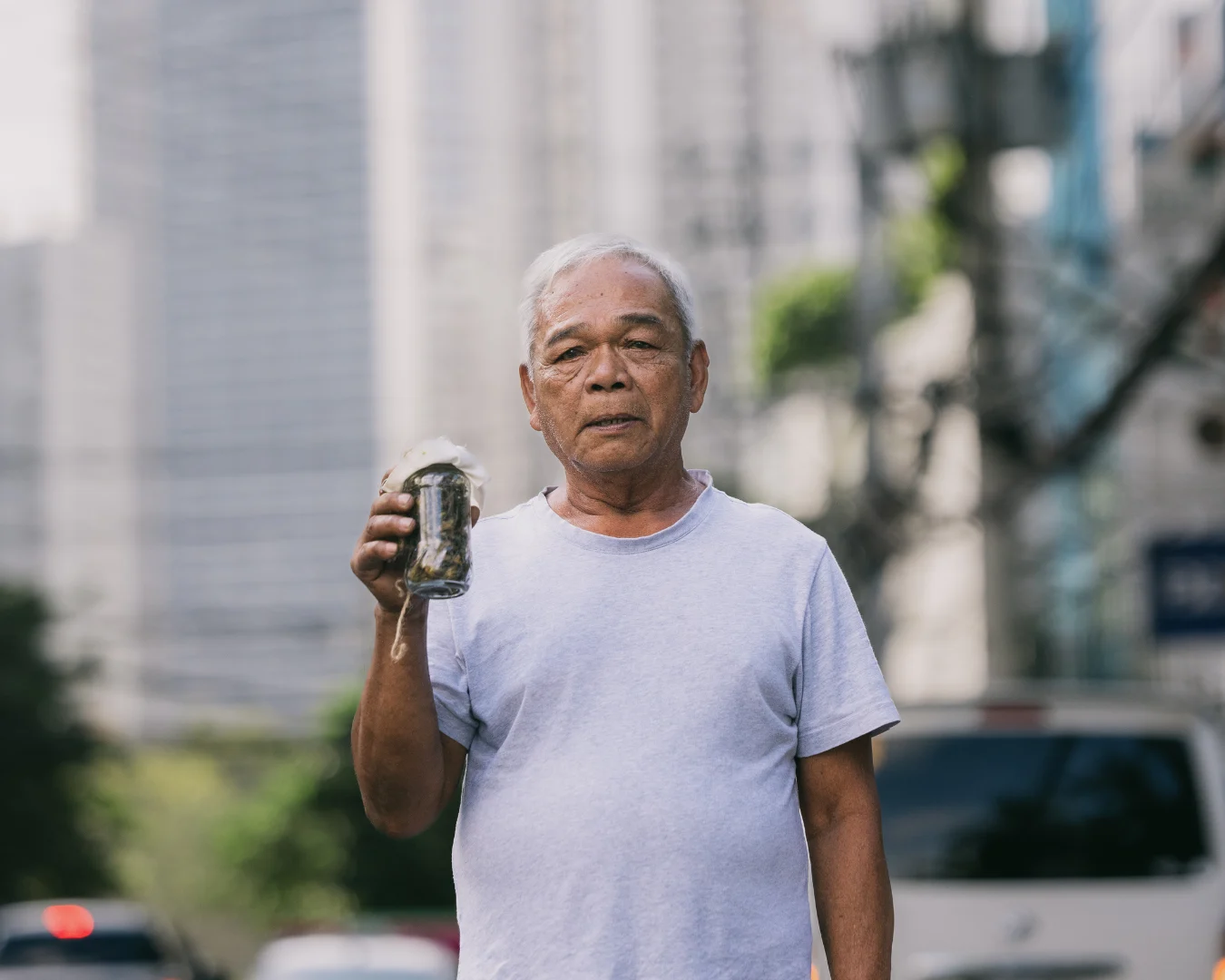
Object of Memory
It’s not just extreme weather events that make fisherfolk and farmers like Amador suffer. Slow onset events, such as rising water temperatures, are taking a toll on their livelihood. Warmer oceans kill underwater life. In Salcedo, Eastern Samar, seaweeds in shallow waters are already dying, leaving Amador and other fisherfolks with barely any fish to catch.
Amador and his community respond to the climate crisis by adopting adaptation and mitigation practices to save their livelihoods, but he also believes that the authorities must also listen to them who has been disproportionately impacted by the climate crisis.
Explore More Stories

LORENA IVY OGANIA
Kulambo | Philippines

MARY MERGAL
Piece of Cabinet | Philippines

FELISA CASTRO
Bariw Basket | Philippines