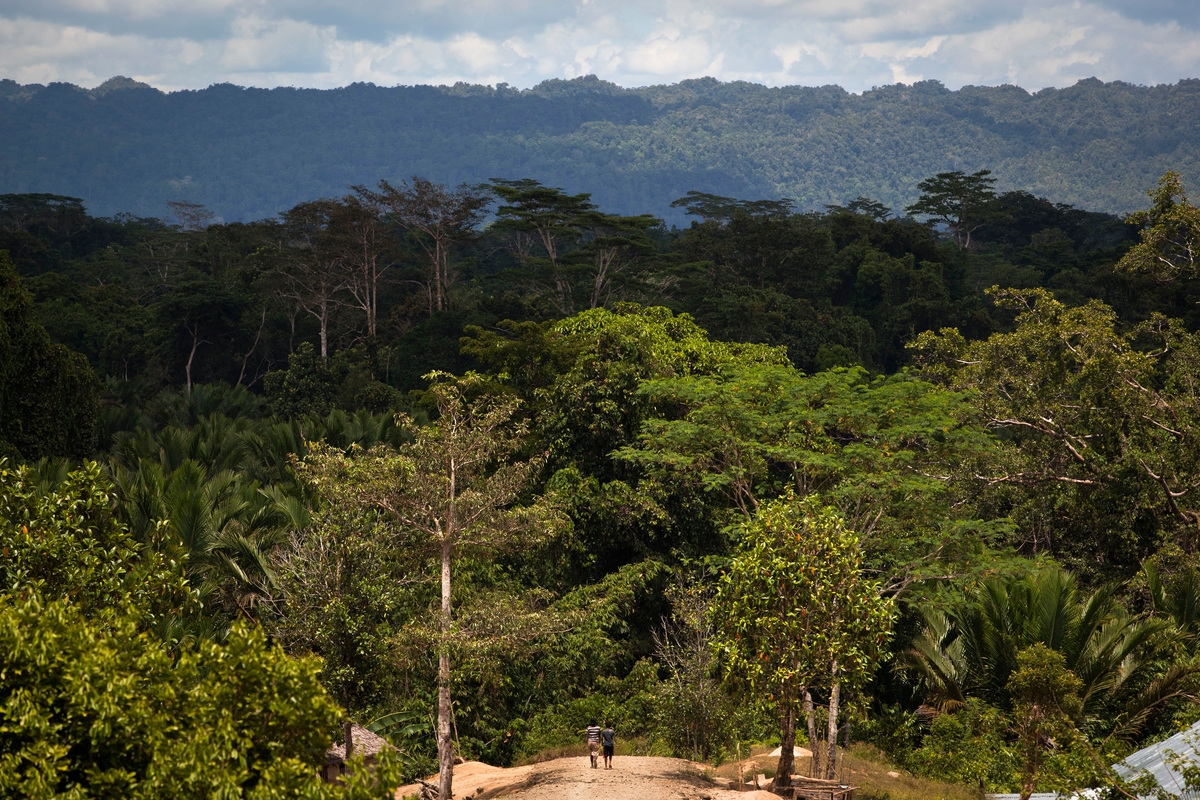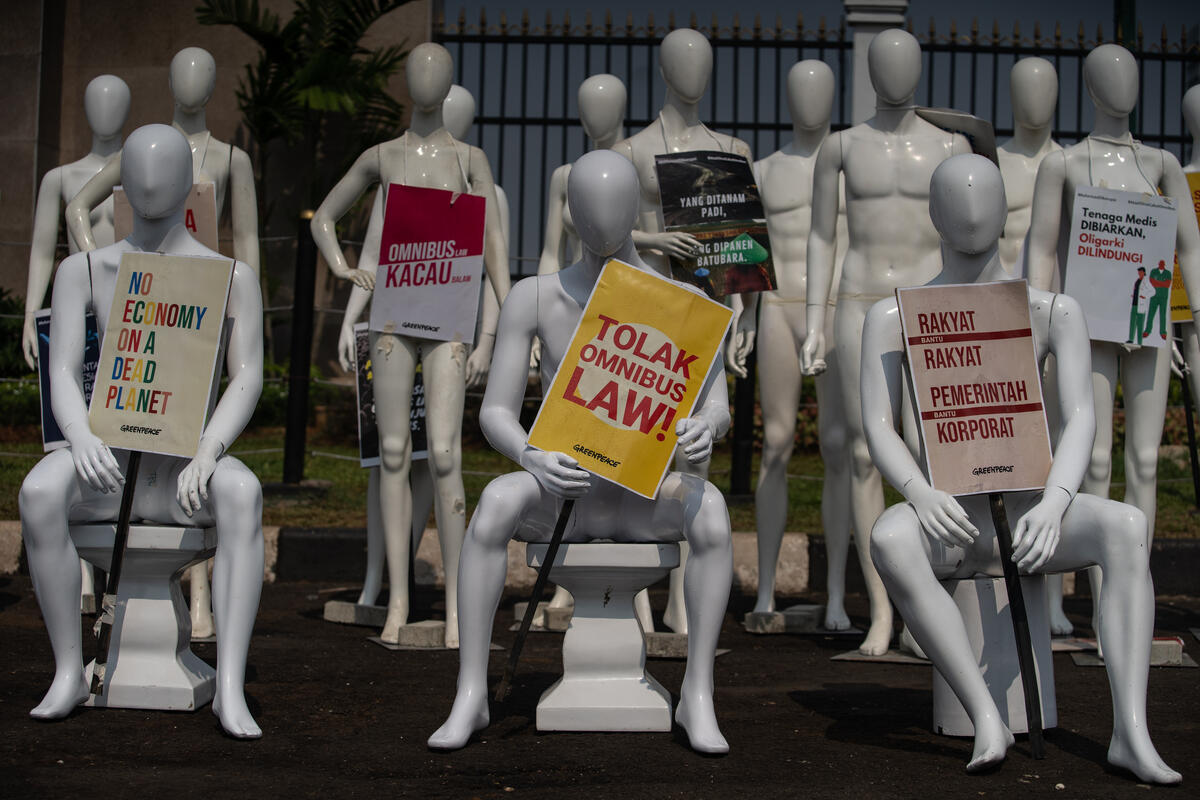
Bali, November 15, 2026. The United Nations has declared that the world has entered a new era of climate crisis, a statement made during the COP 31 global climate conference in Antalya, Turkey. Global temperatures are set to surpass the 1.5°C threshold, bringing the threat of far more severe extreme weather in the future. A powerful El Niño phenomenon is colliding with a planet undergoing extreme warming driven by human activity.
This must serve as a clarion call for world leaders to take more ambitious climate action—driving an immediate, large-scale response to curb and reduce greenhouse gas emissions by accelerating a just, orderly, and equitable transition away from fossil fuels.
“We are witnessing how the climate crisis is fueling disasters that are intensifying and worsening year after year. All of these climate-related disasters are driven by the use of fossil fuels. Fossil energy not only destabilizes the climate but also inflicts widespread harm on public health, society, and the economy, while fueling instability globally. This is a ‘red alert’ for world leaders to commit to—and provide a clear, credible roadmap for—ending the use of fossil fuels,” said Iqbal Damanik, Climate and Energy Campaign Manager Greenpeace Indonesia.
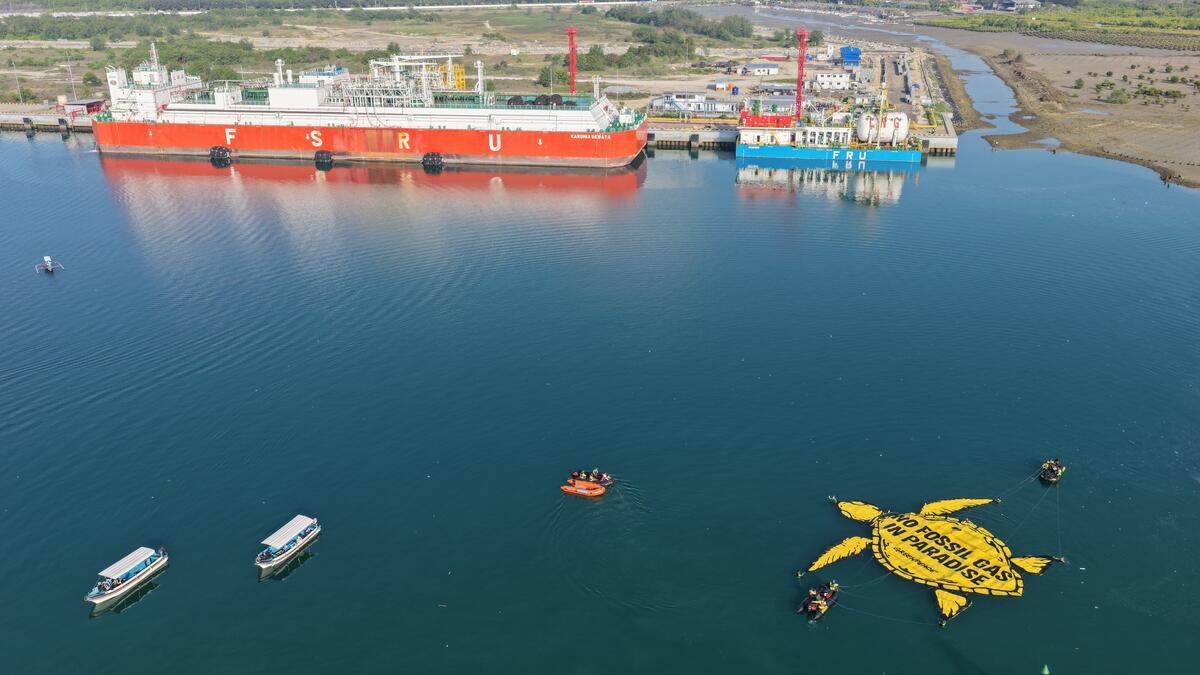
Seizing this moment, Greenpeace Indonesia staged a creative, peaceful protest at the very source of the climate crisis. A banner shaped like a sea turtle was unfurled over the water directly in front of a Floating Storage and Regasification Unit (FSRU) for liquefied natural gas (LNG) in Serangan Village, Bali. The banner bore the message: “No Fossil Gas in Paradise.”
The action also serves as a demand for the Indonesian government to remain consistent in its energy transition and to cease the inclusion of fossil fuels in its electricity planning. In its Electricity Supply Business Plan (RUPTL), the government still makes room for the use of fossil fuels, including the construction of up to 6 GW of new coal-fired power plants and the expansion of gas-fired power capacity by 10.3 GW. A recent report by LPEM UI and Greenpeace Indonesia reveals that Indonesia is experiencing a state of “carbon lock-in,” where the governance of the national electricity system remains structurally designed to prioritize and cement the dominance of fossil fuels.
“If the Indonesian government is serious about pursuing an energy transition, there should be no further expansion of fossil-fuel power plants in its electricity supply plan. Adding new fossil-fuel capacity will only prolong Indonesia’s entrapment in a fossil-fuel-dependent system and hinder the energy transition,” said Yuyun Harmono, Climate and Energy Campaign Lead Greenpeace Indonesia.
Expanding fossil-fuel-based electricity generation capacity also necessitates the construction of supporting infrastructure. Bali has planned the addition of 1,550 MW of gas-fired power plant capacity. To support these operations, a new Floating Storage and Regasification Unit (FSRU) with a capacity of 145,000 cubic meters is slated for construction in Serangan. This development plan has been rejected by the indigenous communities of Serangan and Intaran villages, as it would directly impact the livelihoods of local fishers and the coastal ecosystem.
“Adding LNG facilities in southern Bali will shrink fishing grounds, destroy mangrove ecosystems, and harm sea turtle habitats. Stop using fossil gas and shift focus immediately to renewables,” Yuyun asserted.
Furthermore, gas-fired power plants emit not only CO2 but also methane. Methane is 86 times more potent than CO2 at trapping heat over a 20-year period following its release into the atmosphere. There is also a risk of methane leaks throughout the entire LNG supply chain—from processing and storage to distribution to power plants.
Given its abundant renewable energy potential, Bali’s reliance on fossil gas should no longer be an option. Bali’s solar energy potential is estimated at 3.3-10.9 GW. Therefore, the vision of an “Energy-Independent Bali powered by Clean Energy” should be realized through concrete policies and actions, rather than remaining merely a slogan for the local government.
“Bali has a solar energy potential of up to 3.3-10.9 GW. With such potential, the development of fossil-gas-based power plants should no longer be an option,” said Yuyun.
In August 2026, the Indonesian government also launched a program to develop 100 GWp of solar power capacity in Bali. However, to date, the government has yet to publicly disclose the specific regulations or a detailed implementation plan to achieve this target. The 100 GWp solar power (PLTS) program will be in vain if the national electricity system remains locked into the interests and infrastructure of fossil fuels. The development of solar energy must be accompanied by a comprehensive overhaul of electricity policy, including a halt to the expansion of fossil-fuel-based power generation.
During the first week of the COP 31 climate negotiations, a draft decision was produced that includes a concrete solution: a transition away from fossil fuels within the energy system. Greenpeace Indonesia urges the Indonesian government to support this global agreement by accelerating a just, orderly, and equitable transition; advocating for fair and adequate public financing; ensuring that major corporate emitters are held responsible for funding the transition; and ceasing the promotion of flawed technologies, such as carbon capture, utilization, and storage (CCUS).
Library Link
Media contact:
Iqbal Damanik, Climate and Energy Campaign Manager, Greenpeace Indonesia, +62 811-4445-026
Yuyun Harmono, Climate and Energy Campaign Lead, Greenpeace Indonesia, +62 813-8507-2648
Rahma Shofiana, Media Campaigner, Greenpeace Indonesia, +62 811-1461-674