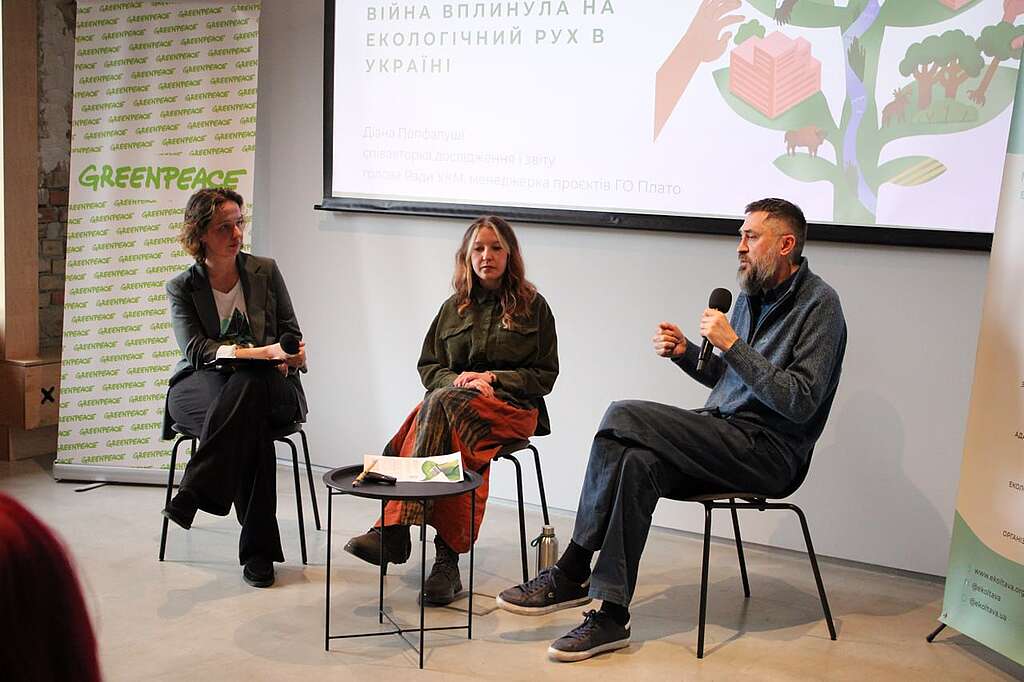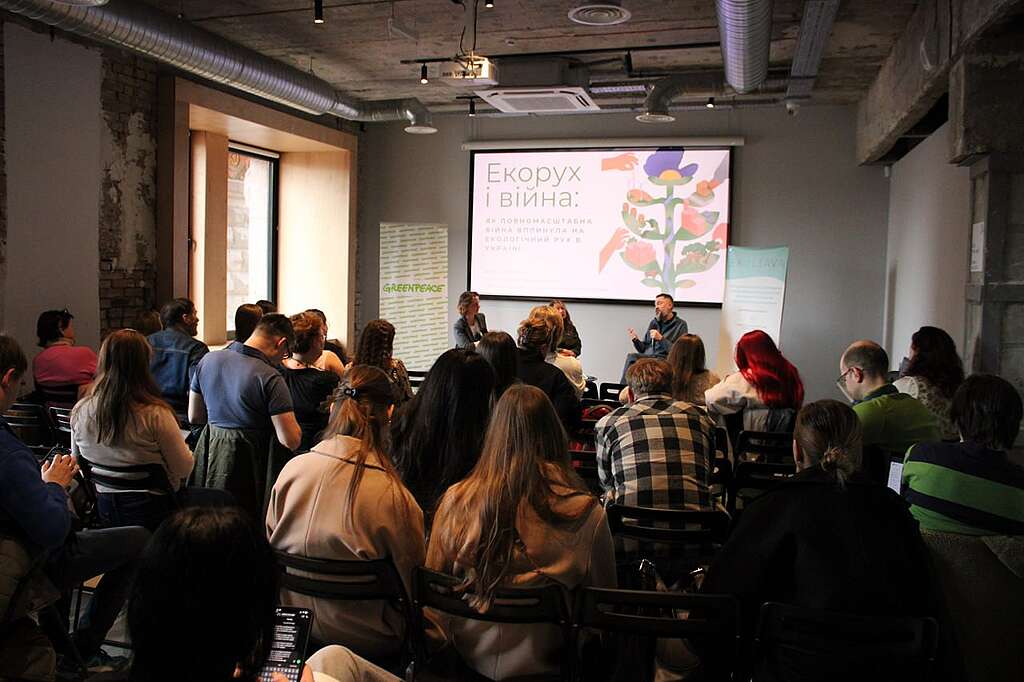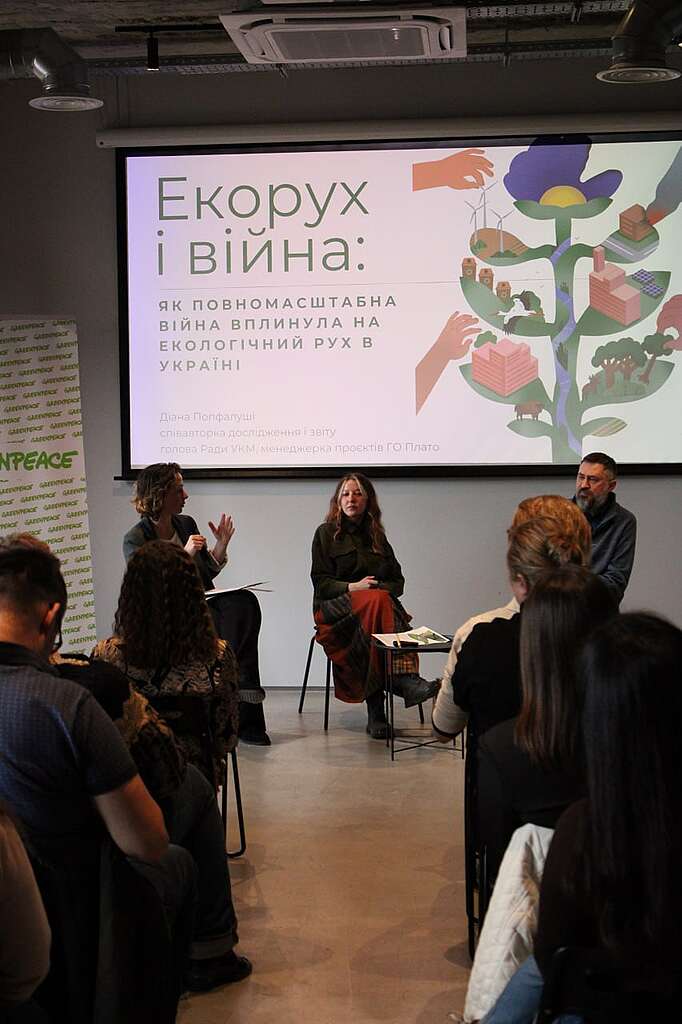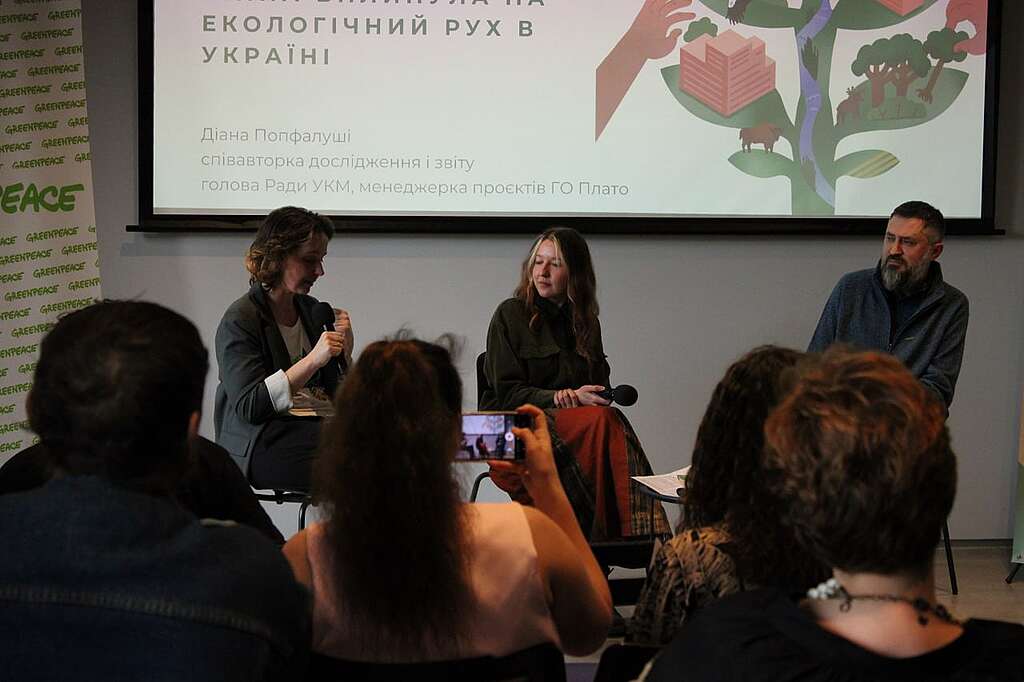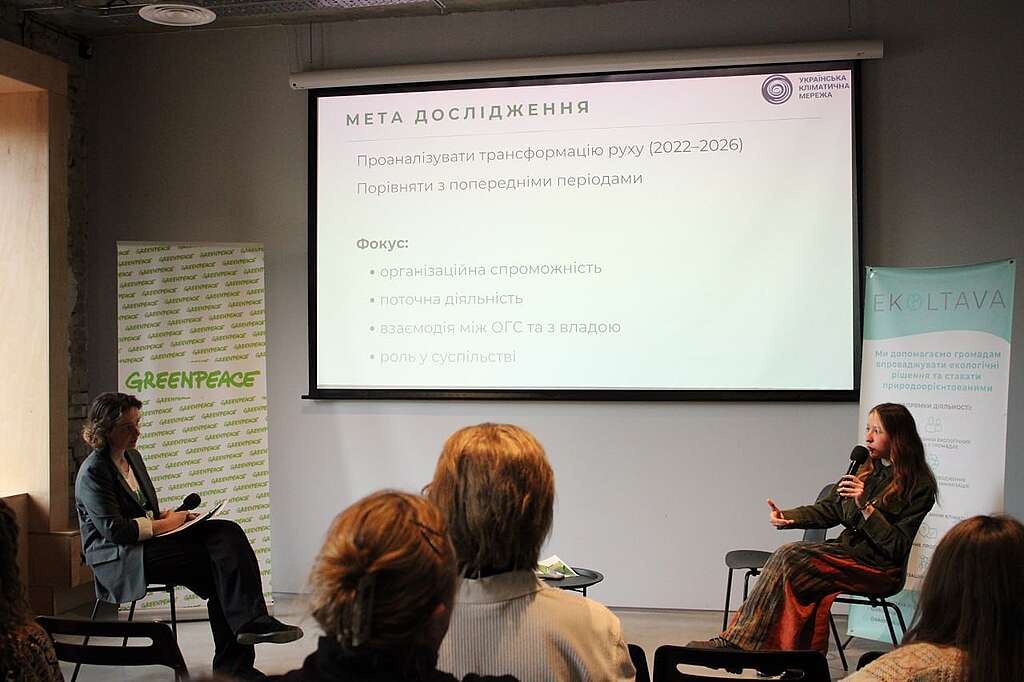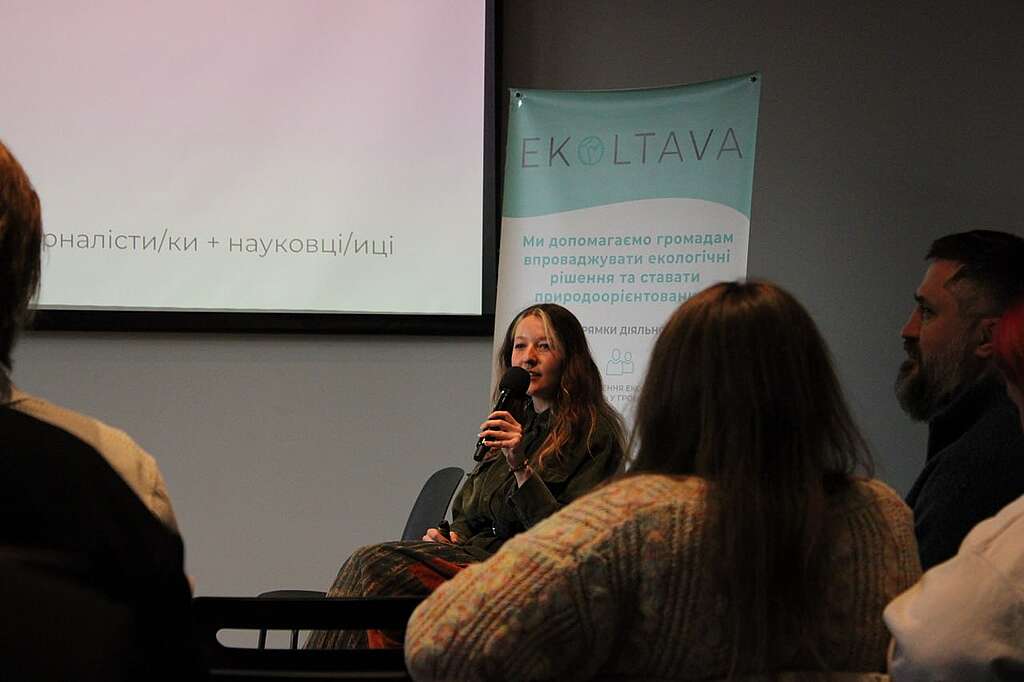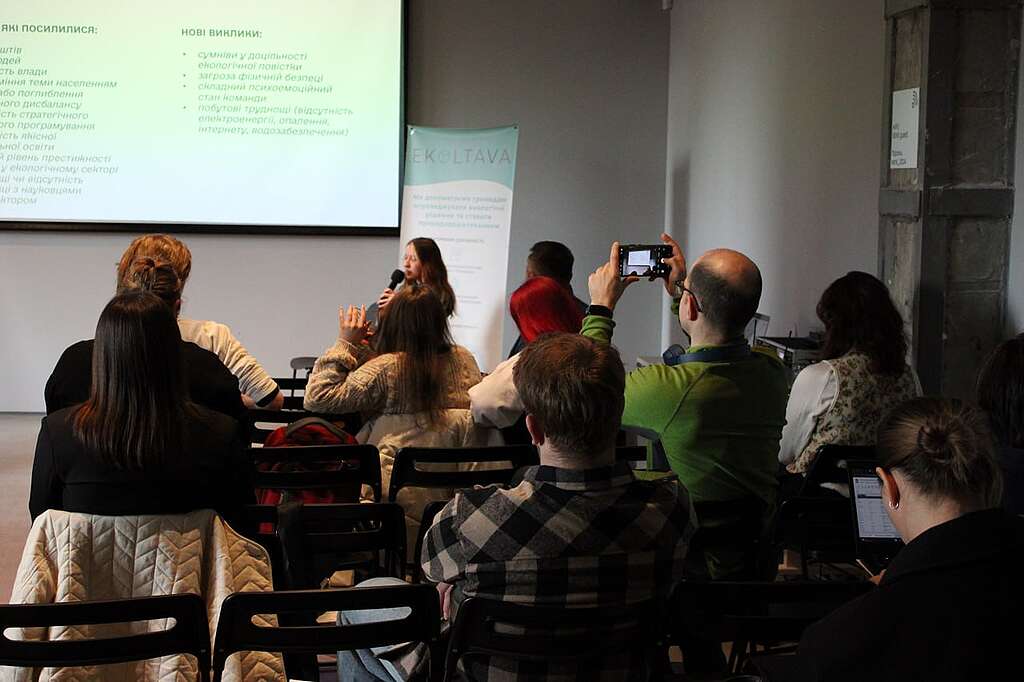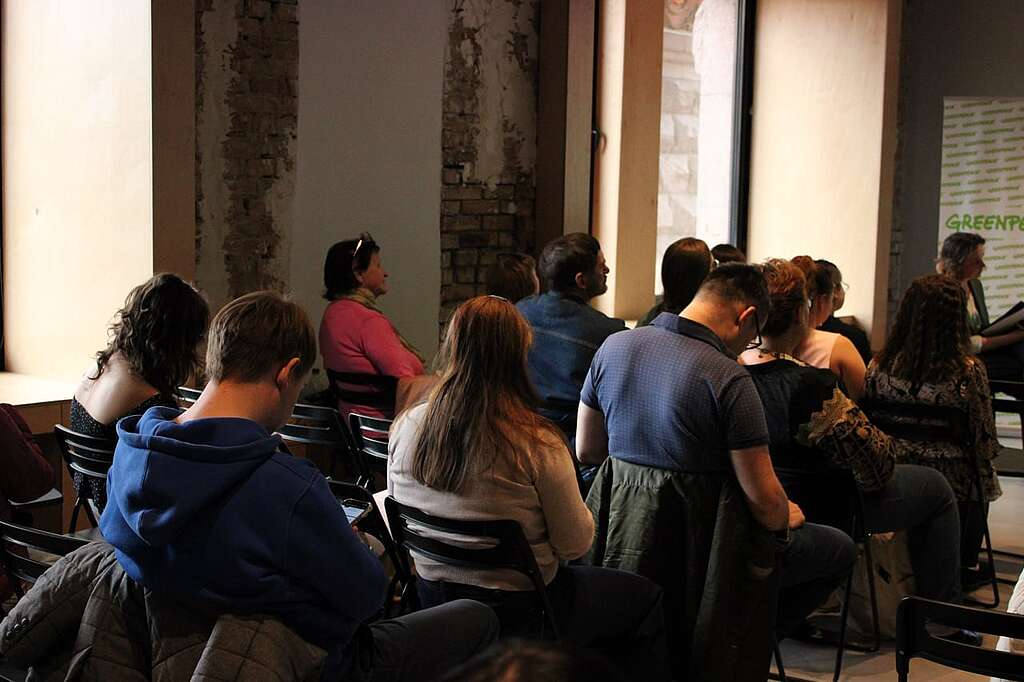
On April 15, at the “Sens” bookstore on Khreshchatyk, a presentation of a uniquely scaled study titled “The Environmental Movement and War: How the full-scale war has affected the environmental movement in Ukraine” took place. The study covers the development of the civic environmental movement from the time of the Chornobyl disaster to the present day.
The presentation was held on the eve of Environment Day (April 18) and the 40th anniversary of the Chornobyl disaster (April 26) — an event that became a symbolic starting point for the environmental movement in Ukraine.
The study was implemented by the Ukrainian Climate Network and NGO “Ekoltava”, with the support of Greenpeace Ukraine, NGO “Plato”, and “Youth Climate Initiative Rozviy”. It is based on 47 in-depth interviews and two focus groups involving representatives of the civic sector, science, media, and government.
“The environmental movement in Ukraine is not just about environmental protection. It is a part of a democratic society that forms a demand for transparency, accountability, and government responsibility. Historically, environmental protests have become a catalyst for broader societal changes — both in Ukraine and in Europe. Today, during the war, this role is only strengthening,” notes Natalia Gozak, director of Greenpeace Ukraine.
According to the researchers, the full-scale war has significantly transformed the environmental movement: from classic campaigns to responding to environmental war crimes, from local initiatives to active international advocacy.
“We sought not only to record the history of the environmental movement but also to understand how it is changing today. Our study shows: the environmental sector has become more cohesive, pragmatic, and at the same time politically significant. It responds to the challenges of war, but does not lose its strategic vision — rebuilding the country on the principles of sustainable development,” emphasizes Diana Popfalushi, co-author of the study and Chair of the Council of the Ukrainian Climate Network.
“The environmental movement in Ukraine is still underestimated by society. Few people know what role environmental organizations played at the beginning of the full-scale invasion in international advocacy for blocking Russian fossil fuels and imposing sanctions. And they continue this work at various levels. Their role in promoting European integration reforms is equally important. The study beautifully demonstrates this strength of the movement,” says Yulia Melnyk, author of the study methodology and editor of the report, director of the NGO “Ekoltava”.
Among the key topics covered by the study:
- The role of the environmental movement as an indicator of the development of democracy in Ukraine.
- The transformation of the environmental sector during the war.
- Cooperation between the civic sector, government, and science.
- The evolution of interaction with the international environmental community.
Special attention during the presentation was paid to the connection between environmental activism and decolonization processes, as well as the importance of preserving the agency of the environmental movement as a part of a democratic society.
The full study is available at the following link: https://drive.google.com/file/d/1WmPPQ2R9oNqgx1jLGAoEglyYep6wAxuo/view
Background:
The study was implemented by the Ukrainian Climate Network and Ekoltava with the support of Greenpeace Ukraine in cooperation with “Plato” and “Rozviy”.
Media Contact:
Daryna Rogachuk, Communications Officer at Greenpeace Ukraine [email protected]