Burgas, August 11, 2026. Greenpeace activists from five countries painted “NO GAS + OIL” on the side of the abandoned tanker “Kairos”, part of Russia’s shadow fleet, anchored off the coast of Burgas, Bulgaria. The activists approached the tanker from Greenpeace’s icebreaker Arctic Sunrise, an iconic vessel for the environmental organization. The activity protested against the toxic dependence on oil and gas, which funds wars, fuels corruption, and endangers marine ecosystems and local communities. In recent months, satellite imagery analysed by Greenpeace Bulgaria shows dozens of oil slicks in the immediate vicinity of the EU and UK sanctioned tanker “Kairos”, raising doubts about the claim of Bulgarian authorities that no leaks could be found at the ship.
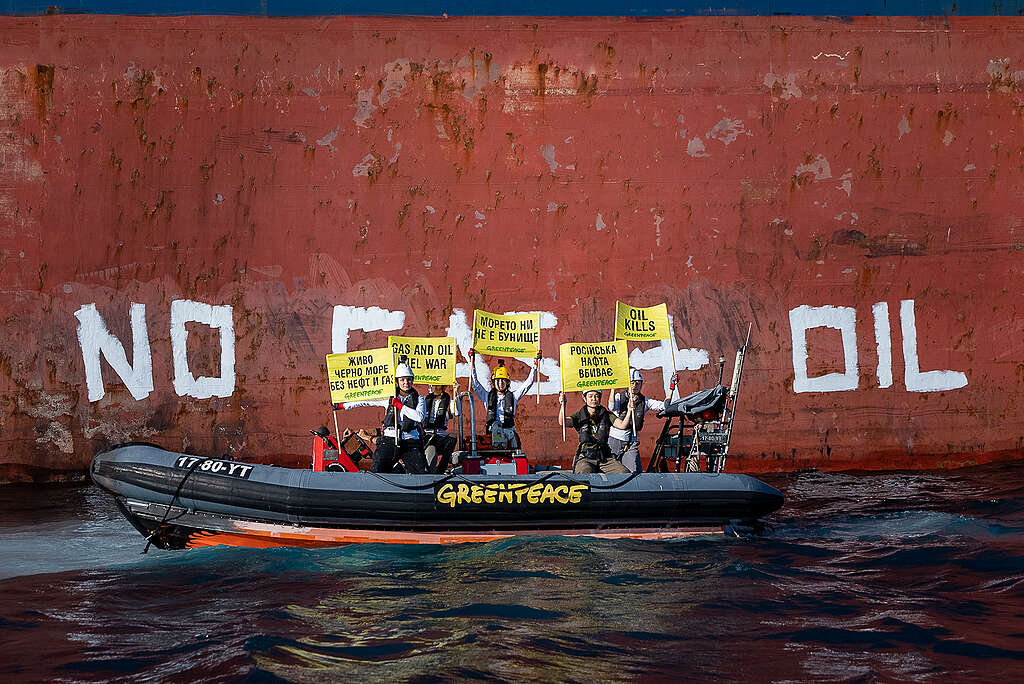
Photo: Ruslan Karlikov / Greenpeace
“The “Kairos” is not just a tanker, but a symptom of how tyrants and oligarchs profit from fossil fuels. We, the citizens, are the ones paying the price for this toxic dependence – some through unaffordable bills, others with their lives. It also puts the Black Sea at risk. Whether they come from tankers or platforms, oil and gas cause pollution and threaten marine ecosystems and coastal communities that rely on the sea for their livelihoods. But we don’t have a second Black Sea. That is why we insist on its protection,” said Martin Tomov, coordinator of the “A Living Black Sea Without Oil and Gas” campaign at Greenpeace Bulgaria.
“The situation in the Black Sea is critical. It is one of the fastest-warming seas in the world. Its ecosystems are under constant pressure – from pollution to fossil gas extraction. Meanwhile, Russia’s shadow fleet tankers, such as the “Kairos”, are sailing its waters on a daily basis. These old and dangerous vessels transport hazardous fuels, dump oil waste, and are ultimately even abandoned along the coast, as if the sea were a dumping ground”, said Meglena Antonova, director of Greenpeace Bulgaria.

Photo: Ruslan Karlikov / Greenpeace
With this action, activists from across Europe – including Bulgaria, Ukraine, Spain, as well as activists from USA, and the Philippines – sent a clear message to the world: they demand an immediate crackdown on Russia’s shadow fleet, which continues to transport crude oil and oil products financing the war in Ukraine. Polina Kolodiazhna, Greenpeace Ukraine’s Campaigner added: “The death toll of Russia’s unjust war increases day by day, with our energy infrastructure targeted to force Ukrainian civilians to suffer. It is critical that Europe stops buying Russian fossil fuels. For the protection of the Ukrainian people and for Europe’s own resilience, we must invest in decentralized renewables – which are harder to hit and offer real energy security.”
Russia’s shadow fleet, to which the ship “Kairos” belongs, continues to fund Russia’s military economy through trade in fossil fuels such as oil and gas. The giant tanker, 274 meters long, was struck in November 2025 while returning empty to the port of Novorossiysk. A Turkish tugboat towed the Russian ship into Bulgarian territorial waters, sparking a diplomatic scandal and leading to the Turkish ambassador being summoned to provide an official explanation. Subsequently, the Bulgarian Navy carried out a rescue operation to evacuate the crew of the distressed ship and managed to anchor the vessel off Burgas, where it remains to this day. In recent months, several toxic spills were witnessed along the southern Black Sea coast, with the “Kairos” being the most likely source of most of them.
Following the start of Russia’s full-scale invasion of Ukraine, the European Union imposed a price cap on Russian oil exports, sanctioning companies and their vessels not respecting this cap. Russia subsequently started to use old and poorly maintained tankers that lack insurance for sanction breaching exports. They often conceal their ownership and routes, manipulate tracking systems, and transfer oil and gas between ships on the high seas, posing a massive risk of pollution.
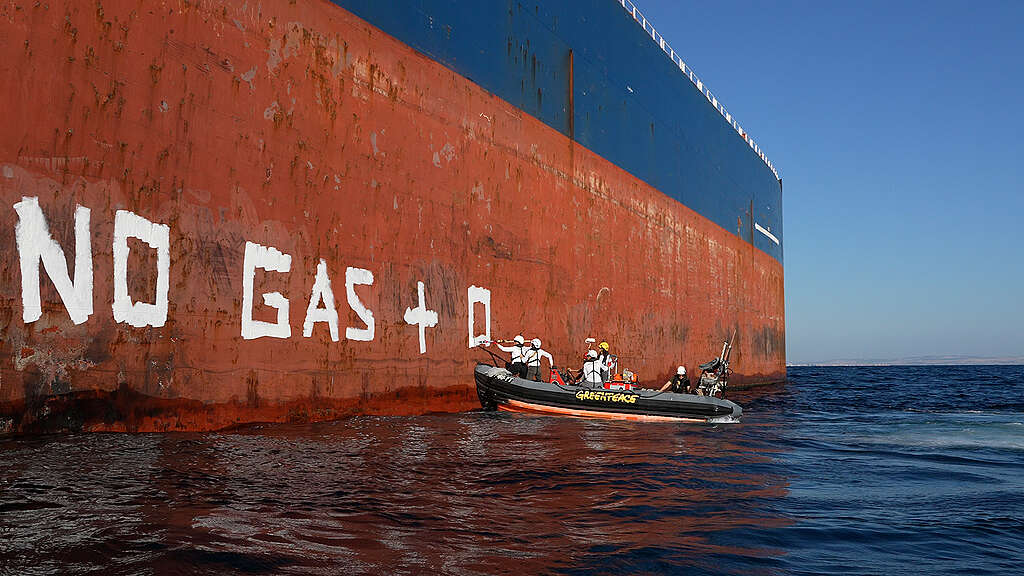
Photo: Ruslan Karlikov / Greenpeace
While the “Kairos” had luckily been empty when hit, Oman currently faces an epic environmental disaster, originating from the almost fully laden 160,000t DWT Russian shadow fleet tanker “Caroline Bezengi”, running around in their waters after an attack in early June this year, and now starting to leak its cargo.
While it goes without saying that Bulgarian authorities must do everything possible to contain the leakage from the “Kairos”, Greenpeace Bulgaria underscores that fossil fuels do not provide energy security but instead expose citizens to constant price fluctuations, supply disruptions, and geopolitical conflicts. The only real alternative is to reduce dependence on oil and gas and invest in renewable energy sources. The future belongs to decentralized renewable solutions that provide affordable and secure energy for everyone.