
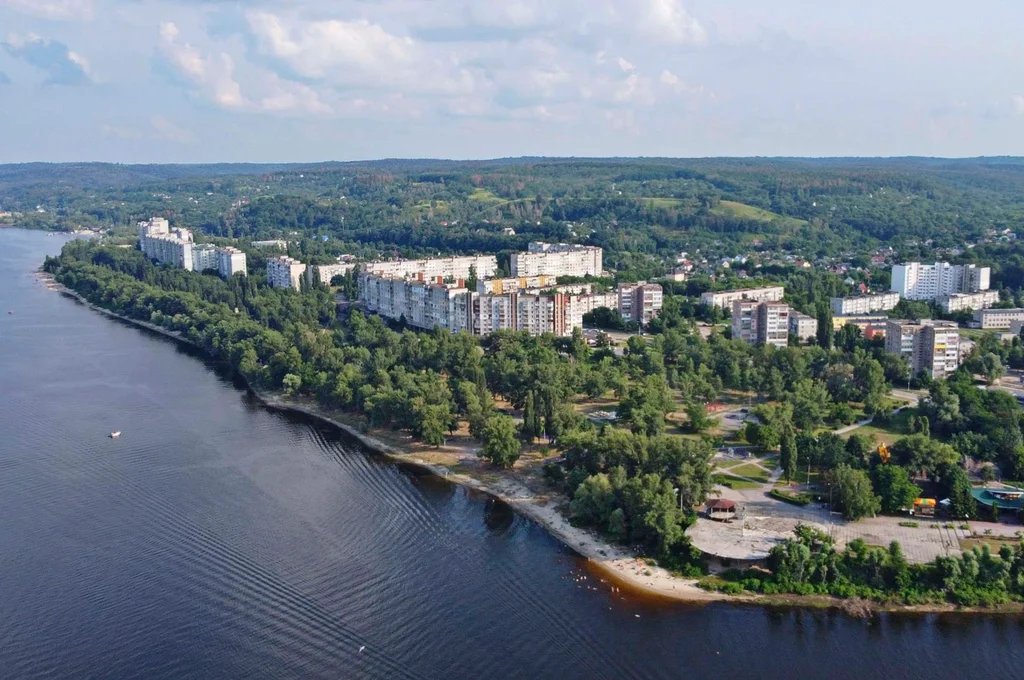
Dnipro River Integrated Vision
The Dnipro River Integrated Vision combines research, scenarios, and proposals for planners, policymakers, experts, and the public to encourage collaboration and dialogue about the river’s future despite the ongoing war.
An important outcome of the project is the energy modeling of the city of Kremenchuk, which revealed the enormous potential for energy efficiency and local production of solar energy in the case of residential and social buildings in Ukraine.
This research was conducted in cooperation with Ro3kvit Urban Coalition for Ukraine.
Photo – © Oleksandr Malyon

In the Summer of 2023, Greenpeace Austria and Ro3kvit teamed up to develop a vision for the Dnipro River. To show the unused potential. To create dialogue and share knowledge. To give alternatives. To inspire.
This website is a ‘popular version’ of the work we have done in 10 months. A report is available in both Ukrainian and English, and can be downloaded for free. This report includes numerous links to articles, research, and archives that can be explored.
-
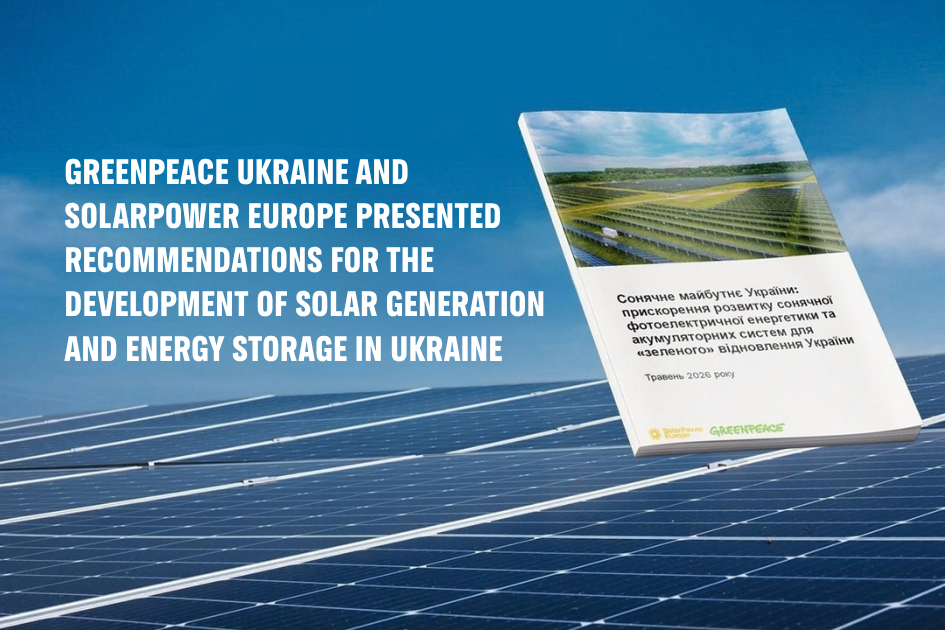
Solar Power and Energy Storage Should Be at the Heart of Ukraine’s Green Recovery — Greenpeace Ukraine and SolarPower Europe
Greenpeace Ukraine, together with SolarPower Europe, Europe’s leading solar energy association, has developed recommendations aimed at accelerating the deployment of solar power and energy storage systems in Ukraine. Their goal…
-

Russia is deliberately sabotaging electricity supply lines at Zaporizhzhia NPP as new Greenpeace satellite analysis exposes Moscow’s disinformation on Ukrainian attacks
More than half of ZNPP’s external power losses since 2022 occurred in the past seven months- new analysis of Greenpeace Ukraine finds no evidence of claimed Ukrainian strikes
-

Gas and Oil Kill: Greenpeace Activists Paint Message on Russian Shadow Fleet Tankerin the Black Sea
Burgas, August 11, 2026. Greenpeace activists from five countries painted “NO GAS + OIL” on the side of the abandoned tanker “Kairos”, part of Russia’s shadow fleet, anchored off the…

