Throughout the year, the Greenpeace Ukraine team did everything possible to support Ukrainians during the war, promote the country’s energy independence, preserve the environment, and become a pillar of support for young people and initiatives.
Radiation Safety
- One of our goals is to prevent Russia from illegally launching nuclear reactors at the Zaporizhzhia Nuclear Power Plant. This is part of Russia’s strategy for long-term control over the facility, which is under illegal occupation. Through expert reconnaissance and analysis of satellite imagery, we were able to expose Russian disinformation and operations at the ZNPP, drawing the attention of the international community and even send a letter to IAEA Director General Rafael Grossi, in which we emphasised that the IAEA should not support Russia’s preparations for the illegal launch of nuclear reactors at the ZNPP. We were the only voice that publicly exposed the pro-Russian bias within the IAEA secretariat.
- We exposed the Russian government’s blackmail of the IAEA (the IAEA mission to the Zaporizhzhya NPP was forced to travel through the occupied territory of Ukraine and Russia). IAEA inspectors were blocked at the NPP for almost three months: Russian drones attacked the IAEA mission’s vehicles, which were trying to replace the mission. Sending a new mission through occupied territory is a violation of Ukraine’s sovereignty and international law.
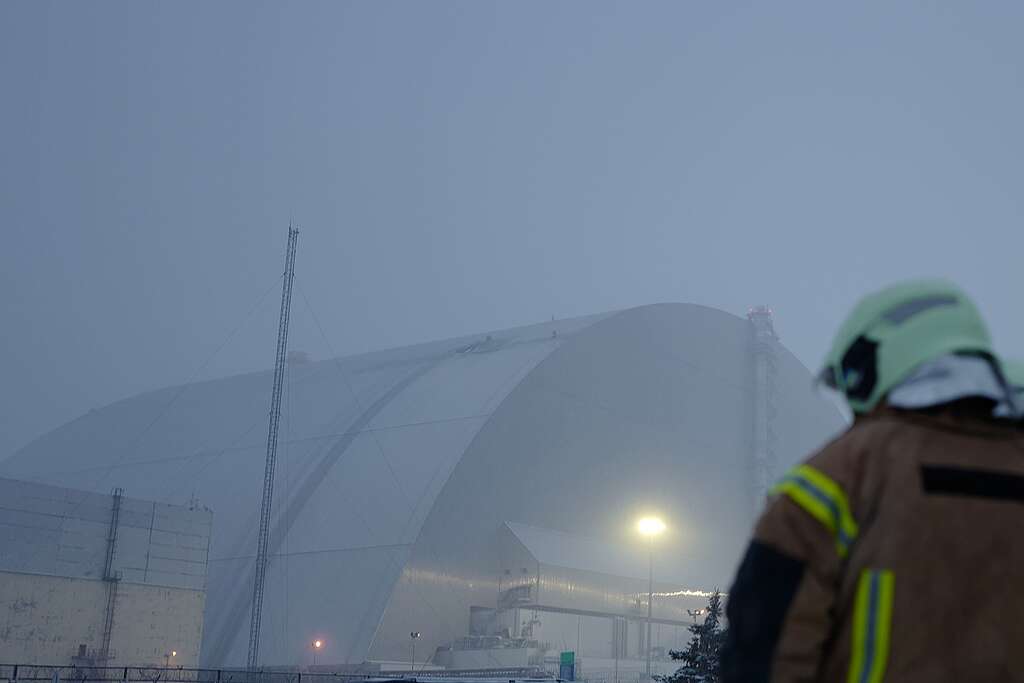
- We immediately went to the Chornobyl nuclear power plant to investigate the current state of the new safe confinement, which was hit by a Russian drone on 14 February. We also asked former British military experts from McKenzie Intelligence Services to analyse the attack on Chornobyl. The analysis showed that the drone that struck the Chornobyl Nuclear Power Plant was a Russian Geran-2 drone, which is used exclusively by Russian forces, and was almost certainly programmed to strike the Chornobyl Nuclear Power Plant on the night of 14 February 2025.
- Analysis of satellite images revealed that the Russians are building a new power line in the occupied Ukrainian territories in order to illegally launch the Zaporizhzhya nuclear power plant. This is one of the first concrete pieces of evidence that Russia is implementing a dangerous and illegal plan to launch the Zaporizhzhya nuclear power plant. Russia’s move towards the potentially catastrophic operation of the reactor must be condemned.
- Together with the human rights organisation Truth Hounds, Rosatom’s involvement in war crimes and nuclear risks at the Zaporizhzhia Nuclear Power Plant has been exposed. The report ‘Seizure of Power’ documents Rosatom’s involvement in torture, murder, abduction and coercion of personnel, as well as the undermining of nuclear safety.
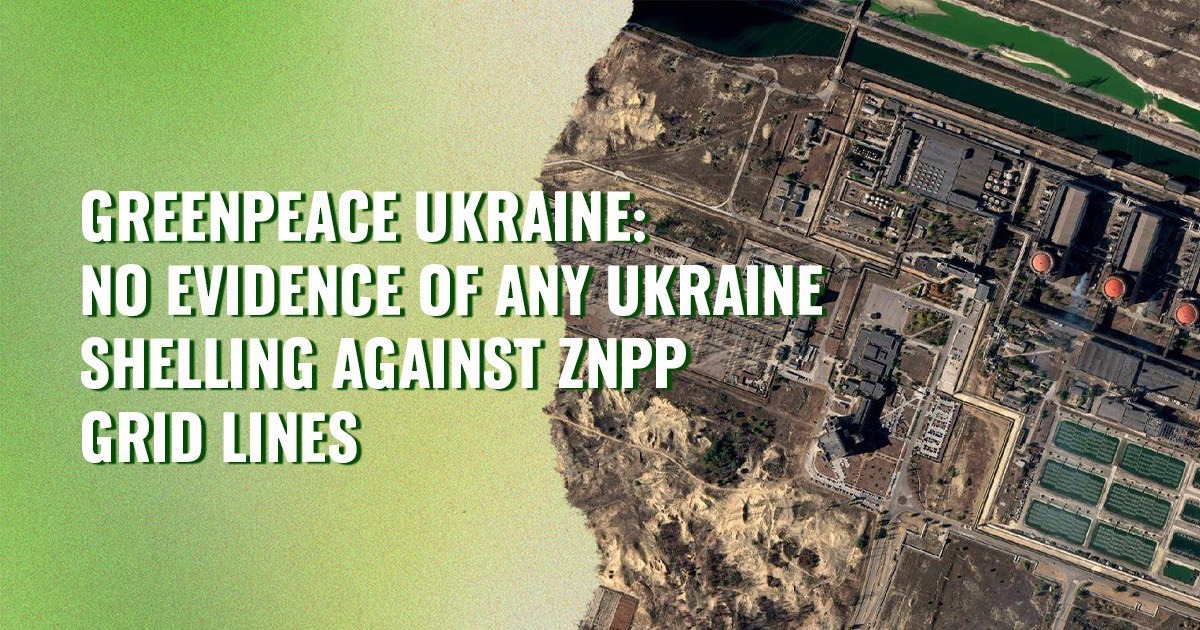
- We investigated whether the loss of electricity at the Zaporizhzhya Nuclear Power Plant was a deliberate act of sabotage by Russia. Using high-resolution satellite imagery, we were able to prove that it was an operation carried out by Russia. The line was cut by Russia, and there were no traces of artillery shelling in the area, as Russia falsely claimed. Russia’s goal is to permanently disconnect the plant from Ukraine’s power grid and connect it to a power grid controlled by the Russian Federation.
- In November, we made our third trip since 2022 to the Chornobyl Nuclear Power Plant and the exclusion zone. In cooperation with the Ukrainian Hydrometeorological Institute, we conducted research in the cooling pond, one of the most contaminated sites in the zone since 1986. Understanding how these radioactive contaminants behave in water and sediment is important for long-term environmental safety. To support this work, we funded the construction of a floating platform for radiation research called H.B. Victory. It will help scientists study radiation levels in the water systems of the exclusion zone over the next few years.
Green Recovery
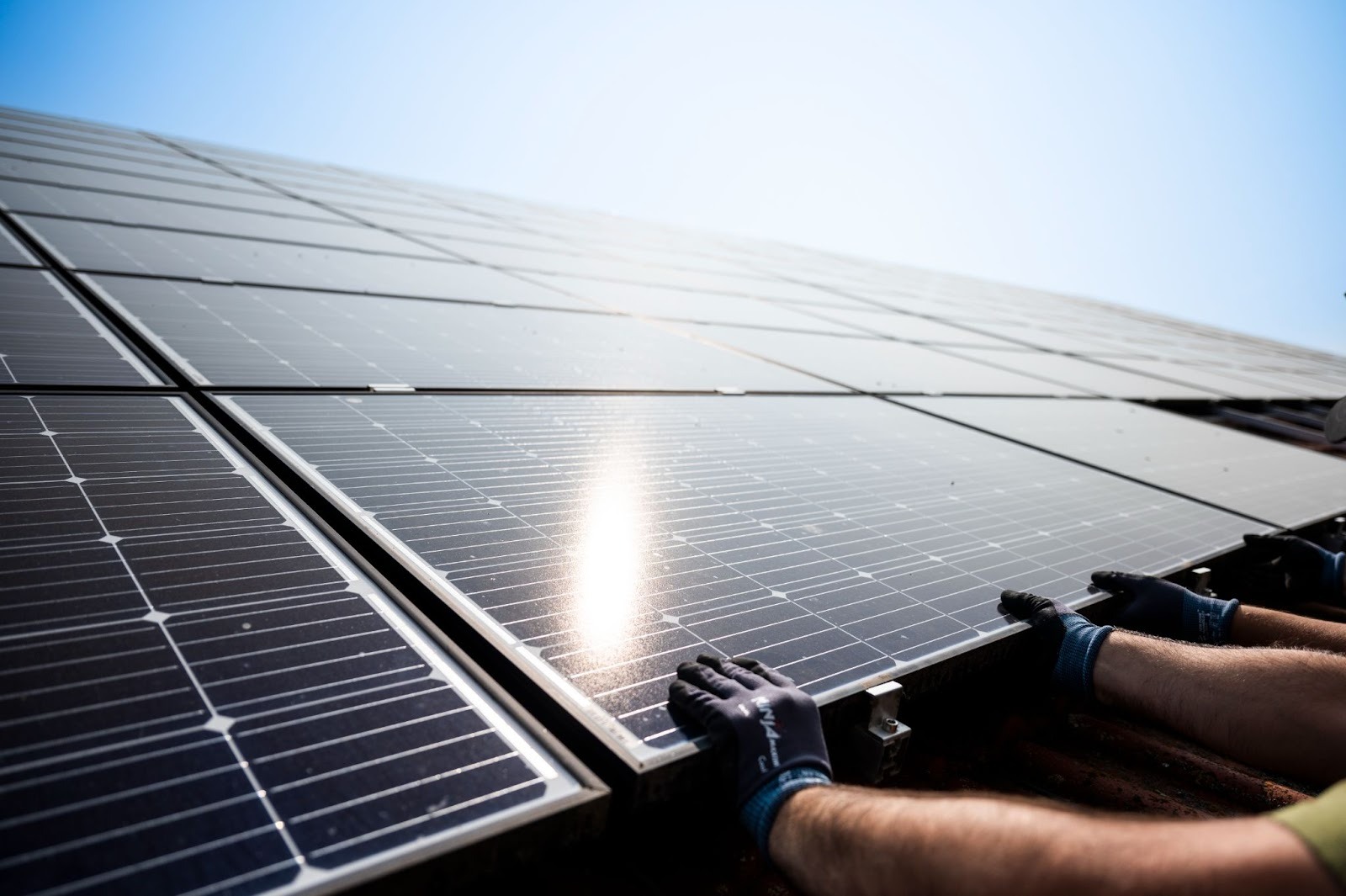
- Almost a year ago, we launched our ‘Solar for Ukraine project’. As part of the project, we provided Ukrainian hospitals with solar panels. The equipment, which we provided in collaboration with BIOHAUS-Stiftung, will enable hospitals to save up to one million hryvnia annually. Thirteen winners of the 2025 competition have already received solar stations. In total, we brought 881 kW of solar power to Ukraine.
- This year, we continued our project ‘Solar Women Installers,’ which trained Ukrainian women in the relevant ‘green’ profession of installing solar power plants. Thirty women completed the training.
- We equipped an apartment building in Trostyanets with geothermal and air heat pumps, which are the only source of heat and hot water supply. The project was the first of its kind among apartment buildings in Ukraine.
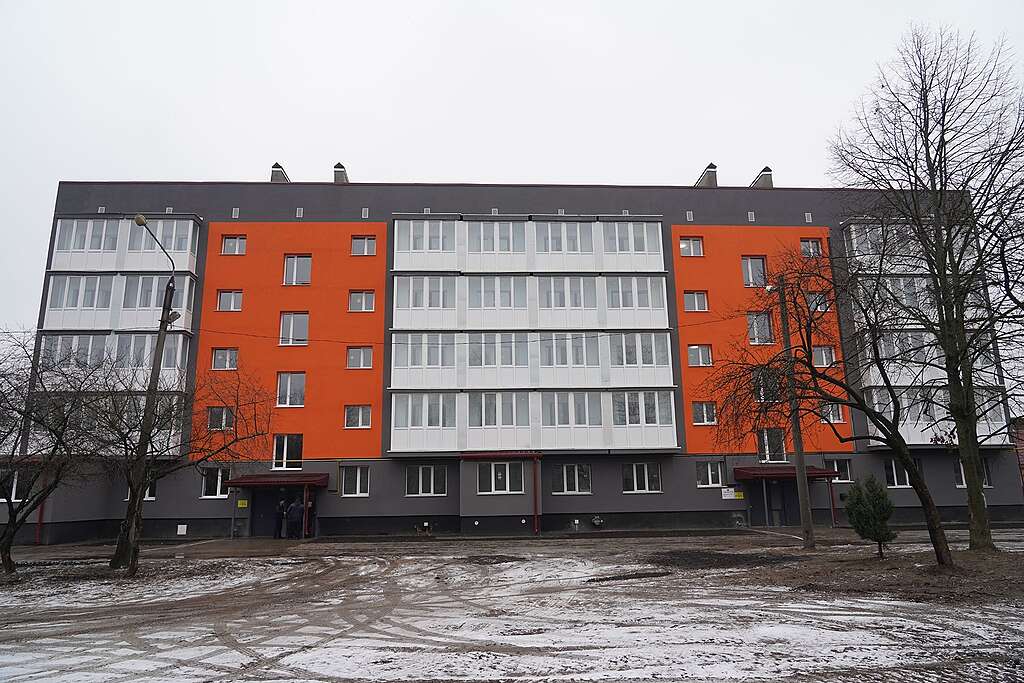
The total cost of the project was €218,000, which was provided by donors (Green Planet Energy, Environment Foundation Greenpeace, Greenpeace Germany).
- We held our third ReCamp: 15 journalists from national and regional publications took part in our camp. ReCamp has created a community that will help environmental issues become an integral part of the public agenda.
- We joined the campaign against the export of Russian liquefied gas to Europe. The campaign took place in Belgium, where more than 70 activists from 15 countries blocked the Zeebrugge liquefied gas terminal for over 24 hours.
Environmental Protection
- In August, Ukraine signed the High Seas Agreement. In doing so, our country supported the global movement to preserve marine biodiversity, its resources and natural reserves. We are proud to have launched a campaign that has contributed to progress in international environmental law.
- We cannot ignore violations of environmental legislation. Shocked by the construction of foundations for wind turbines on the Runa mountain pasture, we supported active environmental organisations and the local community in their opposition to the destruction of valuable ecosystems in the Carpathian highlands. We launched an information campaign to protect Runa, joined the field meeting of the Verkhovna Rada committees on European integration and environmental policy, and even spoke at the Re:Open Zakarpattia forum, where we presented an important study on the potential of renewable energy sources in Ukraine, conducted with scientists from the University of Technology Sydney last year. The study proves that the wind potential of Zakarpattia is not the highest among all regions, so it is necessary to look for alternatives, and they definitely exist.
Zelenyi Val
- This year, Zeleniy Val hosted 72 events, which were attended by almost 1,100 people. These included training sessions, workshops, master classes, lectures, walks, games, speaking clubs, and creative workshops.
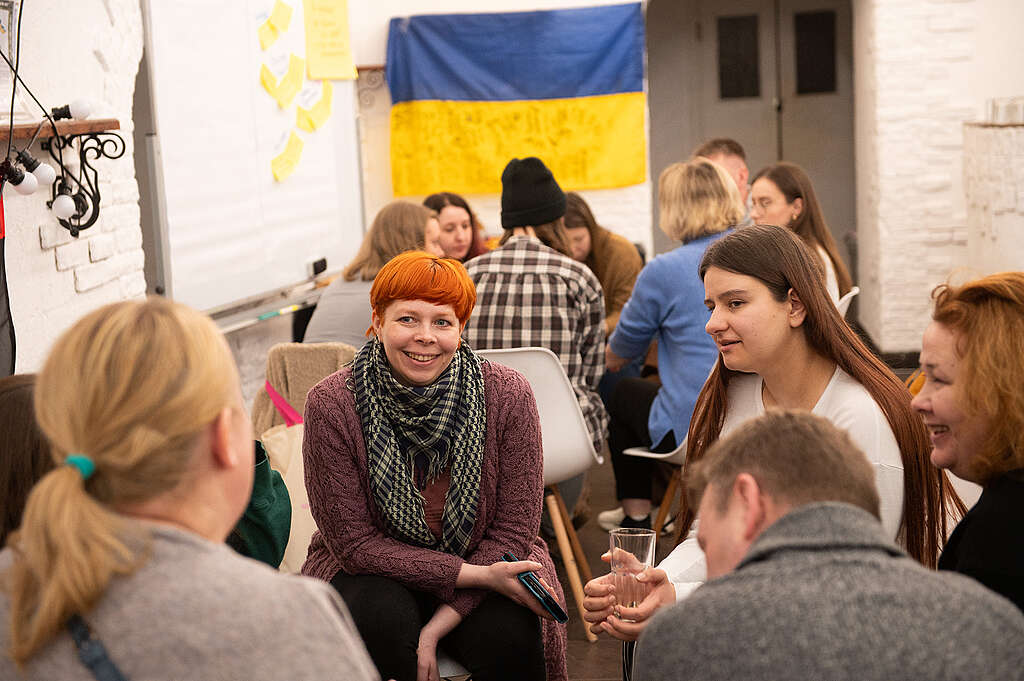
- We supported youth leadership and local initiatives to change their communities. Over the course of the year, we helped implement 14 initiatives involving more than 2,000 residents.
- We are proud that this year we brought together Ukraine’s climate organisations and together launched a new annual tradition – Ukrainian Climate Week. Schools, municipal enterprises, universities, public organisations, parks, and businesses joined the first UKW. Over 150 activities in 75 cities and villages attracted more than 5,000 participants.