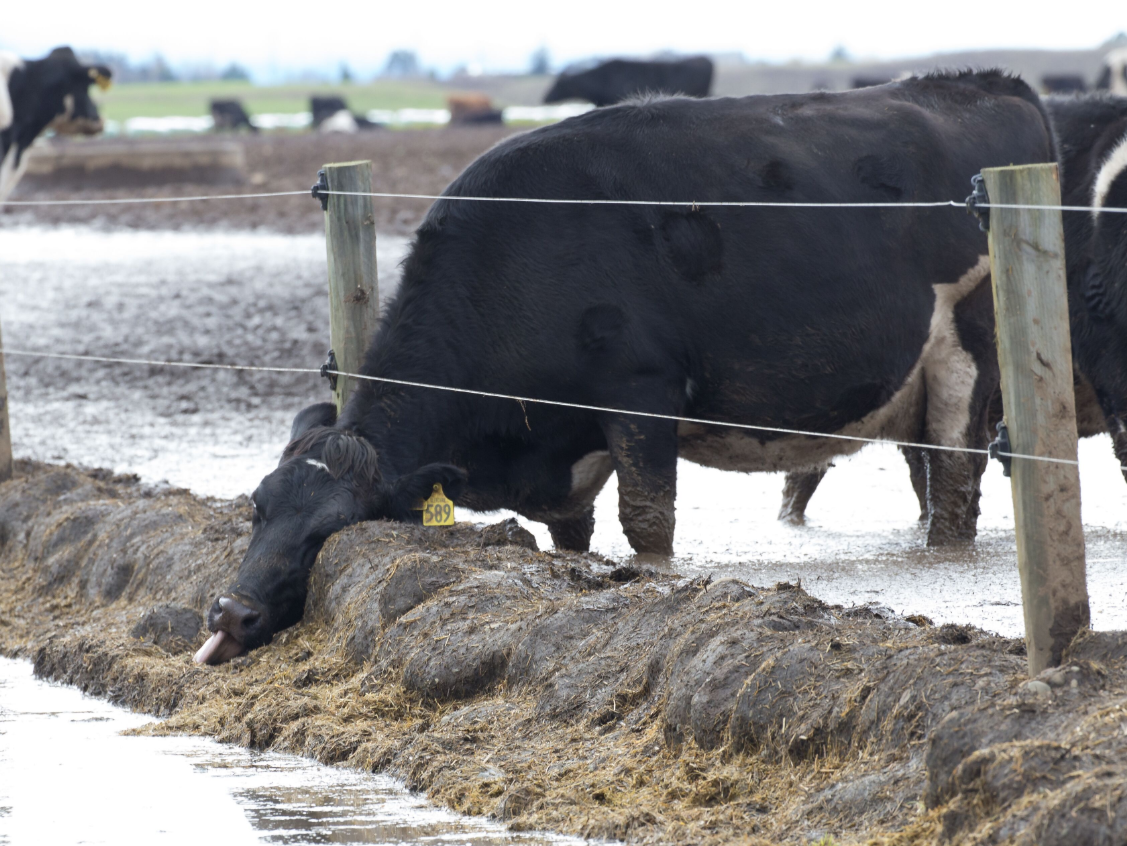
Greenpeace says that Environment Southland continues to risk people’s health by delaying action against dairy pollution, following the announcement that they would instead conduct another investigation into the causes of the region’s nitrate crisis.
This will be the second investigation run by the regional council into the nitrate woes that caused Gore’s town supply to exceed the legal limit for nitrate contamination last year.
Greenpeace Aotearoa freshwater campaigner Will Appelbe says “The people of Southland don’t need more reports – they need urgent action to reign in intensive dairying and protect people’s health from the nitrate crisis.”
The first investigation only looked at the compliance history of resource consent holders in the area. Environment Southland says this new investigation will identify and understand broad nitrogen source types, groundwater flow and age, and how the Coopers Well is replenished – which could take up to three years to complete.
“While more data is always useful, we have enough evidence that shows intensive dairying is the main source of nitrate contamination in the region, it should not delay urgent action to protect water supplies,” says Appelbe.
Greenpeace recently issued a warning to pregnant people against drinking from the Lumsden water supply, after the organisation’s recent nitrate testing revealed that the town’s water was at 6.14 mg/L of nitrate (NO3-N) on average. The New Zealand College of Midwives recommends that pregnant people exposed to drinking water nitrate above 5 mg/L ‘consider accessing an alternative water source’.
“According to Environment Southland’s own report earlier this year, up to 15,000 Southlanders are served by drinking-water supplies that are highly vulnerable to nitrate contamination. They deserve action now, not in three years.”
“We need to stop nitrate from getting into the drinking water in the first place. That means reducing the size of the dairy herd, and phasing out the use of synthetic nitrogen fertiliser, because urea and cow urine are the primary sources of nitrate contamination.”