Everything you need to know about New Zealand’s involvement in helping the USA’s push for deep sea mining in the Pacific.
Why is Greenpeace protesting New Zealand involvement in deep sea mining?
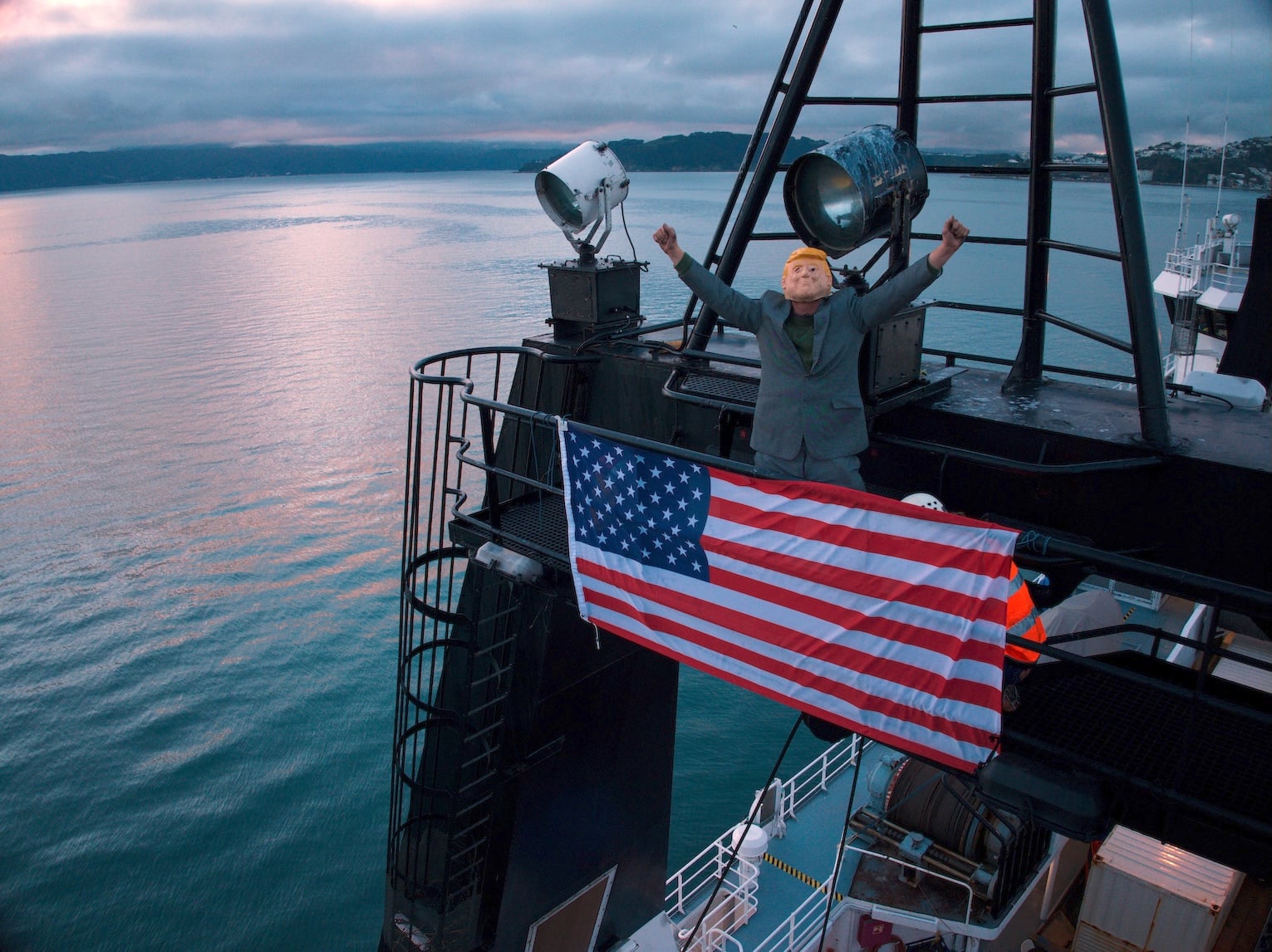
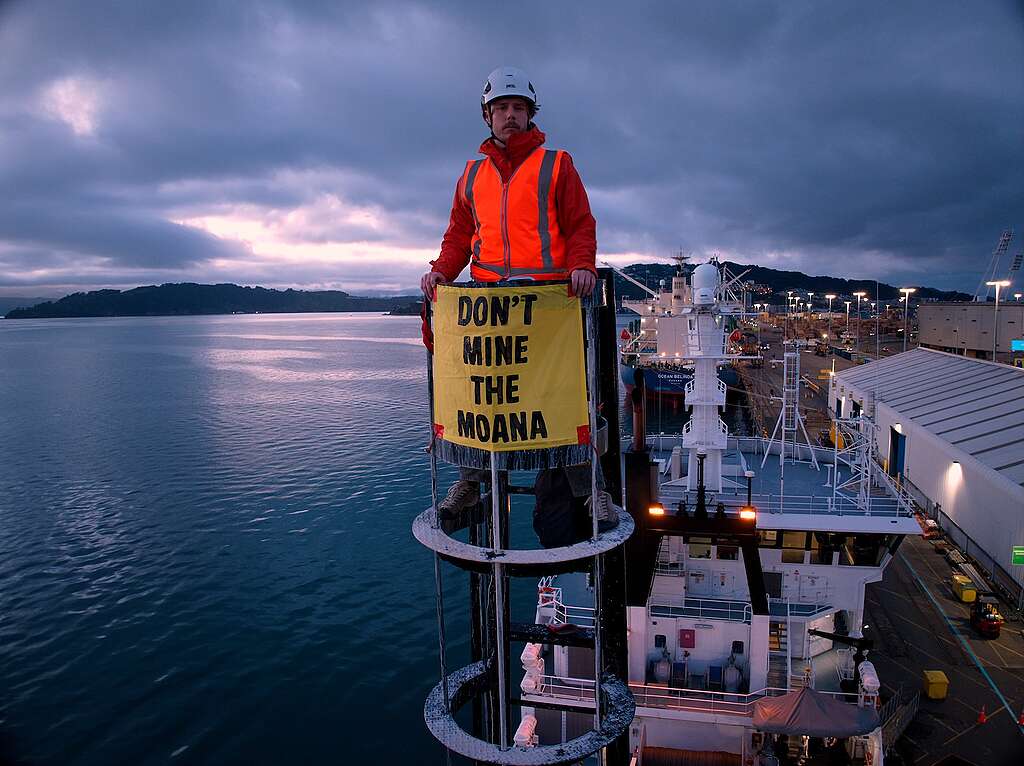
Activists boarded a New Zealand government-owned vessel in Wellington harbour on Saturday 26 September to send a clear message: New Zealand must not be complicit in Trump’s minerals grab.
The Tangaroa, a state funded vessel, has just finished surveying deep sea minerals for Glomar – an American company that will use the data to help it start commercial deep sea mining in the Pacific Ocean.
Deep sea mining would strip the seafloor for profit, causing irreversible damage to the ocean we all rely on and putting Pacific Peoples’ way of life at risk.
It’s time for New Zealand to take a stand. Join our call on the New Zealand government to back a global moratorium on seabed mining.
Take ActionWhat is theTangaroa vessel?
The Tangaroa is a state-owned vessel belonging to Earth Sciences (previously NIWA and GNS Science).
Over the last few weeks the Tangaroa has been surveying for minerals in the Clarion Clipperton Zone, which is in the deep international waters of the Pacific Ocean.
While Greenpeace has the utmost respect for the work of Earth Sciences and the scientific experts in their fields, this data is being gathered explicitly to allow deep sea mining to begin. We are against mining industry-led and funded expeditions being used to further US industrial and military interests.
Earth Sciences is helping start deep sea mining in the Pacific
The Tangaroa returned to port on 25 September from a mission helping a US company set up a mining operation in the Pacific Ocean.
Its work was carried out on behalf of UK Seabed Resources Ltd, a wholly-owned subsidiary of US corporate entity Glomar Minerals, that has made clear its intentions to begin commercial exploitation of the seafloor in 2027.
Earth Sciences is acting as a US puppet in Trump’s plans to exploit the deep. Right now Trump is defying international law and has demanded that US companies forge ahead with plans to exploit the Pacific Ocean.
Why do miners want to target the seabed?
Deep sea mining is an untested industry. Deep below the Pacific ocean’s surface, deposits of metals and minerals like manganese, nickel and cobalt have built up on the seafloor into potato-sized ‘polymetallic nodules’ over millions of years.
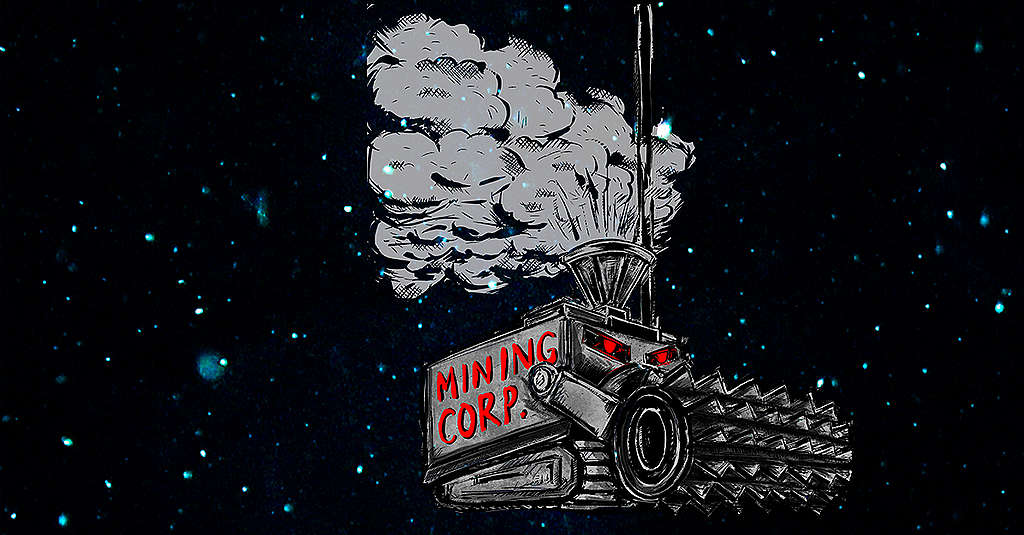
Mining companies want to extract these metals by using gigantic machines capable of operating at up to a depth of four thousand metres.
Deepsea mining is harmful to the seabed
Seabed mining would be extremely destructive, destroying beautiful habitats and ecosystems that aren’t yet fully understood.
Seabed mining would cause massive damage to the ecosystems which sustain life all the way up the food chain, that all of us rely on.
Pacific Peoples, particularly those living subsistence lifestyles in coastal areas, will pay the highest price. At the centre of their identities and ways of life Pacific Peoples have deep spiritual and cultural ties to the ocean.
Why does Glomar Minerals want minerals from the Pacific?
Glomar Minerals holds two exploration contracts for polymetallic nodules in the Pacific Ocean.
Mining companies like to say they’re extracting ‘critical’ minerals for ‘green tech’.
Yet many of the minerals listed by the USA as ‘essential’ have military applications. Vanadium, for example, is used to strengthen iron and steel and is a component in jet engines, airframes, ballistic missiles, and as a coating for night vision goggles.
The United States’ aggressive push for unilateral mining
Under the Trump administration, the US and mining companies such as Glomar Minerals and The Metals Company are moving unilaterally to start mining the deep sea. By invoking domestic laws, the US is seeking to bypass international negotiations and agreements including the United Nations Convention of the Law of the Sea (UNCLOS).
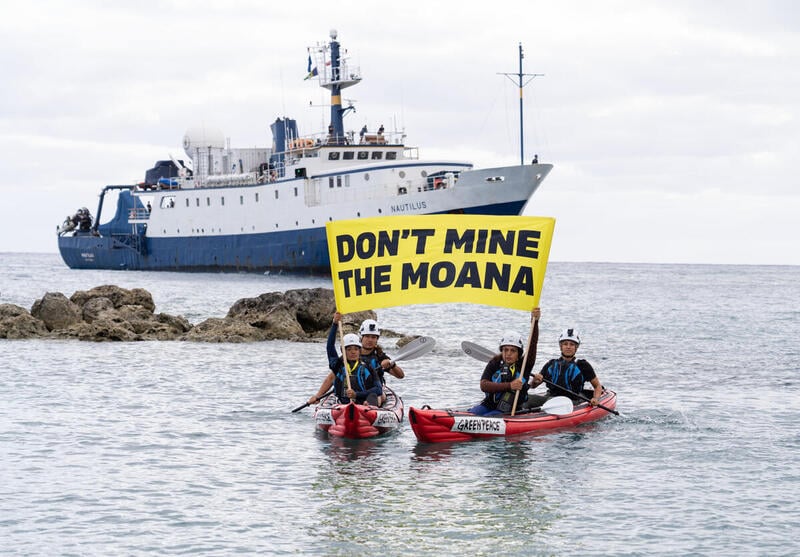
This push poses legal risks for Pacific nations. If government agencies allow their research vessels – such as New Zealand’s RV Tangaroa or the Cook Islands’ MV Anuanua Moana — to gather data for commercial deep sea mining exploration, these governments risk complicity in breaches of international law.
US Ambassador Jared Novelly and the geopolitical threat
The newly appointed US Ambassador to Aotearoa New Zealand, the Cook Islands, Niue, and Samoa, is Trump’s friend and oil billionaire, Jared Novelly.
Novelly publicly stated that securing so-called ‘critical’ seabed minerals — particularly in the Cook Islands — is his top priority. This is in spite of Cook Islands’ voters overwhelming opposition to seabed mining.
At the same time, the Luxon Government is negotiating a minerals deal with the Trump Administration, as they have been with other countries, to stockpile for both defense and industrial needs.
The ocean could be stripped of minerals to serve the US war mongering.
What can I do?
Take action today and send a direct messgage the US Ambassador, Jared Novelly

Join our call to urge the New Zealand Government to stop playing US puppet and say no to deep sea mining!
It’s time for New Zealand to take a stand. Join our call on the New Zealand government to back a global moratorium on seabed mining.
Take Action