One of the most extraordinary experiences I’ve had as a marine biologist was when we were tracking lobsters on Wolf Island in the Galápagos Islands in 2003. The work occurred at night, so I used to take a nap after lunch. One day, I was still asleep in my pyjamas when suddenly, someone came running to tell me there was a whale shark under the boat. I thought they were joking, and tried to ignore them, but they kept insisting, and when I looked over the deck, sure enough, there it was. I was so excited that I just jumped into the water. The crew passed me a diving mask, and I spent the next 45 minutes swimming around in my pyjamas with a juvenile whale shark. I started asking myself where it had come from and where it was going. Years later, I would discover that juvenile whale sharks are actually quite rare in the Galápagos. Most whale sharks here are large adult females, and we still don’t know why!
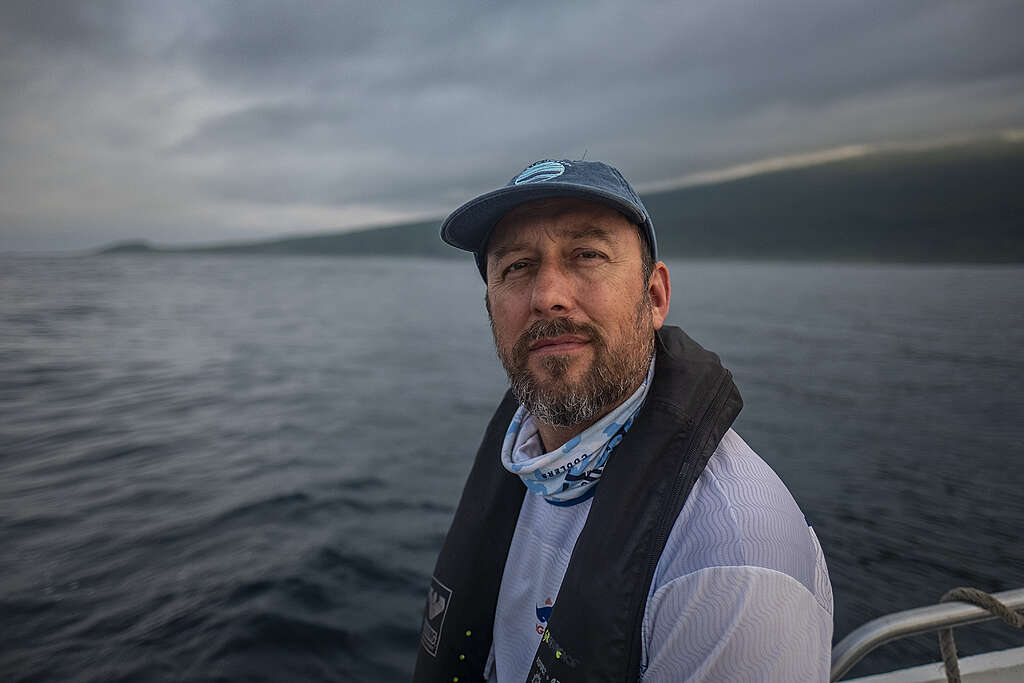
Shark scientist Alex Hearn photographed during a tagging expedition with Greenpeace off the coast of Isabela Island in the Galapagos Islands, Ecuador.

The natural environment has always fascinated me. Initially, I wanted to become an ornithologist because I love birds. I never saw myself as a marine scientist until I was about sixteen when we went on a school trip to the north of Spain. We spent a week in Galicia doing science work on the seashore and boats, which changed everything for me. After finishing my PhD in Ocean Science in 2001, I came to the Galápagos, and I’ve been involved in research here ever since.  

I joined the 2024 Greenpeace Galápagos expedition on the Arctic Sunrise to help gather information on the variety of fish and larger marine life that live in the oceans around the Galápagos Marine Reserve. The open ocean is much more vulnerable than we thought, and we need a baseline to measure change and improve the conservation of this area. 
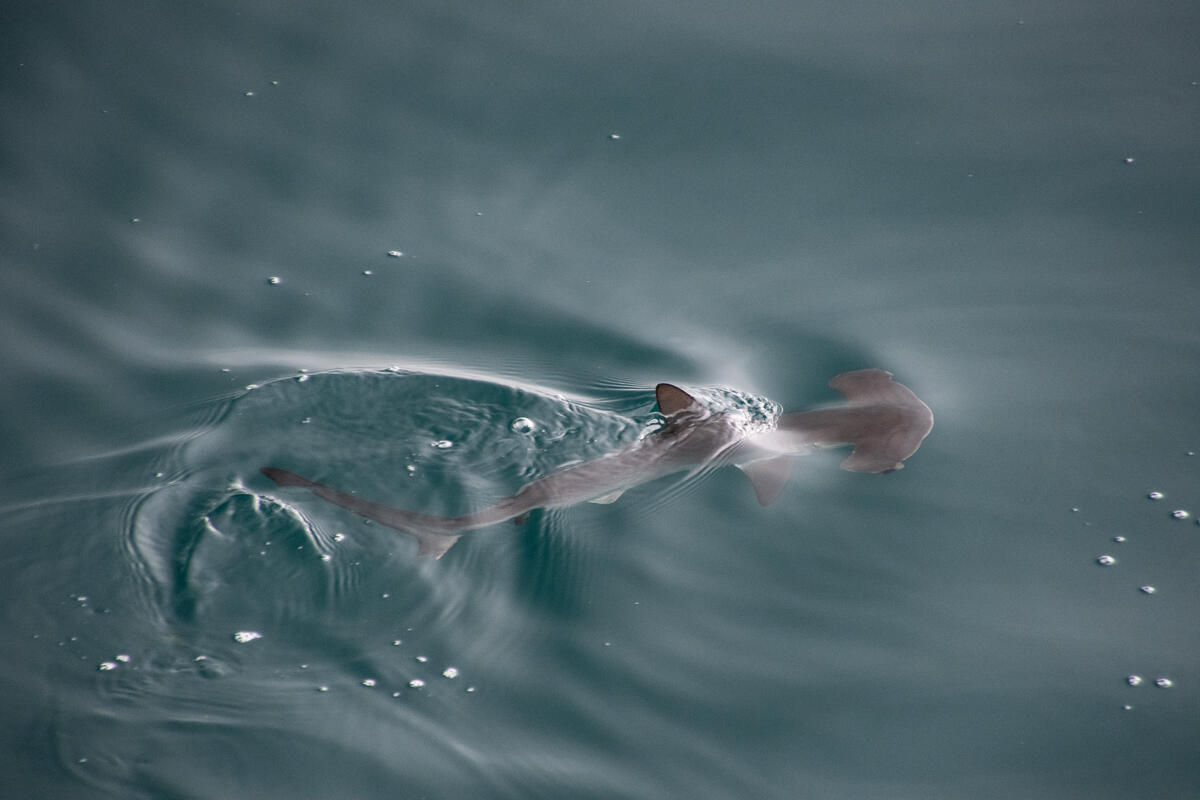
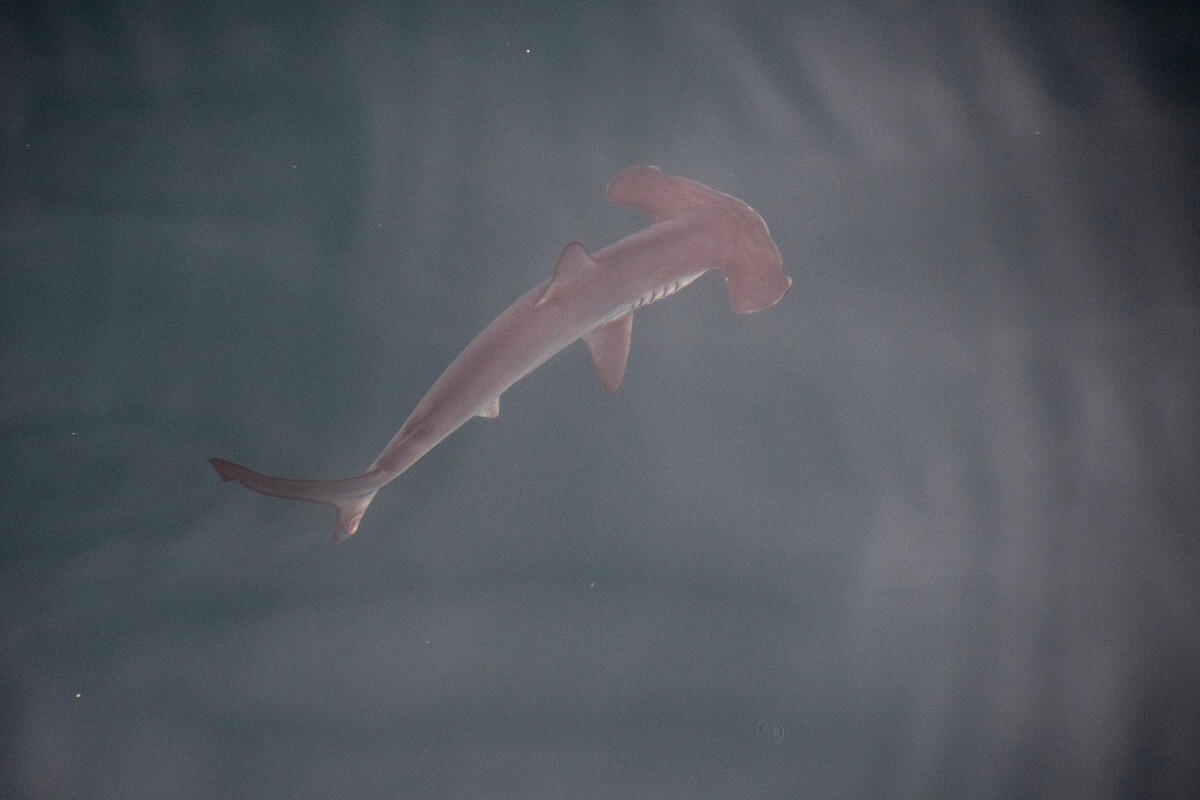
Hammerhead shark in Galapagos. © Greenpeace
A juvenile smooth hammerhead shark seen in the Galápagos, Ecuador.

The primary goal of this expedition was to track sharks around the Galápagos Marine Reserve and understand to what extent they live inside protected waters and move out to unprotected waters. In this region, there are several endangered or critically endangered migratory species that we’re interested in, like hammerhead sharks, which move between the Galápagos Island and Cocos Island along a swimway called the Cocos Ridge. 

Human activities like overfishing, poaching, or ship strikes directly impact these creatures, and there are things we can do about these dangers. By studying the populations, habitats, and migratory routes of the affected species, we can create areas to protect them. 
<!-- wp:paragraph -->
<p>Greenpeace Aotearoa is <a href="https://community.greenpeace.org.nz/events/public-meeting-protect-drinking-water">hosting a public meeting in Rangiora this Saturday</a> to mobilise efforts to protect water quality in the region, just two weeks after the Government’s fast-track project list was revealed to include significant irrigation schemes.</p>
<!-- /wp:paragraph -->

<!-- wp:paragraph -->
<p>The organisation will also be running two free nitrate contamination drinking water testing events: one in Amberley on October 18th, and one in Oxford on October 20th.</p>
<!-- /wp:paragraph -->

<!-- wp:paragraph -->
<p>Greenpeace’s Canterbury-based freshwater campaigner, Will Appelbe, says, “Everyone should be able to take a dip in their local river or drink the water coming out of their tap without getting sick. But for many rural communities, particularly in Canterbury, that’s becoming less and less possible.</p>
<!-- /wp:paragraph -->

<!-- wp:paragraph -->
<p>“Now, the Christopher Luxon Government is actively pushing through legislation that will worsen water quality in Canterbury, such as the fast-track bill. The irrigation schemes included in the fast-track schedule would suck the life out of already-fragile rivers and return polluted water back into the environment through further dairy intensification in the region.”</p>
<!-- /wp:paragraph -->

<!-- wp:paragraph -->
<p>Greenpeace has been running free drinking water testing events across the country, as well as a free mail-in water testing service, for the last three years, to raise awareness of increasing levels of nitrate in drinking water.</p>
<!-- /wp:paragraph -->

<!-- wp:paragraph -->
<p>The organisation says that many rural communities in Canterbury are seeing levels of nitrate in drinking water increasing, while a growing body of science has linked prolonged exposure to elevated levels of nitrate, to increased health risks including risks of bowel cancer and preterm birth.</p>
<!-- /wp:paragraph -->

<!-- wp:paragraph -->
<p>“More irrigation means more intensive dairying, which is polluting lakes, rivers, and drinking water with high levels of nitrate,” says Appelbe.</p>
<!-- /wp:paragraph -->

<!-- wp:paragraph -->
<p>“We’re hosting this public meeting to discuss the increasing threats to water quality in Canterbury and to provide a way for local communities to engage with efforts to prevent water pollution at the source.</p>
<!-- /wp:paragraph -->

<!-- wp:paragraph -->
<p>“Greenpeace will continue to stand with communities and fight to end pollution of lakes, rivers, and drinking water. Ultimately, we need to reduce the dairy herd, end the use of synthetic nitrogen fertiliser, and stop big new irrigation schemes.”</p>
<!-- /wp:paragraph -->

<!-- wp:paragraph -->
<p>The Greenpeace public meeting will be held at The Skurr Centre, Rangiora Showgrounds, on Saturday 19th October, from 6:30pm. The organisation is also running free drinking water testing in <a href="https://community.greenpeace.org.nz/events/water-testing-amberley">Amberley on the 18th October</a> from 1-5pm at the Holy Innocents Anglican Church, and in<a href="https://community.greenpeace.org.nz/events/water-testing-oxford"> Oxford on the 20th October </a>from 9:30am-3pm in the Oxford Town Hall A&P Room.</p>
<!-- /wp:paragraph -->
A juvenile smooth hammerhead shark seen in the Galápagos, Ecuador.

The historic Global Ocean Treaty is a tool countries can use, but they must first ratify it as quickly as possible. The Treaty can only be brought to life once at least 60 governments have written it into their national laws. 

If we’re serious about protecting 30% of the world’s oceans by 2030, political leaders must prioritise Treaty ratification or time will run out. Leaders come and go, but the ones who ratify the Treaty will leave a legacy of lasting impact for generations to come. 
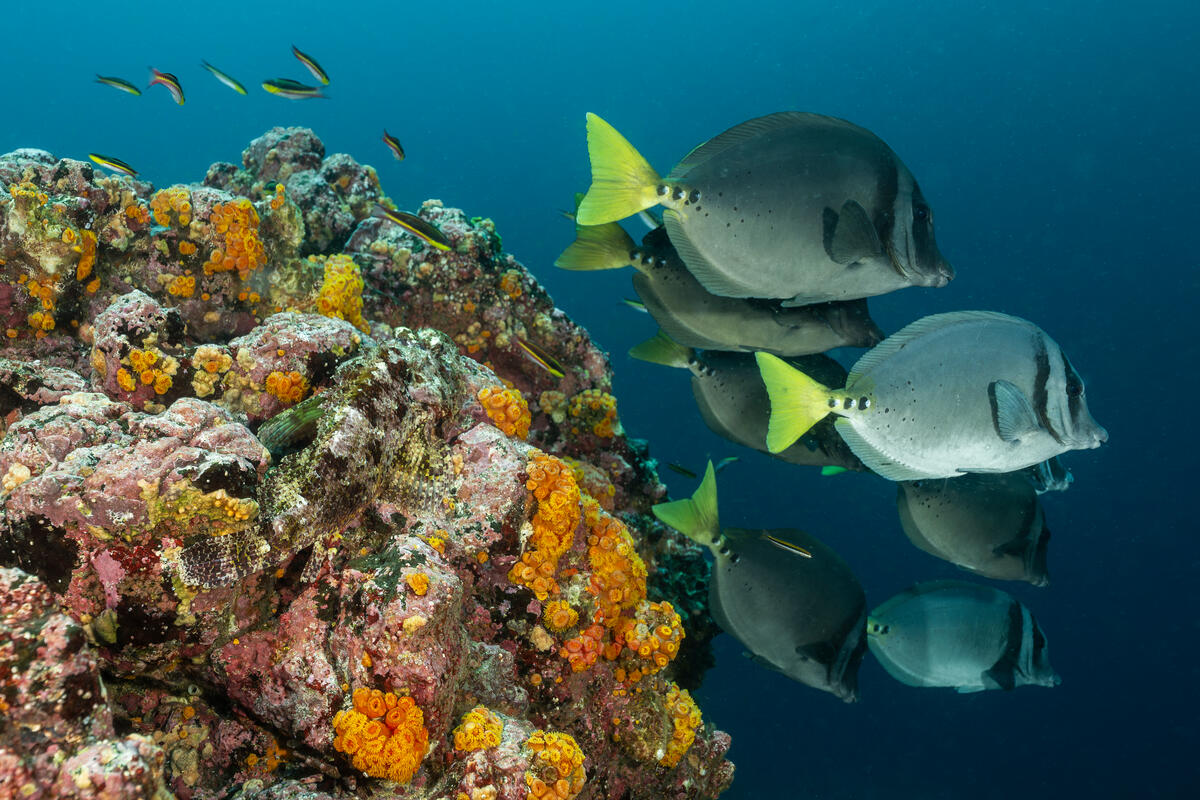
Markus Mauthe Galapagos- Underwater. © Markus Mauthe / Greenpeace
Underwater images of Yellowtail Surgeonfish near Isabela Island from Markus Mauthe’s Galapagos Trip for his worldwide project The Climate Turning Points.

The oceans not only provide a home to many incredible species, but they’re also extremely important in regulating the climate. There is no green without blue. The high seas comprise over 60% of the world’s oceans, and whether we think about them or not, they are relevant to our daily lives. Oceanographers recently discovered that Galápagos can affect the climate as far away as the United Kingdom thanks to a system of currents  that transports heat throughout the oceans.

We’re one little blue planet floating in the middle of a vast, cold emptiness of space. Without the oceans, there is no life on Earth; that’s why we simply cannot fail to protect them.
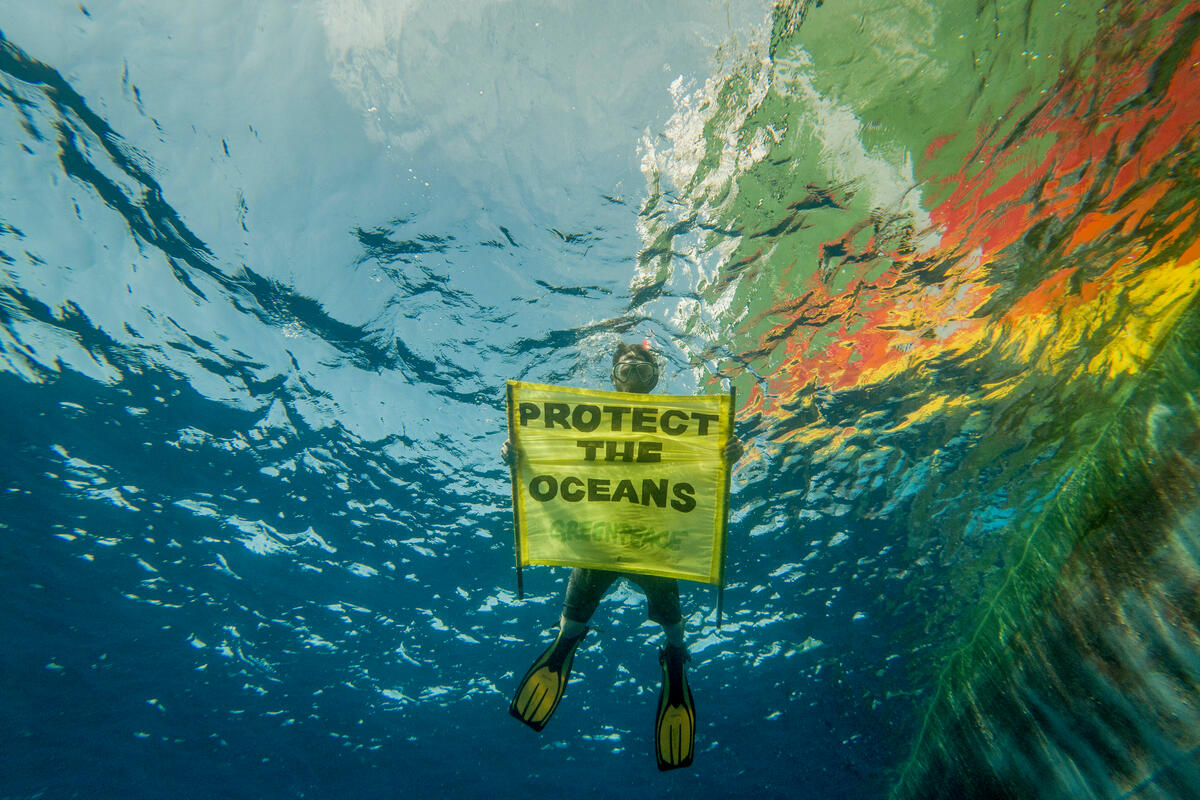
Protect the Oceans Banner in the Pacific Ocean. © Tomás Munita / Greenpeace
Filmmaker Fábio Erdos holds a banner next to the Arctic Sunrise in the Pacific Ocean, between Galápagos and Ecuador.

Alex Hearn is a Professor of Marine Biology at Universidad San Francisco de Quito in Ecuador and co-founder of the Galápagos Whale Shark Project and MigraMar.
PETITION: Create global ocean sanctuaries

Call on the Foreign Affairs Minister Winston Peters to create new global ocean sanctuaries and protect our blue planet.

Sign the petition