Family isn’t just about blood—it’s about standing together through the toughest of times.
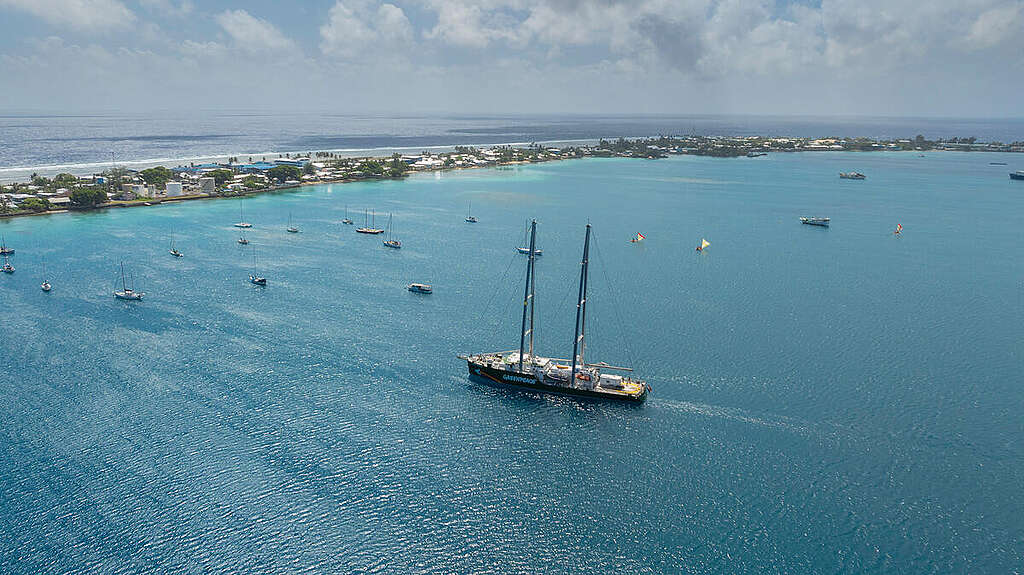
This is the relationship between Greenpeace and the Marshall Islands – a vast ocean nation, stretching across nearly two million square kilometers of the Pacific. Beneath the waves, coral reefs are bustling with life, while coconut trees stand tall. For centuries, the Marshallese people have thrived here, mastering the waves, reading the winds, and navigating the open sea with their canoe-building knowledge passed down through generations. Life here is shaped by the rhythm of the tides, the taste of fresh coconut and roasted breadfruit, and an unbreakable bond between people and the sea. From the bustling heart of its capital, Majuro to the quiet, far-reaching atolls, their islands are not just land; they are home, history, and identity.
Still, Marshallese communities were forced into one of the most devastating chapters of modern history—turned into a nuclear testing ground by the United States without consent, and their lives and lands poisoned by radiation.
Operation Exodus: A Legacy of Solidarity
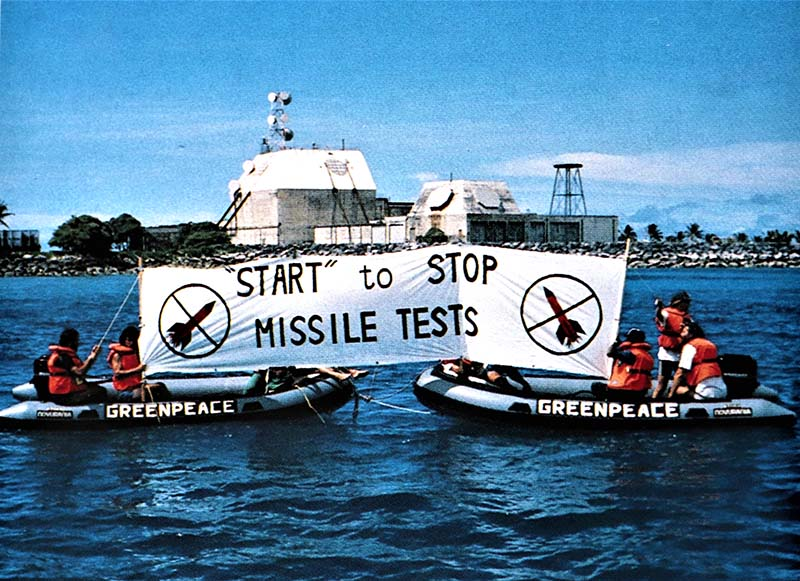
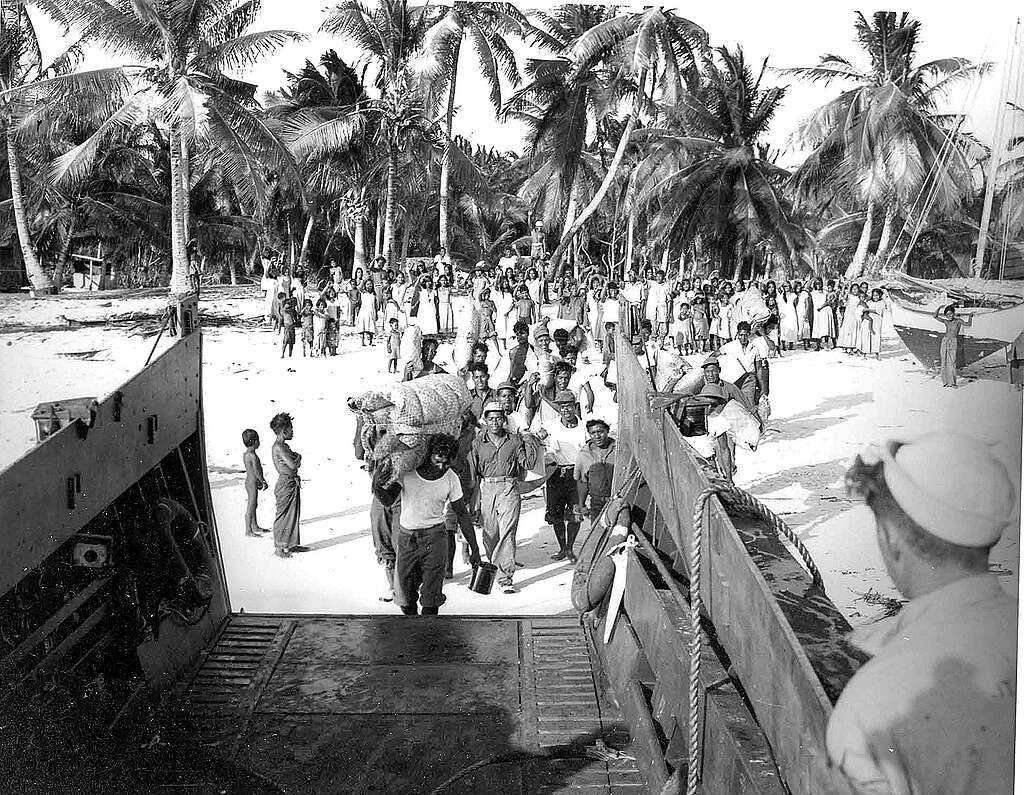
Between 1946 and 1958, the U.S. conducted 67 nuclear tests in the Marshall Islands – its total yield roughly equal to one Hiroshima sized bomb every day for 12 years. During this Cold War period, the US government planned to conduct its largest nuclear test ever. On the island of Bikini, United States Commodore Ben H. Wyatt manipulated the 167 Marshallese people who called Bikini home asking them to leave so that the US could carry out atomic bomb testing, stating that it was for “the good of mankind and to end all world wars”. Exploiting their deep faith, he misled Bikinians into believing they were acting in God’s will, and trusting this, they agreed to move—never knowing the true cost of their decision
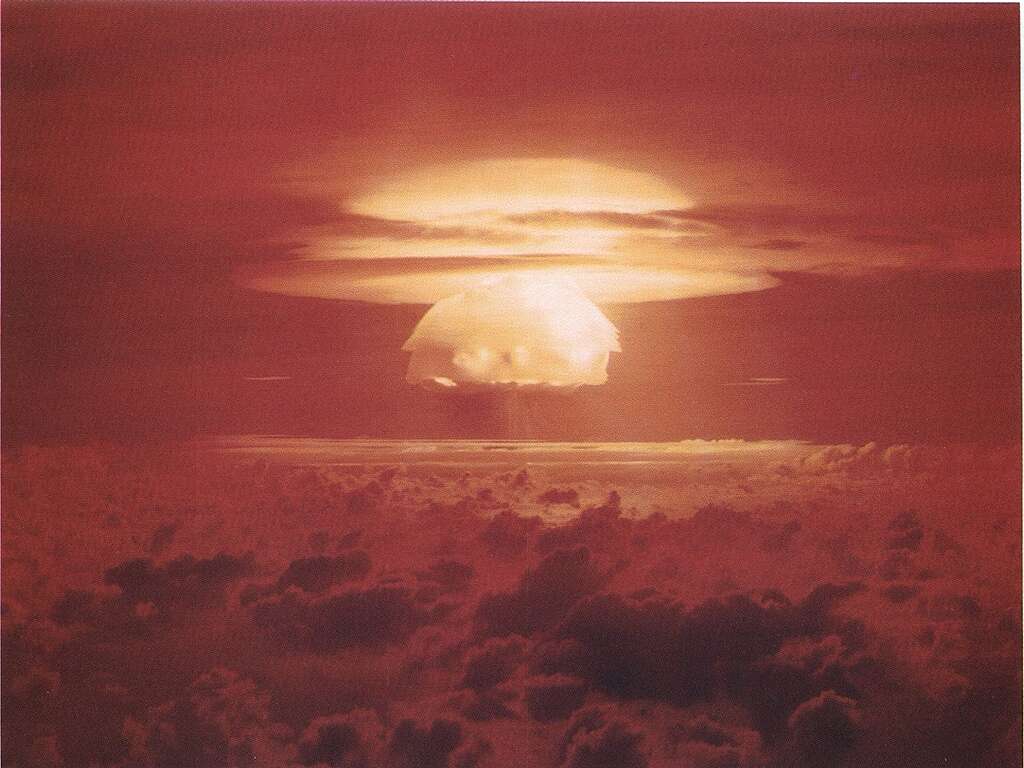
On March 1, 1954, the Castle Bravo test was launched – its yield 1000 times stronger than Hiroshima. Radioactive fallout spread across Rongelap Island about 150 kilometers away, due to what the US government claimed was a “shift in wind direction”. In reality, the U.S. ignored weather reports that indicated the wind would carry the fallout eastward towards Rongelap and Utirik Atolls, exposing the islands to radioactive contamination. Children played in what they thought was snow, and almost immediately the impacts of radiation began – skin burning, hair fallout, vomiting. The Rongelap people were immediately relocated, and just three years later were told by the US government their island was deemed safe and asked to return.
For the next 28 years, the Rongelap people lived through a period of intense “gaslighting” by the US government.*
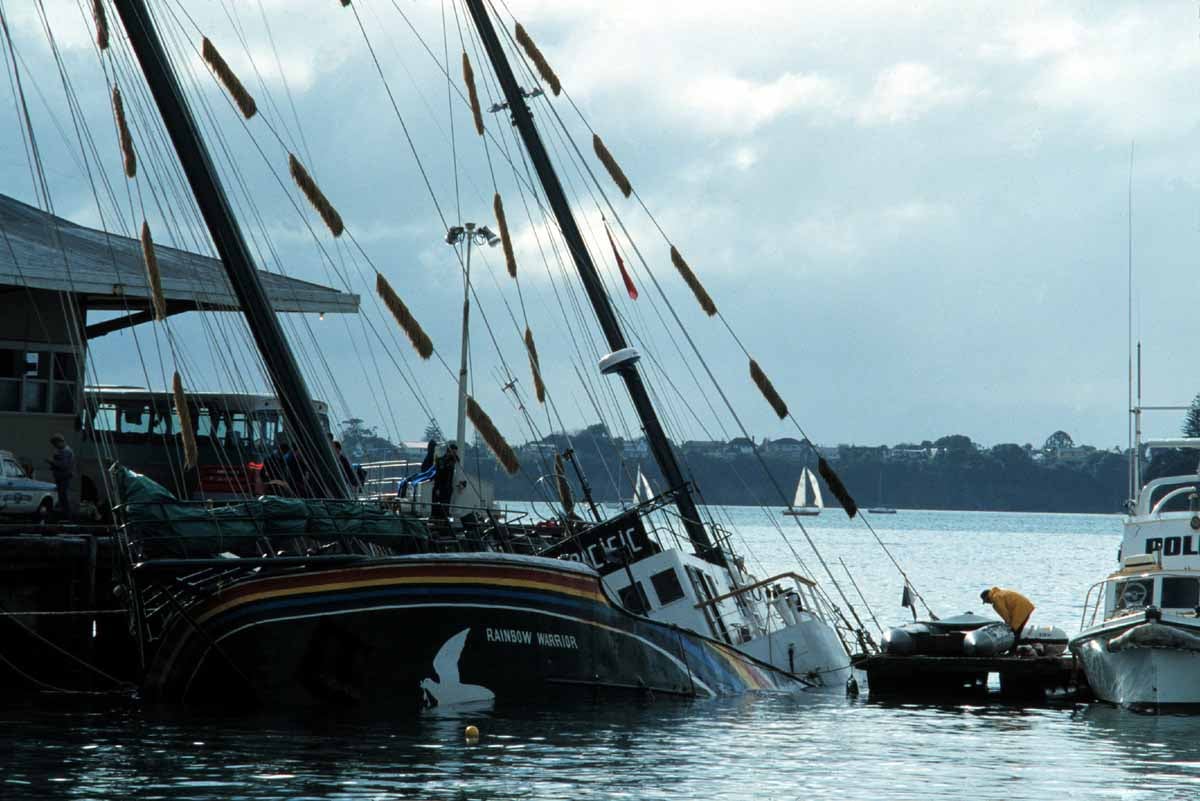
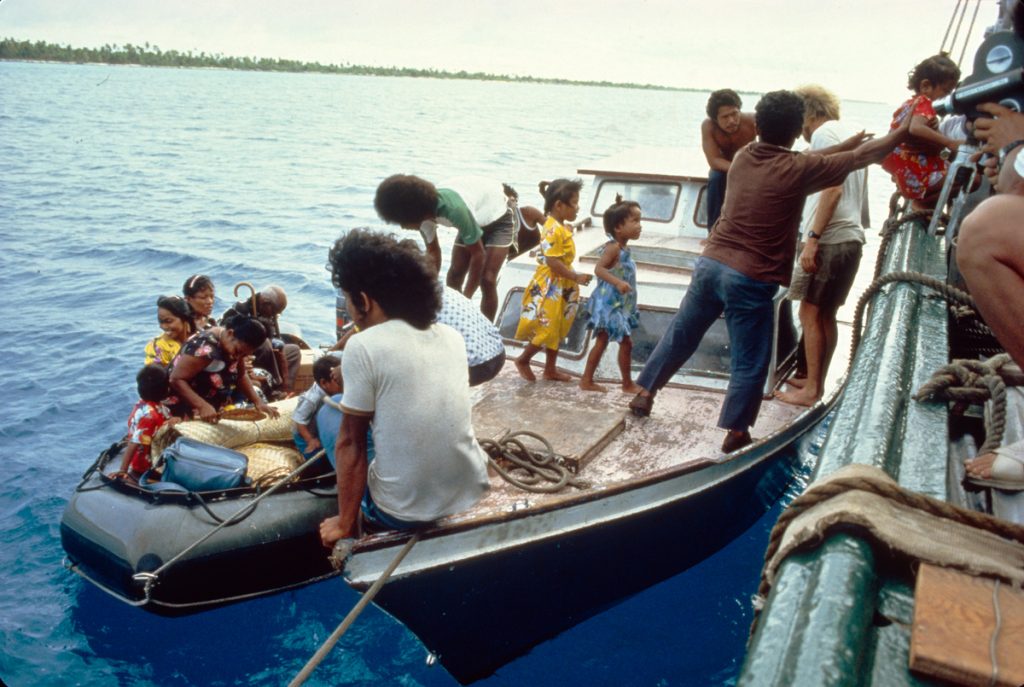
Forced to live on contaminated land, with women enduring miscarriages and cancer rates increasing, in 1985, the people of Rongelap made the difficult decision to leave their homeland. Despite repeated requests to the US government to help evacuate, an SOS was sent, and Greenpeace responded: the Rainbow Warrior arrived in Rongelap, helping to move communities to Mejatto Island.
This was the last journey of the first Rainbow Warrior. The powerful images of their evacuation were captured by photographer Fernando Pereira, who, just months later, was killed in the bombing of the Rainbow Warrior as it sailed to protest nuclear testing in the Pacific.
From Nuclear to Climate: The Injustice Repeats
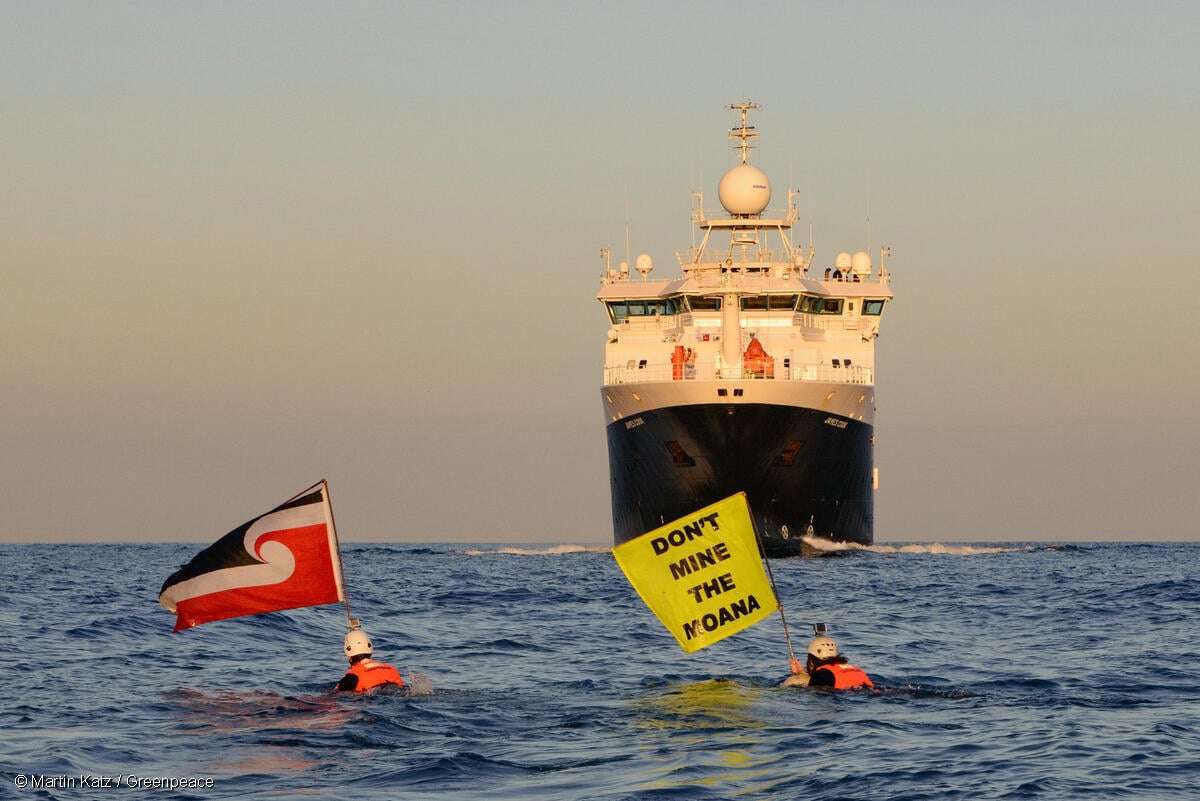
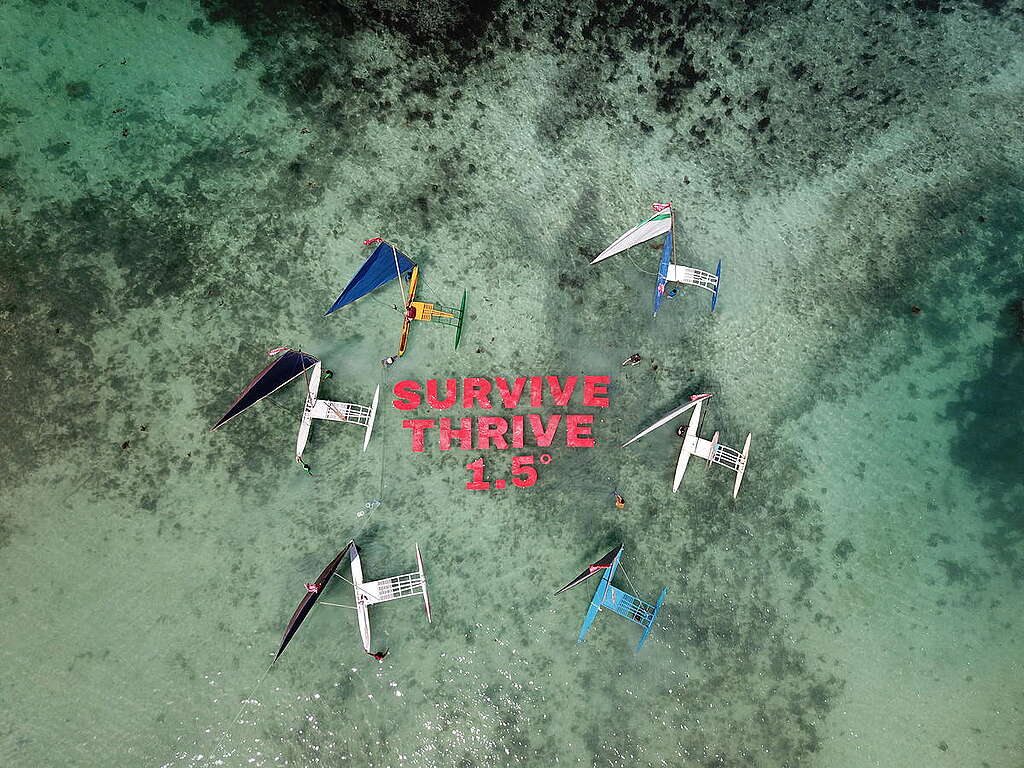
The fight for justice did not end with the nuclear tests—the same forces that perpetuated nuclear colonialism continue to endanger the Marshall Islands today with new threats: climate change and deep-sea mining.
The Marshall Islands, a nation of over 1,000 islands, is particularly vulnerable to climate impacts. Entire communities could disappear within a generation due to rising sea levels. Additionally, greedy international corporations are pushing to mine the deep sea of the Pacific Ocean for profit. Deep sea mining threatens fragile marine ecosystems and could destroy Pacific ways of life, livelihoods and fish populations. The ocean connects us all, and a threat anywhere in the Pacific is a threat to the world.
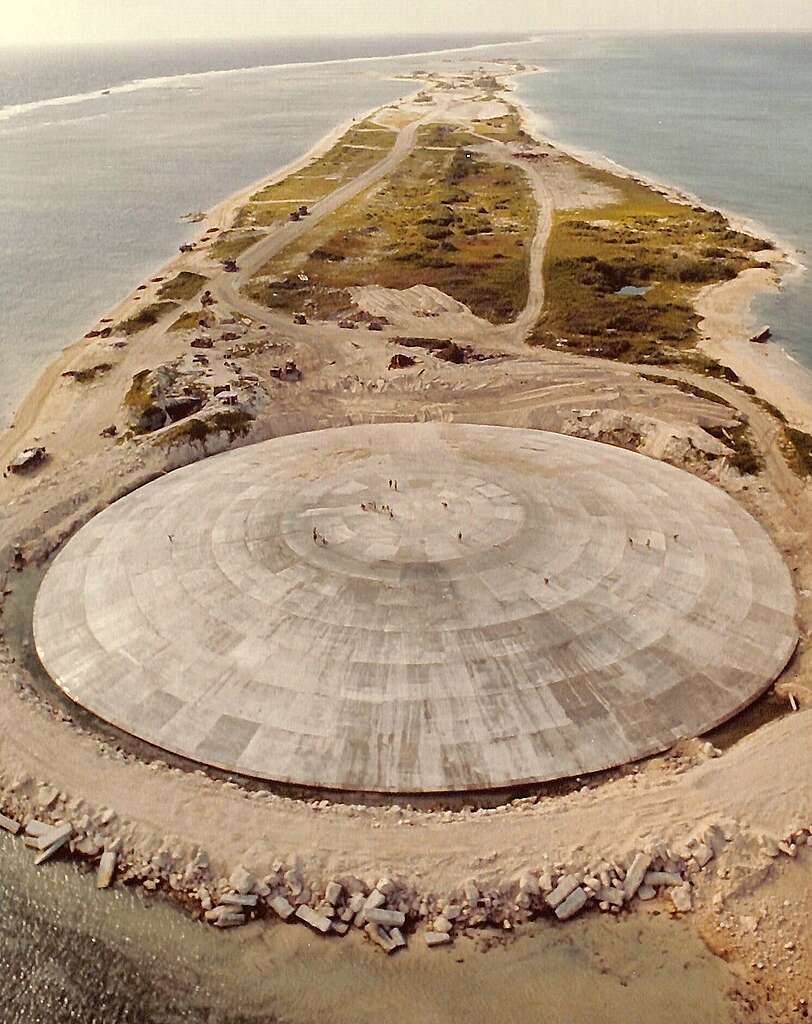
But if there could be one symbol to encapsulate past nuclear injustices and current climate harms it would be the Runit Dome. This concrete structure was built by the US to contain radioactive waste from years of nuclear tests, but climate change now poses a direct threat. Rising sea levels and increasing storm surges are eroding the dome’s integrity, raising fears of radioactive material leaking into the ocean, potentially causing a nuclear disaster.
Science, Storytelling, and Resistance: The Rainbow Warrior’s epic mission and 40 year celebration
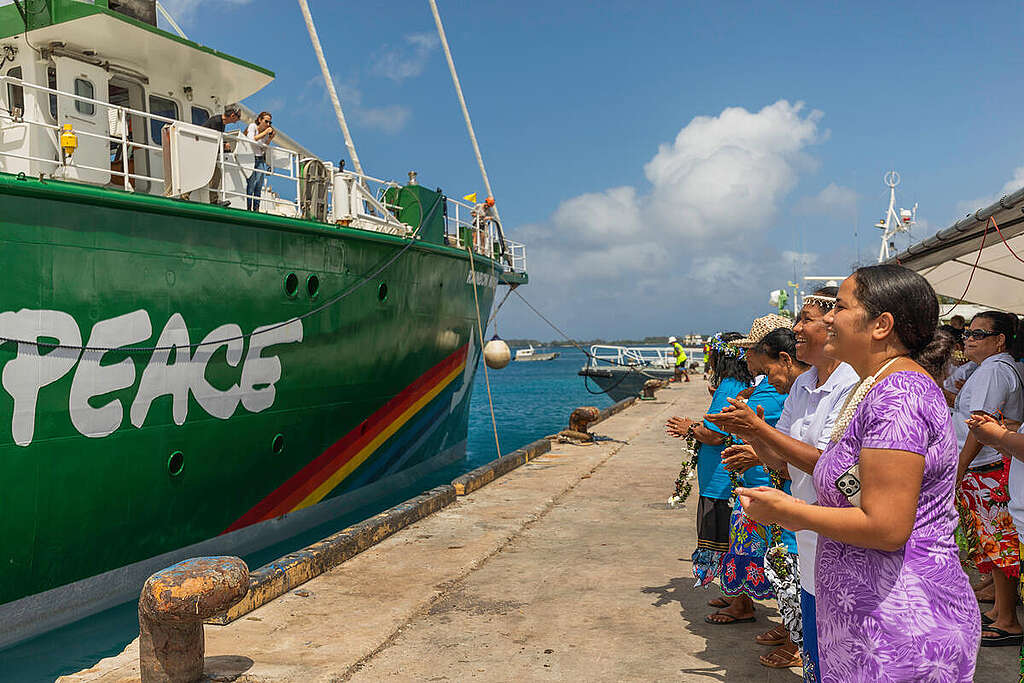
At the invitation of the Marshallese community and government, the Rainbow Warrior is in the Pacific nation to celebrate 40 years since 1985’s Operation Exodus, and stand in support of their ongoing fight for nuclear justice, climate action, and self-determination.
This journey brings together science, storytelling, and activism to support the Marshallese movement for justice and recognition. Independent radiation experts and Greenpeace scientists will conduct crucial research across the atolls, providing much-needed data on remaining nuclear contamination. For decades, research on radiation levels has been controlled by the same government that conducted the nuclear tests, leaving many unanswered questions. This independent study will help support the Marshallese people in their ongoing legal battles for recognition, reparations, and justice.
The Path of the Ship Tour: A Journey Led by the Marshallese
From March to April, the Rainbow Warrior will sail across the Marshall Islands, stopping in Majuro, Mejatto, Enewetak, Bikini, Rongelap, and Wotje. Like visiting old family, each of these locations carries a story — of nuclear fallout, forced displacement, resistance, and hope for a just future.
But just like old family, there’s something new to learn. At every stop, local leaders, activists, and a younger generation are shaping the narrative. Their testimonies are the foundation of this journey, ensuring the world cannot turn away. Their stories of displacement, resilience, and hope will be shared far beyond the Pacific, calling for justice on a global scale.
A Defining Moment for Climate Justice
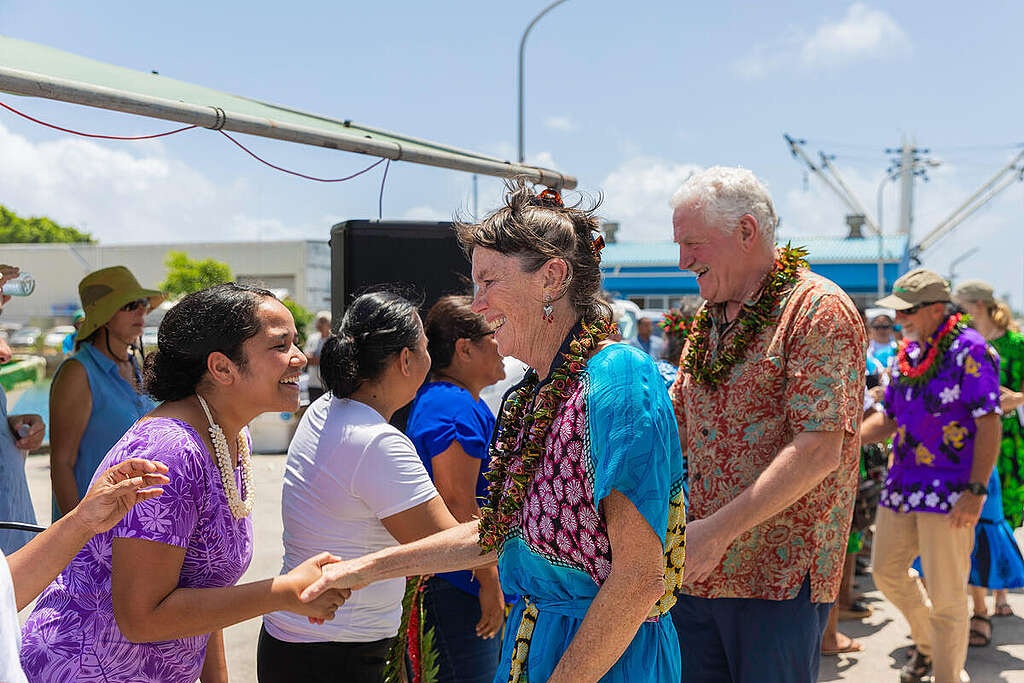
The Marshallese are not just survivors of past injustices; they are champions of a just future. Their leadership reminds us that those most affected by climate change are not only calling for action—they are showing the way forward. They are leaders of finding solutions to avert these crises.
![<!-- wp:planet4-block-templates/page-header {"mediaPosition":"right"} -->
<!-- wp:group {"align":"full"} -->
<div class="wp-block-group alignfull"><!-- wp:group {"className":"container"} -->
<div class="wp-block-group container"><!-- wp:media-text {"align":"full","mediaPosition":"right","mediaId":61743,"mediaLink":"https://www.greenpeace.org/aotearoa/story/5-reasons-why-we-need-global-ocean-sanctuaries/marine-life-in-scott-reef-western-australia-3/","mediaType":"image","imageFill":false,"className":"is-pattern-p4-page-header is-style-parallax"} -->
<div class="wp-block-media-text alignfull has-media-on-the-right is-stacked-on-mobile is-pattern-p4-page-header is-style-parallax"><div class="wp-block-media-text__content"><!-- wp:group -->
<div class="wp-block-group"><!-- wp:heading {"level":1,"placeholder":"Enter title","backgroundColor":"white"} -->
<h1 class="wp-block-heading has-white-background-color has-background" id="h-protect-the-oceans">
Protect the oceans
</h1>
<!-- /wp:heading --></div>
<!-- /wp:group -->
<!-- wp:paragraph {"placeholder":"Enter description","style":{"typography":{"fontSize":"1.25rem"}}} -->
<p style="font-size:1.25rem">The oceans are in crisis, but together we have the power to save them, and the wildlife that calls them home.</p>
<!-- /wp:paragraph -->
<!-- wp:buttons -->
<div class="wp-block-buttons"><!-- wp:button {"className":"is-style-cta"} -->
<div class="wp-block-button is-style-cta"><a class="wp-block-button__link wp-element-button" href="https://petition.act.greenpeace.org.nz/oceans-create-new-global-ocean-sanctuaries">Take action</a></div>
<!-- /wp:button --></div>
<!-- /wp:buttons --></div><figure class="wp-block-media-text__media"><img src="https://www.greenpeace.org/static/planet4-aotearoa-stateless/2023/11/07eba586-gp1t6j5o_web_size.jpg" alt="Underwater shot showing surgeon fish and parrot fish swimming over a coral bed in Western Australia" class="wp-image-61743 size-full"/></figure></div>
<!-- /wp:media-text --></div>
<!-- /wp:group --></div>
<!-- /wp:group -->
<!-- /wp:planet4-block-templates/page-header -->
<!-- wp:media-text {"mediaId":66961,"mediaLink":"https://www.greenpeace.org/aotearoa/publication/achieving-the-30x30-target-through-the-global-ocean-treaty/manta-ray-off-nusa-penida-island-2/","mediaType":"image","imageFill":true} -->
<div class="wp-block-media-text is-stacked-on-mobile is-image-fill-element"><figure class="wp-block-media-text__media"><img src="https://www.greenpeace.org/static/planet4-aotearoa-stateless/2024/10/3517056c-gp0stsdze_low-res-800px.jpg" alt="A manta ray swims just under the ocean's surface while small fish swim below" class="wp-image-66961 size-full" style="object-position:50% 50%"/></figure><div class="wp-block-media-text__content"><!-- wp:heading -->
<h2 class="wp-block-heading" id="h-the-oceans-are-in-crisis">The oceans are in crisis</h2>
<!-- /wp:heading -->
<!-- wp:paragraph {"placeholder":"Content…"} -->
<p>The oceans cover over 70% of the world's surface. They provide food, <a href="https://www.greenpeace.org/aotearoa/story/huge-carbon-store-seabed-research/">sink carbon</a> and are home to over half of all life on this planet.</p>
<!-- /wp:paragraph -->
<!-- wp:paragraph {"placeholder":"Content…"} -->
<p>But these great, blue expanses are being <a href="https://www.greenpeace.org/aotearoa/story/how-does-overfishing-make-climate-change-worse/">emptied of life</a> and <a href="https://www.greenpeace.org/aotearoa/story/this-is-what-ghost-fishing-does-to-the-ocean/">filled with trash</a> thanks to human activity.</p>
<!-- /wp:paragraph -->
<!-- wp:paragraph {"placeholder":"Content…"} -->
<p>To protect all sea life, we must <a href="https://www.greenpeace.org/aotearoa/story/what-is-bottom-trawling-and-why-is-it-bad-for-the-environment/">challenge industrial fisheries</a> and stop destructive practices like <a href="https://www.greenpeace.org/aotearoa/story/what-is-seabed-mining-and-why-does-it-threaten-the-oceans/">seabed mining</a>. By <a href="https://www.greenpeace.org/aotearoa/story/5-reasons-why-we-need-global-ocean-sanctuaries/">creating ocean sanctuaries</a>, we can let marine wildlife recover and replenish.</p>
<!-- /wp:paragraph -->
<!-- wp:paragraph {"placeholder":"Content…"} -->
<p>But there's hope. It's not too late. We can still rebuild our great blue planet, together.</p>
<!-- /wp:paragraph --></div></div>
<!-- /wp:media-text -->
<!-- wp:media-text {"mediaPosition":"right","mediaId":66975,"mediaLink":"https://www.greenpeace.org/aotearoa/press-release/un-biodiversity-target-set-to-be-missed-by-eight-decades-greenpeace-warns/protect-the-oceans-banner-in-the-pacific-ocean-2/","mediaType":"image","imageFill":true} -->
<div class="wp-block-media-text has-media-on-the-right is-stacked-on-mobile is-image-fill-element"><div class="wp-block-media-text__content"><!-- wp:heading -->
<h2 class="wp-block-heading" id="h-a-global-oceans-treaty">A Global Oceans Treaty</h2>
<!-- /wp:heading -->
<!-- wp:paragraph {"placeholder":"Content…"} -->
<p>In March 2023, history was made when governments agreed on <a href="https://www.greenpeace.org/aotearoa/story/so-we-have-a-global-oceans-treaty-what-now/">a Global Oceans Treaty</a> at the United Nations. This agreement puts in place the possibility of worldwide protection through the creation of <a href="https://www.greenpeace.org/aotearoa/story/5-reasons-why-we-need-global-ocean-sanctuaries/">global ocean sanctuaries</a>.</p>
<!-- /wp:paragraph -->
<!-- wp:paragraph {"placeholder":"Content…"} -->
<p>The goal is to <a href="https://www.greenpeace.org/aotearoa/publication/achieving-the-30x30-target-through-the-global-ocean-treaty/">protect 30% of the world's oceans by 2030</a>. This is what scientists say is needed to avoid the worst of the climate and biodiversity crisis.</p>
<!-- /wp:paragraph -->
<!-- wp:paragraph {"placeholder":"Content…"} -->
<p>Now the structure is in place, the next step is identifying and creating these global ocean sanctuaries.</p>
<!-- /wp:paragraph -->
<!-- wp:buttons -->
<div class="wp-block-buttons"><!-- wp:button {"className":"is-style-cta"} -->
<div class="wp-block-button is-style-cta"><a class="wp-block-button__link wp-element-button" href="https://petition.act.greenpeace.org.nz/oceans-create-new-global-ocean-sanctuaries">Sign the petition</a></div>
<!-- /wp:button --></div>
<!-- /wp:buttons --></div><figure class="wp-block-media-text__media"><img src="https://www.greenpeace.org/static/planet4-aotearoa-stateless/2024/10/38521b7e-gp0stzng2_low-res-800px.jpg" alt="Filmaker Fábio Erdos holds a banner that reads Protect The Oceans under water, next to the Greenpeace ship the Arctic Sunrise in the Pacific Ocean" class="wp-image-66975 size-full" style="object-position:50% 50%"/></figure></div>
<!-- /wp:media-text -->
<!-- wp:query {"queryId":1,"query":{"pages":0,"perPage":24,"offset":0,"author":"","search":"","exclude":[6679],"sticky":"","inherit":false,"postType":"p4_action","block_name":"planet4-blocks/actions-list","postIn":[15927,16026,59310,15252],"hasPassword":false,"order":"desc","orderBy":"date"},"namespace":"planet4-blocks/actions-list","className":"actions-list p4-query-loop is-custom-layout-grid","layout":{"type":"grid","columnCount":3},"current_post_id":6679} -->
<div class="wp-block-query actions-list p4-query-loop is-custom-layout-actions-list p4-query-loop is-custom-layout-grid"><!-- wp:heading {"lock":{"move":true}} --><h2 class="wp-block-heading">How you can help</h2><!-- /wp:heading -->
<!-- wp:paragraph {"lock":{"move":true},"placeholder":"Enter description","style":{"spacing":{"margin":{"top":"24px","bottom":"32px"}}}} --><p style="margin-top: 24px; margin-bottom: 32px;">The oceans need your help, join us today. Together, we can protect the oceans.</p><!-- /wp:paragraph -->
<!-- wp:query-no-results -->
<!-- wp:paragraph {"placeholder":"No posts found. (This default text can be edited)"} --><p >No posts found.</p><!-- /wp:paragraph -->
<!-- /wp:query-no-results -->
<!-- wp:post-template {"lock":{"move":true,"remove":true}} -->
<!-- wp:post-featured-image {"isLink":true} /-->
<!-- wp:group -->
<div class="wp-block-group"><!-- wp:p4/taxonomy-breadcrumb {"post_type":"p4_action"} /-->
<!-- wp:post-title {"isLink":true,"level":3} /-->
<!-- wp:post-excerpt /-->
</div>
<!-- /wp:group -->
<!-- wp:group {"className":"read-more-nav"} -->
<div class="wp-block-group read-more-nav"><!-- wp:planet4-blocks/action-button-text /-->
</div>
<!-- /wp:group -->
<!-- /wp:post-template -->
<!-- wp:buttons {"lock":{"move":true},"layout":{"type":"flex","justifyContent":"space-between","orientation":"horizontal","flexWrap":"nowrap"},"className":"carousel-controls"} -->
<div class="wp-block-buttons carousel-controls"><!-- wp:button {"className":"carousel-control-prev","tagName":"button"} -->
<div class="wp-block-button carousel-control-prev"><button class="wp-block-button__link wp-element-button">Prev</button></div>
<!-- /wp:button -->
<!-- wp:button {"className":"carousel-control-next","tagName":"button"} -->
<div class="wp-block-button carousel-control-next"><button class="wp-block-button__link wp-element-button">Next</button></div>
<!-- /wp:button --></div>
<!-- /wp:buttons -->
<!-- wp:buttons {"className":"load-more-actions-container","layout":{"type":"flex","justifyContent":"center"}} -->
<div class="wp-block-buttons load-more-actions-container"><!-- wp:button {"className":"is-style-secondary","tagName":"button"} -->
<div class="wp-block-button is-style-secondary"><button class="wp-block-button__link wp-element-button">Load more</button></div>
<!-- /wp:button -->
</div>
<!-- /wp:buttons --></div>
<!-- /wp:query -->
<!-- wp:group {"backgroundColor":"beige-100","layout":{"type":"constrained","wideSize":"90%"}} -->
<div class="wp-block-group has-beige-100-background-color has-background"><!-- wp:spacer {"height":"20px"} -->
<div style="height:20px" aria-hidden="true" class="wp-block-spacer"></div>
<!-- /wp:spacer -->
<!-- wp:heading -->
<h2 class="wp-block-heading" id="h-seabed-mining-a-new-threat-to-the-oceans">Seabed mining - a new threat to the oceans</h2>
<!-- /wp:heading -->
<!-- wp:paragraph -->
<p>Seabed mining, or <a data-type="link" data-id="https://www.greenpeace.org/aotearoa/story/what-is-deep-sea-mining/" href="https://www.greenpeace.org/aotearoa/story/what-is-deep-sea-mining/">deep sea mining</a>, is the newest threat that the oceans face. It involves digging up the sea floor to extract valuable metals.</p>
<!-- /wp:paragraph -->
<!-- wp:paragraph -->
<p>It's an extremely destructive form of mining that would <a href="https://www.greenpeace.org/aotearoa/story/deep-sea-mining-scars-remain-fifty-years-on/">damage marine ecosystems beyond repair</a>.</p>
<!-- /wp:paragraph -->
<!-- wp:paragraph -->
<p>But in New Zealand, seabed mining could start in <a href="https://www.greenpeace.org/aotearoa/explore/seabed-mining/what-is-trans-tasman-resources/">the South Taranaki Bight</a> thanks to <a href="https://www.greenpeace.org/aotearoa/press-release/luxon-escalates-war-on-nature-with-mining-heavy-fast-track-list/">the Fast-Track Bill</a>. This would put rare and endangered animals at risk - such as pygmy blue whales, Māui dolphins, Hector’s dolphins and kororā.</p>
<!-- /wp:paragraph -->
<!-- wp:paragraph -->
<p>With your help, we can stop seabed mining before it starts. <a href="https://petition.act.greenpeace.org.nz/oceans-ban-seabed-mining/">Sign our petition today</a>!</p>
<!-- /wp:paragraph -->
<!-- wp:buttons -->
<div class="wp-block-buttons"><!-- wp:button {"className":"is-style-cta"} -->
<div class="wp-block-button is-style-cta"><a class="wp-block-button__link wp-element-button" href="https://petition.act.greenpeace.org.nz/oceans-ban-seabed-mining/">Sign the petition</a></div>
<!-- /wp:button -->
<!-- wp:button {"className":"is-style-secondary"} -->
<div class="wp-block-button is-style-secondary"><a class="wp-block-button__link wp-element-button" href="https://www.greenpeace.org/aotearoa/explore/seabed-mining/">Find out more</a></div>
<!-- /wp:button --></div>
<!-- /wp:buttons -->
<!-- wp:spacer {"height":"20px"} -->
<div style="height:20px" aria-hidden="true" class="wp-block-spacer"></div>
<!-- /wp:spacer --></div>
<!-- /wp:group -->
<!-- wp:media-text {"mediaPosition":"right","mediaId":62605,"mediaLink":"https://www.greenpeace.org/aotearoa/markus-mauthe-galapagos-underwatermarkus-mauthe-galapagos-unterwasser/","mediaType":"image","imageFill":true} -->
<div class="wp-block-media-text has-media-on-the-right is-stacked-on-mobile is-image-fill-element"><div class="wp-block-media-text__content"><!-- wp:heading -->
<h2 class="wp-block-heading" id="h-ban-bottom-trawling">Ban bottom trawling</h2>
<!-- /wp:heading -->
<!-- wp:paragraph {"placeholder":"Content…"} -->
<p><a href="https://www.greenpeace.org/aotearoa/story/what-is-bottom-trawling-and-why-is-it-bad-for-the-environment/">Bottom trawling</a> is a method of fishing that involves dragging heavy weighted nets across the sea floor. It's highly destructive as it catches and <a href="https://www.greenpeace.org/aotearoa/press-release/footage-released-by-greenpeace-reveals-damage-in-the-deep-ocean-from-industrial-fishing/">damages everything in its path</a> - including coral, turtles and many juvenile fish.</p>
<!-- /wp:paragraph -->
<!-- wp:paragraph -->
<p>In New Zealand, bottom trawling is still permitted. In fact, New Zealand is the <a href="https://www.greenpeace.org/aotearoa/press-release/the-cost-of-trawling-3000kg-dead-coral-in-one-year/">only country still trawling in the South Pacific high seas</a>.</p>
<!-- /wp:paragraph -->
<!-- wp:paragraph -->
<p>Greenpeace is campaigning to ban bottom trawling, particularly in key marine areas, like on <a href="https://www.greenpeace.org/aotearoa/story/what-are-seamounts-and-why-do-they-matter-to-the-ocean/">seamounts</a> and <a href="https://www.greenpeace.org/aotearoa/press-release/thousands-call-on-government-to-drop-hauraki-gulf-bill-changes/">the Hauraki Gulf</a>.</p>
<!-- /wp:paragraph -->
<!-- wp:buttons -->
<div class="wp-block-buttons"><!-- wp:button {"className":"is-style-cta"} -->
<div class="wp-block-button is-style-cta"><a class="wp-block-button__link wp-element-button" href="https://petition.act.greenpeace.org.nz/oceans-bottomtrawling">Sign the petition</a></div>
<!-- /wp:button -->
<!-- wp:button -->
<div class="wp-block-button"><a class="wp-block-button__link wp-element-button" href="https://www.greenpeace.org/aotearoa/story/what-is-bottom-trawling-and-why-is-it-bad-for-the-environment/">Find out more</a></div>
<!-- /wp:button --></div>
<!-- /wp:buttons --></div><figure class="wp-block-media-text__media"><img src="https://www.greenpeace.org/static/planet4-aotearoa-stateless/2024/03/9805855f-gp0stznbw_medium_res-1024x683.jpg" alt="A school of red and blue fish swim above a coral reef in the Galapagos" class="wp-image-62605 size-full" style="object-position:50% 50%"/></figure></div>
<!-- /wp:media-text -->
<!-- wp:query {"queryId":0,"query":{"pages":0,"offset":0,"postType":"post","order":"desc","orderBy":"date","author":"","search":"","exclude":[6679],"sticky":"","inherit":false,"hasPassword":false,"postIn":[63703,14188,61742,64887,63253,63062,61009,62602,62460,6830,6630,61775],"perPage":12},"namespace":"planet4-blocks/posts-list","className":"posts-list p4-query-loop is-custom-layout-carousel","layout":{"type":"flex","columnCount":4},"current_post_id":6679} -->
<div class="wp-block-query posts-list p4-query-loop is-custom-layout-carousel"><!-- wp:group {"layout":{"type":"flex","justifyContent":"space-between"}} -->
<div class="wp-block-group"><!-- wp:heading {"lock":{"move":true}} -->
<h2 class="wp-block-heading">More on oceans</h2>
<!-- /wp:heading -->
<!-- wp:navigation-link {"label":"See all stories","url":"http://www.greenpeace.org/aotearoa/news-stories/","className":"see-all-link"} /--></div>
<!-- /wp:group -->
<!-- wp:paragraph {"placeholder":"Enter description","lock":{"move":true},"style":{"spacing":{"margin":{"top":"24px","bottom":"36px"}}}} -->
<p style="margin-top:24px;margin-bottom:36px">Discover more about the oceans, marine wildlife and the threats faced</p>
<!-- /wp:paragraph -->
<!-- wp:query-no-results -->
<!-- wp:paragraph {"placeholder":"No posts found. (This default text can be edited)"} -->
<p>No posts found.</p>
<!-- /wp:paragraph -->
<!-- /wp:query-no-results -->
<!-- wp:post-template {"lock":{"move":true,"remove":true}} -->
<!-- wp:columns -->
<div class="wp-block-columns"><!-- wp:post-featured-image {"isLink":true} /-->
<!-- wp:group -->
<div class="wp-block-group"><!-- wp:group {"className":"posts-list-meta"} -->
<div class="wp-block-group"><!-- wp:p4/taxonomy-breadcrumb {"taxonomy":"category","post_type":"post"} /-->
<!-- wp:post-terms {"term":"post_tag","separator":" "} /-->
</div>
<!-- /wp:group -->
<!-- wp:post-title {"isLink":true,"level":3} /-->
<!-- wp:post-excerpt /-->
<!-- wp:group {"className":"posts-list-meta"} -->
<div class="wp-block-group posts-list-meta"><!-- wp:post-author-name {"isLink":true} /-->
<!-- wp:post-date /--></div>
<!-- /wp:group --></div>
<!-- /wp:group --></div>
<!-- /wp:columns -->
<!-- /wp:post-template -->
<!-- wp:buttons {"lock":{"move":true},"className":"carousel-controls","layout":{"type":"flex","justifyContent":"space-between","orientation":"horizontal","flexWrap":"nowrap"}} -->
<div class="wp-block-buttons carousel-controls"><!-- wp:button {"className":"carousel-control-prev","tagName":"button"} -->
<div class="wp-block-button carousel-control-prev"><button class="wp-block-button__link wp-element-button">Prev</button></div>
<!-- /wp:button -->
<!-- wp:button {"className":"carousel-control-next","tagName":"button"} -->
<div class="wp-block-button carousel-control-next"><button class="wp-block-button__link wp-element-button">Next</button></div>
<!-- /wp:button --></div>
<!-- /wp:buttons -->
<!-- wp:navigation-link {"label":"See all stories","url":"http://www.greenpeace.org/aotearoa/news-stories/","className":"see-all-link"} /--></div>
<!-- /wp:query -->
<!-- wp:group {"style":{"elements":{"link":{"color":{"text":"var:preset|color|white"}}}},"backgroundColor":"dark-green-800","textColor":"white","layout":{"type":"constrained","contentSize":"85%"}} -->
<div class="wp-block-group has-white-color has-dark-green-800-background-color has-text-color has-background has-link-color"><!-- wp:spacer {"height":"20px"} -->
<div style="height:20px" aria-hidden="true" class="wp-block-spacer"></div>
<!-- /wp:spacer -->
<!-- wp:group {"layout":{"type":"flex","orientation":"vertical","justifyContent":"center"}} -->
<div class="wp-block-group"><!-- wp:image {"id":67243,"width":"auto","height":"100px","sizeSlug":"thumbnail","linkDestination":"none","align":"center","className":"caption-alignment-center"} -->
<figure class="wp-block-image aligncenter size-thumbnail is-resized caption-alignment-center" id="circles"><img src="https://www.greenpeace.org/static/planet4-aotearoa-stateless/2024/11/a82a7992-whale-icon-transparant-300x300.png" alt="" class="wp-image-67243" style="width:auto;height:100px"/></figure>
<!-- /wp:image -->
<!-- wp:heading {"textAlign":"center","level":3,"style":{"elements":{"link":{"color":{"text":"var:preset|color|white"}}}},"textColor":"white"} -->
<h3 class="wp-block-heading has-text-align-center has-white-color has-text-color has-link-color" id="h-the-oceans-need-your-help">The oceans need your help</h3>
<!-- /wp:heading --></div>
<!-- /wp:group -->
<!-- wp:paragraph {"align":"center"} -->
<p class="has-text-align-center">Greenpeace works to protect all the amazing marine life that call the ocean home. Support our work through a regular donation or a one-off gift.</p>
<!-- /wp:paragraph -->
<!-- wp:buttons {"layout":{"type":"flex","justifyContent":"center"}} -->
<div class="wp-block-buttons"><!-- wp:button {"className":"is-style-cta"} -->
<div class="wp-block-button is-style-cta"><a class="wp-block-button__link wp-element-button" href="https://donate.act.greenpeace.org.nz/p4-donate">Donate now</a></div>
<!-- /wp:button --></div>
<!-- /wp:buttons -->
<!-- wp:spacer {"height":"20px"} -->
<div style="height:20px" aria-hidden="true" class="wp-block-spacer"></div>
<!-- /wp:spacer --></div>
<!-- /wp:group -->
<!-- wp:query {"queryId":0,"query":{"pages":0,"offset":0,"postType":"post","order":"desc","orderBy":"date","author":"","search":"","exclude":[6679],"sticky":"","inherit":false,"hasPassword":false,"postIn":[],"perPage":3,"taxQuery":{"post_tag":[25]}},"namespace":"planet4-blocks/posts-list","layout":{"type":"default","columnCount":3},"current_post_id":6679} -->
<div class="wp-block-query posts-list p4-query-loop is-custom-layout-list"><!-- wp:group {"layout":{"type":"flex","justifyContent":"space-between"}} -->
<div class="wp-block-group"><!-- wp:heading {"lock":{"move":true}} --><h2 class="wp-block-heading">Recent news</h2><!-- /wp:heading -->
<!-- wp:navigation-link {"label":"See all stories","url":"http://www.greenpeace.org/aotearoa/news-stories/?tag=oceans","className":"see-all-link"} /-->
</div>
<!-- /wp:group -->
<!-- wp:paragraph {"lock":{"move":true},"placeholder":"Enter description","style":{"spacing":{"margin":{"top":"24px","bottom":"36px"}}}} --><p style="margin-top: 24px; margin-bottom: 36px;">Keep up to date in our work on protecting the oceans</p><!-- /wp:paragraph -->
<!-- wp:query-no-results -->
<!-- wp:paragraph {"placeholder":"No posts found. (This default text can be edited)"} --><p >No posts found.</p><!-- /wp:paragraph -->
<!-- /wp:query-no-results -->
<!-- wp:post-template {"lock":{"move":true,"remove":true}} -->
<!-- wp:columns -->
<div class="wp-block-columns"><!-- wp:post-featured-image {"isLink":true} /-->
<!-- wp:group -->
<div class="wp-block-group"><!-- wp:group {"layout":{"type":"flex"}} -->
<div class="wp-block-group"><!-- wp:p4/taxonomy-breadcrumb {"taxonomy":"category","post_type":"post"} /-->
<!-- wp:post-terms {"term":"post_tag","separator":" "} /-->
</div>
<!-- /wp:group -->
<!-- wp:post-title {"isLink":true,"level":3} /-->
<!-- wp:post-excerpt /-->
<!-- wp:group {"className":"posts-list-meta"} -->
<div class="wp-block-group posts-list-meta"><!-- wp:post-author-name {"isLink":true} /-->
<!-- wp:post-date /-->
</div>
<!-- /wp:group --></div>
<!-- /wp:group --></div>
<!-- /wp:columns -->
<!-- /wp:post-template -->
<!-- wp:buttons {"lock":{"move":true},"layout":{"type":"flex","justifyContent":"space-between","orientation":"horizontal","flexWrap":"nowrap"},"className":"carousel-controls"} -->
<div class="wp-block-buttons carousel-controls"><!-- wp:button {"className":"carousel-control-prev","tagName":"button"} -->
<div class="wp-block-button carousel-control-prev"><button class="wp-block-button__link wp-element-button">Prev</button></div>
<!-- /wp:button -->
<!-- wp:button {"className":"carousel-control-next","tagName":"button"} -->
<div class="wp-block-button carousel-control-next"><button class="wp-block-button__link wp-element-button">Next</button></div>
<!-- /wp:button --></div>
<!-- /wp:buttons -->
<!-- wp:navigation-link {"label":"See all stories","url":"http://www.greenpeace.org/aotearoa/news-stories/?tag=oceans","className":"see-all-link"} /--></div>
<!-- /wp:query -->](https://www.greenpeace.org/static/planet4-international-stateless/2025/03/a1a859e8-gp0su4q86-1024x683.jpg "Local Marshallese Women's group dance and perform cultural songs at the Rainbow Warrior welcome ceremony in Majuro. © Bianca Vitale / Greenpeace")
Since they have joined the global fight for climate justice, their leadership in the climate battle has been evident. In 2011, they established a shark sanctuary to protect vital marine life. In 2024, they created their first ocean sanctuary, expanding efforts to conserve critical ecosystems. The Marshall Islands is also on the verge of signing the High Seas Treaty, showing their commitment to global marine conservation, and has taken a firm stance against deep-sea mining. They are not only protecting their lands but are also at the forefront of the global fight for climate justice, pushing for reparations, recognition, and climate action.
This voyage is a message: the world must listen, and it must act. The Marshallese people are standing their ground, and we stand in solidarity with them – just like family.
Learn their Story. Support their call for justice. Amplify their voices. Because when those on the frontlines lead, justice is within reach.
Shiva Gounden is the Head of Pacific at Greenpeace Australia Pacific
* This refers to the period from 1957 – when the U.S. Atomic Energy Commission declared Rongelap Atoll safe for habitation despite known contamination – to 1985, when Greenpeace assisted the Rongelap community in relocating due to ongoing radiation concerns. The Compact of Free Association, signed in 1986, finally started acknowledging damages caused by nuclear testing to the populations of Rongelap.