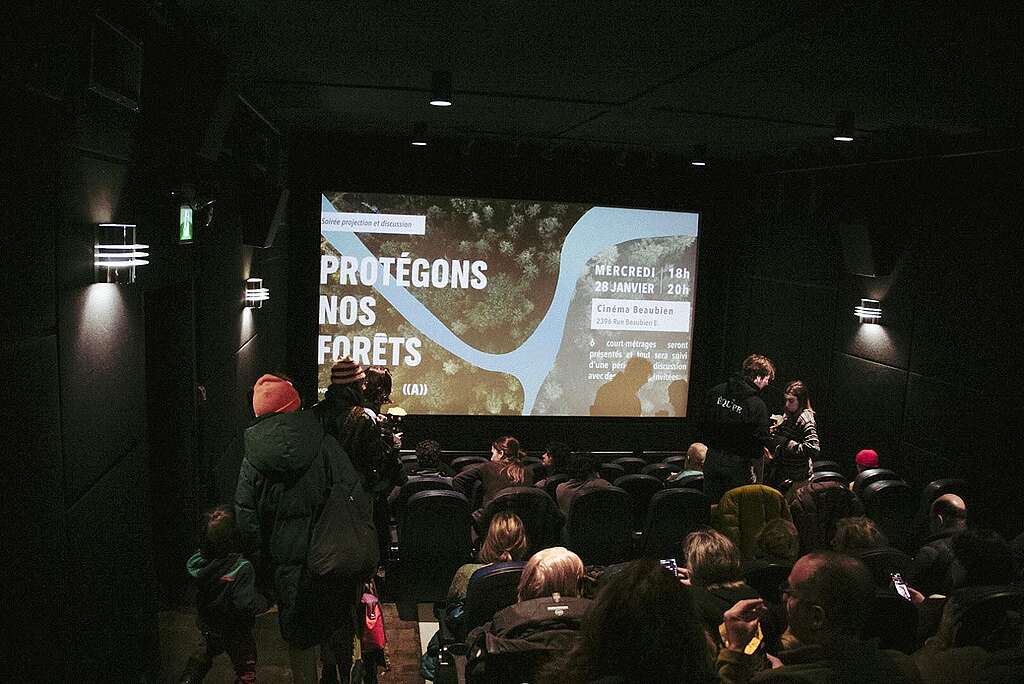
Greenpeace Canada, in collaboration with Wapikoni Mobile and Amplifier films, hosted a film screening and discussion last week, January 28th, on the topic of Protecting our Forest in support of Indigenous Land Defenders, local groups and activists taking action against the forestry reform bill 97 by the Quebec Government.
Back in September 2025, the proposed Bill 97 was abandoned by the Coalition du Québec CAQ government due to the increasing criticism from First Nations chiefs, environmental groups, activists and others who believed the reform to be highly exploitative and misleading. The bill aimed to divide the province’s forest into three zones: one that prioritised conservation, one focused on timber production, and a third zone for multiple uses. However, the reality was a vision of forest management that some argued could have resulted in ecocide and cultural genocide against Indigenous people.
Despite the withdrawal of Bill 97, profit-driven forestry companies continue to ravage forests, biodiversity, and stolen lands with impunity to produce lumber for export. Greenpeace recently published, Paper Trail to Nowhere, a two-part investigative report that exposes Domtar, formerly Paper Excellence, as the largest pulp and paper mill company in Canada, managing 22 million hectares of forest land across the country and has ties to a global conglomerate known for destroying forests worldwide and conflicts with Indigenous communities. Now, it’s quickly taking over our forests.
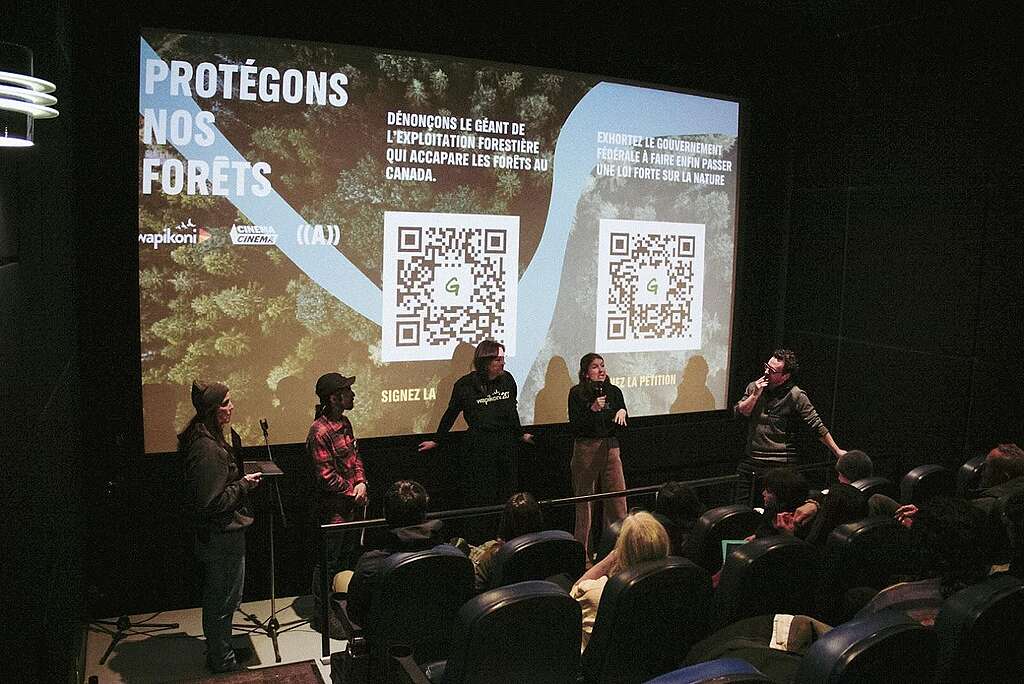
In light of these events, we collaborated with Wapikoni Mobile — a non-profit that supports Indigenous film-makers throughout Canada and Amplifier Films, a film-maker and activist organization that has been capturing the illegal deforestation for over the past 5 years at Nitaskinan, Atikamekw territory.
A total of 6 films were presented throughout the night that not only captured the resistance against extractive industry and other “national interest” projects, but also heart-warming films that made us reflect on our connection to the land, our responsibility and roles as caretakers, including “A message from Mother Earth” by Poet and writer Denise Larocque or “It’s me Landon” by Landon Moise.
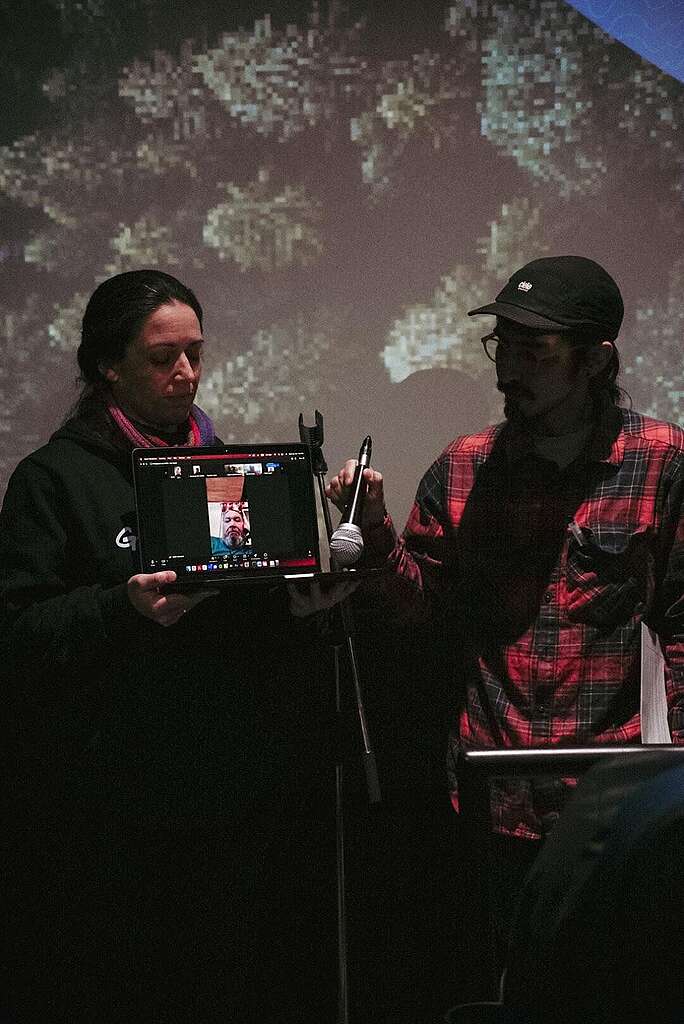
After the film screening, we invited our guest speakers to come up on stage and shed some light on the topic from their own experiences and practices. We were honoured to have Robert Echequan, Atikamekw land chief defender, who joined us for the evening. Robert has been at the forefront of the resistance movement at Camp Souveranité 134km, the main checkpoint against illegal forestry activity.
“I will die here in defending my territory. I will not give up the fight,” he said after calling out the injustices in his territory and the lack of accountability from the government to intervene against illegal deforestation by industry companies.
Throughout the call, members of the Front de Résistance Autochtone Populaire (FRAP) and Front de Résistance Écologique et de Défense Autochtone (FREDA) showcased their support by being online and calling out to the public to support the camps by creating more blockades against both forestry and mining activities in the territory. Equally important is the financial support that is needed to maintain and keep the camps alive. They also called for any donations or financial support.
Moreover, our guest panellist, Nicolas Mainville, Director of Biodiversity at the Société pour la nature et les parcs (SNAP Québec) shared his view on the current uncertainties of the CAQ government, the current lack of leadership, and his doubts on how a new revised bill will truly create a transparent process amongst environmental groups and Indigenous movements.
What’s next?
It is quite clear that the provincial government and its industry backers should be accountable for the ongoing intense industrial logging, biodiversity loss, and rapid climate change.
As part of our ongoing work at Greenpeace, we know that Canada’s forests are not abstract assets on a balance sheet. They are living ecosystems, sources of clean air and water, homes to wildlife, and places people rely on for their livelihoods and cultures. When billions in public money are tied to their destruction, people across Canada deserve answers.
To that end, Greenpeace Canada has launched two petitions that call on the Government to take action towards:
- Protect forests: expose the logging giant taking over forests across Canada.
- Protect Biodiversity across the nation: Urging the federal government to finally pass a strong nature law that respects Indigenous sovereignty, sets clear protection targets, ensures public accountability, and holds polluters responsible.
Use your voice now to support these important calls to action!
Eager to get involved and learn more? Here are some key resources:
Support Camp Souverainité 134km
- Financial support to keep the camp alive.
- Follow what’s happening through their social media channels via their Instagram account.
- Get involved by participating in the camp. If you need information on how to get there and ways to be involved, please contact Checkpoint Parent directly through their instagram account.
Wapikoni films
Support Wapikoni Mobile by watching their films and supporting their roster of filmmakers. Here is our final list shown at our screening:
- It’s me, Landon (C’est moi, Landon)
- A message from Mother Earth
- Nous nous soulèverons
- Nimocom otaski (La forêt de mon grand-père)
- Onactasowin
- Djodjo aki
Amplifier Films
- Check out their short film, Blocage BLOCKADE (BLOCKAGE), tracing five years of resistance on Nehirowisiw territory, deep within Nitaskinan.
- Check out their latest film, Hiver Atikamekw. The film gives voice to supporters of the camp, to Elders who are present on the land, and documents subsistence practices, including the trapping of a lynx. It shows that Atikamekw culture is alive and well, practiced on the land, outside the reserve, deep in the forest.