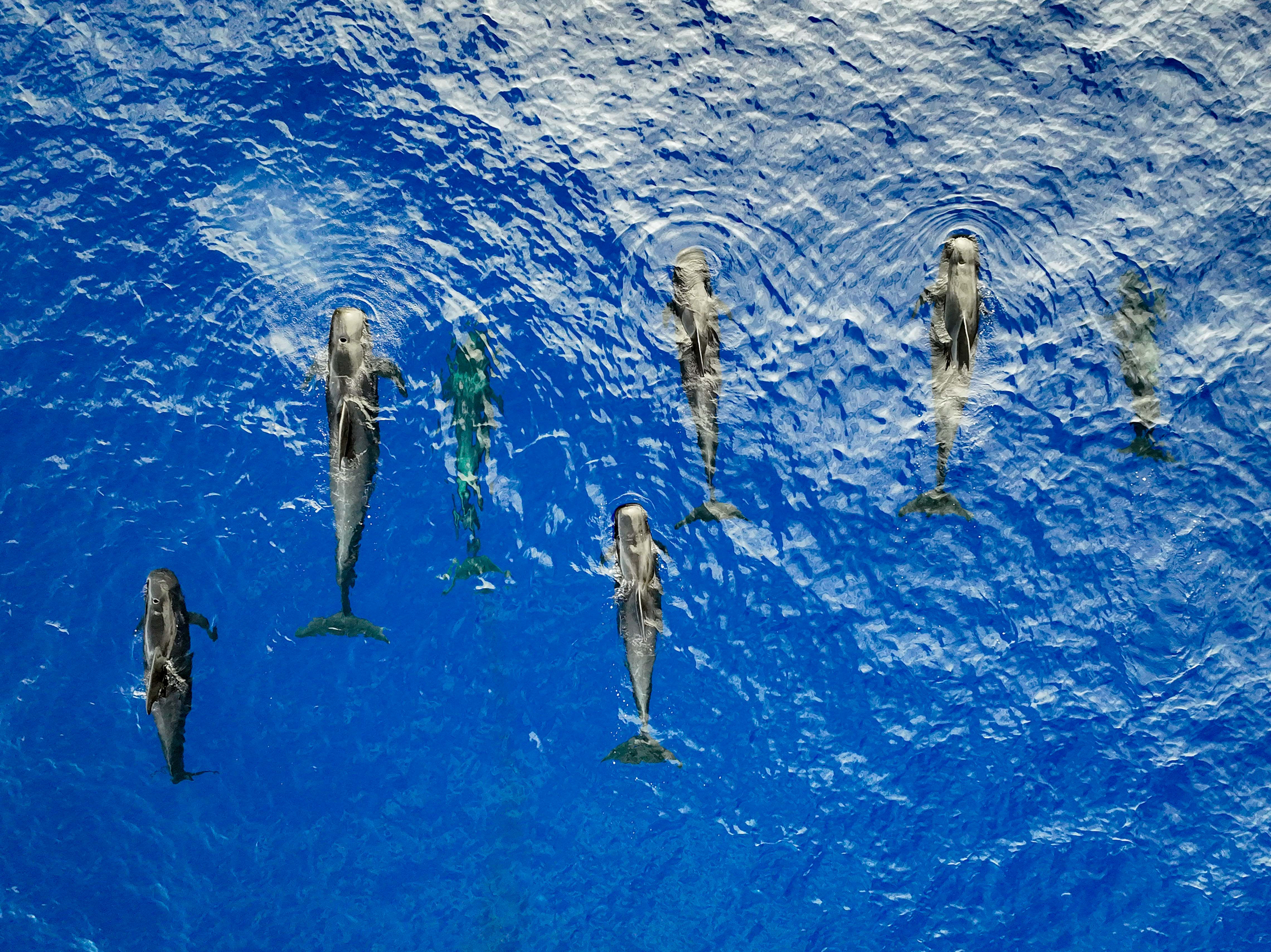
Introduction
Protecting the ocean sounds both urgent and overwhelming. Most people might first think of beach cleanups or refusing to eat bluefin tuna. But then what? What is happening beneath the surface? And what can ordinary people like us actually do?
In 2025, a group of volunteers chose to go further. They appeared at fishing ports in Daxi, Yilan before dawn, and at educational booths on the streets of Taichung—demonstrating that everyone can take action to protect the ocean.
From Deep Sea to Coastal Waters: Dual Challenges of Distant-Water Labor Rights and Coastal Overfishing
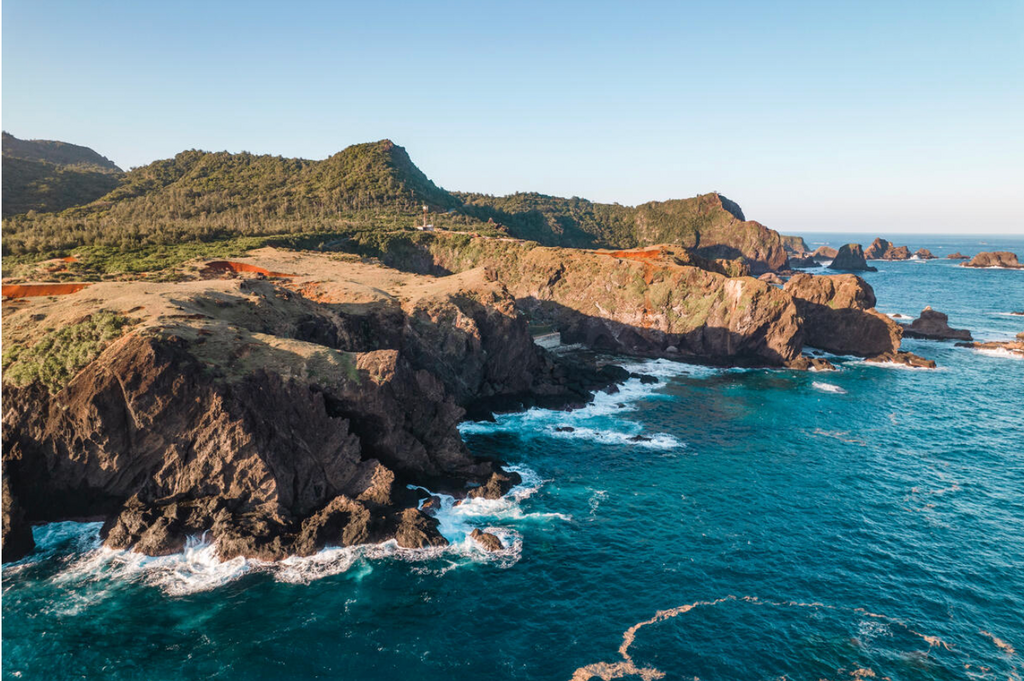
Taiwan is an island surrounded by the ocean. These waters nurture rich biodiversity, with over 3,000 recorded fish species—about one-tenth of the world’s total—making it one of the most biodiverse marine regions globally.© Greenpeace / James Liu
However, overfishing in coastal waters, habitat destruction, insufficient fisheries management, and climate change impacts such as coral bleaching and ocean acidification are gradually degrading once-thriving marine ecosystems. (Additional Reading: Protecting Our Seas: From Coral Surveys to Distant-Water Fisheries Governance — A Review of 2025 Ocean Action)
Fish Survey Project: Collecting Firsthand Fish Length Data
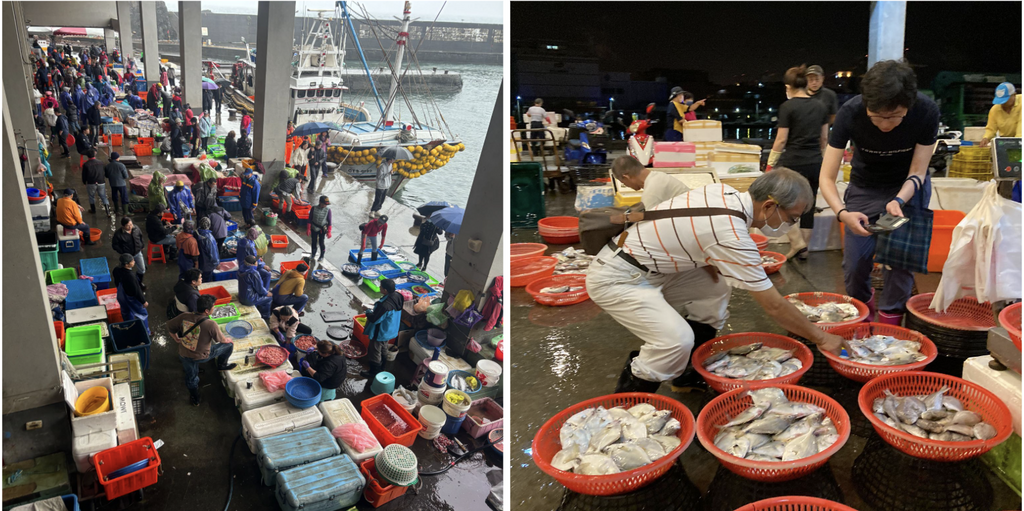
In 2023, Greenpeace launched the “Citizen Scientist Fish Survey Project,” recording fish species and lengths at fishing ports to provide scientific evidence for marine policy and conservation.© Greenpeace
Greenpeace, together with ocean expert Associate Professor He Xuanqing from the Department of Aquaculture at National Kaohsiung University of Science and Technology, and data science expert Associate Professor Xu Weiyuan from the Department of Computer Science and Information Engineering and the Department of Environmental Biology and Fisheries Science at National Taiwan Ocean University, collaborated to combine artificial intelligence with citizen scientists (trained volunteers) for the first time. They collected empirical data on the body lengths of commonly found coastal fish species in Taiwan and investigated the relationship between these measurements and overfishing.
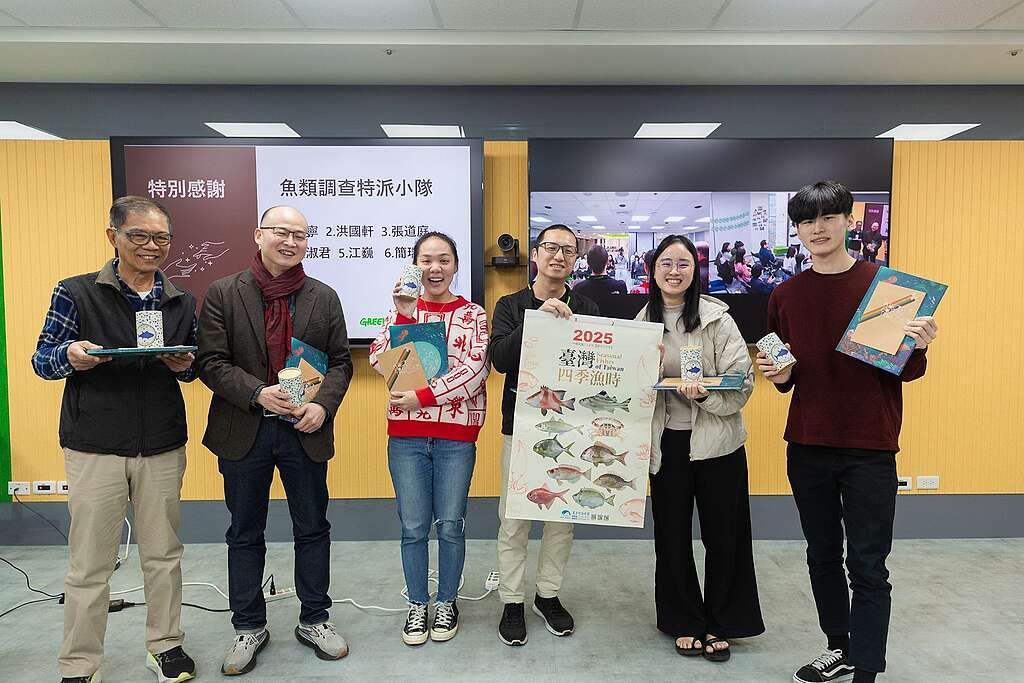
Now in its fourth year, the project includes more than 35 volunteer citizen scientists.© Greenpeace
(1) What are volunteers responsible for doing?
In this project, Greenpeace recruited two types of volunteers, namely “fishing port survey volunteers” and “fish labeling volunteers.”
Fishing port survey volunteers are responsible for going to the front line of fishing ports to photograph target fish species. Before this, volunteers participate in training camps to learn and become familiar with common target fish species. On duty days, volunteers are responsible for visiting fish markets in Daxi and Nanfangao (Yilan), Kezailiao Fishing Port (Kaohsiung), Qianzhen Fishing Port (Kaohsiung), Donggang (Pingtung), and Magong Fishing Port (Penghu).
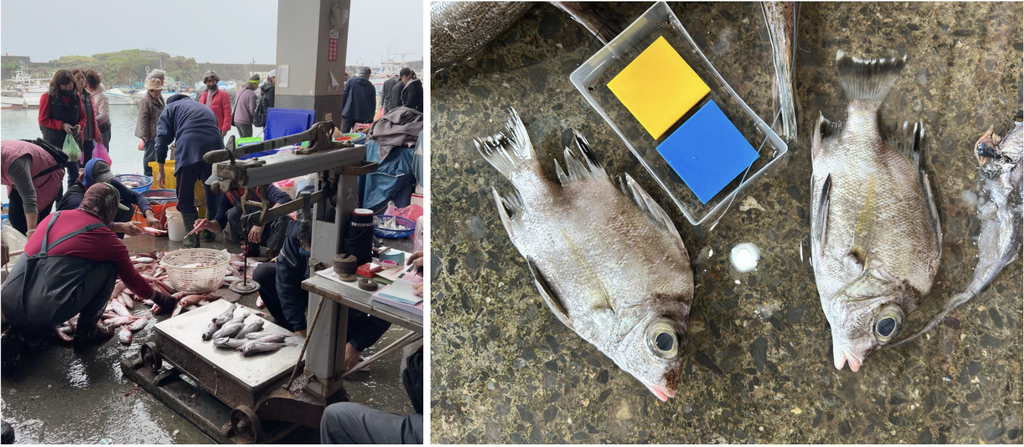
Fishing port survey volunteers must arrive at the port early in the morning, before fresh catches are sold, find the target fish species, place a specially made scale reference object, and take valuable first-hand data photos. © Greenpeace
Fish labeling volunteers need to be familiar with every target fish species, and classify and label hundreds of photos uploaded by fishing port survey volunteers using computer software, marking the fish species in each photo. Over time, a large database is built to develop AI tools for fish species identification and body length estimation. This is the first AI system development in Taiwan combining fish species identification and body length estimation.
In the early stage of the project in 2023, we selected 40 common nearshore fish species in Taiwan for investigation. Within this year, Greenpeace volunteers visited fish markets in five ports across Taiwan and collected a total of 18,180 fish sample photos.
(2) First release of survey results: fish really became smaller
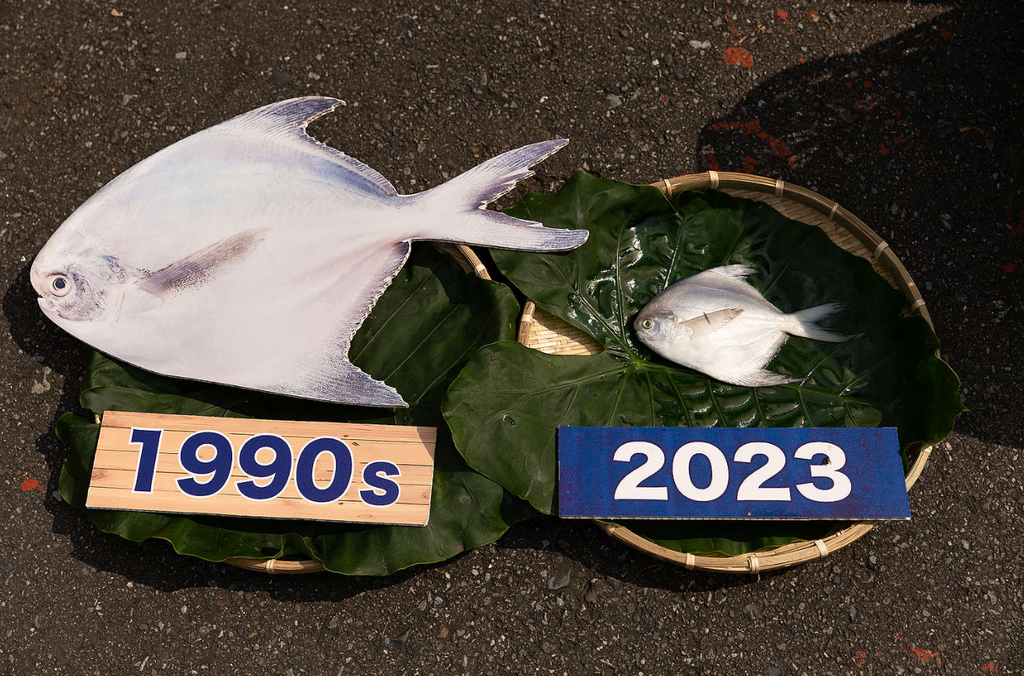
On March 9, 2023, Greenpeace Ocean Project team held a press conference outside the Executive Yuan, comparing mature body length reference values of pomfret in past literature with juvenile fish currently sold in fish markets, urging representatives of the Executive Yuan to submit the “Marine Conservation Act” for review as soon as possible. At the end of 2024, Taiwan’s “Marine Conservation Act” was finally passed with public expectation and officially came into effect in July 2025. © Greenpeace
On World Oceans Day 2024, Greenpeace released survey results of 40 common fish species in Taiwan. The results found that as many as 24 “fresh catch” fish species had more than half of their samples not reaching “50% sexual maturity length (Lm50)”. Among them, silver pomfret, star pomfret, greater amberjack, pomfret, and black seabass had proportions below Lm50 exceeding 90%, indicating the most severe overfishing situation. (Extended reading: Taiwan’s first common fish census: 24 “fresh catch” species under overfishing condition)
In view of this, the originally one-year citizen scientist fish survey project was extended into a long-term volunteer monitoring project. We also increased our scope to 45 fish species in 2025. Over these three years, volunteers collected a total of 24,227 photos, continuously supporting the Greenpeace Ocean Project team in promoting Taiwan’s marine conservation actions.
(3) From Volunteers on the Ground: fishermen are powerless, poor treatment of migrant workers
Volunteer Shujun heard the most direct warning during casual conversations with fish vendors. Some vendors shared that fish catches have decreased a lot in recent years, and the industry is becoming increasingly difficult. Volunteer Daoting observed fishermen’s inner contradiction: “During auction processes, some fishermen are very friendly, and they also privately lament that fish catches are gradually becoming smaller. Watching unscrupulous commercial vessels engage in uncontrolled fishing, they are also unable to control it. Otherwise, fewer and smaller fish are not good for anyone.”
For volunteers who grew up near the port, changes in the ocean are even more heartbreaking. Jia, who lives in Donggang, was deeply shocked when seeing an extremely small red snapper being caught: “The severity of overfishing exceeded imagination. I realized I cannot just be a consumer; I must start taking action.” Volunteer Christina from Malaysia was also greatly shocked after seeing rare fish species that should have been protected in marine museums appearing in bloody auction scenes.
An anonymous volunteer stated that the conditions on ships were dirty and chaotic, with migrant workers directly showering on board, and working conditions were extremely harsh. It was very distressing to see. This also warns that marine conservation is not only about fish, but also about the basic dignity and labor rights governance of every person in the entire industry chain.
Volunteer-Designed Ocean Education Booths: from lesson plans to field practice all designed by volunteers
Indeed, as volunteers observed, ocean issues are not only about overfishing. In addition to nearshore issues close to us in Taiwan, such as actively promoting sustainable fisheries in Taiwan and solving overfishing problems, ocean issues also include distant-water issues, such as fisheries labor rights reform and stopping deep-sea mining.
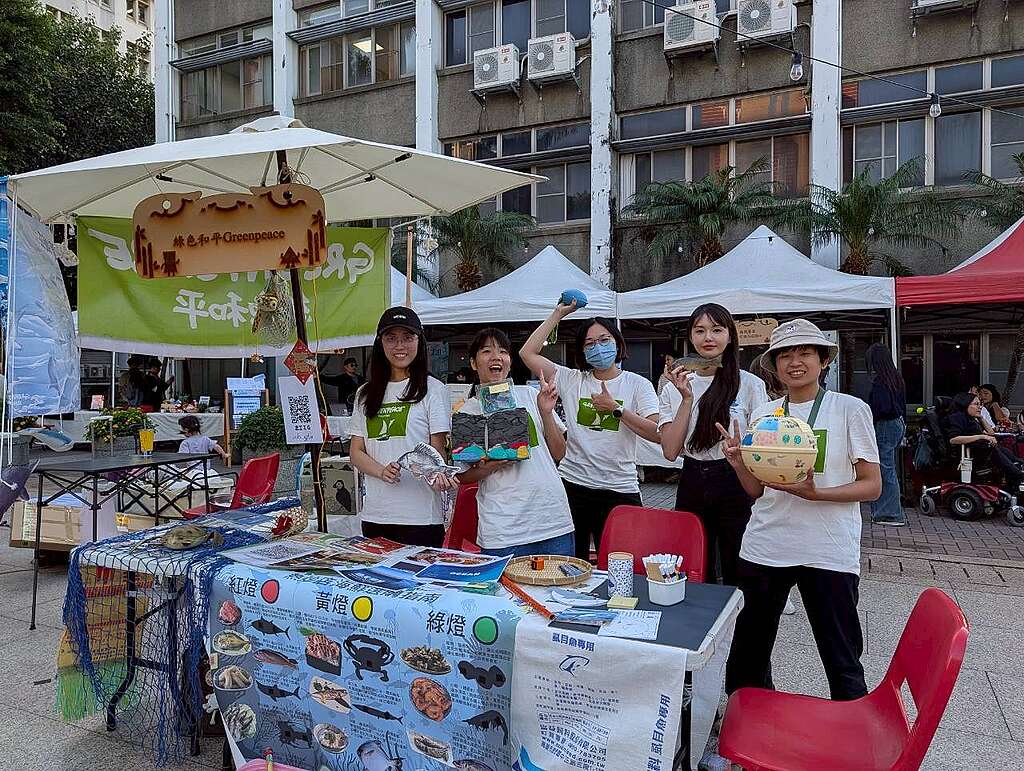
In 2024 and 2025, the Greenpeace Community Outreach Campaign Team, in order to empower the volunteers in Taichung (Greenpeace only has offices in Taipei and Kaohsiung), launched the “Taichung Ocean Volunteer Project,” aiming to train volunteers located in Taichung to become frontline personnel capable of independently completing booth preparation and lesson plan creation for public awareness building. © Greenpeace
(1) Relay of ocean protection: more experienced volunteers leading new recruits
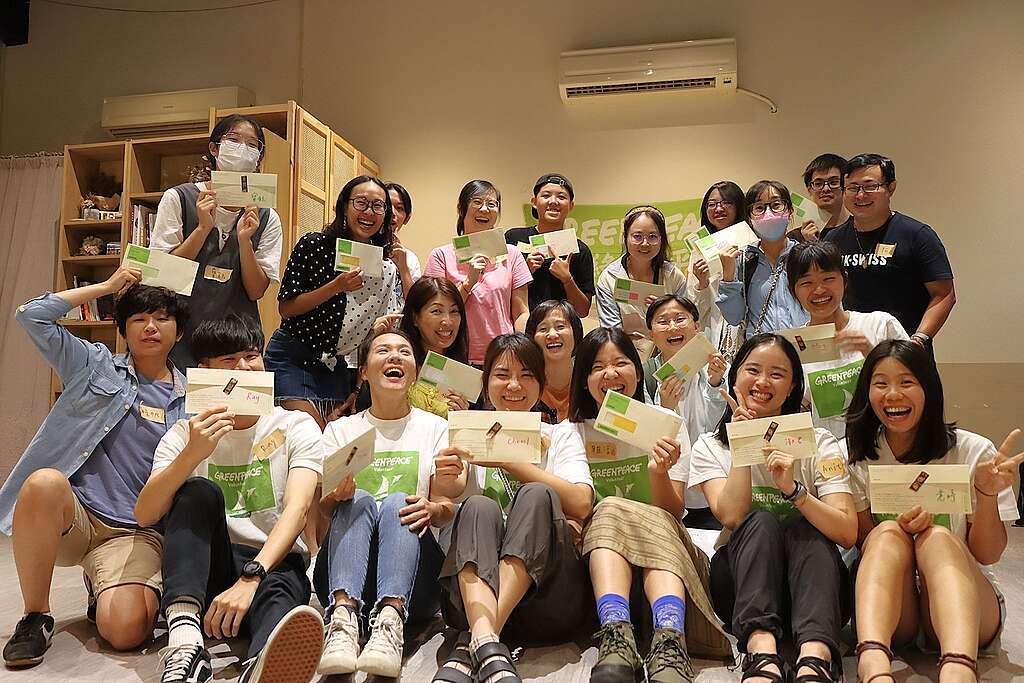
From August 31 to September 1, 2024, the first “Ocean Booth Volunteer Project Training Camp” was successfully held in Taichung. A total of 18 volunteers participated in the project and were divided into three groups: “Deep-sea mining,” “Distant-water issues” (overfishing and fisheries labor rights), and “Nearshore issues” (Taiwan Marine Conservation Act and sustainable seafood). © Greenpeace
The Taichung ocean volunteer action began with a solid two-day training camp. The most special point of this project is that each group leader is a senior Greenpeace volunteer. Group leaders use their booth advocacy experience to guide new volunteers to complete an independent ocean advocacy action from 0 to 1.
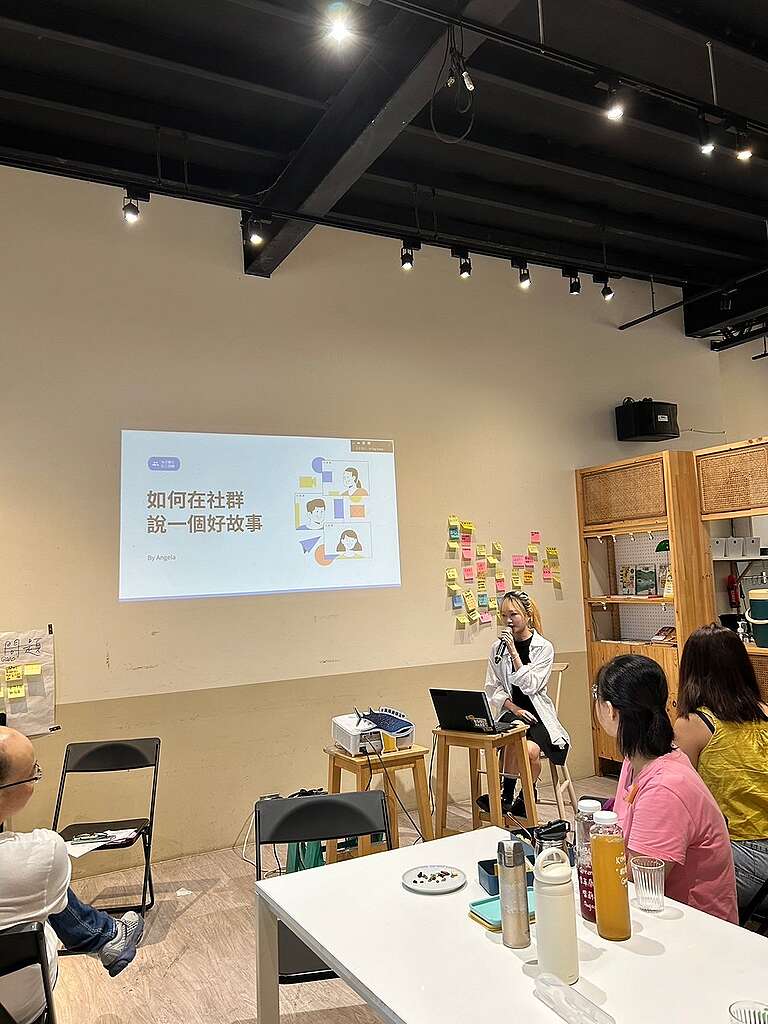
In addition, Greenpeace colleagues in charge of social media marketing also came to share social media skills with volunteers, encouraging them to post content related to their themes on social media to expand influence. © Greenpeace
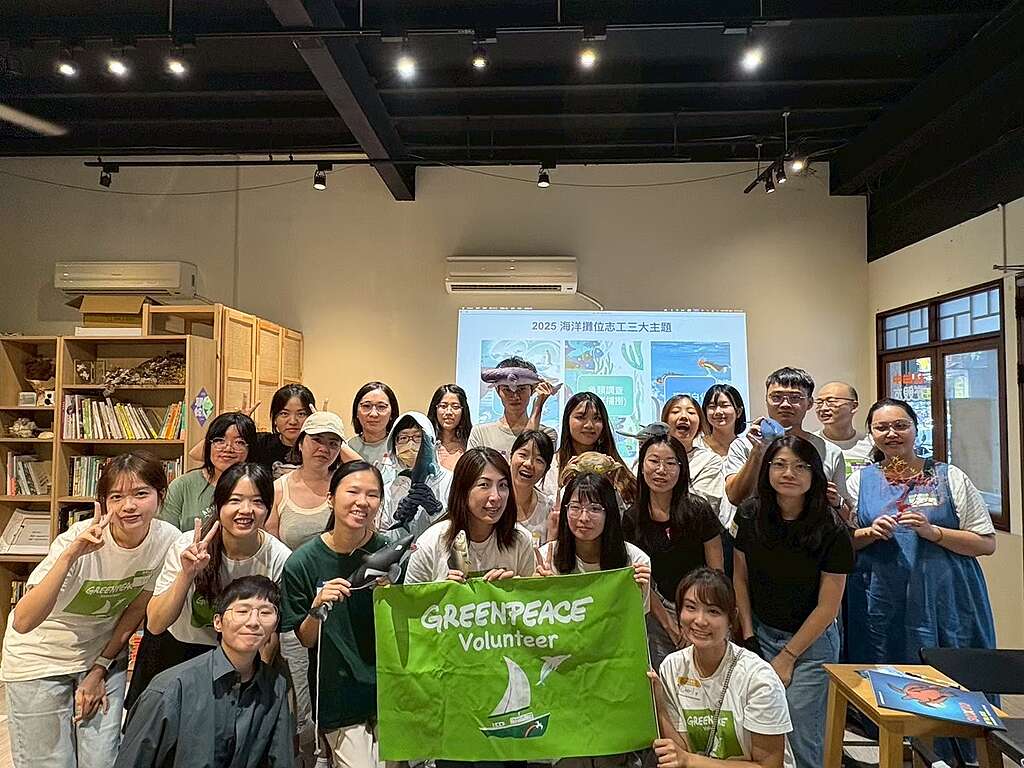
The second Ocean Booth Volunteer Training Camp was held from August 16 to 17, 2025. A total of 19 volunteers participated and were also divided into three groups: “Coral bleaching,” “Marine protected areas,” and “Overfishing.” © Greenpeace
(2) Volunteers Did It All: Creative Lesson Plans from Start to Finish
Ocean volunteers brainstormed various interactive experiences to make the public more willing to stay at booths and learn about ocean issues.
- Overfishing group — “A Cappella”
The second group promoting overfishing cleverly used a pun and named the group “A Cappella,” meaning “Ah~ fish got stuck and got pulled away.” Not only is the name humorous, volunteers also composed a song and interacted with the public at booths.
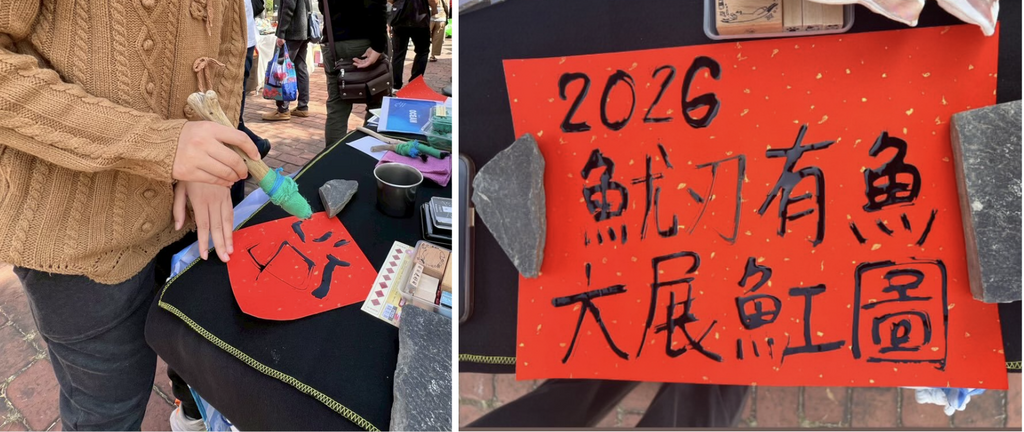
During New Year booth events, creative volunteers used driftwood, fishing nets, and fishing lines from marine debris to make “marine debris pens,” inviting the public to use them to create ocean-themed spring couplets. © Greenpeace
- Most popular booth: coastal group’s “traffic light seafood purchasing game”
The most attractive booth game for children was the “traffic light seafood fishing game” developed by the first coastal group.
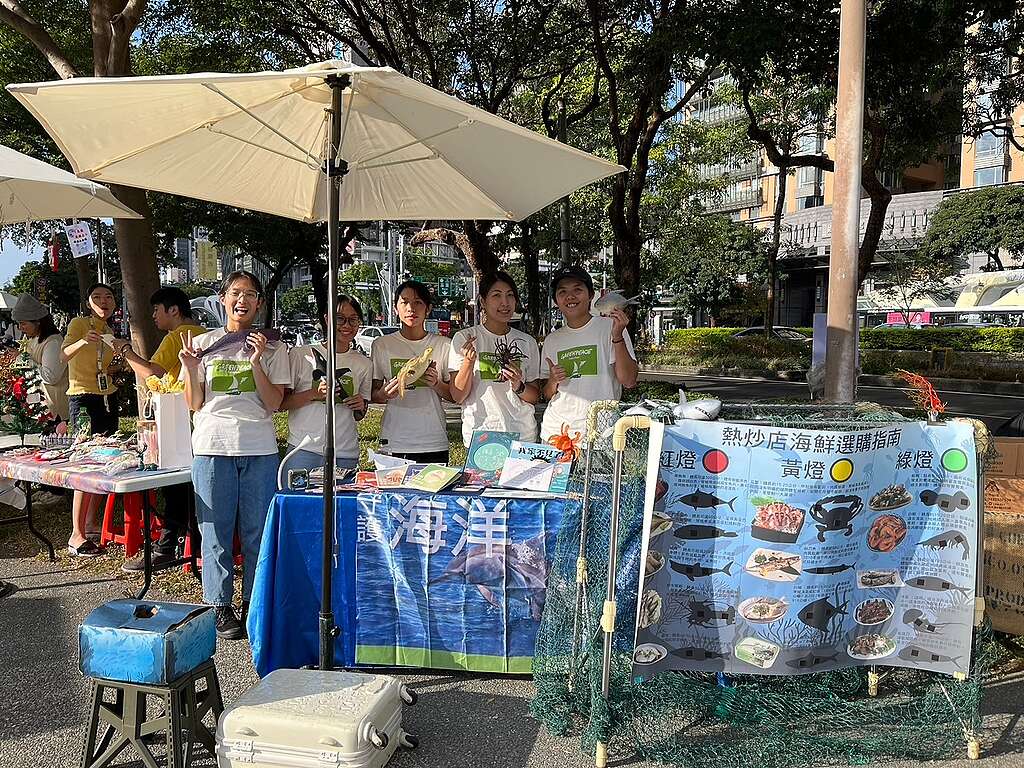
Volunteers simplified complex sustainable seafood guidelines into easy-to-understand “red, yellow, green light” concepts. Green light: abundant resources (can eat often). Yellow light: decreasing resources (eat occasionally). Red light: endangered (try not to eat). © Greenpeace
Volunteers used an attractive poster called “Seafood purchasing guide for stir-fry restaurant” to keep the visitors for longer, and invited them to participate in a “fishing” activity. After participants or children fish out seafood from the box, they compare it on the poster to see which “light category” it belongs to, learning through play how to make ocean-friendly choices in daily shopping and ordering food.
- Bringing distant issues into daily life: “Tuna Human Cans” teaching tool design
Last year’s distant-water group also launched a highly satirical and humorous “Tuna Human Cans,” which triggered public attention to distant-water fisheries and fisheries labor rights.
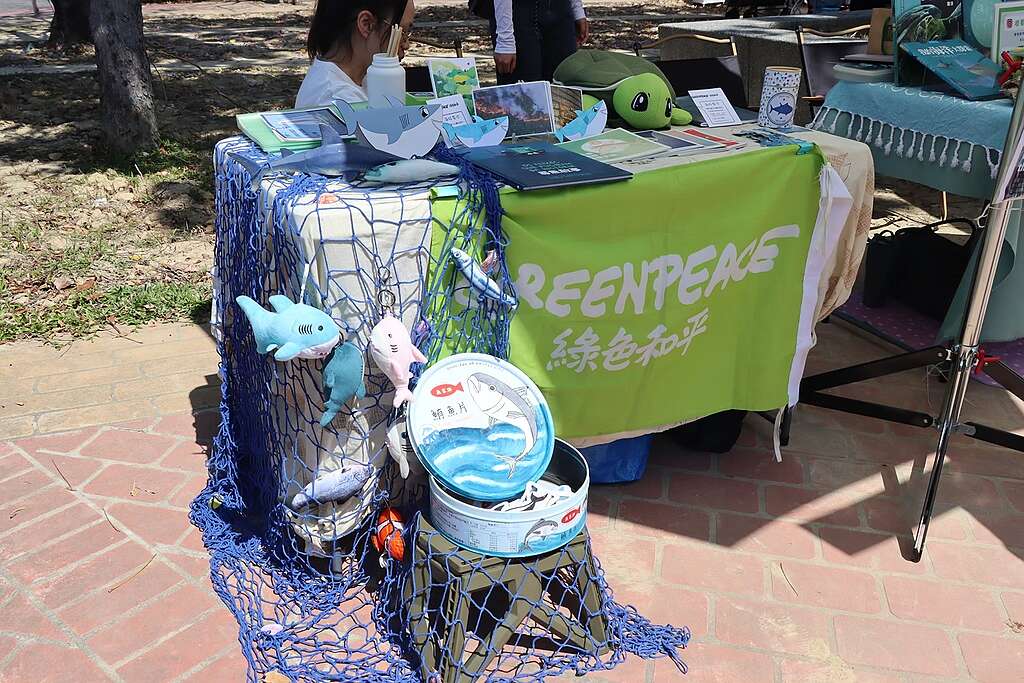
Volunteers handcrafted a 3D model of “Tuna Human Cans” as an educational tool. The outside looks like a tuna can, but inside it contains fishermen, dolphins, sharks, and tuna cardboard cutouts, linking fishing methods and working conditions of fishermen with marine ecology and human rights issues related to tuna cans. © Greenpeace
Volunteers actively invite the audience to pick up bycatch paper models inside the can (such as sharks and dolphins) and fisherman models. After sparking curiosity, they further explain the ecological damage caused by fishing methods and human rights issues of distant-water fishermen, transforming abstract issues into concrete consumer awareness actions. If the public wants to learn more, volunteers also invite them to scan a QR code to watch the documentary “Before You Eat.”
(Additional reading: People working at sea: real stories of foreign fishermen on distant-water vessels)
(3) Impact of ocean volunteer projects
Over these three years, Greenpeace ocean volunteers, through frequent booth activities and public conversations, successfully brought ocean issues into public life and achieved impressive results:
- Deep-sea mining group: 4 markets, 1 fishing port sharing, reaching 486 people.
- Distant-water group: 5 market booths, reaching 372 people.
- Coastal group: 5 market booths, reaching 452 people.
- Coral bleaching group: 4 market booths, reaching 169 people.
- Marine protected areas group: 5 market booths, reaching 255 people.
- Overfishing group: 6 market booths, reaching 397 people.
- The two ocean volunteer programs reached a total of 2,131 people.
The outcome of more than two thousand people engaged in protective efforts as a result of volunteers’ creativity and sweat.
(4) Collective strength forms a net: volunteers’ reflections on ocean protection
Senior volunteer A-Kuan stated: “Just because you cannot see it does not mean it is not happening.” To help more people understand these rarely discussed issues, volunteers designed interactive games and teaching tools so that the public could understand that behind seafood on the table, there are also human rights exploitation issues.
Volunteer Yixuan, who served as group leader in the A Cappella group, noted that during booth activities, team members continuously improved communication skills. Yixuan said: “At the beginning, our opening lines were very awkward, but later we adjusted quickly depending on tools and situations, such as using ‘marine debris spring couplets’ to attract attention. I think this is a big improvement for everyone!”
Volunteer Baoyu, who participated in the project for two consecutive years, believed that companions working together on issues were the most important motivation. She said emotionally: “Because the initial volunteer experience was so good, everyone was willing to listen and accept each other’s opinions, so we continued until now. Of course, the second group of team members was also very positive and warm.”
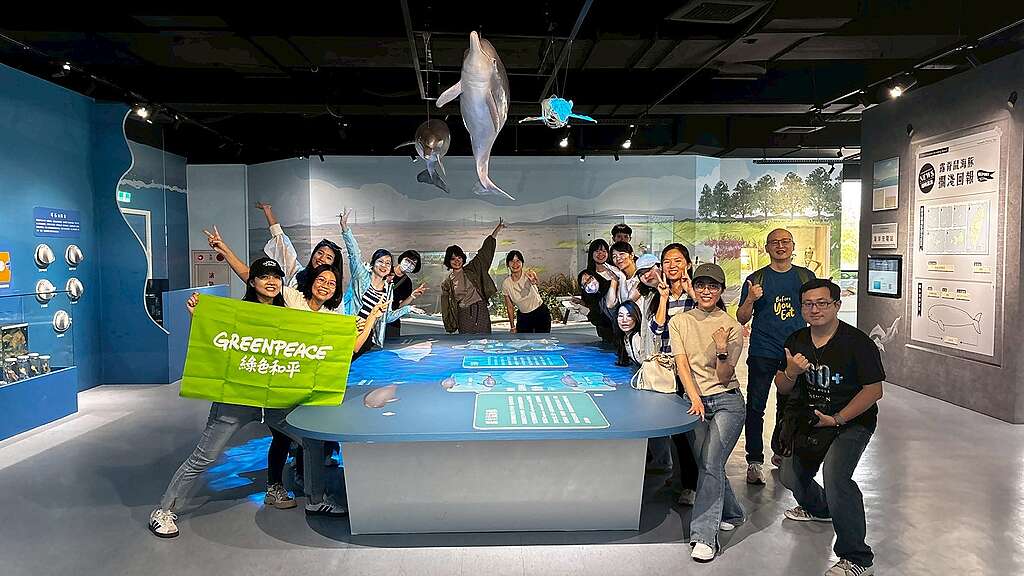
The second volunteer sharing session was at the Central Taiwan Marine Conservation Education Center to learn and exchange experiences. © Greenpeace
The future of the ocean needs you!
In 2025, this net woven by volunteers expanded from data collection at fishing ports to creative outreach at markets. Every piece of data accumulated and every conversation with the public is an attempt to help restore the increasingly depleted seas. We have accumulated thousands of photos and reached countless people, but the challenges of the ocean still remain.
The relay baton of ocean protection is still being passed on. Now, you can also become part of ocean protection:
Join us: If you also want to go into fishing ports and collect important data, you are welcome to sign up as a “fish survey volunteer” and protect the ocean with us at the frontline! [Click here to register as a fish survey volunteer]
Stay connected: If you cannot commit your time at the moment, you are also welcome to join Greenpeace volunteers and follow the volunteer Instagram community to receive updates on activities and stand with us in action. [Click here to join Greenpeace volunteers]