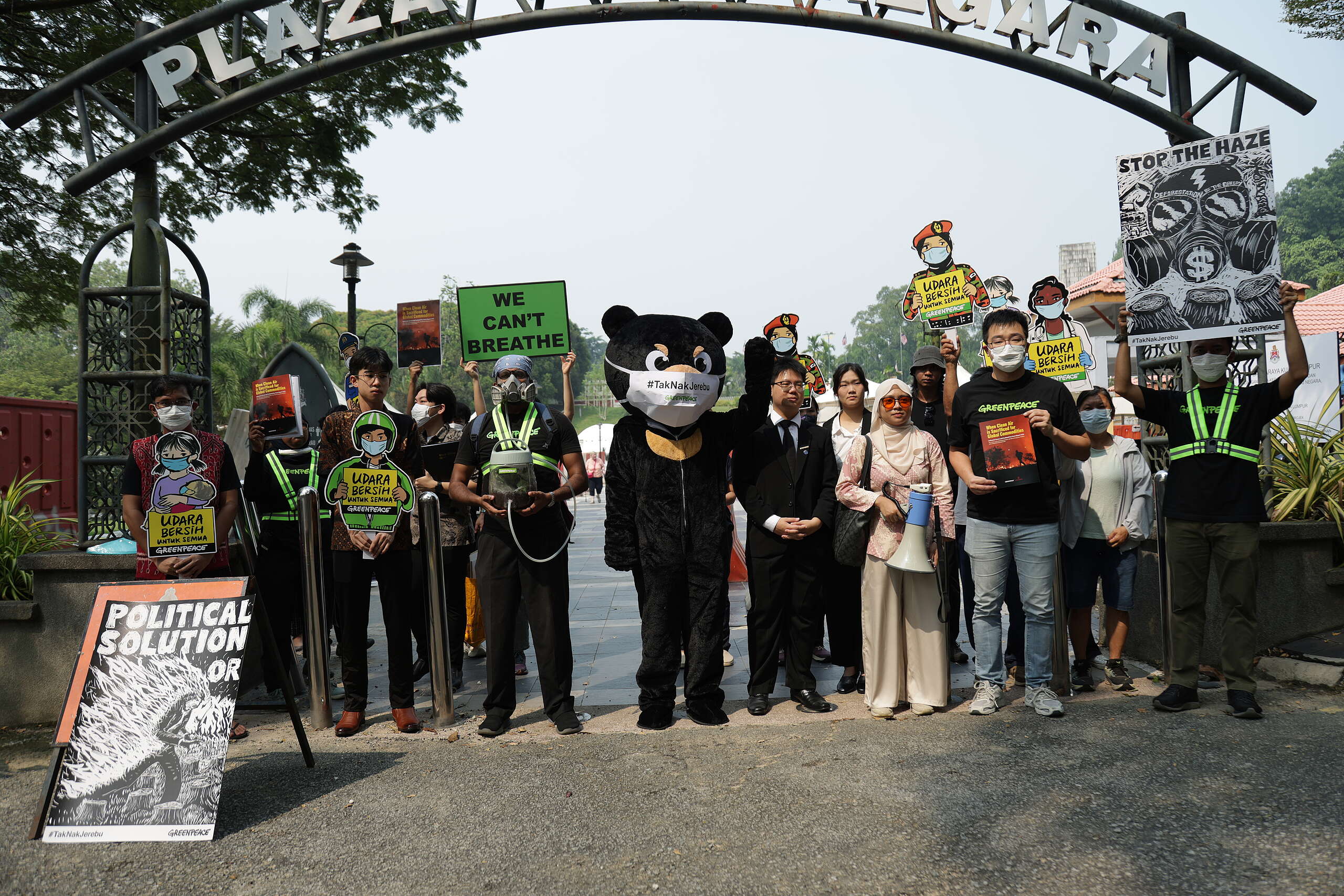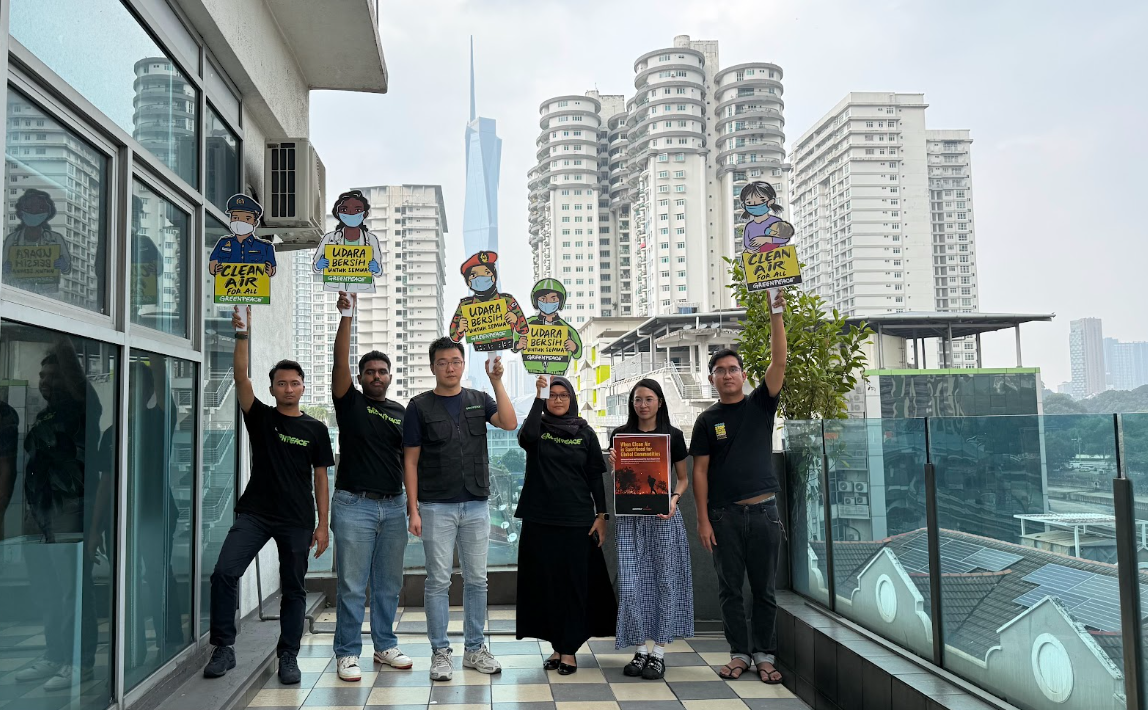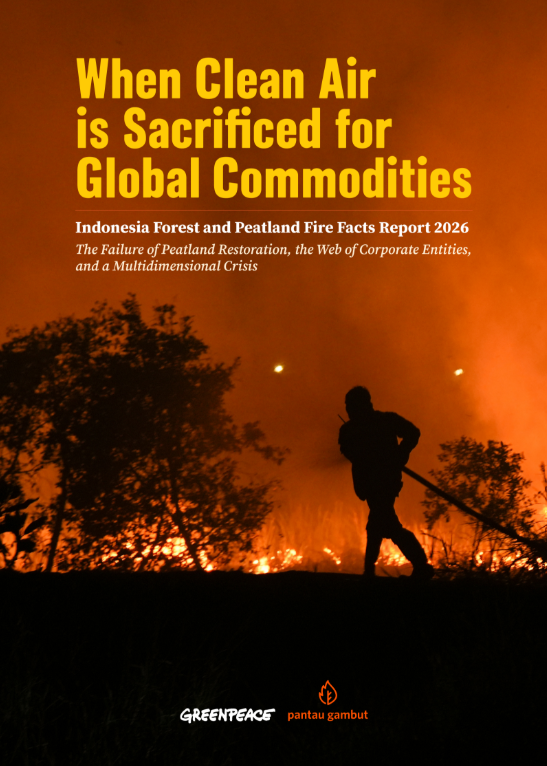
Jakarta / Kuala Lumpur, 24 August 2026 – Greenpeace Indonesia and Greenpeace Malaysia are calling for stronger, more transparent and coordinated emergency action to stop the forest and land fires that have once again triggered transboundary haze between Indonesia and Malaysia.
This year’s crisis once again shows that haze is not simply a matter of wind direction or weather. The wind may carry smoke across borders, but the root of the problem lies in recurring fires—particularly in vulnerable forests and peatlands—and the failure to ensure effective prevention and law enforcement.
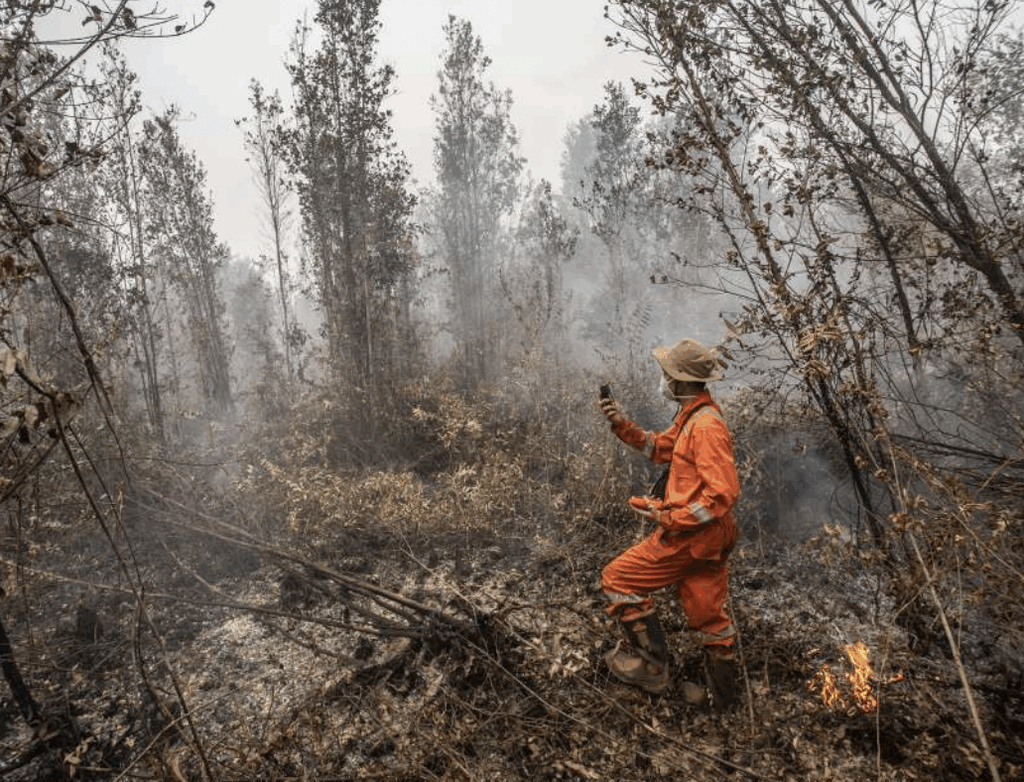
Greenpeace Indonesia’s monitoring from 11–16 August 2026 recorded 592 hotspots across Kalimantan, with 455 of them located on peatlands. The hotspots included 322 in West Kalimantan, 181 in Central Kalimantan, and 86 in South Kalimantan. Based on regional monitoring and cross-checking against meteorological data, smoke from fires in Kalimantan has repeatedly crossed the border into Sarawak and moved towards Kuching from early to mid-August.
The situation is increasingly alarming as communities in both countries are already experiencing the impacts of the haze. In Indonesia, fires and smoke have disrupted people’s lives and worsened air quality in several areas. In Malaysia, deteriorating air quality caused by transboundary haze has forced school closures in Sarawak. Recent reports also show that this year’s fires have spread widely, prompting the Indonesian government to increase the deployment of personnel and firefighting resources in Kalimantan.
Belgis Laela Noor Habiba, Forest Campaigner at Greenpeace Indonesia, said:
“People in Indonesia and Malaysia should not be forced to breathe toxic air every time the dry season arrives. We have seen the same cycle far too many times: fires grow, the sky disappears behind a blanket of smoke, schools close, public health is put at risk, and then everyone starts looking for someone to blame. What we need now is not finger-pointing, but to ensure that the fires are stopped, their causes are thoroughly investigated, and those responsible are genuinely held accountable.”
Greenpeace stresses that the wind is not the culprit. The wind simply carries smoke from fires that already exist. For this reason, the response cannot stop at emergency measures such as firefighting operations, water bombing or weather modification once fires have already spread. Governments must strengthen prevention on the ground, protect and rewet peatland ecosystems, ensure companies are accountable for their concessions and supply chains, and enforce the law without favour against individuals and corporations proven to have caused or allowed fires to occur.
This crisis also once again demonstrates that clean air knows no national borders. Communities in Pontianak, Palangkaraya and other affected areas face the same threat as people in Kuching and across Sarawak. They are all being denied their right to clean air because of failures to prevent fires that should have been anticipated.
Heng Kiah Chun, Country Representative of Greenpeace Malaysia, said:
“It is unfair that people in Malaysia are being asked to bear the health and social impacts of recurring haze while accountability for the fires remains an issue that has never been properly resolved. Cross-border solidarity means standing with communities in Indonesia, who are also victims, while firmly demanding accountability from all parties, including companies and investors, wherever they may be based , that are linked to forest destruction and fires.”
Greenpeace Indonesia and Greenpeace Malaysia have previously documented the recurring pattern of transboundary haze in their joint report, The ASEAN Haze Trauma, which shows that the impacts of forest and peatland fires have been felt by communities across Southeast Asia, while links between fires and companies from Indonesia, Malaysia and Singapore remain a critical issue in the fight for justice and accountability.
Greenpeace Indonesia and Greenpeace Malaysia therefore call for:
- The Indonesian government to immediately prioritise stopping the fires and protecting affected communities, including by ensuring that all necessary resources are available for firefighting and prevention efforts.
- Transparent and impartial law enforcement against all parties proven to be involved in forest and land burning, including corporations and those who profit from clearing land through the use of fire.
- Comprehensive audits and investigations into concessions and companies in fire-affected areas, as well as full public disclosure of information on fire hotspots, concession ownership, law enforcement processes and sanctions imposed.
- The Malaysian government to strengthen measures to protect public health while ensuring that Malaysian companies and business interests operating in, or linked to, fire-prone areas are not exempt from accountability.
- The governments of Indonesia and Malaysia, together with ASEAN member states, to strengthen cooperation on fire prevention and cross-border accountability. The haze crisis cannot be resolved through diplomacy only after the smoke has arrived; the region needs stronger mechanisms to prevent, investigate and hold those responsible for transboundary pollution to account.
“It is time we stop treating haze as a seasonal disaster that people simply have to accept. Every year, we know the dry season is coming. We know that peatlands are highly vulnerable to fire. We know that smoke will endanger millions of people and can cross national borders. If we already know all of this, then the failure to prevent it is no longer merely a technical problem, it is a failure of political will and accountability,” concludes Belgis.
Greenpeace Indonesia and Greenpeace Malaysia stress that people in both countries do not need cross-border disputes. They need clean air, protected forests and peatlands, and the assurance that those responsible for causing this crisis cannot continue to escape accountability.
Haze does not carry a passport. Its impacts do not stop at national borders. Neither should the responsibility to stop it.
Join thousands of Malaysians who are standing up for their right to breathe clean air.
Add your name