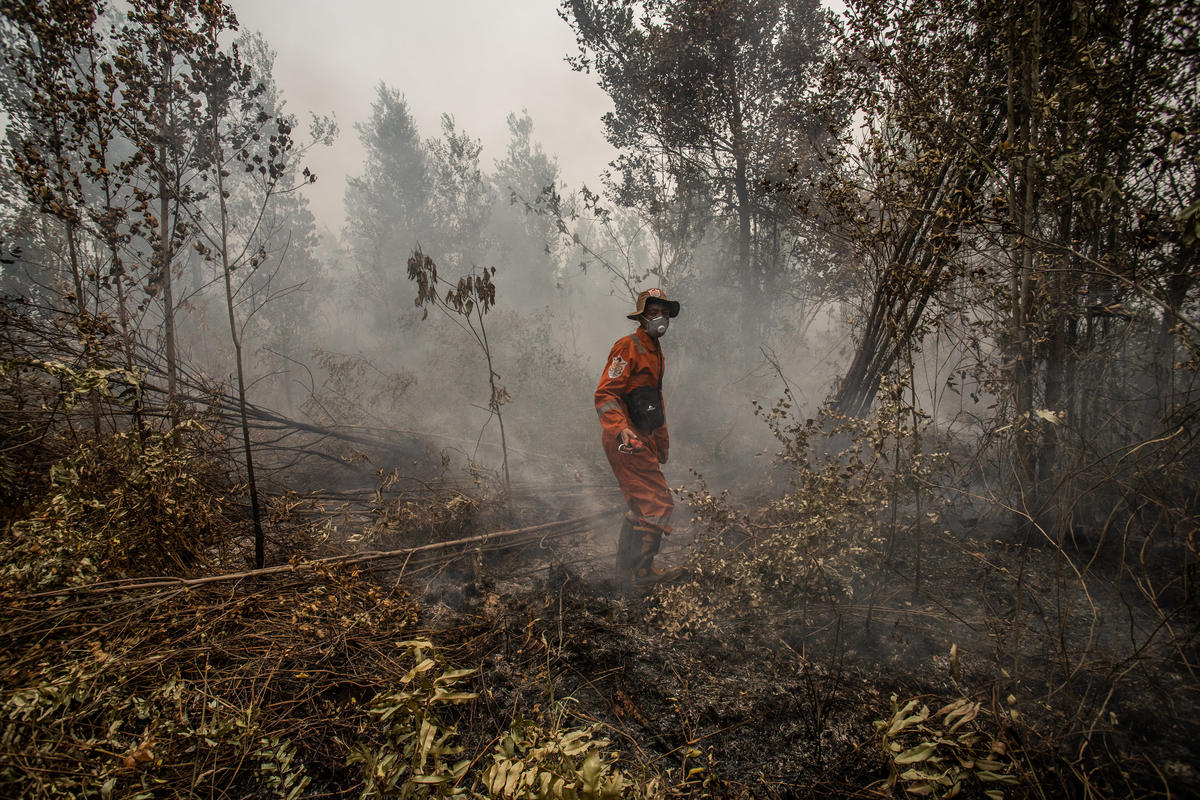
KUALA LUMPUR, 12 November 2026 – As questions remain over the corporate interests linked to fire-affected concessions that have resulted in haze, and the responsibility of governments to investigate them, at least 21 companies across six Malaysian business groups or shell companies domiciled in Malaysia with connections to concessions where haze-source points were detected.
A new report titled, Days Full of Haze, released today by Greenpeace, alongside Pusaka Bentala Rakyat and Nusantara Atlas, recorded 17,805 haze-source points across 23 districts in Indonesia between 8 August and 31 October 2026. Of these, 2,270 were detected within 264 oil palm concessions, while another 2,938 were found within 143 pulpwood concessions, highlighting the scale of fire-related activity within areas allocated for commercial plantation and forestry operations. The findings also highlight how complex corporate structures and limited disclosure of ownership information can make it difficult in tracing links between concession-holding companies and wider business groups.
Findings show the total area of forest and land burned in Indonesia between January and July 2026 was 202,004.30 hectares; a 47% (64,996.88 hectares) increase compared with 2019 and 80% (109,080.25 hectares) compared with 2023. Compared with 2025, the area of forest and land burned in 2026 increased by 69% (82,791.04 hectares).
Among the Malaysian-linked business interests identified in the analysis are concessions associated with Genting, IOI and Kuala Lumpur Kepong (KLK). These include PT Globalindo Agung Lestari in Central Kalimantan, associated with Genting, where 50 haze-source points were recorded; PT Sukses Karya Sawit in West Kalimantan, associated with IOI, with 24 points; and PT Menteng Jaya Sawit in Central Kalimantan, associated with KLK, with 19 points. It is worth noting that the detection of haze-source points within these concessions does not, on its own, establish who started the fires or determine corporate liability but instead warrants further investigations and the corporate links of these business entities.
On 5 November, Malaysia reportedly reaffirmed its preference for a diplomatic approach to tackling the issue rather than pursuing legal avenues [1]. Meanwhile, Singapore recently strengthened its Transboundary Haze Pollution Act (THPA), introducing measures to enhance enforcement and corporate accountability. Under the Act, Singapore’s National Environment Agency (NEA) has issued Preventive Measures Notices to ten Indonesian companies. Separately, the agency has requested information from ten Singapore-registered companies under Section 10 of the Act, concerning their business relationships, concession holdings and fire-prevention measures [2].
Greenpeace Malaysia Interim Country Representative Heng Kiah Chun said:
“Diplomatic cooperation is important, and it must lead to concrete action. Our findings on Malaysian-linked companies with repeated links in recurring fire-affected concession areas over the years raises serious questions about the effectiveness of their fire-prevention and land-management practices.”
“Singapore’s recent amendments to its haze law are not just about increasing fines. Earlier intervention and stronger enforcement mechanisms that look beyond individual plantation operators to wider corporate groups and business relationships is a much needed first step.
“Malaysia should learn from these developments and move towards enacting a Clean Air Act to strengthen its own legal framework, which will enable effective investigations, improve corporate transparency and accountability while ensuring that companies found responsible can be held accountable, even when the environmental damage takes place outside our borders.”
In Malaysia, an estimated 27.6 million people across 11 states were affected by haze originating from Indonesian peatland fires. More than 600 schools in Sarawak were also reportedly closed [3] from mid-August, underscoring the impact of transboundary haze on communities, public services and daily life.
Addressing the recurring haze crisis requires more than diplomatic exchanges or isolated national responses. Malaysia must play an active role by working with Indonesia to investigate Malaysian-linked corporate interests, improving corporate transparency and accountability across business relationships and supporting stronger regional mechanisms for cross-border cooperation and accountability. ASEAN governments must ensure that companies cannot evade scrutiny simply because the environmental damage associated with their operations takes place beyond national borders.
ENDS
Sources:
[1]]https://www.nst.com.my/news/nation/2026/11/1571386/malaysia-sticks-diplomatic-approach-transboundary-haze
[2]https://www.straitstimes.com/singapore/environment/nea-issues-legal-notices-under-haze-law-to-10-singapore-based-companies-including-asia-pulp-paper
[3]https://www.scmp.com/week-asia/health-environment/article/3364829/malaysias-sarawak-shuts-almost-600-schools-haze-hits-very-unhealthy-level
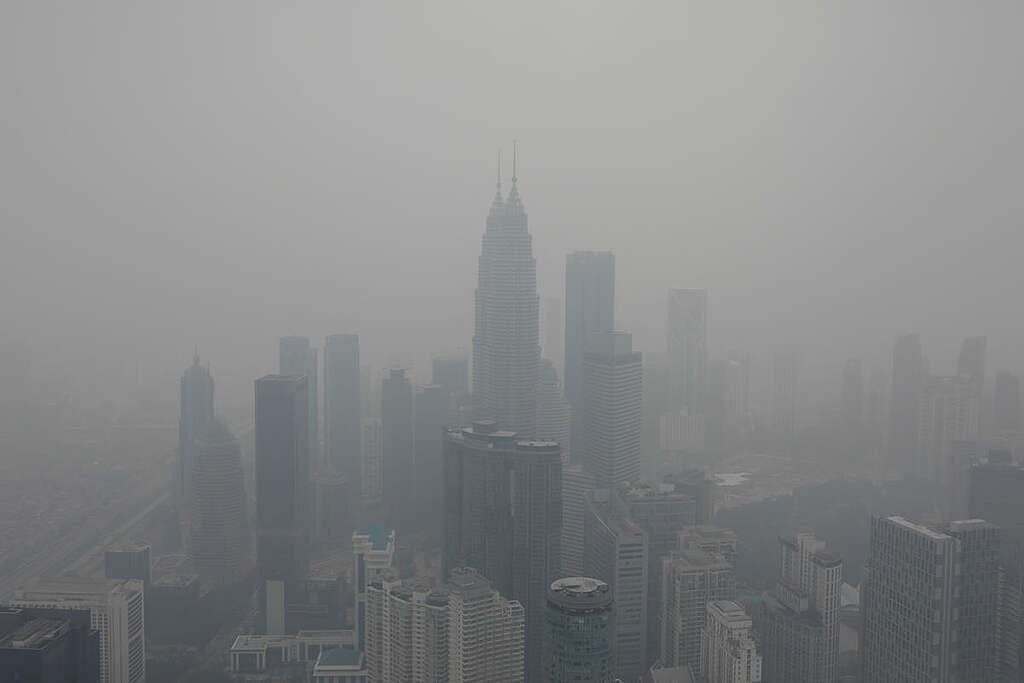
Year after year, haze returns to Malaysia. Act now, because we shouldn’t have to accept this as a norm.
Sign petition