Tubigon, Bohol — Survivors from island communities in Bohol marked the fourth anniversary of Super Typhoon Odette by unveiling a community-led art installation on Ubay Island with artist Leeroy New and Greenpeace Philippines, that highlights the lasting impacts of the climate disaster and the growing call for climate accountability.
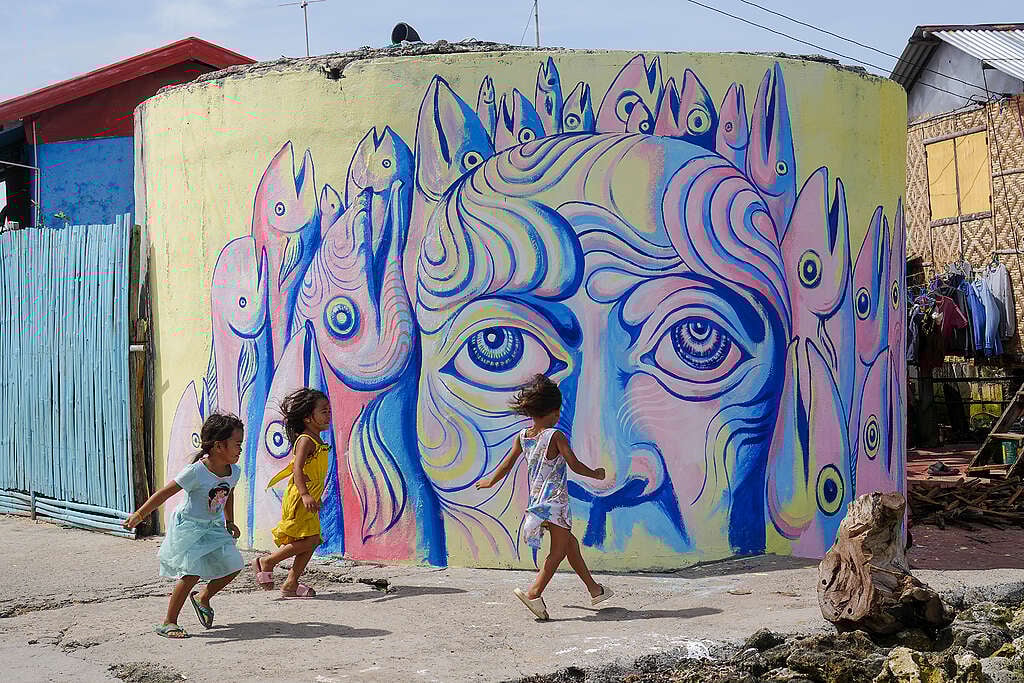
Titled Hagit sa Kaugma-on (“Challenge of the Future”), the installation took shape through hands-on workshops with climate-impacted residents of Tubigon, many of whom continue to live with the long-term effects of the typhoon. The main art piece uses locally sourced bamboo that anchors the work in Bohol’s landscape and culture. Woven into the piece are objects of memories that hold emotional significance for residents, including items damaged by the typhoon such as fragments of homes and tools linked to fishing and farming livelihoods.These elements transform lived experience into a public expression of remembrance and the ongoing demand for justice.
“When Odette hit, everything we worked for disappeared in one night. Our home, our boats, our sense of safety for our children,” said Niña Caren Caballa. “We are tired of being told to be resilient. We want change that keeps our families safe. This installation holds not only our memories but also the fight we carry in our hearts every day. We are standing up because we refuse to let big companies like Shell walk away from what their destructive business has done to our lives. We are fighting so our children will not inherit the same pain and the same storms.”
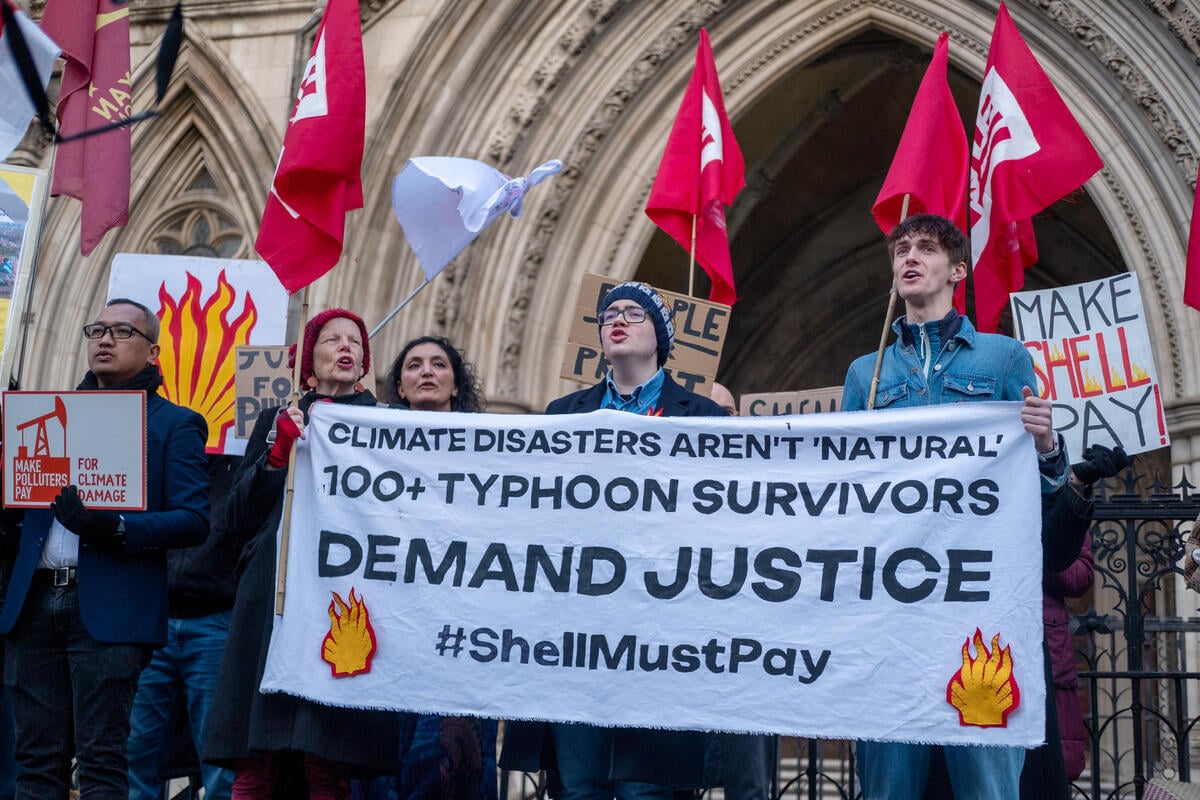
Many of the community members who helped create the murals and sculptures are also claimants in a recently filed legal case in the United Kingdom against oil giant Shell.[1] The case draws on new research showing that human-induced climate change more than doubled the likelihood and intensity of Odette.[2] While justice moves through the courts, the installation offers a space where personal histories connect with a broader call for justice, and stands as a parallel expression of agency. It makes visible the real costs of the climate crisis and grounds the call for accountability in lived experience.
“Art is part of actively creating a solution,” said Leeroy New. “It’s not just something decorative or something to be collected by those who can afford it. Art is embedded in our daily life, and it contributes to the betterment of society as a whole. Creating something specific to this place, together with the community, and grounded in local culture and creative identity draws attention to what people have lived through and the systems that shape these realities. For me, this kind of work is about creating a visual and cultural language that helps us envision a future that is more positive and creative, and one that moves us closer to climate justice for communities on the frontlines.”
Super Typhoon Odette made landfall in Bohol on December 16, 2021, leaving a trail of devastation that the province continues to confront today. The typhoon claimed 110 lives and caused more than Php 3.6 billion in damages to infrastructure and Php 6.6 billion in damages to agriculture. A total of 290,593 homes were damaged or destroyed, forcing families to rebuild with limited support while navigating the typhoon’s long-term impacts.[3] Odette killed more than 400 people and left more than Php 34 billion in damages across the entire country.[4]
“The devastation we saw in Bohol and throughout the Philippines did not happen in a vacuum. Fossil fuel corporations have known their pollution would intensify the climate crisis and they still chose profit over people,” said Virginia Benosa-Llorin, senior campaigner at Greenpeace Philippines. “Communities were left to rebuild, while companies like Shell continued to earn billions. This installation sends a clear message that communities have had enough. They are demanding accountability and a safer future for all. Polluters can no longer hide from the harm they created. They must pay.”
The Ubay Island installation builds on earlier community-led creative interventions, including the Community Art Tapestry: Weaving Stories of Survival, Hope, and Climate Action[5] and the People’s Museum for Climate Justice.[6] It highlights the growing role of climate-impacted communities in the Philippines as leaders in the global fight for climate accountability.
As the Philippines marks the fourth anniversary of Super Typhoon Odette, communities are affirming that remembrance can also be a source of strength. Through shared memory, creative expression, and collective action, they are choosing courage over silence and working together to hold polluters accountable while building hope for a safer future.
Greenpeace is calling on the Philippine government to support the Odette Case, enact the Climate Accountability Bill, and start the process to litigate carbon majors for climate impact damages to the Filipino people.
The group is also calling on all Filipinos to support the Bohol community plaintiffs to the case by adding their name to the online petition (www.odettecase.org) and by following The Odette Case and Greenpeace Philippines on social media.[7]
Link to photos and videos of art installation:
Notes to Editors:
[1] Filipino Odette survivors file landmark climate damages case against Shell in UK
[2] The influence of anthropogenic climate change on Super Typhoon Odette (Typhoon Rai) and its impacts in the Philippines
[3] The Bohol Post-Odette Rehabilitation and Recovery Plan 2022
[4] Philippine government’s final situation report for Typhoon Odette
[5] Community Art Tapestry: Weaving Stories of Survival, Hope, and Climate Action is a series of art and poetry workshops under the Just Poetry project that aims to bring the creative spirit of frontline communities facing the impacts of the climate crisis. The project highlights the powerful narratives surrounding climate change and how people from different cultures share the same challenges, even when separated by great distances—showcasing the strength of individuals and communities as they navigate the challenges posed by climate injustice with courage. It is also part of the Courage for Climate engagement campaign, which aims to mobilize support for the CLIMA Bill filed at the House Committee on Climate Change, the litigation efforts by impacted communities, and other initiatives that calls for climate accountability. [Some photos here and here]
[6] From memories to heroes: Climate justice museum commemorates stories of struggle and hope
[7] Greenpeace invites the public to sign the online petition at www.odettecase.org, use the hashtag #TheOdetteCase to participate in online discussions, and follow these pages on social media:
- The Odette Case on Facebook, Instagram, and TikTok
- Greenpeace Philippines on Facebook, Instagram, Tiktok, and YouTube
For more information, contact:
Karl Isaac Santos
Media and Communications Consultant | Greenpeace Philippines
+63 9176758883 | [email protected] | [email protected]