
Greenpeace calls on PH gov to fully implement RA 9003 and enforce plastic reduction
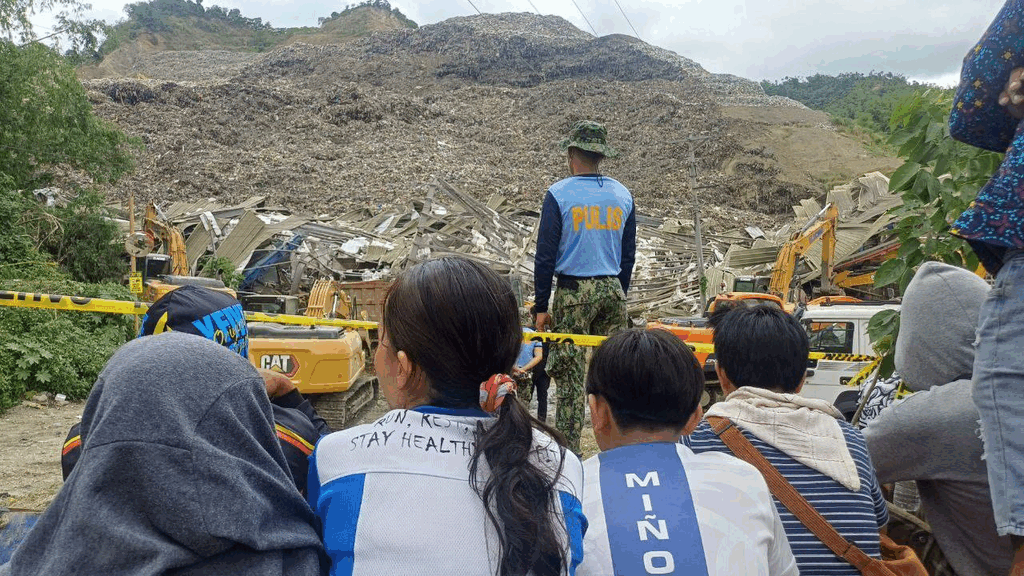
9 January 2026, Quezon City — A landslide at a landfill in Cebu City trapped several individuals in the management’s building, with at least one confirmed dead, 12 rescued, and more than 30 still missing.[1] As of writing, rescue and retrieval operations by local government agencies are still ongoing.
Reacting to this, Greenpeace Campaigner Marian Ledesma said:
“Our thoughts are with those affected by this disaster. This incident is reminiscent of what happened in Payatas 25 years ago.[2] This shows a grim picture of our broken waste management system that has failed Filipinos and communities once again. We could have prevented this from happening if only the root cause of waste and pollution had been addressed decades ago. Incidents like these are bound to happen again as long as the government continues to allow the overproduction of residual waste, particularly single-use plastics.
“The Ecological Solid Waste Management Act of 2000 (RA 9003)—a law passed after the Payatas tragedy—was primarily designed to ensure waste prevention through source reduction and segregation, but enforcement has been inconsistent. At the same time, local governments struggle with massively increasing volumes of single-use plastic waste that can only end up in landfills.
“However, more than 25 years after the law was passed, the Philippines still lacks a national policy to regulate single-use plastics, and the Department of Environment and Natural Resources (DENR) and the National Solid Waste Management Commission (NSWMC) are still struggling to put in place a meaningful non-environmentally acceptable products and packaging (NEAPP) list as mandated in the law.
“Meanwhile, the government passed a toothless and industry-biased Extended Producer Responsibility (EPR) Law in 2022 (RA 1198), which has failed to curb plastic pollution because of its misguided focus on waste recovery and facilitation of toxic approaches such as waste burning, instead of mandating proven upstream solutions.
“Greenpeace is calling on the Philippine government to act with urgency and show political will in addressing plastic pollution. As a start, the government must fully implement RA 9003 by enforcing waste prevention through single-use plastic bans, promoting reuse systems, expanding the NEAPP list, and enforcing waste segregation. Congress must also amend the EPR Law to set clear targets and timelines for actual plastic reduction, rather than merely waste recovery, and for implementing reuse systems. More importantly, corporations, such as fast-moving consumer goods companies and retailers that rely on disposable packaging and single-use plastics, must be held accountable for driving our escalating waste problem. Companies must be mandated to drastically reduce plastic production and use and to shift to refill and reuse systems.”
“Casualties from landslides in dumpsites are just the tip of the iceberg when it comes to the tragedies that surrounding communities experience. Every day, these communities are at risk from exposure to pollution and toxic effluents. More often than not, it is already vulnerable and underserved communities—those with the least resources and political power—that are forced to live near landfills, with the country’s escalating waste crisis further heightening the risks and harms they face. The government shouldn’t wait for another tragedy, but should act now to address the plastic pollution crisis decisively.”
###
Note to the editor:
[1] The Freeman – LOOK: Aerial view of the Binaliw landfill in Cebu… | Facebook
[2] Payatas tragedy: One year after | Philstar.com
For more information and interview requests, please contact:
Karl Orit
Communications Campaigner
Greenpeace Southeast Asia – Philippines
[email protected] | +63 919 457 1064 (Viber & WhatsApp)

Discussion
It Is So HORRENDOUS That the Planet...Oceans..People...Animals Are choking To Death From Plastic! It Is In Our Bodies For Goodness sake! When Will Governments WorldWide Wake Up & STOP THIS! It Is Appalling & Disgusting To Not Care!