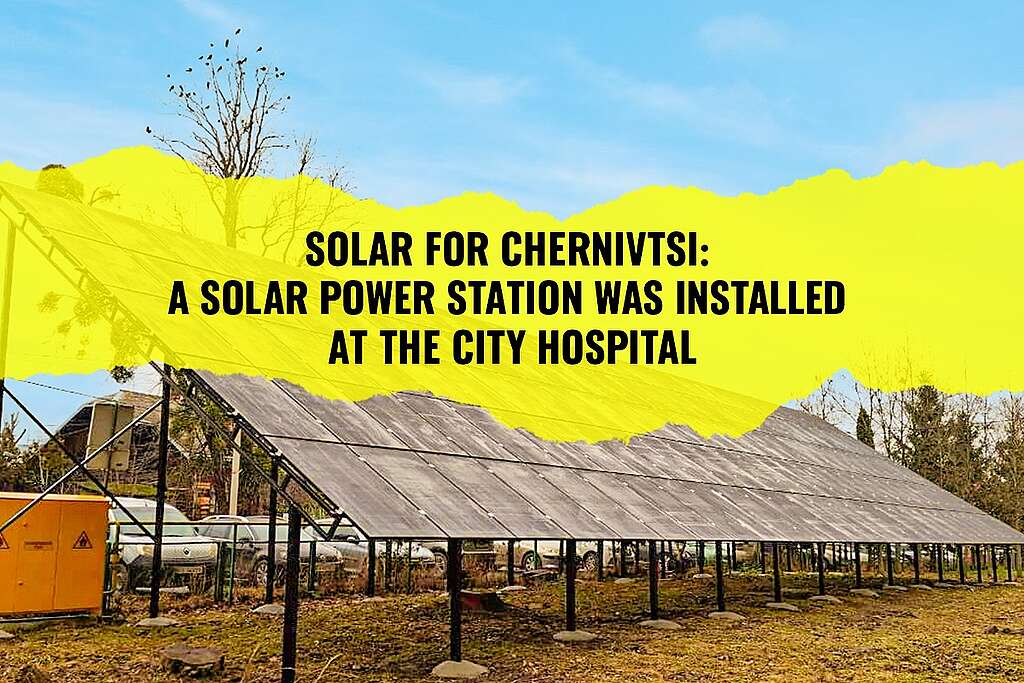
One of the departments of the city hospital has received a 50 kW solar power plant as part of the “Solar for Ukraine” competition implemented by Greenpeace Ukraine.
The solar plant is expected to help the hospital save approximately half a million UAH per year and reduce its dependency on fluctuating electricity tariffs. With its own electricity generation, the medical facility will be able to cut energy expenses and redirect the savings toward essential hospital needs such as medical equipment, medications, and improved patient conditions.
The winner of the competition was one of the departments of the Chernivtsi city hospital. It is the only public inpatient medical facility in its area, treating patients with neurological, cardiovascular, and respiratory conditions. The hospital also provides care for internally displaced persons and military personnel.
Over the past year, around 4,000 patients have received inpatient care at the facility, and the total number of medical services provided exceeded 40,000. The hospital’s service area includes a modular town for internally displaced persons, the Chernivtsi Center for Social and Psychological Assistance, the “City of Goodness” shelter, a geriatric nursing home, and other socially significant institutions.
In addition to financial savings, installing the solar power plant enhances the hospital’s energy resilience and contributes to reducing CO₂ emissions,especially important in times of war-related risks and potential emergency power outages.
“Solar power plants for hospitals are about the rational use of public funds. Lower electricity bills mean more resources for treating people. At the same time, it’s an investment in the stable operation of medical institutions, even in crisis conditions,” said Illia Kuksenko, Junior Campaigner at Greenpeace Ukraine.
The Chernivtsi community already has experience implementing renewable energy sources such as solar power plants operating at water utility facilities and public buildings. The development of renewable energy is also embedded in the community’s strategic documents, making such projects a long-term and economically sound solution.