
How to survive the winter with green energy?
The project models a fast and efficient way to provide winter aid in Ukraine during an energy crisis. We show how green and sustainable energy solutions can decrease the time spent using generators in social buildings during energy cuts.
Since the full-scale invasion, Ukrainian energy infrastructure has been under constant threat from Russian attacks. The winter months pose the most critical challenge for schools, hospitals, and kindergartens, as buildings can be left without electricity for hours. Rather than relying on generators, Greenpeace Ukraine advocates for the deployment of hybrid solar power systems as a fast and effective green solution.
Implementation
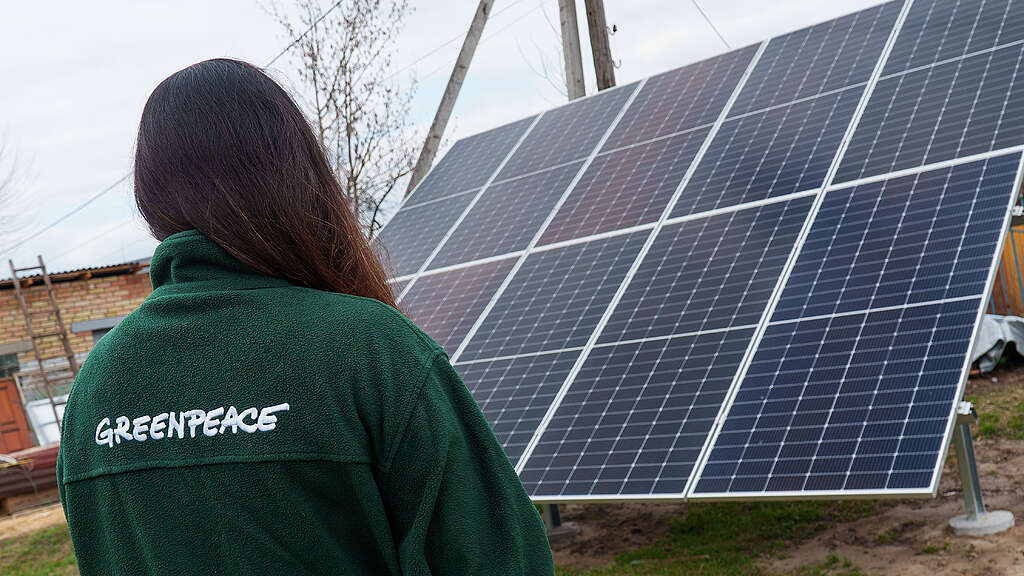
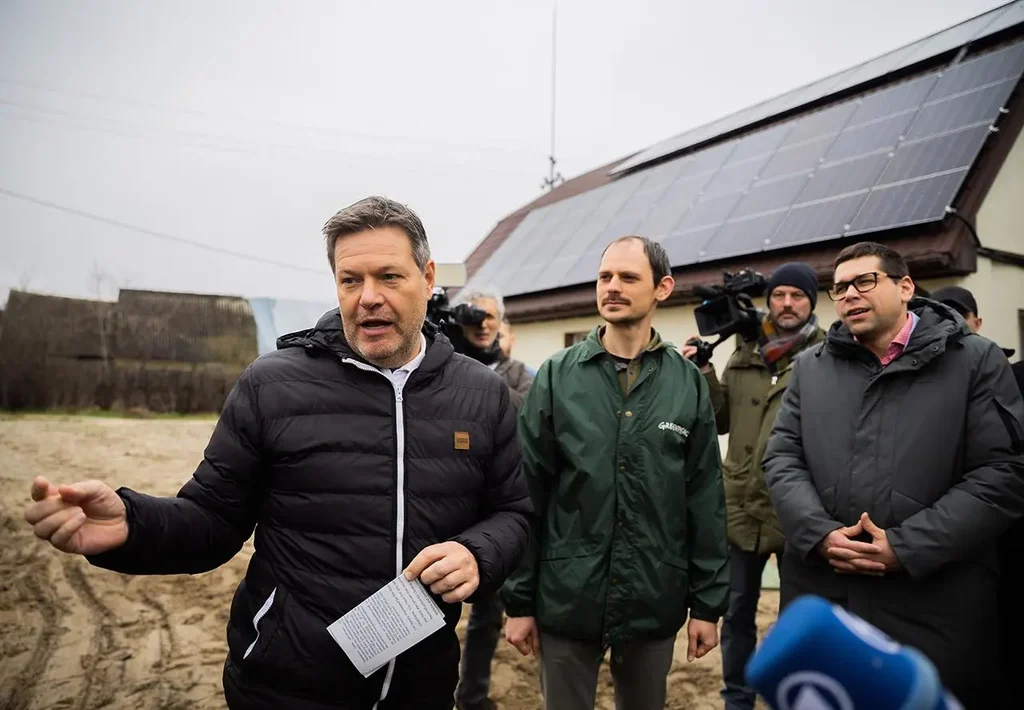
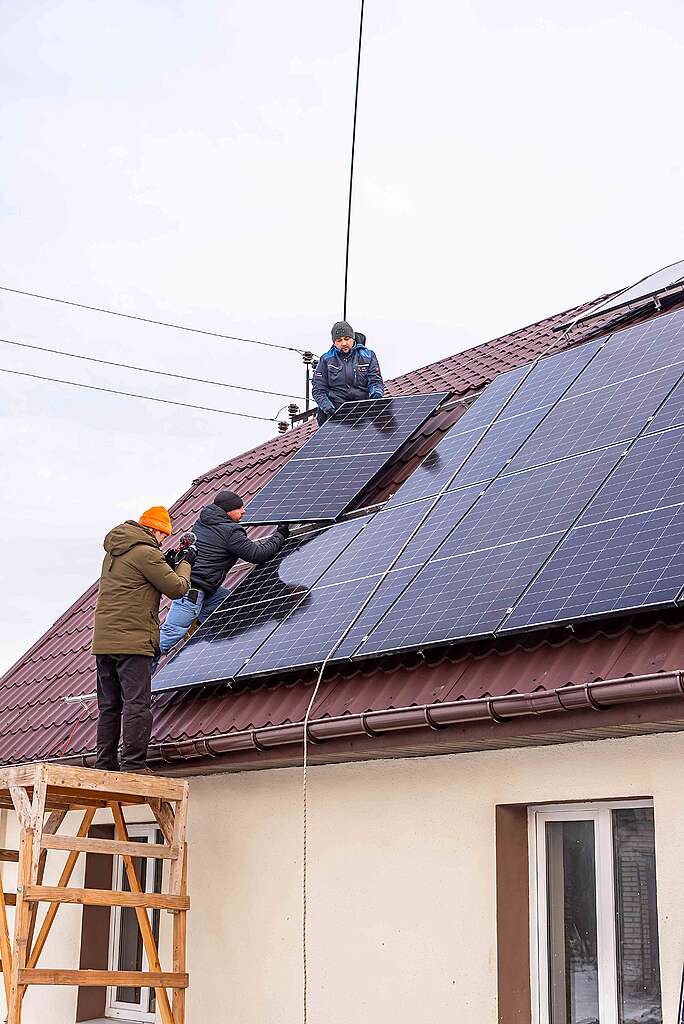
As a model for this initiative, we have installed hybrid solar power systems at a school in Hostomel, Kyiv Oblast, and an outpatient clinic in Mykolaiv.
These installations aim to reduce reliance on diesel generators, thereby mitigating adverse health effects on students and patients. This project is funded by Greenpeace Germany and the Greenpeace Environmental Foundation, with installation carried out by the Ukrainian company Solar Service.
Benefits and Future Potential
The hybrid solar systems integrate solar panels and batteries, minimizing dependence on the vulnerable power grid, which is susceptible to shelling. In instances where solar energy alone cannot meet the institutions’ demands, generators serve as a backup solution. This initiative not only reduces utility costs significantly but also sets the stage for both institutions to operate 100% on solar electricity in the coming months.
Scaling Up
Upon successful implementation, similar hybrid solar power systems could be installed in more schools, kindergartens, and hospitals across Ukraine, particularly in areas near the contact line with unstable power supply. This initiative demonstrates the vast potential and advantages of solar energy for Ukraine, paving the way for a more resilient and sustainable future.
By integrating renewable energy sources and promoting sustainable practices, we aim to create resilient, environmentally responsible spaces that serve communities effectively and sustainably.
More on green reconstruction and our energy efficiency work
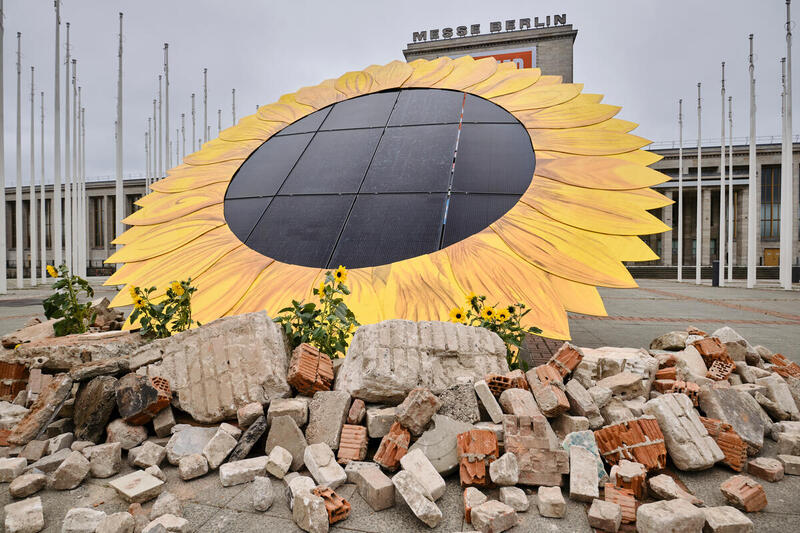
The solar panels used are part of a donation from the Biohaus Foundation Paderborn. They will be delivered to the Ukrainian town of Trostyanez at the end of June to support the power supply there.
Zu Beginn der Ukraine Recovery Conference in Berlin demonstrieren Greenpeace-Aktivist:innen mit einer überdimensionalen Sonnenblume (Durchmesser 7,50 Meter). Die Aktivist:innen demonstrieren für einen Ausbau der Solarenergie in der Ukraine. Die Blüte der Sonnenblume in der Mitte der Installation vor dem Konferenzort ist mit aktiven Solarpanelen gestaltet. Die verwendeten Solarpanele sind Teil einer Spende der Biohaus-Stiftung Paderborn. Sie werden Ende Juni in die ukrainische Stadt Trostjanez geliefert, um die dortige Stromversorgung zu unterstützen.
Solar Marshall Plan
-
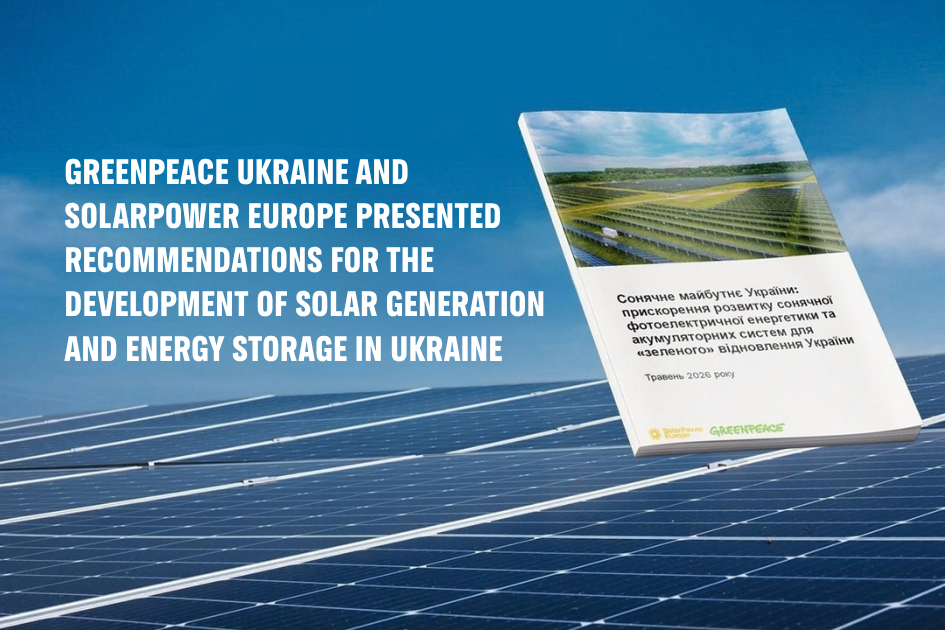
Solar Power and Energy Storage Should Be at the Heart of Ukraine’s Green Recovery — Greenpeace Ukraine and SolarPower Europe
Greenpeace Ukraine, together with SolarPower Europe, Europe’s leading solar energy association, has developed recommendations aimed at accelerating the deployment of solar power and energy storage systems in Ukraine. Their goal…
-

Russia is deliberately sabotaging electricity supply lines at Zaporizhzhia NPP as new Greenpeace satellite analysis exposes Moscow’s disinformation on Ukrainian attacks
More than half of ZNPP’s external power losses since 2022 occurred in the past seven months- new analysis of Greenpeace Ukraine finds no evidence of claimed Ukrainian strikes
-

Gas and Oil Kill: Greenpeace Activists Paint Message on Russian Shadow Fleet Tankerin the Black Sea
Burgas, August 11, 2026. Greenpeace activists from five countries painted “NO GAS + OIL” on the side of the abandoned tanker “Kairos”, part of Russia’s shadow fleet, anchored off the…

