Greenpeace along with iwi and environmental groups are calling the decision to reject Trans Tasman Resources proposal to mine the Taranaki seafloor “a massive win for people power and the ocean”.
In a draft decision, released today, the Fast Track expert panel declined the Australian company’s application to mine the seabed in the South Taranaki Bight.
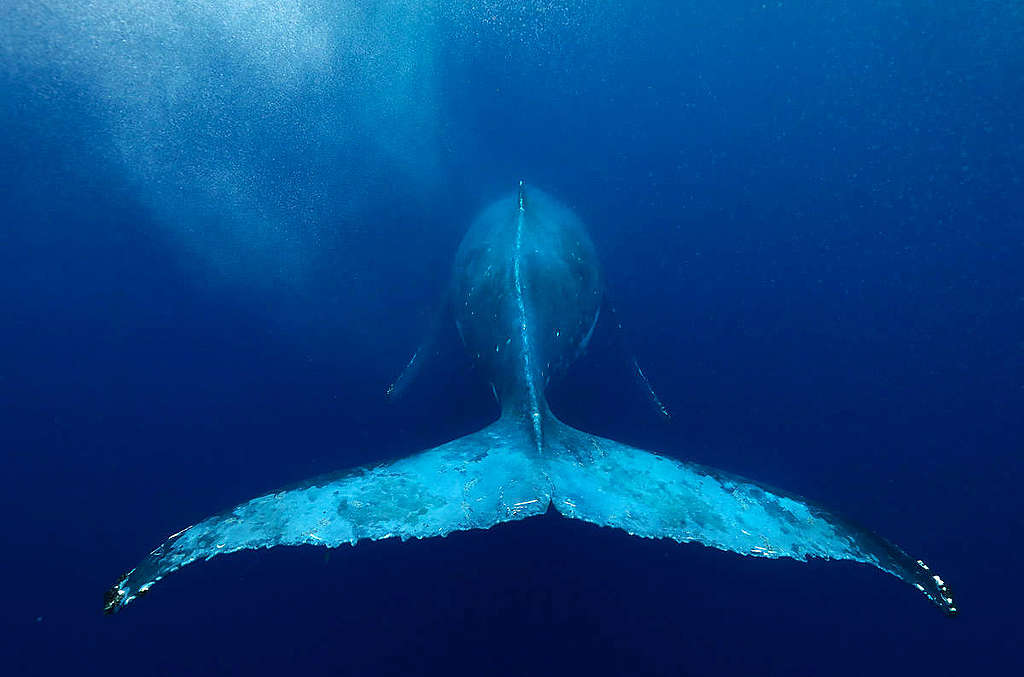
The panel declined consent for the project, finding it would likely cause material harm to marine ecosystems, threatened species like pygmy blue whales and penguins, and concluded it could not be safely managed, even with conditions attached.
Greenpeace Aotearoa seabed mining spokesperson Juressa Lee says: “This is the outcome we have been fighting for over 12 years. It shows exactly what happens when communities, iwi, experts and ocean protectors stand together.
“This win today is a powerful validation of what iwi and the communities of Taranaki and Aotearoa have been saying for years – seabed mining is simply too destructive to go ahead.
“The resistance to seabed mining in Aotearoa and around the Pacific is strong and persistent. From Taranaki, to the Cook Islands, and across Te Moananui a Kiwa, people are rising up against this destructive industry.
“Now the New Zealand government must listen. Nearly 60,000 people around Aotearoa signed petitions calling for an outright ban on seabed mining in Aotearoa.
“As we head into an election year, government officials should remember that this is who they represent and commit to taking bold action to protect the moana by banning seabed mining.”
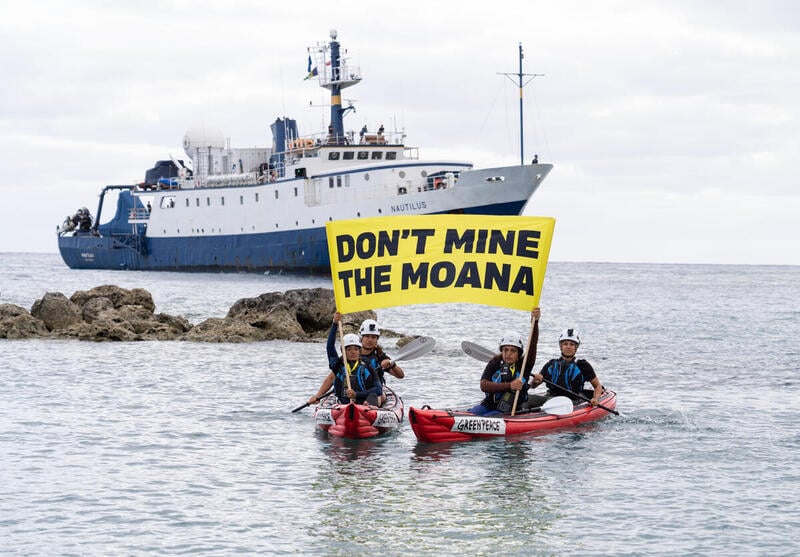
Greenpeace Aotearoa protested against Trans Tasman Resources‘ attempt to start a seabed mine in Taranaki, occupying the offices of mining industry lobby group Straterra in September 2024.

Just months later, along with Ngāti Ruanui, Greenpeace activists shut down the Sydney AGM of Australian mining company Manuka Resources, the owner of Trans-Tasman Resources.
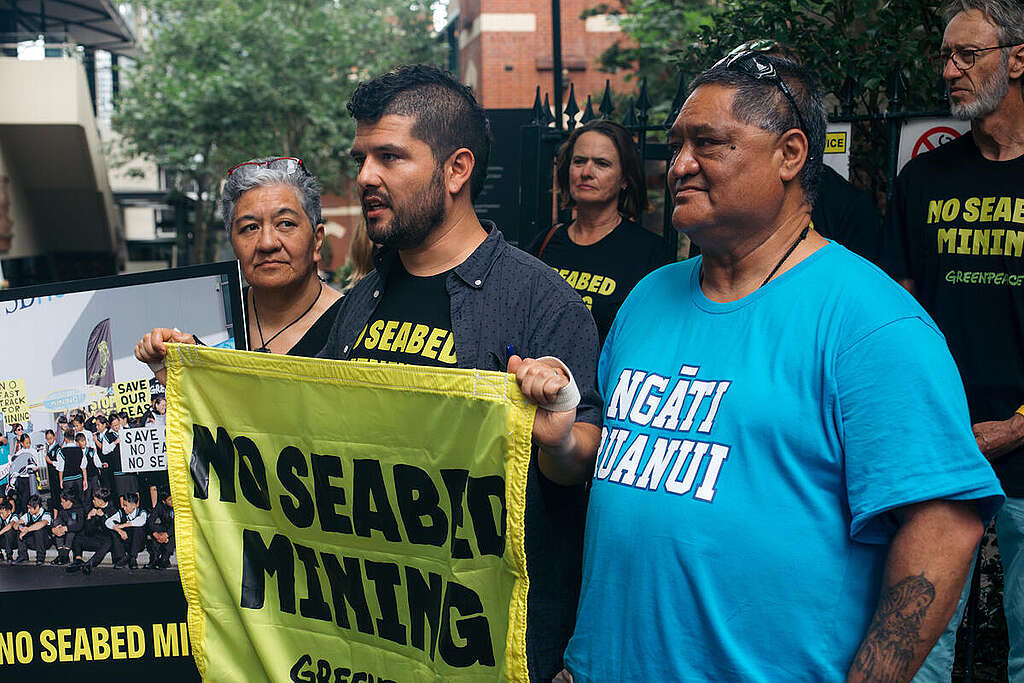
Lee says: ,“Iwi, the local community, and tens of thousands of New Zealanders have stopped Taranaki being carved up for sale. To prevent this happening again, we must ban seabed mining outright for the waters of Aotearoa, and ensure the moana is never pillaged to line mining industry pockets.”
Seabed mining is a new threat to the oceans. Now is our chance to prevent the destruction before it’s too late.
Add my name