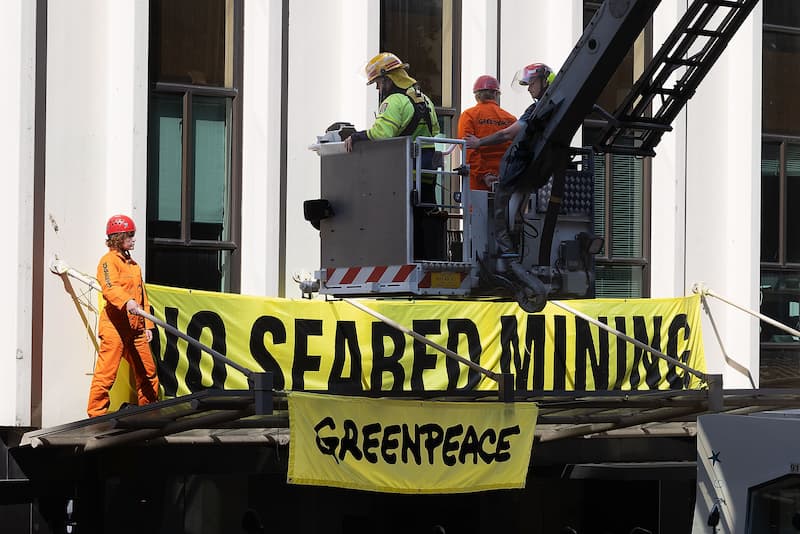
News that the NZ government is in talks with the Trump administration on a critical minerals deal is drawing fierce criticism from Greenpeace Aotearoa, who warn of unchecked environmental destruction, Te Tiriti violations, and Aotearoa becoming a pawn in the US’s quest for further geopolitical control.
The confirmation that NZ is in discussions with the US comes just weeks after Trump issued a proclamation that “foreign trading partners” who did not sign deals on critical minerals supply could face trade penalties.
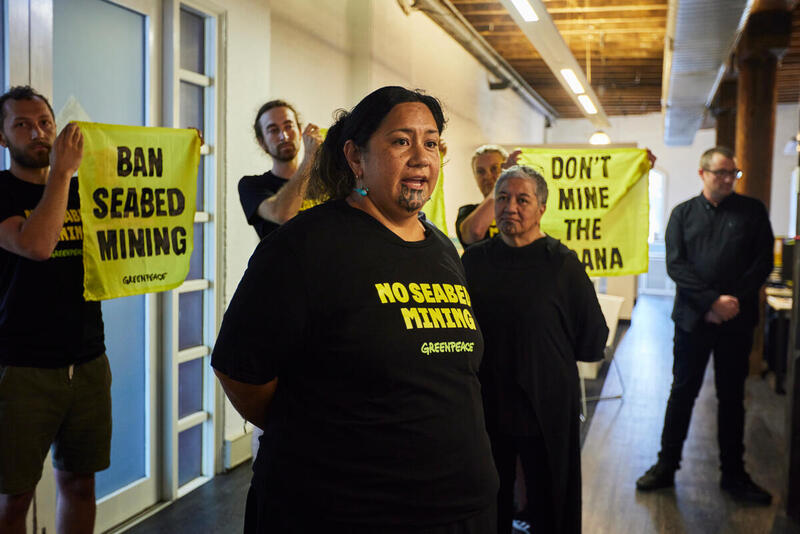
Russel Norman, Executive Director of Greenpeace Aotearoa says New Zealand must resist being pushed into a deal that will expedite environmental destruction in Aotearoa.
“The Trump administration is showing absolute disregard for everything other than their own agenda and greed. Pacific Peoples and over 40 nations have rejected the idea of mining the ocean, but here’s the US issuing ultimatums trying to force the start of this industry.
“Clearly, the will of Indigenous Peoples and Pacific nations do not matter in the Trump administration’s resource and power grab .”
Trump’s push for a critical minerals deal is just the latest in a series of moves to expedite mining the ocean.
Last year, the President signed an executive order to accelerate the exploitation of seabed minerals. Since then, the US has also signed deals with the Cook Islands for mining exploration and sent an expedition vessel to the region. They are also forging ahead with plans to open up US Pacific territories such as American Samoa to mining.
“The US is pressuring every nation they can, including us here in Aotearoa, to bend to their will. But resistance to mining the seafloor here and around the Pacific is strong. People are coming together to fight for a future where the ocean is protected, not pillaged to line Global North pockets.”
Norman warns that NZ is being used as a pawn in Trump’s game.
“New Zealand must not be responsible for helping open up Pandora’s Box on seabed mining. The ocean is too precious to mine, the people of this region depending on its health and integrity for survival.”
At home, Luxon’s government has been heavily criticised since 2023 for trying to Fast Track mining projects across Aotearoa, including a controversial seabed mine proposed for Taranaki. There, ‘critical mineral’ vanadium – described on Trump’s list – is thought to be in large supply.
“Who is this seabed mine for?” says Norman.
“Iwi in Taranaki have repeatedly rejected plans by Trans Tasman Resources to open this destructive seabed mine in their waters. They have said no, as have the rest of the community, local councils, the courts, and the fishing industry.
“Now we hear that the NZ government is in closed room conversations with Trump to supply minerals – some of which are found at this site. Is the NZ government going to allow the waters of the west coast to be trashed, fish stocks impacted, Indigenous Rights violated – to fuel the US’s dreams?
“What happens here in the waters of Aotearoa should not be dictated by the US, not when tangata whenua and the communities who will be most affected have rejected the project time and time again.”
A week ago, the US took another step to make it easier for deep sea mining companies to exploit the ocean – combining exploratory and commercial applications into a single process, also reducing environmental reviews. The following day, The Metals Company USA applied for a consolidated permit to explore and mine the Pacific.