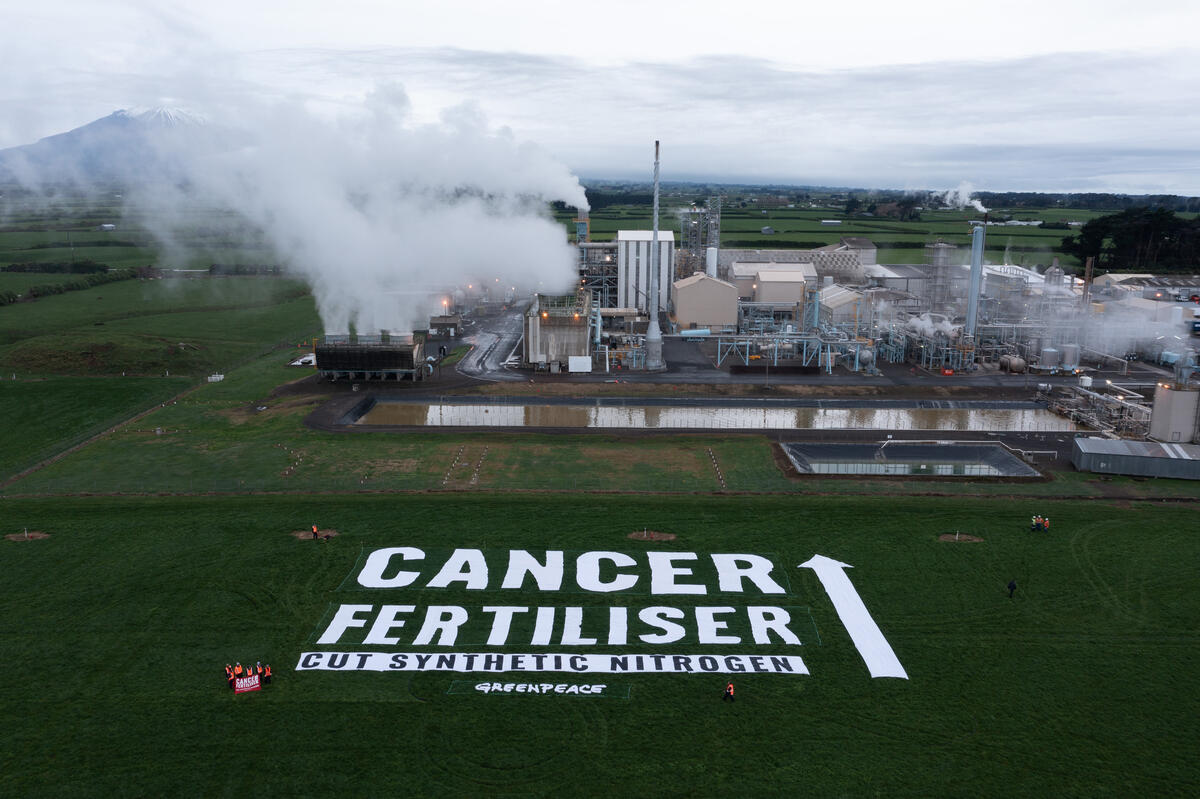
Greenpeace is calling on the New Zealand Government to put public health above industry profits by lowering the legal limit for nitrate in drinking water.
To the Ministers for Local Government and Health,
New Zealand is in a nitrate emergency. Rural drinking water is contaminated, and evidence shows that it’s getting worse, particularly in Southland and Canterbury. Long term exposure to nitrate-contaminated drinking water has potentially severe health consequences – and we haven’t seen their full impacts yet.
The legal limit for nitrate contamination in our drinking water standards must change to reflect this, and we’re calling on you to commit to lowering the Maximum Allowable Value for nitrate in drinking water.
Nitrate contamination is an emerging health crisis, and as Minister for Health and Minister of Local Government you both have responsibility in this area. We need your Government to act.
In Denmark, the Government has announced that it will accept the recommendations of an independent scientific panel, that advised that the legal limit for nitrate in drinking water should be 6 mg/L of nitrate NO3 – equivalent to 1 mg/L nitrate NO3-N (which is the commonly used method to measure nitrate in New Zealand). This is because international studies have found an increased risk of bowel cancer associated with long-term exposure to this concentration of nitrate.
This means that in Denmark, water supplies above 1mg/L NO3-N nitrate contamination could be deemed unsafe for drinking.
Here in Aotearoa, our legal limit for nitrate in drinking water is eleven times that. Our drinking water standard for nitrate was set in the 1960s in response to Blue Baby Syndrome. This is an acute condition and a more immediate risk to babies, but despite evidence linking long-term exposure to nitrate levels much lower than the current standard to health risks like preterm birth, bowel cancer, and now potentially dementia, the legal limit for nitrate remains the same.
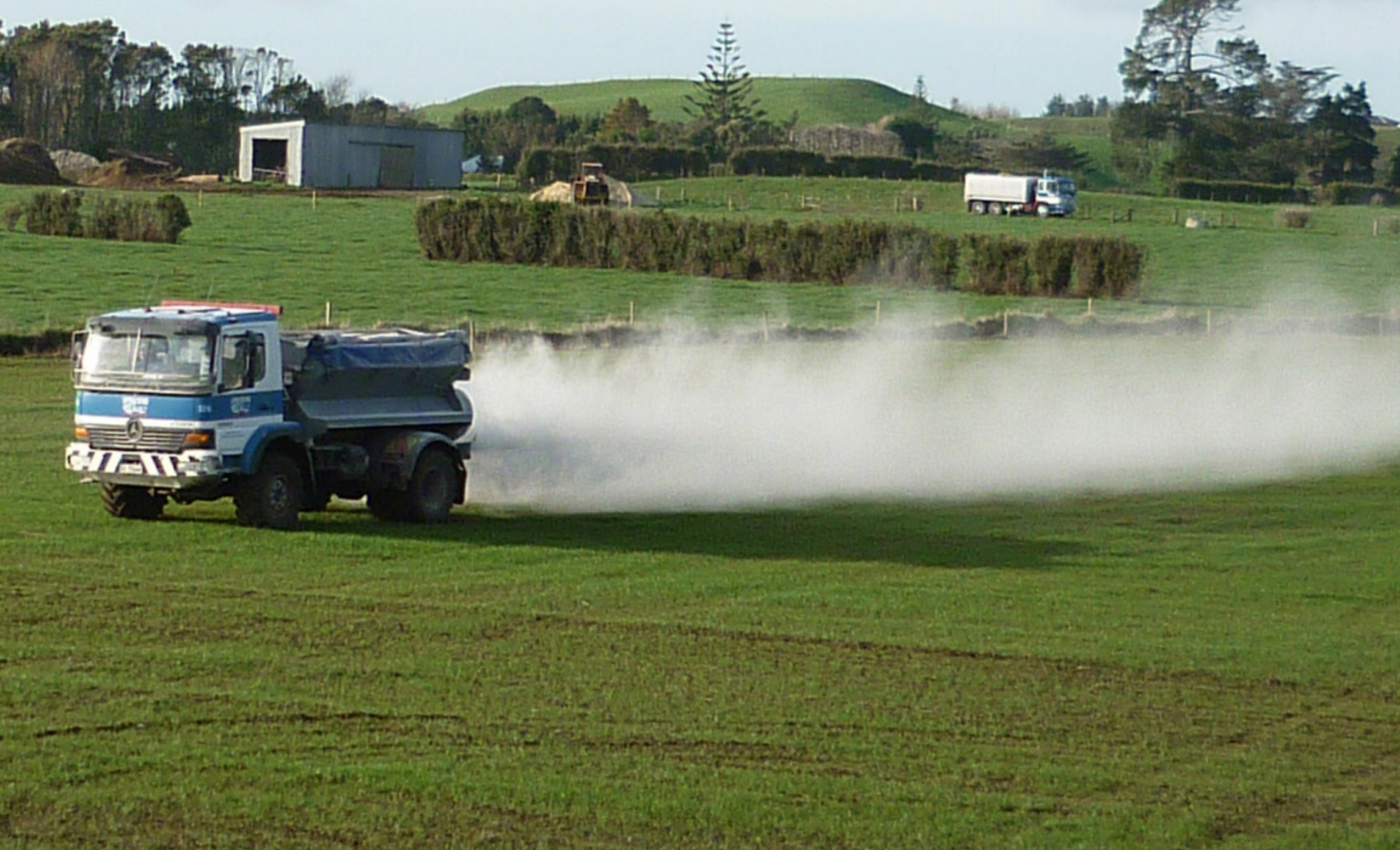
Nitrate contamination from the intensive dairy industry is disproportionately impacting rural communities. In Canterbury, where dairy cow numbers have exploded elevenfold in the last 30 years, more public drinking water supplies are reaching nitrate levels associated with an increased risk of pre-term birth. This is happening right now – and your Government is doing nothing. That must change.
Tens of thousands of New Zealanders have signed a Greenpeace petition calling for the Government to lower the legal limit for nitrate. In 2022, the Ministry of Health refused to acknowledge the growing body of scientific evidence indicating the benefits of lowering the MAV – but agreed to continue to monitor the science and advise if changes to the MAV are needed.
It is now very clear that the MAV must be lowered.
Denmark is acting to protect their communities from nitrate contamination. New Zealand must follow suit.
We’re calling on you to commit to lowering the Maximum Allowable Value for nitrate in drinking water from 11.3mg/L to 1mg/L NO3-N, in line with the actions of the Danish Government and recommendations from the scientific community.
Everybody has the right to clean safe drinking water. Rural New Zealanders shouldn’t be left to deal with the consequences of nitrate contamination, when your Government could choose to take action.
Call on the Government to lower the limit for nitrates in drinking water to safe levels
Take Action